COE review: Impact of proposed changes on premiums uncertain, say experts拥车证审查:专家称,拟议变更对保费的影响尚不确定
Experts say proposed COE changes may not lower prices as they weigh rebates, surcharges and wider car ownership costs in Singapore. Read more at straitstimes.com.
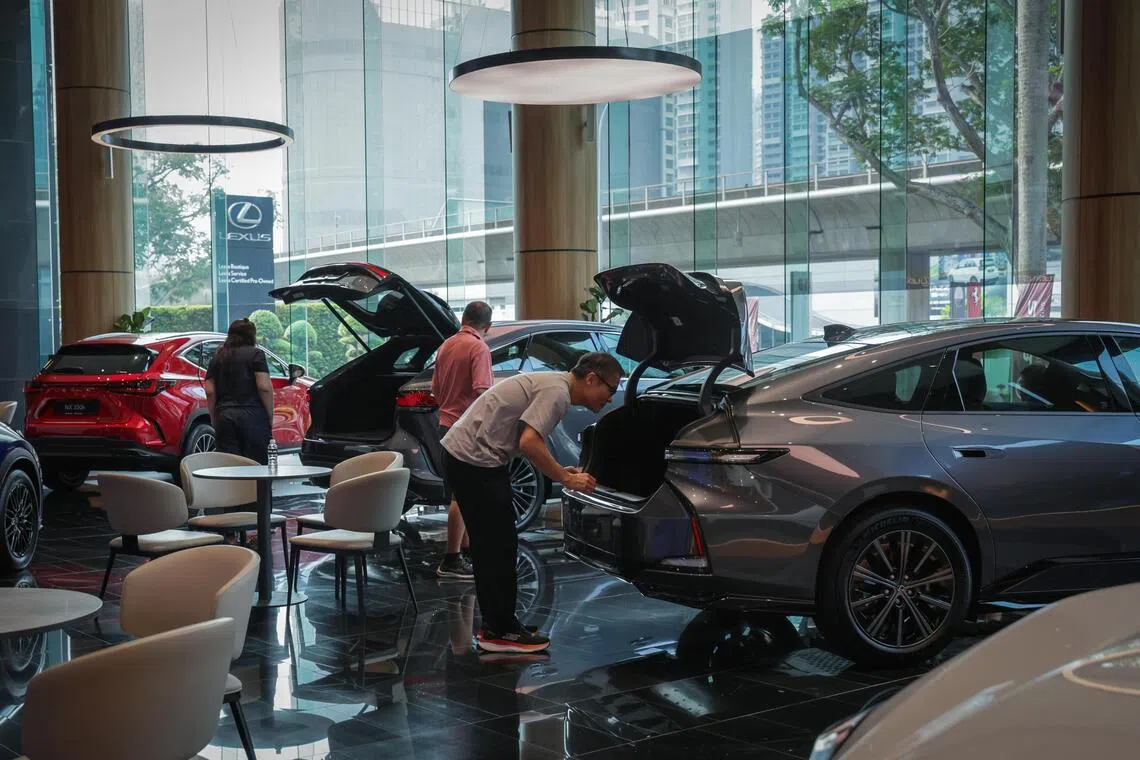
Merging categories A and B and giving a COE rebate for mass-market cars may not necessarily translate to guaranteed savings for buyers.
Published Oct 08, 2026, 05:06 PM
Updated Oct 08, 2026, 05:06 PM
Experts say the proposed COE changes may not clearly lower prices. Merging Categories A and B could still keep bidding pressure high.
A tiered rebate or surcharge system may push buyers towards mass-market cars, but dealers and carmakers may adjust models to fit better OMV tiers.
Other policies, including VES, the end of EV rebates, and lower deregistration payouts, could offset savings.
SINGAPORE – It is unclear just how much impact the suggested changes to the certificate of entitlement (COE) system will have on prices, said experts.
Merging categories A and B and giving a COE rebate for mass-market cars may not necessarily translate to guaranteed savings for buyers, compared with prices under the current system.
It is also likely that more car buyers will lean towards buying a mass-market car, they added.
On Oct 8, the Land Transport Authority (LTA) began a public consultation exercise to get views on proposals to merge Cat A and B into a single passenger car grouping.
A tiered system of surcharges or subsidies based on vehicle’s open market value (OMV) is also among the suggested changes.
The aim of the suggested tweaks is to make clearer the distinction between the prices of mass-market cars.
Since late 2024, the price of a Category A COE, meant for mass-market models, has closed in on that of Category B, which is used for larger, more powerful cars and luxury models.
Research Assistant Professor Samuel Chng – Urban Psychology Lab head at the Lee Kuan Yew Centre for Innovative Cities at the Singapore University of Technology and Design – said there is no clear basis to expect that merging Categories A and B will lower COE prices.
Combining both categories, he added, will not create more COEs, but instead make buyers bid in a common pool with a more explicit differentiation in costs, based on a car’s OMV, which is the baseline cost before taxes.
That would mean buyers of mass-market cars will pay less than those buying premium ones, said Associate Professor Walter Theseira, a transport economist at the Singapore University of Social Sciences.
Chng said some buyers might opt to switch to a car with a lower OMV, while others may be influenced by the rebates to get a car.
If more buyers start shopping around for a car, competition for COEs will increase, he added.
Terence Ho, adjunct associate professor in practice at the Lee Kuan Yew School of Public Policy at the National University of Singapore, said such a scenario could mean upward pressure on COE prices.
If the proposed changes are implemented, buyers of mass-market cars could put off their car purchases in the hope of benefitting from the rebate, he added.
On the other hand, those looking to buy premium cars with higher OMVs might bring their purchases forward to avoid the surcharge, added Ho.
It is difficult, however, to determine how significant the impact of these decisions will be on the prices of Category A and B COEs, he said.
As for car dealers, Theseira said carmakers are likely to find ways to ensure car models fit within “better” OMV tiers that qualify for rebates or no surcharges, within the next six months to a year after changes kick in.
For instance, carmakers can bring in a certain car model, but implement specific cost cuts for the vehicle to fit within a certain tier.
This can be done through “old tricks” such as fitting car equipment locally after vehicles are imported into Singapore, as well as disabling certain software features at the import stage and re-enabling them later, added Theseira.
He said such market activity is difficult for the authorities to control as customer preferences and vehicle technologies will continue to evolve, making it necessary for different model variants to be brought into the market.
As most buyers get a car with a COE secured through a dealer, he also said it is likely the full rebate may not be passed on to car buyers.
For instance, the dealer can choose to bank on the rebate to put in a more aggressive COE bid, he added.
And before the changes are implemented, motor dealers will always have the motivation to encourage buyers to rush their purchases, Theseira said.
The supply of COEs, however, is starting to stabilise and this will continue until the end of the decade, so it is likely that prices will go down, he added.
Also with the new ERP 2 system in place, motorists can be priced more “comprehensively” in terms of road usage or distance – instead of just the COE.
As such, Theseira said there could be an increase in the COE supply by the end of the decade or in the early 2030s.
Chng said car buyers will need to consider the combined impact of other policies on the cost of car ownership, instead of looking at the proposed rebate in isolation.
He added that the latest revisions to the vehicular emissions scheme (VES) – in which cars with high exhaust emissions have to pay higher surcharges of up to $45,000 in 2027 – and the halting of a rebate for electric car buyers in December, could offset part of any future rebates for those who buy cars under the proposed tiered system.
But the net benefits will ultimately depend on the car model, when the new changes are rolled out and the prevailing COE premium, said Chng.
Also citing the recent reduction in car deregistration payouts , he said these other policies matter when comparing ownership costs over several years – although the effect is less immediately visible than an upfront rebate.
Taking into account other related policies, Ho said the cost of higher-end premium cars will go up, particularly if they are high-emissions internal combustion engine cars.
And with the smaller car deregistration payout, he said these luxury cars will lose significant residual value since they experience higher depreciation.
All in, the effectiveness of the proposed tiered rebate system will depend on whether buyers can readily compare car model options and understand how they are priced, said Chng.
He added that buyers need to be notified in advance of when and how the annual reviews of OMV tiers take place so that they can plan ahead to buy or renew a car around work, caregiving and household budgets.
将 A 类和 B 类汽车合并,并对大众市场汽车给予拥车证回扣,并不一定能保证购车者节省开支。
发布于 2026 年 10 月 8 日下午 5:06
更新于2026年10月8日下午5:06
专家表示,拟议的拥车证变更方案可能不会明显降低价格。A类和B类拥车证合并后,竞标压力可能依然居高不下。
分级折扣或附加费制度可能会促使买家选择大众市场汽车,但经销商和汽车制造商可能会调整车型以适应更好的 OMV 等级。
其他政策,包括车辆排放补贴、电动汽车补贴的取消以及注销车辆赔偿金的降低,可能会抵消节省的费用。
新加坡——专家表示,目前尚不清楚对拥车证(COE)制度的拟议改革会对价格产生多大影响。
与现行制度下的价格相比,将 A 类和 B 类汽车合并,并对大众市场汽车给予拥车证回扣,未必能保证购车者节省开支。
他们还补充说,更多购车者可能会倾向于购买大众市场车型。
10月8日,陆路交通管理局(LTA)启动了一项公众咨询活动,以征求公众对将A类和B类乘用车合并为一个乘用车组别的提案的意见。
根据车辆公开市场价值 (OMV) 实行分级附加费或补贴制度也是建议的改革措施之一。
这些调整建议的目的是为了更清楚地区分大众市场汽车的价格。
自 2024 年底以来,面向大众市场车型的 A 类拥车证价格已经接近面向更大、更强劲的汽车和豪华车型的 B 类拥车证价格。
新加坡科技设计大学李光耀创新城市中心城市心理学实验室主任、研究助理教授张胜(Samuel Chng)表示,没有明确的依据可以预期A类和B类拥车证合并会降低拥车证价格。
他补充说,将这两类合并不会产生更多的拥车证,而是会让买家在一个共同的池子里竞标,成本差异更加明确,基于汽车的 OMV(税前基准成本)。
新加坡社会科学大学交通经济学家沃尔特·特塞拉副教授表示,这意味着大众市场汽车的买家将比购买高端汽车的买家支付更少的费用。
Chng表示,一些买家可能会选择购买OMV较低的汽车,而另一些买家可能会受到折扣的影响而购买汽车。
他补充说,如果更多买家开始货比三家买车,拥车证的竞争将会加剧。
新加坡国立大学李光耀公共政策学院兼职副教授何德伦表示,这种情况可能意味着拥车证价格面临上涨压力。
他补充说,如果这些提议的改革得以实施,大众市场汽车的购买者可能会推迟购车,希望能够获得退税。
何先生补充说,另一方面,那些想要购买 OMV 较高的优质汽车的人可能会提前购买以避免附加费。
但他表示,目前很难确定这些决定会对A类和B类拥车证的价格产生多大的影响。
至于汽车经销商,Theseira 表示,汽车制造商可能会在政策变更生效后的六个月到一年内,找到方法确保汽车型号符合“更好”的 OMV 等级,从而获得退税或免除附加费。
例如,汽车制造商可以引进某个车型,但通过特定的成本削减措施,使该车型符合某个档次。
Theseira补充说,这可以通过一些“老套路”来实现,例如在车辆进口到新加坡后在当地安装汽车设备,以及在进口阶段禁用某些软件功能,然后在以后重新启用它们。
他表示,由于消费者的偏好和汽车技术会不断发展,因此有必要将不同的车型推向市场,这种市场活动很难被当局控制。
他还表示,由于大多数购车者都是通过经销商获得拥车证(COE),因此很可能无法将全部回扣转给购车者。
他补充说,例如,经销商可以选择利用回扣来提出更积极的拥车证竞标。
塞西拉表示,在改革措施实施之前,汽车经销商总会有动机鼓励买家尽快购买。
他补充说,然而,拥车证的供应开始趋于稳定,这种情况将持续到本十年末,因此价格可能会下降。
此外,随着新的 ERP 2 系统的实施,可以根据道路使用情况或行驶距离对驾驶员进行更“全面”的定价,而不仅仅是 COE 费用。
因此,塞塞拉表示,到本十年末或 2030 年代初,拥车证供应量可能会增加。
Chng表示,购车者需要考虑其他政策对汽车拥有成本的综合影响,而不是孤立地看待拟议的退税政策。
他还补充说,车辆排放计划 (VES) 的最新修订——其中高排放车辆必须在 2027 年支付高达 45,000 美元的更高附加费——以及 12 月份停止对电动汽车购买者的退税,可能会抵消未来根据拟议的分级制度购买汽车的人获得的任何退税的一部分。
Chng表示,最终的净收益将取决于车型、新规推出的时间以及当时的拥车证溢价。
他还提到最近汽车注销补偿金的减少,并表示,在比较几年的拥有成本时,这些其他政策也很重要——尽管其效果不如预先退款那样立竿见影。
何先生表示,考虑到其他相关政策,高端豪华车的成本将会上涨,尤其是高排放的内燃机汽车。
他还表示,由于车辆注销补偿金较少,这些豪华车的残值将会大幅下降,因为它们的折旧率更高。
Chng表示,总而言之,拟议的分级回扣制度的有效性将取决于买家是否能够轻松比较汽车型号选项并了解它们的定价方式。
他还补充说,需要提前通知购车者 OMV 等级的年度审查的时间和方式,以便他们能够提前计划,根据工作、照顾家人和家庭预算来购买或续购汽车。