From ‘kodokushi’ in Japan to Perak villages, lonely deaths rise as Malaysia’s ageing population grows从日本的“孤尸”到霹雳州的村庄,随着马来西亚人口老龄化,孤独死亡的案例也在增加。
KUALA KANGSAR, Oct 9 — Although she suffers from several health conditions, including diabetes and high blood pressure, Jahara Hashim never fails to go to the Senior Citizens...
The article highlights the challenges faced by elderly individuals living alone in Malaysia, particularly the rising incidences of 'lonely deaths.' While emphasizing the importance of community initiatives like the Senior Citizens Activity Centre (Pawe) for keeping seniors active and socially engaged, it also underscores the need for comprehensive measures by families, communities, and government agencies to support and protect vulnerable elderly populations.
Programs such as 'We-Fit' are designed to enhance the health and well-being of older adults, aiming to mitigate issues such as the loss of muscle mass with age.
KUALA KANGSAR, Oct 9 — Although she suffers from several health conditions, including diabetes and high blood pressure, Jahara Hashim never fails to go to the Senior Citizens Activity Centre (Pawe) in Manong town, located about a 30-minute bicycle ride from her home in Kampung Changkat Manong.
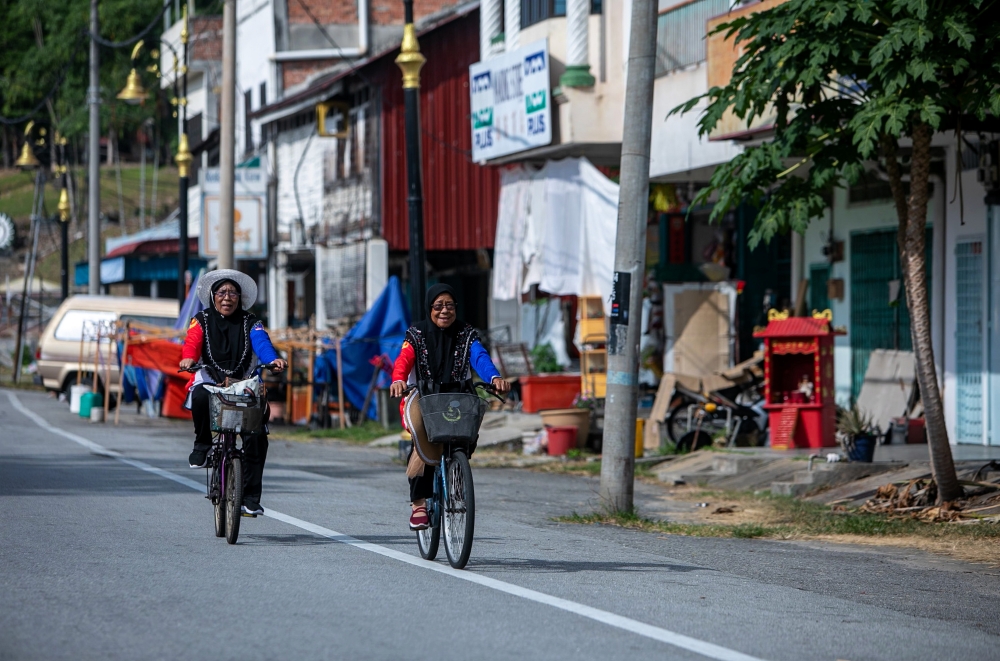
At the centre, a community initiative under the Department of Social Welfare, the 75-year-old woman takes part in various activities with other senior citizens, rather than spending her days alone at home, where she has lived by herself since her husband died 22 years ago and their two children got married.
Despite repeatedly being invited by her children to live with them, Jahara insists on staying in her own home. And the remedy for her loneliness is the activity centre.
For the past five years, her daily routine has been to cycle to the Pawe as early as 8am and return home at about 1pm. The routine also serves as a point of reference for the centre’s staff and her friends, who would notice if she failed to turn up as usual.
“My children do worry about me (cycling to the centre every day). They tell me to just rest at home in case anything happens to me. But staying at home can be boring,” she told Bernama.
According to Jahara, her children keep in regular contact with her, checking on her and visiting her every week.
Jahara may live alone, but her whereabouts and health are constantly monitored by her family as well as her friends at the Pawe. However, not everyone living alone has the same support system as she does.
The media frequently reports the discovery of bodies in homes days after the individuals had died, with one common thread in many of these cases: the deceased lived alone.
In Japan, discovering decomposing bodies of people who lived alone is not something new. Known as kodokushi, or lonely death, the issue has in recent years also attracted increasing media attention in Malaysia.
Media reports quoting Associate Prof Dr Rahimah Ibrahim, director of the Malaysian Research Institute on Ageing at Universiti Putra Malaysia, estimated that around 3,500 cases of people dying alone occur annually in Malaysia.
She based the estimate on microdata, citing Perlis, which has a population of about 300,000, as an example. The state recorded 80 cases of sudden deaths involving people living alone between 2022 and August 2024.
The cases involved people from various age groups, including elderly people who had never married, had no children or had been neglected by their families; individuals with chronic illnesses or mental health conditions living apart from the community; as well as single young people living alone in urban areas.
In Perak, the state Fire and Rescue Department (JBPM) recorded 15 cases of people found dead alone inside their homes between 2021 and July this year. Four of these cases were recorded in 2025 and another four between January and July 2026, indicating an upward trend.
The situation is particularly concerning as Perak has the highest proportion of elderly people in the country, with 10.8 per cent of its population of 2.58 million aged 65 and above, according to the latest data from the Department of Statistics Malaysia. About 15.3 per cent of Perak’s population were aged 60 and above.
With the growing number of senior citizens living alone, coupled with children moving to cities and changing family structures, ‘lonely deaths’ are no longer isolated incidents but an emerging social challenge requiring the attention of families, communities and the government.
Commenting on the 15 lonely death incidents reported by Perak JBPM, its director Datuk Sayani Saidon said the department handled the cases after members of the public or police called for assistance to open the doors or grilles of the homes concerned.
She said in most cases, the bodies were already beginning to decompose and had started to emit an odour, with some of the individuals believed to have been dead for more than a week.
“Not all were elderly people… there were also individuals in their 30s and 40s.
“However, we are now seeing more older people living alone as their children have moved away or work far from home. There are also married couples without children who live apart due to work commitments,” she told Bernama.
She also said that when accidents occur at home involving people in such circumstances, they may face difficulties in getting timely assistance.
“Therefore, I urge children who live far from their parents to maintain regular contact with them and keep the telephone numbers of their closest neighbours so that their parents’ well-being can be monitored.
“At the same time, neighbours and the local community must also play a role by looking out for senior citizens and individuals living alone in their respective areas,” she said.
Sayani added that village heads and village development and security committees should know how many vulnerable individuals live in their respective areas to facilitate the provision of assistance during emergencies or disasters.
She said cooperation among agencies, including the Ministry of Health, Department of Social Welfare, local authorities and religious institutions, is also important to gather data and formulate more comprehensive measures to protect senior citizens living alone.
“Perak is also known as one of the preferred states for retirement and has a large senior citizen population. So, there is a possibility that the number of people living alone will continue to rise,” she said.
Programmes for senior citizens
Meanwhile, Perak Women and Community Development Secretariat director Jamilah Zakaria said the state government has introduced various programmes to empower the elderly and safeguard their welfare, particularly those living alone.
“As we know, the Department of Social Welfare (JKM) provides an activity centre for senior citizens (Pawe) in every district. In Perak, we have about 23 such centres, and the state government collaborates with JKM and Pawe to provide programmes focused on empowering elderly people.
“This enables them to stay active and engage with the community,” she said in an interview with Bernama.
She said the programmes, including ‘We-Fit’ which focuses on health and physical fitness, are designed to ensure the well-being of senior citizens.
“Through the We-Fit programme, which we have introduced in the districts, we provide information on healthy eating. We work with the state health department and district health offices, which bring in dietitians to help senior citizens understand appropriate portion sizes, calorie intake and other aspects of healthy nutrition.
“We will also be conducting roadshows in all 12 districts (in Perak) and in each district, we will be collecting data on the number of senior citizens and their health status, including their body composition assessments, particularly their body fat percentage and muscle mass.
“Based on this data, we can plan programmes that are appropriate for each district,” she said, adding that the data also helps raise awareness of the risk of sarcopenia, the age-related loss of muscle mass, strength and function.
“Through health screening and education, senior citizens can better understand their physical condition and are encouraged to take preventive measures through physical activity, strength training and appropriate nutrition.” — Bernama
From football meme to boycott calls: Why Indonesian grooming brand Kahf is facing backlash in Malaysia
Nature in freefall: WWF says wildlife populations plunge 73pc since 1970
Palm‑sized hatchlings, big win: Malaysia’s green turtles defy global wildlife decline
Five arrested, police hunting eight more suspects over alleged arson at Sarawak convenience stores
Immigration dept detains 20, seizes 341 passports in foreign worker quota abuse probe
KFC manager killed in Kuala Berang crash while crossing busy stretch
这篇文章重点介绍了马来西亚独居老人面临的挑战,特别是“孤独死亡”事件的不断增加。文章强调了社区活动的重要性,例如老年人活动中心(PAWE),它有助于保持老年人的活力和社交参与度。同时,文章也强调了家庭、社区和政府机构需要采取综合措施来支持和保护弱势老年群体。
“We-Fit”等项目旨在增强老年人的健康和福祉,以缓解随着年龄增长而出现的肌肉量减少等问题。
瓜拉江沙,10 月 9 日讯——尽管 Jahara Hashim 患有糖尿病和高血压等多种疾病,但她从未间断地前往位于 Manong 镇的老年人活动中心 (Pawe)。该中心距离她位于 Kampung Changkat Manong 的家大约 30 分钟的自行车车程。
在这个由社会福利部牵头的社区中心,这位 75 岁的老妇人可以和其他老年人一起参加各种活动,而不是像以前那样独自待在家里。自从 22 年前丈夫去世、两个孩子结婚后,她就一直独自生活在那里。
尽管孩子们多次邀请她和他们一起生活,贾哈拉仍然坚持待在自己的家中。而活动中心成了她排解孤独的良方。
过去五年,她每天的例行公事是早上8点骑车去帕维中心,下午1点左右回家。这个作息时间也成了中心工作人员和朋友们的参考,如果她没像往常一样出现,他们都会注意到。
“我的孩子们很担心我(每天骑车去中心)。他们劝我待在家里休息,以防万一我出了什么事。但待在家里也挺无聊的,”她告诉马新社。
据贾哈拉说,她的孩子们与她保持着定期联系,每周都会关心她并去看望她。
贾哈拉虽然独居,但她的家人和朋友们(在帕维)时刻关注着她的行踪和健康状况。然而,并非所有独居者都能像她一样拥有如此完善的支持系统。
媒体经常报道在死者去世数日后在其住所发现尸体,而这些案件中有一个共同点:死者生前独居。
在日本,发现独居者的腐烂尸体并非新鲜事。这种现象被称为“孤尸死”(kodokushi),近年来在马来西亚也引起了媒体的广泛关注。
媒体报道援引马来西亚博特拉大学马来西亚老龄化研究所所长拉希玛·易卜拉欣副教授的话说,马来西亚每年约有 3500 人孤独死亡。
她以人口约30万的玻璃市州为例,根据微观数据进行了估算。该州在2022年至2024年8月期间记录了80起独居者猝死案例。
这些案例涉及各个年龄段的人,包括从未结婚、没有子女或被家人忽视的老年人;患有慢性疾病或精神健康问题而与社区隔离的人;以及独自居住在城市地区的单身年轻人。
霹雳州消防救援局(JBPM)记录显示,2021年至今年7月期间,共有15人被发现独自死于家中。其中4起案件发生在2025年,另有4起发生在2026年1月至7月,表明此类案件呈上升趋势。
这种情况尤其令人担忧,因为霹雳州是全国老年人口比例最高的州,根据马来西亚统计局的最新数据,该州258万人口中,65岁及以上人口占10.8%。霹雳州约有15.3%的人口年龄在60岁及以上。
随着独居老年人数量的增加,加上子女迁往城市和家庭结构的变化,“孤独死亡”不再是孤立事件,而是一个新兴的社会挑战,需要家庭、社区和政府的关注。
针对霹雳州居家隔离局报告的 15 起孤独死亡事件,该局局长拿督萨亚尼·赛顿表示,在公众或警方致电请求协助打开相关房屋的门或栅栏后,该部门处理了这些案件。
她说,在大多数情况下,尸体已经开始腐烂并散发出气味,其中一些人据信已经死亡超过一周。
“并非全是老年人……其中也有三四十岁的人。
“然而,我们现在看到越来越多的老年人独居,因为他们的子女已经搬走或在外地工作。还有一些没有子女的已婚夫妇,由于工作原因而分居两地,”她告诉马新社。
她还表示,当此类人员在家中发生意外时,他们可能难以及时获得帮助。
“因此,我敦促远离父母的孩子们与父母保持定期联系,并记下最近的邻居的电话号码,以便能够了解父母的健康状况。
“与此同时,邻居和当地社区也必须发挥作用,关注各自区域内的老年人和独居人士,”她说。
萨亚尼补充说,村长和村庄发展与安全委员会应该了解各自地区有多少弱势群体,以便在紧急情况或灾害发生时能够提供援助。
她表示,卫生部、社会福利部、地方政府和宗教机构等各机构之间的合作对于收集数据和制定更全面的措施来保护独居老年人也至关重要。
“霹雳州也是著名的退休胜地之一,拥有庞大的老年人口。因此,独居人口数量可能会继续上升,”她说道。
老年人项目
与此同时,霹雳州妇女及社区发展秘书处主任贾米拉·扎卡里亚表示,州政府已推出各种计划,以增强老年人的能力并保障他们的福利,特别是那些独居的老年人。
“众所周知,社会福利部(JKM)在每个县都设有老年人活动中心(Pawe)。在霹雳州,我们大约有23个这样的中心,州政府与社会福利部和老年人活动中心合作,提供旨在增强老年人能力的各项计划。”
“这使他们能够保持活跃并参与社区活动,”她在接受马新社采访时表示。
她表示,包括专注于健康和身体锻炼的“We-Fit”在内的这些项目,旨在确保老年人的福祉。
“我们通过在各地区推行的‘We-Fit’计划,提供健康饮食方面的信息。我们与州卫生部门和地区卫生办公室合作,由他们邀请营养师帮助老年人了解合适的食物份量、卡路里摄入量以及其他健康营养方面的知识。”
“我们还将在霹雳州的12个县进行巡回宣传,在每个县,我们将收集老年人的数量和健康状况数据,包括他们的身体成分评估,特别是他们的体脂百分比和肌肉质量。
“根据这些数据,我们可以制定适合每个地区的计划,”她说道,并补充说,这些数据还有助于提高人们对肌肉减少症风险的认识,肌肉减少症是指与年龄相关的肌肉质量、力量和功能的丧失。
“通过健康筛查和教育,老年人可以更好地了解自身的身体状况,并被鼓励通过体育锻炼、力量训练和合理营养来采取预防措施。”——马新社
从足球梗图到抵制呼声:印尼男士护理品牌Kahf为何在马来西亚遭遇强烈抵制
自然界急剧衰落:世界自然基金会称,自1970年以来,野生动物数量锐减73%。
手掌大小的幼龟破壳而出,意义重大:马来西亚绿海龟逆全球野生动物数量下降的趋势而存活
五人被捕,警方正在追捕另外八名涉嫌在砂拉越便利店纵火的嫌疑人
移民局在调查外籍劳工配额滥用案中拘留20人,扣押341本护照
肯德基经理在穿越繁忙路段时遭遇车祸身亡,地点位于瓜拉勿浪。