From football meme to boycott calls: Why Indonesian grooming brand Kahf is facing backlash in Malaysia从足球梗图到抵制呼声:印尼男士护理品牌Kahf为何在马来西亚遭遇强烈抵制
KUALA LUMPUR, Oct 9 — What began as a football meme celebrating Indonesia’s victory in a regional tournament has turned into a social media controversy for Indonesian men’s...
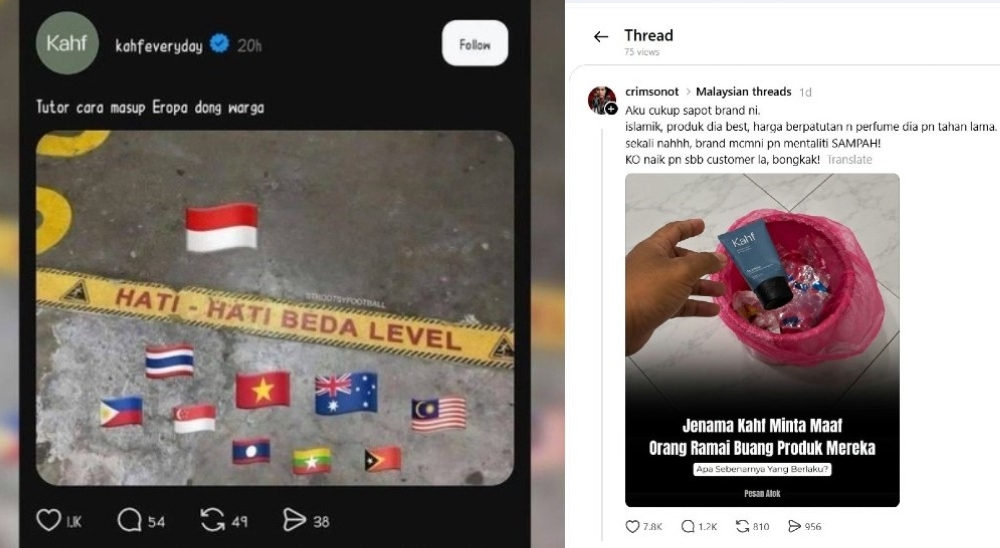
The recent controversy surrounding Indonesian men's grooming brand Kahf erupted after a football-themed meme celebrating Indonesia's victory in the Fifa Asean Cup was perceived as disrespectful by neighboring countries, particularly Malaysia.
The backlash resulted in calls for a boycott, driven by social media criticism and concerns over national pride.
Kahf has since deleted the post and issued an apology, acknowledging the need to rebuild trust through more than just words.
The incident has sparked broader discussions about brand accountability and the importance of cultural sensitivity in digital engagement.
KUALA LUMPUR, Oct 9 — What began as a football meme celebrating Indonesia’s victory in a regional tournament has turned into a social media controversy for Indonesian men’s grooming brand Kahf, sparking boycott calls in Malaysia and drawing celebrities into the debate.
The brand has since deleted the post and apologised, but the backlash has continued, with the dispute spilling beyond football into questions of national pride, respect and how brands engage with their audiences online.
Here’s what you need to know about the Kahf controversy.
The controversy began after Indonesia defeated Thailand on penalties to win the inaugural Fifa Asean Cup on October 5.
Following the victory, Kahf’s official Threads account, @kahfeveryday, shared a football-themed meme featuring the words “ HATI-HATI BEDA LEVEL ”, which translates to “Careful, different levels”.
The image placed the Indonesian flag above those of Malaysia, Thailand, Singapore and several other countries, accompanied by the caption “ Tutor cara masuk Eropa dong ”, loosely translated as “Teach us how to get into Europe”.
While apparently intended as football banter, the post drew criticism from social media users who interpreted it as belittling Indonesia’s regional neighbours.
The post quickly attracted criticism, particularly from Malaysian social media users who questioned why a brand selling products across the region would publish content they considered disrespectful.
What began as criticism of the meme soon escalated into calls to boycott Kahf products in Malaysia, with some users also targeting its sister brand, Wardah.
The hashtag #BoikotKahf began circulating online, while some users shared videos of themselves discarding Kahf products.
The controversy also prompted wider debate over the boundaries between sporting rivalry and national pride, and whether brands should engage in potentially provocative humour on their official social media accounts.
Kahf subsequently deleted the post and issued a public apology on Threads, acknowledging that the content was inappropriate and did not reflect the respect the brand sought to uphold.
The company took responsibility for the post and apologised for the disappointment it had caused.
It also acknowledged that rebuilding public trust would require more than words, pledging to demonstrate its commitment through its actions.
However, the apology did not immediately put an end to the criticism, with some Malaysian consumers questioning whether the response went far enough.
Malaysian and Indonesian celebrities weigh in
The controversy has also drawn reactions from public figures on both sides of the border, with opinions divided over the backlash and how the brand should move forward.
Indonesian actor Boy Hamzah attracted criticism after reportedly posting a video suggesting that Malaysia’s smaller population meant a boycott would have little impact on Kahf.
He also made controversial remarks about the countries’ shared history, including a claim that Malaysia would not exist without Indonesia.
In Malaysia, singer, actor and television host Alif Satar, who serves as a Kahf brand ambassador, distanced himself from the tone of the original post.
Alif said he did not support content that belittled any country or individual, stressing that Malaysia and its people deserved respect.
While acknowledging Kahf’s apology, he maintained that rebuilding trust required meaningful action rather than words alone.
He also urged people to respect differences of opinion without resorting to insults or putting others down.
Malaysian Muay Thai fighter and kickboxer Johan Ghazali, meanwhile, took a different stance, saying he would continue supporting Kahf despite the controversy.
Johan acknowledged that the brand had made a mistake but argued that it deserved an opportunity to move forward after apologising.
Most recently, Malaysian actor Sharnaaz Ahmad weighed in through an Instagram video yesterday, urging Malaysians and Indonesians not to allow online disagreements to undermine their longstanding ties.
Sharnaaz also criticised Kahf’s decision to use its business account for provocative football banter, while suggesting that the dispute should not be prolonged once an apology had been made.
He called for greater mutual respect between the two countries and cautioned against allowing disagreements over sport or social media posts to damage relationships within their entertainment industries.
Although Kahf has removed the offending post and apologised, the controversy continues to generate discussion about brand accountability, cultural sensitivities and the risks of using sporting rivalries to engage audiences online.
For Kahf, the immediate challenge is whether it can regain the confidence of Malaysian consumers who were offended by the post.
Whether its apology and subsequent actions will be enough to restore that trust remains to be seen.
From ‘kodokushi’ in Japan to Perak villages, lonely deaths rise as Malaysia’s ageing population grows
Nature in freefall: WWF says wildlife populations plunge 73pc since 1970
Palm‑sized hatchlings, big win: Malaysia’s green turtles defy global wildlife decline
Melaka High Court jails jobless man 15 years for killing friend, body found in burnt car
MetMalaysia sounds thunderstorm warning for KL, Selangor and eight states until 6pm
‘Respect our grief’: Irene Sofiya’s family hits back at social media rumours of suspect’s family visit
最近,印尼男士护理品牌 Kahf 因一张庆祝印尼在 FIFA 东盟杯中获胜的足球主题表情包而引发争议,邻国,特别是马来西亚,认为该表情包不尊重印尼。
此次事件引发了强烈反弹,导致抵制呼声四起,其主要原因是社交媒体上的批评和对民族自豪感的担忧。
卡夫随后删除了该帖子并发表了道歉声明,承认需要通过实际行动而非言语来重建信任。
该事件引发了关于品牌责任和数字互动中文化敏感性重要性的更广泛讨论。
吉隆坡,10 月 9 日——一个庆祝印尼在地区锦标赛中获胜的足球表情包,却演变成印尼男士护理品牌 Kahf 在社交媒体上的争议,引发了马来西亚的抵制呼声,并将名人卷入了这场辩论。
该品牌随后删除了帖子并道歉,但舆论反弹仍在继续,这场争议已经从足球领域蔓延到民族自豪感、尊重以及品牌如何与在线受众互动等问题上。
以下是关于卡夫争议你需要了解的内容。
这场争议始于10月5日,当时印度尼西亚在点球大战中击败泰国,赢得了首届国际足联东盟杯冠军。
胜利之后,Kahf 的官方 Threads 账号 @kahfeveryday 分享了一张以足球为主题的表情包,上面写着“HATI-HATI BEDA LEVEL”,翻译过来就是“小心,不同级别”。
图片将印度尼西亚国旗置于马来西亚、泰国、新加坡和其他几个国家的国旗之上,并配以标题“Tutor cara masuk Eropa dong”,大致翻译为“教我们如何进入欧洲”。
虽然该帖子显然意在就足球话题进行调侃,但却招致了社交媒体用户的批评,他们认为该帖子是在贬低印度尼西亚的地区邻国。
该帖子很快招致批评,尤其是来自马来西亚社交媒体用户的批评,他们质疑一个在整个地区销售产品的品牌为何会发布他们认为不尊重人的内容。
最初只是对该表情包的批评,但很快就升级为在马来西亚抵制 Kahf 产品的呼声,一些用户甚至将矛头指向了其姊妹品牌 Wardah。
#BoikotKahf 标签开始在网上流传,一些用户还分享了自己丢弃 Kahf 产品的视频。
这场争议也引发了更广泛的辩论,讨论体育竞争与民族自豪感之间的界限,以及品牌是否应该在其官方社交媒体账户上进行可能具有挑衅性的幽默活动。
随后,Kahf 删除了该帖子,并在 Threads 上发表了公开道歉,承认该内容不恰当,没有体现该品牌想要维护的尊重。
该公司承担了该帖子的责任,并为由此造成的失望表示歉意。
该公司也承认,重建公众信任需要的不仅仅是言辞,并承诺将通过行动来证明其承诺。
然而,道歉并没有立即平息批评,一些马来西亚消费者质疑这一回应是否足够。
马来西亚和印尼名人纷纷发表看法
这场争议也引起了两国公众人物的反应,对于由此引发的强烈反对以及该品牌应该如何继续发展,各方意见不一。
据报道,印尼演员博伊·哈姆扎发布了一段视频,暗示马来西亚人口较少,因此抵制卡夫(Kahf)不会产生太大影响,此举引发了批评。
他还就两国共同的历史发表了一些有争议的言论,包括声称如果没有印度尼西亚,马来西亚就不会存在。
在马来西亚,歌手、演员兼电视主持人阿里夫·萨塔尔(Alif Satar)是 Kahf 品牌的形象大使,他与原帖的语气划清界限。
阿利夫表示,他不支持贬低任何国家或个人的内容,并强调马来西亚及其人民理应受到尊重。
他承认卡夫的道歉,但坚持认为重建信任需要切实的行动,而不仅仅是言语。
他还敦促人们尊重不同的意见,不要诉诸侮辱或贬低他人。
与此同时,马来西亚泰拳选手兼踢拳选手约翰·加扎利则采取了不同的立场,表示尽管存在争议,他仍将继续支持卡夫。
约翰承认该品牌犯了错误,但他认为,道歉后该品牌应该有机会重新开始。
最近,马来西亚演员莎娜兹·艾哈迈德昨天通过 Instagram 视频表达了她的看法,敦促马来西亚人和印度尼西亚人不要让网络上的分歧破坏他们长期以来的关系。
沙尔纳兹还批评了卡夫利用其商业账户进行挑衅性足球玩笑的做法,同时建议既然已经道歉,就不应该再拖延这场争端。
他呼吁两国加强相互尊重,并告诫不要让体育或社交媒体帖子方面的分歧损害两国娱乐行业内部的关系。
尽管卡夫已经删除了引发争议的帖子并道歉,但这场争议仍在继续引发关于品牌责任、文化敏感性以及利用体育竞争来吸引在线受众的风险的讨论。
对于 Kahf 而言,眼下的挑战是能否重新赢得因该帖子而感到冒犯的马来西亚消费者的信任。
其道歉及后续行动是否足以恢复信任,还有待观察。
从日本的“孤尸”到霹雳州的村庄,随着马来西亚人口老龄化,孤独死亡的案例也在增加。
自然界急剧衰落:世界自然基金会称,自1970年以来,野生动物数量锐减73%。
手掌大小的幼龟破壳而出,意义重大:马来西亚绿海龟逆全球野生动物数量下降的趋势而存活
马六甲高等法院判处失业男子15年监禁,罪名是杀害朋友,尸体在烧毁的汽车内被发现。
马来西亚气象局对吉隆坡、雪兰莪州及其他八个州发布雷暴警告,持续至下午6点。
“尊重我们的悲痛”:艾琳·索菲亚的家人驳斥社交媒体上关于嫌疑人探望其家人的谣言