Budget 2027: Medical groups hail end to contract doctor system, enhanced public-private synergy but seek more on retention2027年预算案:医疗团体欢迎终止合同医生制度,加强公私合作,但要求在留住医生方面采取更多措施。
KUALA LUMPUR, Oct 9 — Healthcare stakeholders had mixed responses to the national health allocations announced in Budget 2027, with the Malaysian Medical Association (MMA)...
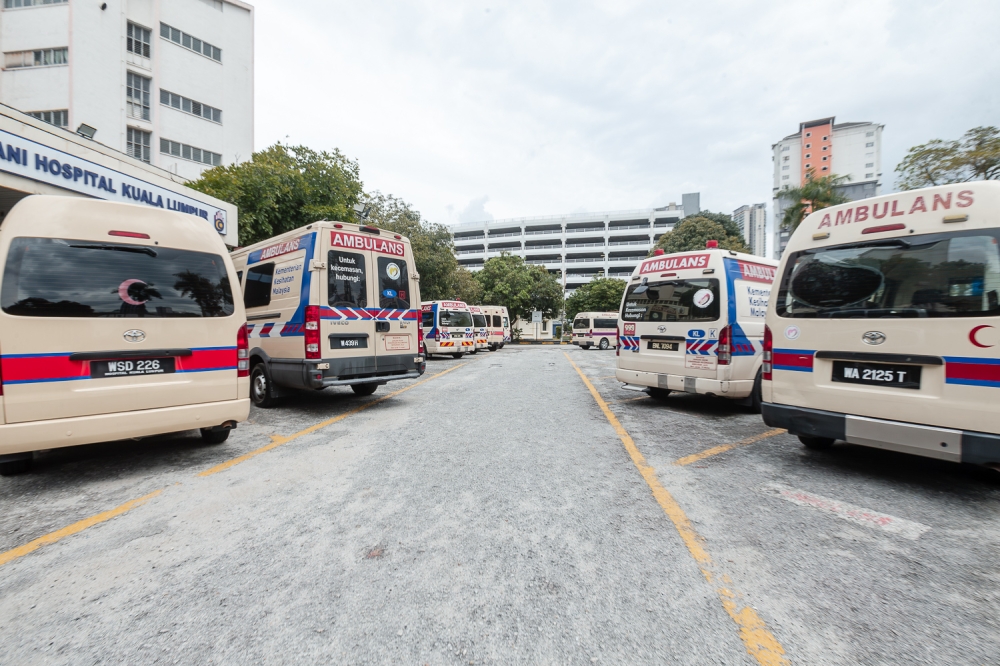
Healthcare stakeholders had mixed reactions to Budget 2027, with the MMA applauding the end of the contract doctor system and APHM supporting public-private cooperation.
MMA highlighted the need for a strategy to retain healthcare workers and emphasised strengthening primary care to tackle non-communicable diseases.
APHM welcomed initiatives to reduce patient waiting times and highlighted the potential benefits of faster licensing for Malaysia's medical tourism industry.
KUALA LUMPUR, Oct 9 — Healthcare stakeholders had mixed responses to the national health allocations announced in Budget 2027, with the Malaysian Medical Association (MMA) applauding the move to end the contract doctor system while highlighting critical gaps in workforce retention
The Association of Private Hospitals Malaysia (APHM), meanwhile, welcomed measures to boost public-private cooperation.
The Ministry of Health’s allocation has increased to RM47.7 billion, from RM46.5 billion in 2026.
MMA president Dr Sivanaesan Letchumanan described the commitment to end the contract doctor system as a major win for the profession, noting that over 9,000 contract doctors are set to be offered permanent positions in 2027.
“This is a significant milestone and addresses one of MMA’s longstanding calls. We commend the Government for taking this important step towards providing greater job security and career certainty for our young doctors,” he said.
He, however, noted that permanent appointments must be accompanied by a broader strategy to retain healthcare workers.
Malaysia faces a shortage of nearly 11,000 specialists, he said, with demand for specialist care expected to rise amid the growing burden of non-communicable diseases (NCDs) and an ageing population.
“We cannot afford to lose more specialists when we urgently need to train and retain more of them,” he said, calling for greater investment in specialist and subspecialist training, career progression, fair remuneration and better working conditions.
MMA also said more emphasis should be placed on strengthening primary healthcare to tackle NCDs.
The country’s network of private general practitioners remains underutilised and could play a greater role in prevention, early detection and long-term disease management, Sivanaesan said.
“Strengthening primary care is essential to reducing avoidable hospital admissions and easing pressure on specialist services,” he said.
Sivanaesan said the success of Budget 2027 should be measured not only by its allocations, but by improvements in patient care, waiting times, workforce retention and access to healthcare.
MMA reiterated its call for a national healthcare workforce distribution dashboard, providing transparent information on staffing levels and shortages at individual public hospitals and clinics. The data could support workforce planning and help direct resources to areas of greatest need, it said.
The association also noted that the RM1.2 billion allocation for hospital and clinic maintenance was unchanged from 2026, despite ageing facilities and growing maintenance needs.
It called for sufficient funding to address manpower shortages in Sabah and Sarawak, including better incentives and career opportunities, and reiterated its call to restore the previous percentage-based Regional Incentive Payment.
Meanwhile, APHM president Datuk Dr Kuljit Singh welcomed measures to reduce patient waiting times, including a RM200 million allocation for outsourcing patients to other hospitals and expanded sessional arrangements for private-sector specialists, with the maximum engagement period extended.
APHM also welcomed Budget 2027’s reflection of work on billing transparency, saying it looked forward to further discussions with stakeholders on implementation.
Dr Kuljit said the e-CKAPS portal, which is due to enable private healthcare facilities to be licensed entirely online from 2027, targets a reduction of up to 65 per cent in processing times.
He said faster licensing could also support Malaysia’s medical tourism sector.
“What matters most is not the size of the budget increase but the outcome for patients.
“APHM stands ready to work closely with the Health Ministry and other stakeholders to turn these measures into real improvements on the ground,” he said.
Four injured after lorry crashes into 11 vehicles in Shah Alam
MEF welcomes RM2,000 minimum wage, says MSME exemption gives smaller firms breathing room
Haze: 36 areas record unhealthy API readings, Pasir Gudang highest at 190
医疗保健利益相关者对 2027 年预算案的反应不一,MMA 对合同医生制度的结束表示赞赏,APHM 则支持公私合作。
MMA强调需要制定留住医护人员的策略,并强调要加强基层医疗以应对非传染性疾病。
APHM对减少病人等待时间的举措表示欢迎,并强调了加快马来西亚医疗旅游业审批流程的潜在好处。
吉隆坡,10月9日讯——医疗卫生利益相关者对2027年财政预算案中公布的国家医疗拨款反应不一。马来西亚医学协会(MMA)对终止合同医生制度表示赞赏,但同时也强调了医疗人员流失方面存在的关键问题。
与此同时,马来西亚私立医院协会(APHM)对加强公私合作的措施表示欢迎。
卫生部的拨款已从 2026 年的 465 亿令吉增加到 477 亿令吉。
马来西亚医学协会主席西瓦纳桑·莱楚马南博士将结束合同医生制度的承诺描述为该行业的重大胜利,并指出,2027 年将有超过 9000 名合同医生获得永久职位。
“这是一个重要的里程碑,回应了马来西亚医学协会长期以来的呼吁。我们赞扬政府采取这一重要举措,为我们的年轻医生提供更大的就业保障和职业发展前景,”他说。
但他指出,永久性任命必须辅以更广泛的留住医护人员的战略。
他表示,马来西亚面临近 11,000 名专科医生的短缺,随着非传染性疾病 (NCD) 负担加重和人口老龄化,对专科护理的需求预计将会上升。
“我们迫切需要培训和留住更多专家,因此我们不能再失去更多专家了,”他说道,并呼吁加大对专家和亚专家培训、职业发展、公平薪酬和更好工作条件的投资。
MMA还表示,应更加重视加强基层医疗保健,以应对非传染性疾病。
Sivanaesan表示,该国的私人全科医生网络仍未得到充分利用,可以在预防、早期发现和长期疾病管理方面发挥更大的作用。
他说:“加强基层医疗对于减少不必要的住院治疗和减轻专科服务的压力至关重要。”
Sivanaesan表示,衡量2027年预算案的成功与否,不仅要看其拨款额度,还要看患者护理、等待时间、员工留任率和医疗保健服务可及性的改善情况。
马萨诸塞州医学协会(MMA)再次呼吁建立全国医疗卫生人力分布信息平台,提供各公立医院和诊所人员配备水平和短缺情况的透明信息。该协会表示,这些数据有助于人力资源规划,并将资源导向最需要的领域。
该协会还指出,尽管医院和诊所设施老化且维护需求不断增长,但从 2026 年起,用于医院和诊所维护的 12 亿令吉拨款仍保持不变。
该组织呼吁提供充足的资金来解决沙巴和砂拉越的人力短缺问题,包括提供更好的激励措施和职业机会,并重申了恢复以前按百分比计算的区域奖励金的呼吁。
与此同时,马来西亚医院医师协会主席拿督库尔吉特·辛格博士对减少病人等待时间的措施表示欢迎,其中包括拨款 2 亿令吉将病人转诊到其他医院,以及扩大私营部门专家的轮班安排,延长最长服务期限。
APHM 也对 2027 年预算案中关于账单透明度工作的体现表示欢迎,并表示期待与利益相关者就实施事宜进行进一步讨论。
库尔吉特博士表示,e-CKAPS门户网站将于2027年起使私立医疗机构能够完全在线获得许可,目标是将处理时间缩短高达65%。
他表示,加快审批流程也有助于马来西亚的医疗旅游业发展。
“最重要的不是预算增加的幅度,而是患者的治疗效果。”
他说:“APHM 已做好准备与卫生部和其他利益相关者密切合作,将这些措施转化为实际的改善措施。”
莎阿南发生货车撞上11辆车的事故,四人受伤
马来西亚雇主联合会(MEF)欢迎2000令吉最低工资标准,并表示中小微企业豁免政策为小型企业提供了喘息空间。
雾霾:36个地区API读数不健康,巴西古当最高达190