Real inclusion: How Budget 2027 benefits ordinary Malaysians in giving them a share of the country’s wealth and success真正的包容:2027年财政预算案如何让普通马来西亚民众分享国家财富和成功,从而使他们受益。
KUALA LUMPUR, Oct 10 — Prime Minister and Finance Minister Datuk Seri Anwar Ibrahim tabled Budget 2027 yesterday, the fifth by his administration, appearing to shift greater...
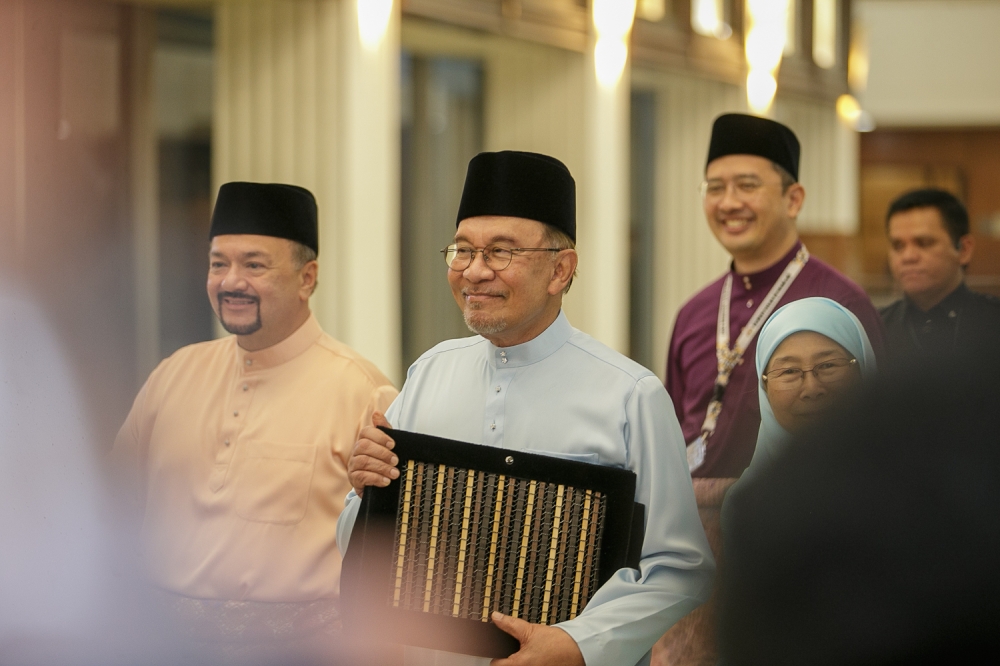
Prime Minister Datuk Seri Anwar Ibrahim presented the RM510 billion Budget 2027, focusing on boosting household incomes and ensuring economic gains benefit ordinary Malaysians amid rising living costs.
Budget 2027 includes measures such as increased minimum wages, expanded tax reliefs, and increased funding for education and healthcare, to support workers, families, and businesses.
Investments in infrastructure and public services continue, with significant allocations for public transport, rural development, housing, and disaster management to enhance national connectivity and resilience.
KUALA LUMPUR, Oct 10 — Prime Minister and Finance Minister Datuk Seri Anwar Ibrahim tabled Budget 2027 yesterday, the fifth by his administration, appearing to shift greater focus towards ensuring that ordinary Malaysians benefit from economic growth and reforms pursued over the past four years.
The national budget totalling RM510 billion, up from RM470 billion in Budget 2026, was tabled amid elevated global fuel prices and Malaysia’s ageing population, and could be the final one before the 16th General Election (GE16).
After years of focusing on economic stability, fiscal discipline and reforms, Budget 2027 appears to place greater emphasis on ensuring that the gains from these efforts are felt by ordinary Malaysians in their daily lives, with living costs still pinching households.
To this end, Anwar has sought to boost household incomes through higher wages and cash aid, more support for businesses and stronger safety nets through tax reliefs and incentives in Budget 2027.
Reforms remain high on his administration’s agenda, with Anwar promising further measures to tighten oversight of government procurement and the management of public funds in 2027.
Here’s a snapshot of what makes Budget 2027:
Cash assistance and cost of living
The government will increase the allocation for Sumbangan Tunai Rahmah (STR) and Sumbangan Asas Rahmah (SARA) to RM16 billion, from RM15 billion.
STR recipients: All recipients will receive SARA of up to RM150 a month, or RM1,800 a year, benefiting up to nine million people.
Other adults: Malaysians aged 18 and above who are not STR recipients will receive Sara Madani of RM100 twice in 2027 — before Aidilfitri and ahead of the 70th anniversary of Merdeka.
Cheaper groceries: Fresh produce will be offered at prices up to 30 per cent lower at Jualan Rahmah Madani and Agro Madani sales
Rural supplies: RM250 million will be allocated to expand the distribution of essential goods to rural and interior areas, including six new locations.
Tax relief and take-home pay
Individual income tax relief will increase from RM9,000 to RM12,000, while tax rates will be lowered by one percentage point for selected income brackets.
The tax rate for income between RM70,000 and RM100,000 will fall to 18 per cent.
The rate for income between RM100,000 and RM150,000 will fall to 24 per cent.
The tax rate for income above RM1 million will be set at 30 per cent.
The government expects the changes to increase disposable income by up to RM1,600 for about five million taxpayers.
Tax relief will also be expanded to cover postnatal care, care expenses for parents and grandparents, sports shoes, tuition for children, subscriptions to artificial intelligence services, vaccinations and adoption costs for pets from registered centres.
Workers, minimum wage and gig workers
The minimum wage will increase from RM1,700 to RM2,000 a month from June 2027, affecting more than four million workers.
Small and medium enterprises with annual sales below RM50 million will be given time to adjust their business models.
The government also announced a starting minimum wage of RM2,500 a month for semi-skilled occupations and graduates.
Government-linked investment companies and government-linked companies will raise their living-wage benchmark from RM3,100 to RM3,400 a month, benefiting about 230,000 workers.
For e-hailing and p-hailing workers, the government and Grab will jointly fund a RM160 million package from 2027 to improve net income and welfare.
This package is expected to increase median-level e-hailing drivers’ net income by up to RM227 a month and p-hailing riders’ income by up to RM100 a month. It also includes matching contributions to Social Security Organisation (Perkeso) schemes, with the government’s contribution rising from 35 per cent to 50 per cent if platform companies also contribute.
E-hailing and p-hailing workers will also be eligible for Employees Provident Fund (EPF) matching contributions of up to RM600 a year or RM6,000 over their lifetime.
All Malaysian citizens will also be registered automatically as EPF members when they turn 18.
Students and families
The government will increase several forms of education assistance and expand support for students.
School aid: Bantuan Awal Persekolahan or early schooling assistance will increase from RM150 to RM200 per pupil. A family with four school-going children will receive RM800.
University travel: FlySiswa Madani air-ticket assistance will increase from RM400 to RM500 for more than 60,000 public university students.
Form Six: Students will receive a living allowance of RM2,500, matching the allowance for matriculation students and benefiting about 90,000 students.
PTPTN loans: Borrowers earning RM2,500 or less a month can defer repayments in 2027. Those earning between RM2,500 and RM3,000 will pay a minimum of RM50 a month. Borrowers without arrears who repay regularly will receive a 10 per cent discount.
Affordable meals: Dapur Siswa Madani will be extended to polytechnics and teacher education institutes, with RM20 million for cooking equipment, food contributions and RM5 meals.
Student housing: The first phase of Universiti Malaya’s student residence is scheduled for completion in 2031, benefiting 10,000 students. The Retirement Fund Inc (KWAP) will invest RM750 million in Vista Kampus housing at six universities, including UniSZA and UiTM.
The government will also allocate RM800 million for higher education infrastructure, including lecture rooms, student residences and replacement of ageing equipment.
Schools, hospitals and public services
Education and healthcare remain among the largest areas of federal spending.
The Education Ministry will receive nearly RM69 billion, up from RM66.2 billion this year, Health Ministry will receive RM47.7 billion, the Higher Education Ministry will get RM19.1 billion and the Home Affairs and Defence ministries will each receive RM22 billion.
For schools, the allocation to repair and maintain all types of schools will double from RM1 billion to RM2 billion — am allocation that includes repairs for national schools, Chinese national-type schools, Tamil national-type schools and registered rakyat religious schools, tahfiz institutions and pondok schools.
A further RM1.3 billion will be provided to upgrade 682 dilapidated schools, particularly in Sabah and Sarawak.
The government also expects 3,500 additional classrooms to be completed by the end of this year to accommodate more Year One pupils.
For public healthcare, RM1.2 billion will be allocated to maintain and repair hospitals and clinics, while more than RM770 million will go towards modern medical equipment, including 400 new ambulances and upgraded haemodialysis facilities.
Nine new healthcare facilities will be built, including a specialist complex and day-treatment centre at Hospital Sultanah Aminah in Johor, a specialist dental centre in Kuching, and integrated health complexes in Gerik, Perak, and Rembau, Negeri Sembilan.
More than 9,000 contract doctors will be made permanent medical officers at public healthcare facilities next year. Paramedics and nurses will receive RM200 post-basic incentives monthly while Air Health Service staff will receive RM100 monthly.
The government will also introduce the MediAsas affordable medical plan in January 2027.
EPF members aged below 55 can pay their premiums using their Akaun Sejahera.
Meanwhile, small and medium enterprises (SMEs) with fewer than 75 employees will receive a first-year premium subsidy of RM200 per worker, capped at 50 workers per company.
The scheme is expected to benefit up to 200,000 workers.
PeKa B40 will continue offering free health screenings, medical equipment assistance and cancer-treatment incentives for STR recipients and their spouses aged 40 and above, with RM80 million allocated.
MySalam will also continue, while the Medical Aid Fund will increase from RM40 million to RM60 million.
Help for senior citizens and people with disabilities
Welfare assistance for senior citizens will receive RM1.3 billion, benefiting nearly 200,000 recipients.
The monthly allowance for caring for bedridden people with disabilities and the chronically ill will increase from RM500 to RM600, while the income threshold for the disabled workers’ allowance will increase from RM1,700 to RM2,000.
Anwar also reduced the service tax rate for elderly care services from eight to six per cent, with a full exemption on fees up to RM96,000 annually. Some 8,000 caregivers will also be trained through an allocation of RM40 million under HRD Corp.
Pupils with special educational needs will also receive a higher allowance of RM200, while the teaching incentive for special education teachers will increase from RM250 to RM300 a month.
Two new Permata Kurnia centres — a Malaysian early intervention and education programme for children with autism — will be built in Melaka and Pahang, alongside more than 130 new Tabika Tunas Istimewa classes in rural areas.
Public transport and connectivity
Public transport users will benefit from continued subsidised passes and investments to improve services.
My50: The pass will continue for 300,000 Prasarana bus and rail users in the Klang Valley.
MyKomuter50: A new pass will benefit 40,000 KTM Komuter users, with average savings of up to RM160 a month.
Free passes: About 360,000 school pupils, people with disabilities and children below six will receive free passes.
Train services: The government will acquire 42 new train sets for ETS and KTM Komuter services. Prasarana will invest more than RM3.4 billion in a comprehensive rail-service recovery programme.
Bus services: RM270 million will be allocated to improve bus services in major cities, including links to 15 East Coast stations ahead of the East Coast Rail Link’s operation.
The first phase of the ECRL, from Kota Bharu to the Gombak Integrated Transport Terminal, is expected to begin operating in December 2026, while a bus station will also be built at the Kota Bharu ECRL station.
Roads, water, electricity and internet
Rural communities will receive RM3.3 billion for basic infrastructure, including roads, community facilities, clean water and electricity. The allocation for rural roads will rise to RM2.3 billion.
The National Non-Revenue Water programme will receive RM2.5 billion to replace 1,900km of ageing critical pipes.
Under the Jendela connectivity initiative, the government plans to extend 4G coverage to all Orang Asli villages, improve internet connectivity along 7,000km of roads and 1,700km of railway lines, and implement the Madani Undersea Cable project.
Road projects in Sabah and Sarawak will receive RM3.3 billion, while another RM350 million will be set aside for federal road maintenance by small contractors in both states.
Sabah will receive RM18.7 billion in federal allocation, up from RM17.6 billion this year, while Sarawak will receive RM16.2 billion, up from RM15.1 billion.
In Sabah, RM204 million will be spent on installing STATCOM systems at the Dam Road and Segaliud substations, while the Southern Link transmission line project will continue.
The federal government will also provide RM600 million to ensure electricity supply continuity in Sabah.
Flood protection and disaster aid
Flood mitigation projects will continue in Kuching, Sarawak, while the second phase of Sungai Golok in Kelantan and Sungai Kemaman in Terengganu.
Nearly RM320 million will be allocated to repair and upgrade slopes, drains and monsoon drains under local authorities, while the National Disaster Management Agency will receive RM260 million.
Financial assistance to repair homes damaged by disasters will increase from RM5,000 to RM10,000.
Housing and public amenities
Nearly RM1 billion will be allocated for Rumah Mesra Rakyat and Residensi Rakyat housing projects. Four new housing projects will be implemented in Kulai, Johor; Nilai, Negeri Sembilan; Paya Rumput, Melaka; and Lembah Pertang, Terengganu.
The Syarikat Jaminan Kredit Perumahan will provide housing financing guarantees of up to RM20 billion, aimed at helping 80,000 borrowers.
In Kuala Lumpur, the Dewan Bandaraya Kuala Lumpur (DBKL) will set aside RM400 million to create 120 acres of new green spaces, restore existing parks and upgrade public facilities and housing.
A 100-acre leased site in Bukit Kiara will be gazetted as a Federal Park.
DBKL will also build 22km of covered pedestrian walkways linking places including the National Mosque, Dataran Merdeka and Pasar Seni, as well as residential areas with shops, schools, clinics and public transport.
Civil servants and frontline services
The government has allocated RM2.3 billion for public servants’ quarters.
New army family housing will be built in Skudai, Johor, alongside quarters in Langkap, Perak, and Papar, Sabah, benefiting about 900 personnel.
Allowances for volunteers in Rela, volunteer fire brigades, volunteer police and civil defence will rise to RM9 an hour for volunteers and RM10.80 an hour for supervisors.
The RM339 million allocation is expected to benefit about 50,000 volunteers.
Set on fire, thrown from cars: Iran’s women stunt performers break barriers
Civil servants to get RM1,500 aid, pensioners RM750 under Budget 2027
Rehda backs Budget 2027 housing measures but calls for more action on rising costs
首相拿督斯里安华·易卜拉欣提出了2027年财政预算案,总额达5100亿令吉,重点在于提高家庭收入,确保经济增长惠及不断上涨的生活成本下的普通马来西亚民众。
2027 年预算案包括提高最低工资、扩大税收减免、增加教育和医疗保健资金等措施,以支持工人、家庭和企业。
对基础设施和公共服务的投资仍在继续,其中公共交通、农村发展、住房和灾害管理方面投入了大量资金,以增强国家连通性和韧性。
吉隆坡,10 月 10 日——首相兼财政部长拿督斯里安华·易卜拉欣昨日提交了 2027 年财政预算案,这是他领导的政府提出的第五份财政预算案,似乎更加注重确保普通马来西亚民众能够从过去四年推行的经济增长和改革中受益。
国家预算总额为 5100 亿令吉,高于 2026 年预算的 4700 亿令吉。此预算是在全球燃油价格高企和马来西亚人口老龄化的背景下提出的,并且可能是第 16 届全国大选 (GE16) 之前的最后一个预算。
经过多年对经济稳定、财政纪律和改革的关注,2027 年财政预算案似乎更加注重确保普通马来西亚人在日常生活中感受到这些努力带来的成果,因为生活成本仍然给家庭带来压力。
为此,安华在 2027 年财政预算案中寻求通过提高工资和现金援助、加大对企业的支持以及通过税收减免和激励措施加强社会保障来提高家庭收入。
改革仍然是安华政府的首要议程,他承诺将在 2027 年采取进一步措施,加强对政府采购和公共资金管理的监督。
以下是2027年预算案的概要:
现金援助和生活成本
政府将把Sumbangan Tunai Rahmah(STR)和Sumbangan Asas Rahmah(SARA)的拨款从150亿令吉增加至160亿令吉。
STR 受益人:所有受益人每月将获得最高 150 令吉的 SARA,或每年 1800 令吉,最多可惠及 900 万人。
其他成年人:18 岁及以上的马来西亚公民,如果不是 STR 受益人,将在 2027 年两次收到 100 令吉的 Sara Madani——一次在开斋节之前,一次在独立 70 周年纪念日之前。
更便宜的食品杂货:在 Jualan Rahmah Madani 和 Agro Madani 的销售活动中,新鲜农产品的价格将降低高达 30%。
农村物资供应:将拨款 2.5 亿令吉,扩大向农村和内陆地区分发必需品的范围,包括六个新的地点。
税收减免和实际到手工资
个人所得税减免额将从9000令吉增加到12000令吉,同时部分收入阶层的税率将降低一个百分点。
年收入在7万令吉至10万令吉之间的税率将降至18%。
年收入在10万令吉至15万令吉之间的税率将降至24%。
收入超过100万令吉的部分,税率将设定为30%。
政府预计这些改革措施将使约五百万纳税人的可支配收入增加至多 1600 令吉。
税收减免范围还将扩大到产后护理、父母和祖父母的护理费用、运动鞋、儿童学费、人工智能服务订阅费、疫苗接种费以及从注册中心领养宠物的费用。
工人、最低工资工人和零工工人
从2027年6月起,最低工资将从每月1700令吉提高到2000令吉,这将影响超过400万工人。
年销售额低于 5000 万令吉的中小型企业将有时间调整其商业模式。
政府还宣布,半熟练工人和毕业生的最低起薪为每月2500令吉。
政府关联投资公司和政府关联公司将把最低生活工资标准从每月 3100 令吉提高到 3400 令吉,约有 23 万名工人将从中受益。
对于网约车和私家车司机,政府和 Grab 将从 2027 年起共同出资 1.6 亿令吉,以提高他们的净收入和福利。
这项方案预计将使网约车司机的中位数月净收入增加至多227令吉,网约车乘客的收入增加至多100令吉。方案还包括对社会保障机构(Perkeso)计划的配套缴款,如果平台公司也缴款,政府的缴款比例将从35%提高到50%。
网约车和出租车司机也将有资格获得雇员公积金 (EPF) 配比缴款,每年最高可达 600 令吉,终身最高可达 6000 令吉。
所有马来西亚公民在年满 18 岁时也将自动注册成为公积金 (EPF) 会员。
学生和家庭
政府将增加多种形式的教育援助,并扩大对学生的支持。
学校补助:学前教育补助金(Bantuan Awal Persekolahan)将从每位学生150令吉增加到200令吉。一个有四个学龄子女的家庭将获得800令吉。
大学旅行:FlySiswa Madani 航空公司的机票补贴将从 400 马币增加到 500 马币,惠及超过 6 万名公立大学学生。
中六:学生将获得 2,500 令吉的生活津贴,与大学预科生的津贴相同,约有 90,000 名学生受益。
PTPTN贷款:月收入2500令吉或以下的借款人可延期至2027年还款。月收入在2500令吉至3000令吉之间的借款人每月至少需支付50令吉。无拖欠且按时还款的借款人可享受10%的折扣。
平价餐食:Dapur Siswa Madani 将推广至理工学院和师范学院,拨款 2000 万令吉用于烹饪设备、食品捐赠和 5 令吉餐食。
学生宿舍:马来亚大学学生宿舍一期工程预计将于2031年竣工,届时将惠及1万名学生。退休基金公司(KWAP)将在包括UniSZA和UiTM在内的六所大学投资7.5亿令吉用于Vista Kampus学生宿舍项目。
政府还将拨款8亿令吉用于高等教育基础设施建设,包括教室、学生宿舍和更换老旧设备。
学校、医院和公共服务
教育和医疗保健仍然是联邦政府支出最大的领域之一。
教育部将获得近690亿令吉的拨款,高于今年的662亿令吉;卫生部将获得477亿令吉;高等教育部将获得191亿令吉;内政部和国防部将分别获得220亿令吉。
对于学校而言,用于维修和维护各类学校的拨款将从 10 亿令吉增加到 20 亿令吉——该拨款包括国民学校、华文国民型学校、淡米尔国民型学校以及注册的拉基亚特宗教学校、塔赫菲兹机构和蓬多克学校的维修费用。
政府还将拨款 13 亿令吉用于升级 682 所破旧学校,尤其是在沙巴和砂拉越的学校。
政府还预计到今年年底将建成 3500 间额外的教室,以容纳更多的一年级学生。
在公共医疗保健方面,将拨款 12 亿令吉用于维护和维修医院和诊所,同时将拨款超过 7.7 亿令吉用于购置现代化医疗设备,包括 400 辆新救护车和升级血液透析设施。
将新建九个医疗保健设施,包括柔佛州苏丹娜阿米娜医院的专科综合体和日间治疗中心、古晋的专科牙科中心,以及霹雳州宜力和森美兰州林茂的综合健康中心。
明年将有超过9000名合同医生转为公立医疗机构的正式医务人员。护理人员和医护人员每月将获得200令吉的基本津贴,而航空医疗服务人员每月将获得100令吉。
政府还将于 2027 年 1 月推出 MediAsas 平价医疗计划。
55岁以下的EPF会员可以使用他们的Akaun Sejahera账户缴纳保费。
同时,员工人数少于 75 人的中小企业 (SME) 将获得每位员工第一年 200 令吉的保费补贴,每家公司最多可补贴 50 名员工。
该计划预计将惠及多达 20 万名工人。
PeKa B40 将继续为 40 岁及以上的 STR 受益人及其配偶提供免费健康检查、医疗设备援助和癌症治疗奖励,并为此拨款 8000 万令吉。
MySalam 也将继续运营,同时医疗援助基金将从 4000 万令吉增加到 6000 万令吉。
为老年人和残疾人士提供帮助
政府将拨款13亿令吉用于老年人福利援助,近20万名老年人将受益。
照顾卧床不起的残疾人和慢性病患者的每月津贴将从 500 令吉增加到 600 令吉,而残疾工人津贴的收入门槛将从 1700 令吉增加到 2000 令吉。
安华还将老年护理服务的服务税率从8%降至6%,每年最高9.6万令吉的费用完全免税。此外,人力资源发展机构(HRD Corp)还将拨款4000万令吉,用于培训约8000名护理人员。
有特殊教育需要的学生也将获得更高的津贴,每月200令吉;同时,特殊教育教师的教学奖励将从每月250令吉增加到300令吉。
马来西亚将在马六甲和彭亨州新建两座 Permata Kurnia 中心(一项针对自闭症儿童的早期干预和教育计划),同时在农村地区开设 130 多个新的 Tabika Tunas Istimewa 课程。
公共交通和交通连接
公共交通用户将受益于持续的补贴车票和用于改善服务的投资。
My50:巴生谷地区 30 万名 Prasarana 巴士和铁路乘客将继续享受该通行证。
MyKomuter50:一项新的通行证将使 40,000 名 KTM Komuter 用户受益,平均每月可节省高达 160 令吉。
免费通行证:约有 36 万名学生、残疾人和 6 岁以下儿童将获得免费通行证。
火车服务:政府将为ETS和KTM通勤铁路购置42列新列车。Prasarana公司将投资超过34亿令吉,用于一项全面的铁路服务复苏计划。
巴士服务:将拨款 2.7 亿令吉用于改善主要城市的巴士服务,包括在东海岸铁路开通之前连接东海岸的 15 个车站。
东海岸铁路 (ECRL) 第一阶段,从哥打巴鲁到鹅唛综合交通枢纽,预计将于 2026 年 12 月开始运营,同时还将在哥打巴鲁 ECRL 站建造一个公交车站。
道路、水、电和互联网
农村社区将获得33亿令吉用于基本基础设施建设,包括道路、社区设施、清洁用水和电力。其中,农村道路的拨款将增至23亿令吉。
国家非收入水计划将获得 25 亿令吉的拨款,用于更换 1900 公里的老旧关键管道。
根据 Jendela 连接计划,政府计划将 4G 网络覆盖范围扩大到所有原住民村庄,改善 7000 公里公路和 1700 公里铁路沿线的互联网连接,并实施 Madani 海底光缆项目。
沙巴和砂拉越的道路建设项目将获得 33 亿令吉的拨款,另有 3.5 亿令吉将拨给这两个州的小型承包商,用于联邦道路的维护。
沙巴州将获得187亿令吉的联邦拨款,高于今年的176亿令吉;砂拉越州将获得162亿令吉的联邦拨款,高于去年的151亿令吉。
在沙巴,将花费 2.04 亿令吉在 Dam Road 和 Segaliud 变电站安装 STATCOM 系统,而南部连接输电线路项目将继续进行。
联邦政府还将提供6亿令吉,以确保沙巴州的电力供应持续稳定。
防洪和灾害援助
砂拉越古晋的防洪工程将继续进行,吉兰丹果乐河和登嘉楼州甘马挽河的第二期工程将继续进行。
近 3.2 亿令吉将用于修复和升级地方政府管辖范围内的斜坡、排水沟和雨水排水沟,而国家灾害管理机构将获得 2.6 亿令吉。
用于修复因灾害受损房屋的财政援助将从5000令吉增加到10000令吉。
住房和公共设施
近10亿令吉将拨款用于Rumah Mesra Rakyat和Residensi Rakyat住房项目。柔佛州古来将实施四个新住房项目;森美兰州汝来;马六甲巴耶鲁普特;以及登嘉楼州 Lembah Pertang。
Syarikat Jaminan Kredit Perumahan 将提供高达 200 亿令吉的住房融资担保,旨在帮助 8 万名借款人。
在吉隆坡,吉隆坡市政局(DBKL)将拨出 4 亿令吉,用于创建 120 英亩的新绿地,修复现有公园,并升级公共设施和住房。
位于武吉加拉的100英亩租赁地将被划定为联邦公园。
吉隆坡市政局还将修建 22 公里的有顶人行道,连接国家清真寺、独立广场和中央艺术坊等场所,以及设有商店、学校、诊所和公共交通设施的住宅区。
公务员和一线服务人员
政府已拨款23亿令吉用于公务员宿舍建设。
新的军人家庭住房将在柔佛州士姑来、霹雳州冷甲和沙巴州巴帕尔建造宿舍,使约 900 名军人受益。
志愿警卫队、志愿消防队、志愿警察和民防队的志愿者津贴将提高至每小时 9 令吉,主管人员的津贴将提高至每小时 10.80 令吉。
预计这笔 3.39 亿令吉的拨款将使约 5 万名志愿者受益。
被点燃、从车上扔下:伊朗女特技演员打破重重障碍
根据2027年财政预算案,公务员将获得1500令吉的援助金,退休人员将获得750令吉的援助金。
马来西亚房地产发展商会(Rehda)支持2027年财政预算案中的住房措施,但呼吁采取更多行动应对不断上涨的成本。