An MB without excos arguably is unconstitutional — Hafiz Hassan没有执行委员会的市政委员会可以说是违宪的——哈菲兹·哈桑
OCTOBER 10 — By a notification in the State Gazette, Yang di-Pertuan Besar of Negeri Sembilan Tuanku Muhriz Tuanku Munawir revoked the appointments of ten state executive...
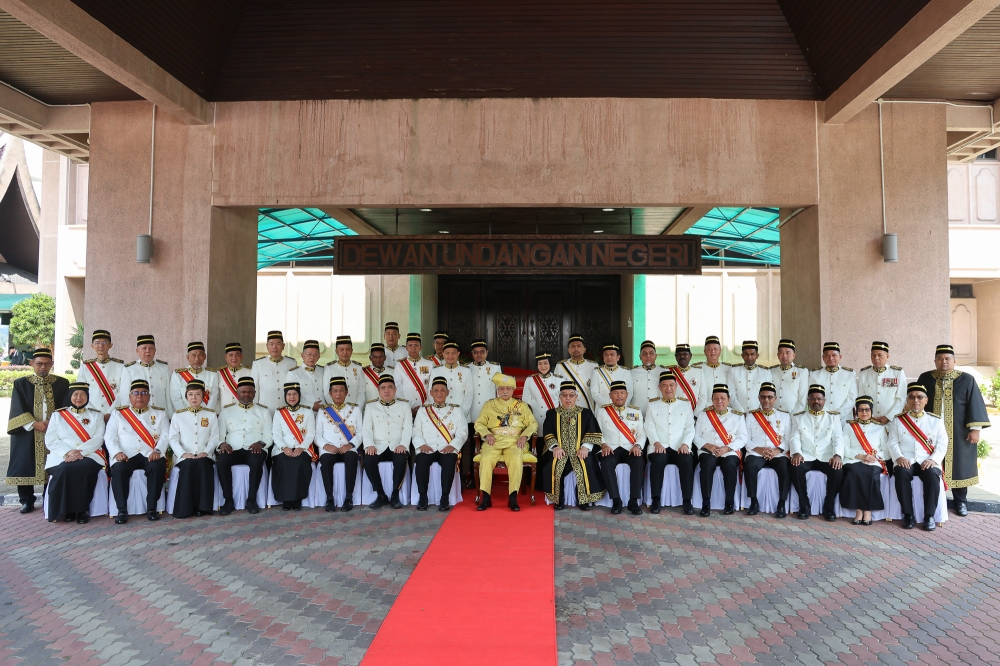
On October 10, a State Gazette notification announced the revocation of ten state executive councillors by Negeri Sembilan's Yang di-Pertuan Besar Tuanku Muhriz Tuanku Munawir due to breaches of their oath of loyalty, with the decision deemed lawful under Article 38(5) of the State Constitution until potentially overturned by the High Court.
Attorney General Tan Sri Mohd Dusuki Mokhtar clarified that the ten officials are only barred from exco rooms, not their legislative duties.
The article stresses the constitutional necessity for an Executive Council comprising a Menteri Besar and at least four excos, underscoring concerns about governance under such circumstances.
OCTOBER 10 — By a notification in the State Gazette, Yang di-Pertuan Besar of Negeri Sembilan Tuanku Muhriz Tuanku Munawir revoked the appointments of ten state executive councillors (excos) for breaching their oath of loyalty.
The gazette says the revocation takes effect on September 20 and is made under Article 38(5) of the Laws of the Constitution of Negeri Sembilan 1959 (State Constitution), which says an exco member other than the Menteri Besar (MB) holds office at the Ruler’s pleasure.
Such a decision is said to be cloaked with a presumption of legality — that is, the decision is legal unless a case of illegality, among others, has been made out.
In simple words the revocation is legal until the High Court decides otherwise.
That is why Attorney General Tan Sri Mohd Dusuki Mokhtar said the ten are only barred from entering the exco rooms and not from state government buildings in their capacity as elected representatives and carry out their duties as assembly persons, particularly to attend to matters involving their constituents.
That is also why I wrote that Datuk Ismail Lasim is an MB without excos.
Like a general without an army.
Like a captain without a crew.
Now, if a Ruler must act on advice, which is a constitutional imperative, then a state must have excos.
It must be an MB and at least four excos.
That is a constitutional imperative as well — by reason of Article 38(1) and Article 38(2) of the State Constitution.
The former is a 7-word provision that reads as follows:
“The Ruler shall appoint an Executive Council.”
The latter is much more elaborate and reads as follows:
“The Executive Council shall be appointed as follows, that is to say —
(a) the Ruler shall first appoint as Menteri Besar to preside over the Executive Council a member of the Legislative Assembly who in His judgment is likely to command the confidence of the majority of the members of the Assembly; and
(b) He shall on the advice of the Menteri Besar appoint not more than ten nor less than four Enactment other members from among the members of the Legislative Assembly,
but if an appointment is made while the Legislative Assembly is dissolved a person who was a member of the last Legislative Assembly may be appointed but shall not continue to hold office after the first sitting of the next Legislative Assembly unless he is a member thereof.”
To put it simply, first there must be an Executive Council. Second the Executive Council must consist of an MB and at least four excos.
The architects or framers of the Federal and State Constitutions made it imperative that there shall be a federal Cabinet and state Executive Councils.
Otherwise, all ministerial or executive powers will be devolved to a federal prime minister or a state MB.
It cannot be the intention of the constitutional framers that such powers are devolved to one man.
A prime minister without a Cabinet is arguably unconstitutional .
So too an MB without excos.
* This is the personal opinion of the writer or publication and does not necessarily represent the views of Malay Mail.
Malaysia must make haze polluters pay — Shahrul Mizan Ismail
Fluent by AI, or fluent by habit? — Suarnamughy Maran
Haze must be handled with sheer haste in South-east Asia — Phar Kim Beng
DPM Zahid wants tahfiz graduates equipped for careers in technology, engineering and medicine
Air quality acceptable for now, Kedah schools to open as usual tomorrow
Lights on: Works Department to extend streetlight operating hours during haze
10 月 10 日,森美兰州最高元首端姑慕赫里兹·端姑慕纳维尔发布州政府公报,宣布撤销十名州行政议员的职务,理由是他们违反了效忠誓言。该决定根据州宪法第 38(5) 条被认为是合法的,直到高等法院可能推翻为止。
总检察长丹斯里莫哈末杜苏基莫克塔尔澄清说,这十名官员只是被禁止进入行政会议厅,而不是被禁止履行立法职责。
文章强调了设立由州务大臣和至少四名行政议员组成的行政委员会的宪法必要性,并着重指出在这种情况下对治理的担忧。
10 月 10 日 — 森美兰国家元首在国家公报上发布通知,撤销了 10 名违反忠诚誓言的州行政议员的任命。
公告称,撤销将于9月20日生效,依据1959年森美兰州宪法第38(5)条(州宪法)作出,该条规定,除州务大臣(Menteri Besar)以外的行政议员由统治者决定其任期。
据说这样的决定带有合法性推定——也就是说,除非有违法行为等情况发生,否则该决定是合法的。
简而言之,在高等法院另行裁定之前,撤销是合法的。
因此,总检察长丹斯里莫哈末杜苏基莫克塔尔表示,这十人只是被禁止进入行政会议厅,而不是以民选代表的身份进入州政府大楼,他们仍然可以履行议员的职责,特别是处理涉及选民的事务。
这也是我为什么写 Datuk Ismail Lasim 是一位没有执委的州务大臣的原因。
就像一个没有军队的将军。
就像一个没有船员的船长。
如果统治者必须根据建议行事(这是宪法规定的义务),那么一个国家就必须有行政委员会。
它必须是MB,并且至少有四辆Exco。
这也是宪法的必然要求——依据是州宪法第 38(1) 条和第 38(2) 条。
前者是一条仅有7个字的条款,内容如下:
“统治者应任命一个行政委员会。”
后者内容更为详尽,具体如下:
“行政委员会的任命方式如下,即——
(甲)统治者应首先任命一名立法议会议员担任行政会议主席,该议员应由统治者认为能够获得立法议会多数议员的信任;
(b)他应根据州务大臣的建议,从立法议会议员中任命不少于四名、不超过十名的其他成员。
但是,如果在立法议会解散期间进行任命,则可以任命上一届立法议会的成员,但除非他是下一届立法议会的成员,否则不得在下一届立法议会第一次会议后继续担任该职务。
简而言之,首先必须设立执行委员会。其次,执行委员会必须由一名理事会成员和至少四名执行委员组成。
联邦宪法和州宪法的设计者们明确规定,必须设立联邦内阁和州行政委员会。
否则,所有部长或行政权力将下放给联邦总理或州部长。
宪法制定者的本意绝不可能是将这样的权力下放给一个人。
没有内阁的首相可以说是违宪的。
一辆没有外挂电脑的奔驰也是如此。
* 这是作者或刊物的个人观点,并不一定代表《马来邮报》的观点。
马来西亚必须让烟霾污染者付出代价——Shahrul Mizan Ismail
是人工智能造就的流利,还是习惯造就的流利?——苏尔纳穆吉·马兰
东南亚必须迅速应对雾霾问题——法金本
副总理扎希德希望接受过伊斯兰教经学院教育的毕业生能够胜任技术、工程和医学领域的工作。
目前空气质量尚可接受,吉打州学校明日照常开学。
亮灯:工程部门将在雾霾期间延长路灯运行时间