History must inspire, not remain a ‘silent witness’, says National Archives chief as Malaysia marks 69 years of independence马来西亚国家档案馆馆长表示,历史应该激励人心,而不是做一个“沉默的见证者”。值此马来西亚独立69周年之际,国家档案馆馆长如是说。
KUALA LUMPUR, Sept 6 — As Malaysia commemorates 69 years of Merdeka, the National Archives of Malaysia (ANM) said history must be more than a record of the past, serving instead...
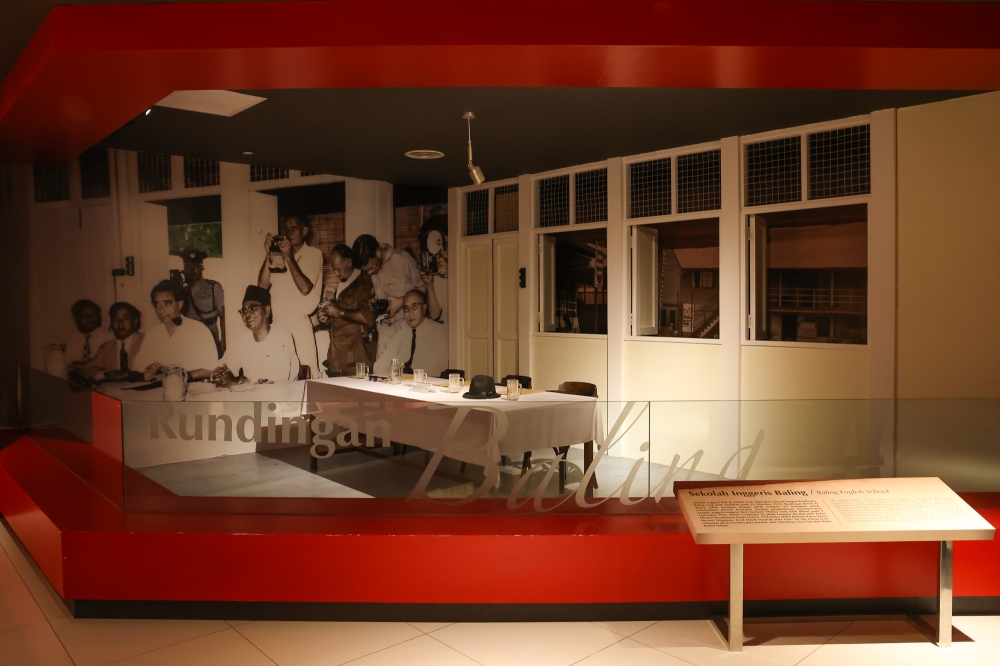
In celebration of Malaysia's 69th Merdeka, the National Archives of Malaysia (ANM) emphasizes history should transcend mere records, serving as an inspiration and lesson for understanding the nation's foundation.
ANM director-general Zaidin Mohd Noor stresses the archive's role in enlightening society by maintaining an expansive collection, including private and NGO records, to provide a comprehensive historical perspective.
Highlighting the importance of understanding events like the Proclamation of Independence alongside their broader contexts, Zaidin advocates for using historical records to guide and inspire ongoing nation-building efforts.
Despite gaps in the historical record, continued efforts are needed to provide a fuller understanding, preventing biased interpretations and fostering informed societal development.
KUALA LUMPUR, Sept 6 — As Malaysia commemorates 69 years of Merdeka, the National Archives of Malaysia (ANM) said history must be more than a record of the past, serving instead as a source of inspiration and lessons for Malaysians to understand how the nation was built.
Although one of the most basic and essential functions of a national archive is to serve the government’s interests, ANM director-general Zaidin Mohd Noor said its foremost responsibility is to serve as a source of enlightenment and improvement for all segments of society.
“Although ANM has a substantial collection of official records, we also collect records from private organisations, NGOs and individuals, as well as conduct oral history interviews.
As custodian of the nation’s heritage, he said such accounts could provide a fuller picture of historical events by documenting the people, processes and decisions that may not have been captured in the main historical narrative.
“For example, if we want to understand the Proclamation of Independence at Stadium Merdeka, we also need to understand how the stadium was built, its architecture and the people involved in making it happen.
“Our role as custodians and researchers is to bring these records to the public and use them as a source of inspiration so that they do not remain silent or static witnesses to the nation-building process,” he told Malay Mail during a recent interview.
In the context of Merdeka, Zaidin said ANM currently holds about 30,000 archival files — roughly 200,000 pages of documents — related to the Malayan Union alone.
The Malayan Union was a British-administered system introduced in 1946 to consolidate the Malay states and Straits Settlements under a central government.
However, it faced strong opposition from Malay political groups and was replaced by the Federation of Malaya in 1948.
“And if people study these documents, they can learn how the country was formed and built.
“That can inspire society to take the achievements of the past as a guide and a source of pride, showing that if we were able to build the nation then, we can continue to build and improve it today,” he added.
Nevertheless, Zaidin acknowledged that while ANM had preserved and safeguarded records relating to Malaysia’s nation-building history, it could not claim that the historical record was complete.
He said partial gaps remain and continued efforts are needed to fill them, particularly to provide society with sufficient context to fully understand and assess specific historical events.
“Take for example the lowering of the Union Jack at Dataran Merdeka and the raising of the Malayan flag at midnight on Aug 31, 1957.
“It is not just about the flags, we also want to know who the people chosen for the occasion were, and why they were selected,” he said.
He said a stronger historical record would also help prevent interpretations based on assumptions, as future generations would have a firm factual foundation from which to understand and assess past events.
“We cannot change what happened in the past and if something happened, we have to accept that it happened.
“By accepting the past as it happened, history can move beyond being a silent witness to becoming a lesson and guide for the present and future,” he said.
Final victim found, four‑day search ends in Kota Tinggi drowning tragedy
‘Round‑the‑clock service’: Puspakom plans 24‑hour operations for vehicle inspections
Miti seeks Budget 2027 allocations to accelerate semiconductor industry, expand Malaysian exports
为庆祝马来西亚独立69周年,马来西亚国家档案馆(ANM)强调,历史不应仅仅是记录,而应成为理解国家建立的灵感和教训。
国家档案馆总监扎伊丁·莫哈末·诺尔强调,档案馆通过保存包括私人和非政府组织记录在内的广泛馆藏,为社会提供全面的历史视角,从而发挥启迪社会的作用。
Zaidin强调理解《独立宣言》等事件及其更广泛背景的重要性,并主张利用历史记录来指导和激励正在进行的国家建设工作。
尽管历史记录存在空白,但仍需继续努力以提供更全面的了解,防止出现有偏见的解释,并促进知情的社会发展。
吉隆坡,9月6日讯——值此马来西亚庆祝独立69周年之际,马来西亚国家档案馆(ANM)表示,历史不应仅仅是对过去的记录,而应成为马来西亚人了解国家建设历程的灵感和教训的来源。
尽管国家档案馆最基本、最重要的职能之一是服务于政府的利益,但国家档案馆总监扎伊丁·莫哈末·诺尔表示,其首要职责是为社会各阶层提供启迪和进步的源泉。
“虽然ANM拥有大量的官方记录,但我们也从私人组织、非政府组织和个人那里收集记录,并进行口述历史访谈。
作为国家遗产的守护者,他表示,此类记述可以通过记录那些可能没有在主要历史叙述中体现的人物、过程和决定,提供更全面的历史事件图景。
“例如,如果我们想了解默迪卡体育场的独立宣言,我们也需要了解体育场的建造方式、建筑风格以及参与建造的人员。
“我们作为保管人和研究者的职责是将这些记录公之于众,并以此为灵感来源,使它们不会在国家建设过程中保持沉默或静止的见证,”他在最近接受《马来邮报》采访时表示。
扎伊丁表示,在独立运动的背景下,ANM目前保存着约30,000份档案文件——约200,000页文件——仅与马来亚联邦有关。
马来亚联邦是英国于 1946 年推行的一项行政制度,旨在将马来各邦和海峡殖民地整合到一个中央政府之下。
然而,它遭到了马来政治团体的强烈反对,并于 1948 年被马来亚联合邦取代。
“如果人们研究这些文件,他们就能了解这个国家是如何形成和建立的。”
“这可以激励社会以过去的成就为指导和骄傲的源泉,表明如果我们过去能够建设国家,我们今天也能继续建设和改善国家,”他补充道。
然而,扎伊丁承认,虽然国家档案馆保存并保护了与马来西亚建国历史相关的记录,但它不能声称历史记录是完整的。
他表示,目前仍存在一些空白,需要继续努力填补这些空白,特别是要为社会提供足够的背景信息,以便充分理解和评估具体的历史事件。
“例如,1957 年 8 月 31 日午夜,在独立广场降下英国国旗,升起马来亚国旗。
他说:“这不仅仅是关于旗帜的问题,我们还想知道被选中参加此次活动的人是谁,以及为什么选择他们。”
他表示,更完善的历史记录也有助于防止基于假设的解读,因为后代将拥有坚实的事实基础来理解和评估过去的事件。
“我们无法改变过去发生的事情,如果发生了什么事,我们就必须接受它已经发生的事实。”
他说:“接受过去发生的事情,历史就能不再只是沉默的见证者,而是成为现在和未来的教训和指南。”
哥打丁宜溺水悲剧,最后一名遇难者被找到,四天搜寻结束
“全天候服务”:Puspakom计划24小时开展车辆检测业务
马来西亚国际贸易及工业部(MITI)寻求在2027年财政预算案中获得拨款,以加速半导体产业发展,扩大马来西亚出口。