Attending a programme in secondary school turned him into a serial entrepreneur at 28中学时期参加的一个项目让他28岁时成为了一名连续创业者。
Xavier Tan shares how a secondary school entrepreneurship programme sparked his journey to founding businesses in London and Singapore. Read more at straitstimes.com.
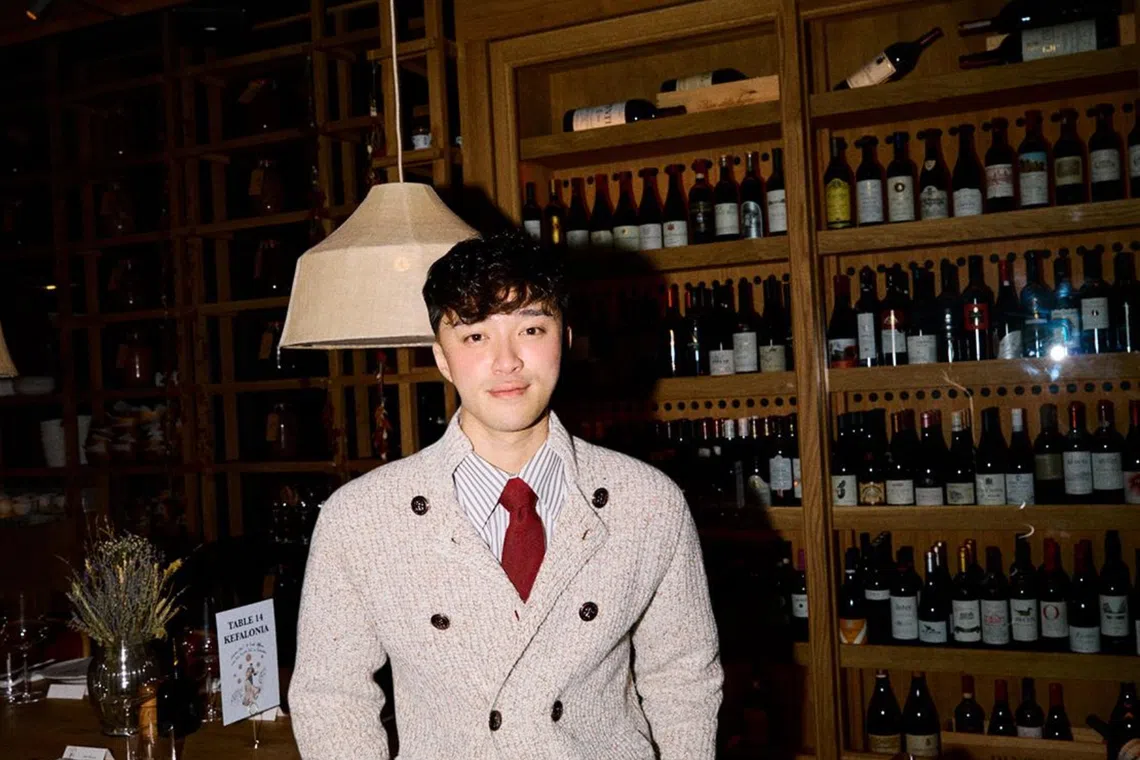
Xavier Tan was inspired by an entrepreneur programme run by Halogen Singapore and is now setting up businesses in London.
PHOTO: COURTESY OF XAVIER TAN
Published Oct 11, 2026, 05:00 AM
Updated Oct 11, 2026, 05:46 AM
SINGAPORE – Xavier Tan was 16 and had no clear idea of what his future would look like.
But everything changed when his secondary school signed him up for the Network for Teaching Entrepreneurship programme.
Tan, now 28, has started four companies, including a private members’ club he co-founded in London, the Rive Gauche Club London.
“For a 16-year-old, that exposure was life-changing. It showed me that the world was much bigger than what I knew at the time, and more importantly, that I could build something of my own.
“It gave me confidence, hunger and direction,” he recalled.
The programme was run by Halogen Singapore, a non-profit organisation created to inspire youth and empower them to make a change in their community.
Tan said: “Through the programme, I learnt how to put together a business proposal and present to industry partners, and visited corporate offices such as LinkedIn and Google.
“I was later given the opportunity to represent Singapore in New York, where I presented in front of industry professionals from organisations such as Citi and EY.”
When Tan returned from New York, he found himself bitten by the entrepreneurial bug.
He started his first business – in shirt-printing – at age 17. A year later, he founded a fashion platform for young people to express themselves through art and design.
In 2020, he moved to London to intern with a fashion public relations company.
“That experience gave me my first real exposure to the pace, scale and possibilities of the London market,” he said. He has been based in the English capital since.
In 2022, he started Enchante Communication, a London-based marketing and communications agency focused on supporting emerging brands with public relations, media visibility and brand positioning.
Just a year later, he co-founded Rive Gauche Club London, which brought together his experience across marketing, events, hospitality and community-building.
“Looking back, many of the opportunities I’ve pursued since then can be traced back to that first experience with the programme,” said Tan, an only child whose mother is a waitress and father works as a masseur.
“It was where I first realised that entrepreneurship was not just about building businesses, but also about creating opportunities and shaping your own path.”
In a full-circle moment, Tan has returned to Halogen as a speaker and mentor to pay it forward by helping other students develop themselves professionally.
Tan also said that living and working abroad has taught him many life lessons.
“One of the biggest lessons I have learnt is that you have to show up, regardless of whether the opportunity seems big or small. You have to show up with sincerity, consistency and a genuine interest in people,” he said .
Tan is single and holds a diploma in product design and innovation from Ngee Ann Polytechnic.
For me, growing money starts with investing in myself first. I believe you make better financial and business decisions when you are in the right state of mind.
Beyond that, I invest in my businesses where I see potential for growth. That could mean improving the quality of our club events, increasing member engagement, hiring the right people, or building better systems so the company can operate more efficiently.
When there is disposable income, I believe in taking a long-term and researched approach to financial investments, such as broad market funds like the S&P 500. I am quite cautious by nature.
Q: What has been your biggest financial mistake?
One of my biggest financial mistakes was not hiring quickly enough when I needed help.
At the time, I was stubborn and thought I could do everything myself. In reality, it consumed a lot of my time, energy and creativity. It eventually led to burnout and limited how much I could grow the business.
As a founder, your job is not to do everything yourself. Your job is to build the vision, lead the team and make sure the business is moving towards the next milestone.
Q: What has been your best financial decision?
My best financial decision was investing in skills and tools early, especially when I bought my first MacBook and taught myself design for my shirt-printing business. The investment was a stretch at the time, but it helped me secure client work and generate many times that amount over the years.
Q: What were your growing-up years like?
Growing up with limited resources shaped the way I look at money. It also taught me not to take opportunities for granted. I am ambitious, but I am also aware of the importance of financial discipline.
I think when you grow up understanding what it feels like not to have much, you become very conscious of how money can create security, but also how it should be used with purpose.
Q: What was your childhood dream?
My childhood dream was to own a home – not necessarily a very grand one, but a place that felt safe. A place where I could write my own rules, create memories, host friends and feel a sense of belonging.
I think that dream still stays with me. A lot of what I do now – building communities, hosting events and bringing people together – probably comes from that same desire to create spaces where people feel welcome.
Q: What was your most memorable encounter with money?
One was when my grandmother was hospitalised in Malaysia. Because she did not have the same access to insurance coverage as we do in Singapore, cash was needed for a minor operation .
She played a big role in raising me when I was younger, so being able to help her and my family during that moment meant a lot to me.
That was when I understood that money is not only about lifestyle or ambition. Sometimes, money is also about being able to show up for the people you love when they need you.
Q: Where’s home for you?
I rent a two-bedroom flat in Chelsea, London.
I do not drive at the moment. To be honest, I failed my driving test six times, so I think London’s public transport and walking culture suit me quite well for now.
Q: What would your perfect day look like?
My perfect day would be a summer Saturday in London. I would wake up early and go for a jog around Kensington or Hyde Park while the city is still quiet. After that, I would stop by Hjem for a cinnamon bun, then head home to clean the flat with music playing in the background and sunlight coming through the windows.
Lunch would be at Martinos, somewhere relaxed but special, with seafood pasta, a martini and good conversation. In the afternoon, I would spend time in the park, read a book, enjoy the sun and let the day move slowly.
In a more practical sense, a perfect day is one where I exercise, complete my to-do list, have good meetings, make progress in the business and somehow still finish before 5pm. To me, that is the real luxury – having enough time left in the day to sit down at a nearby pub for a pint of Stella, enjoy London while it is still bright outside and not feel like I am rushing anywhere.
What would you do if you suddenly had a windfall of $1 million?
A portion would go into my business, especially in areas that can create sustainable growth, such as team, systems and brand development. I would also set aside something for my family.
I would also donate to Halogen Foundation Singapore. I believe you should never forget the people and organisations that were there for you when you were still finding your way.
If there is more after that, I would use part of it to support education or mentorship initiatives for young people. I know how much one opportunity can change the way a young person sees their future, because that happened to me.
Q: If you suddenly had only $100 to your name, what would you do with it?
I would first make sure my basic needs were covered for the day – food, transport and communication.
Then I would use whatever is left very practically. I would reach out to people, look for immediate work opportunities and try to create value with the skills I already have, be it design, marketing, events or sales.
I have started from very little before, so I know that in those moments, you cannot panic. You have to stay calm, be resourceful and move quickly.
Sue-Ann Tan is a business correspondent at The Straits Times, covering capital markets and sustainable finance.
Xavier Tan 受到 Halogen Singapore 举办的创业计划的启发,现在正在伦敦创办企业。
照片:由 Xavier Tan 提供
发布于2026年10月11日 上午5:00
更新于2026年10月11日 上午5:46
新加坡——16岁的泽维尔·谭对自己的未来没有清晰的认识。
但当他的中学为他报名参加创业教育网络项目后,一切都改变了。
现年 28 岁的 Tan 已经创办了四家公司,其中包括他在伦敦共同创办的私人会员俱乐部——伦敦左岸俱乐部 (Rive Gauche Club London)。
“对于一个16岁的孩子来说,那次经历改变了他的一生。它让我明白,世界比我当时所知的要大得多,更重要的是,它让我明白我可以创造属于自己的事业。”
“它给了我自信、渴望和方向,”他回忆道。
该项目由 Halogen Singapore 运营,这是一个旨在激励青年并赋予他们能力,让他们为社区带来改变的非营利组织。
Tan表示:“通过这个项目,我学会了如何撰写商业计划书并向行业合作伙伴进行展示,还参观了LinkedIn和谷歌等公司的办公室。
“后来我获得了代表新加坡前往纽约的机会,在那里我向花旗集团和安永等机构的行业专业人士做了演讲。”
谭从纽约回来后,发现自己也染上了创业的瘾。
他17岁时创办了自己的第一家企业——衬衫印花公司。一年后,他创立了一个时尚平台,让年轻人通过艺术和设计表达自我。
2020年,他搬到伦敦,在一家时尚公关公司实习。
“那次经历让我第一次真正感受到伦敦市场的节奏、规模和潜力,”他说。此后,他一直居住在英国首都。
2022 年,他创办了 Enchante Communication,这是一家位于伦敦的营销和传播机构,专注于为新兴品牌提供公共关系、媒体曝光和品牌定位方面的支持。
仅仅一年后,他就与人共同创立了伦敦左岸俱乐部,将他在市场营销、活动策划、酒店服务和社区建设方面的经验融合在一起。
“回首往事,我之后追求的许多机会都可以追溯到我最初参与这个项目的经历,”谭说道。他是家里的独生子,母亲是服务员,父亲是按摩师。
“正是在那里,我第一次意识到创业不仅仅是创建企业,更是创造机会和塑造自己的道路。”
谭恩回到Halogen担任演讲嘉宾和导师,帮助其他学生进行职业发展,可谓是圆满回报母校。
谭先生还表示,在国外生活和工作让他学到了许多人生经验。
他说:“我学到的最重要的一课就是,无论机会看起来大小,你都必须出现。你必须真诚、坚持不懈,并且对他人抱有真正的兴趣。”
Tan目前单身,持有义安理工学院产品设计与创新专业的文凭。
对我而言,财富增长始于投资自己。我相信,当你拥有正确的精神状态时,才能做出更明智的财务和商业决策。
除此之外,我还会投资于那些我认为有增长潜力的企业。这可能包括提升俱乐部活动的质量、增强会员参与度、招聘合适的人才,或者构建更完善的系统以提高公司运营效率。
如果有可支配收入,我相信应该采取长期且经过深入研究的投资方式,例如投资像标普500指数基金这样的大盘基金。我生性比较谨慎。
问:你犯过的最大的财务错误是什么?
我犯过的最大的财务错误之一就是在需要人手的时候没有及时招聘。
当时我很固执,觉得所有事情都能自己做。但实际上,这耗费了我大量的时间、精力和创造力。最终导致我精疲力竭,也限制了业务的发展。
作为创始人,你的职责不是事事亲力亲为。你的职责是构建愿景,领导团队,并确保企业朝着下一个里程碑稳步前进。
问:你做过的最佳财务决定是什么?
我做过的最明智的财务决定就是早期投资技能和工具,尤其是我买了第一台MacBook,自学设计,为了我的T恤印花生意做准备。当时这笔投资确实有点冒险,但它帮助我获得了客户,并在之后的几年里创造了数倍于此的收益。
问:你的成长岁月是怎样的?
在资源匮乏的环境中长大,塑造了我对金钱的看法。这也教会了我珍惜每一个机会。我雄心勃勃,但也深知财务自律的重要性。
我认为,当你长大后体会到贫穷的滋味,你就会非常清楚金钱如何创造安全感,以及应该如何有目的地使用它。
问:你小时候的梦想是什么?
我儿时的梦想是拥有一套房子——不一定要很豪华,但要是一个让我感到安全的地方。一个我可以自己制定规则、创造回忆、招待朋友并感受到归属感的地方。
我想那个梦想一直伴随着我。我现在所做的很多事情——建立社群、举办活动、将人们聚集在一起——可能都源于同样的愿望,那就是创造一个让人们感到宾至如归的空间。
问:你与金钱之间印象最深刻的一次经历是什么?
其中一次是我祖母在马来西亚住院。由于她不像我们在新加坡那样享有医疗保险,所以做个小手术需要自费。
在我年幼的时候,她对我的成长起到了很大的作用,所以能够在那个时候帮助她和我的家人对我来说意义重大。
那时我才明白,金钱不仅仅关乎生活方式或抱负。有时候,金钱也意味着在所爱之人需要你的时候,能够陪伴在他们身边。
问:对你来说,哪里才是家?
我在伦敦切尔西租了一套两居室公寓。
我目前不开车。老实说,我考了六次驾照都没过,所以我觉得伦敦的公共交通和步行文化目前很适合我。
问:你理想中的一天是什么样的?
我理想中的一天是伦敦夏日的一个周六。我会早早起床,在肯辛顿或海德公园附近慢跑,那时城市还很安静。之后,我会去Hjem买个肉桂卷,然后回家,一边听着音乐,一边沐浴着阳光打扫公寓。
午餐会在马蒂诺餐厅享用,那是个轻松又特别的地方,我会点海鲜意面、马提尼,然后和朋友们聊聊天。下午,我会去公园逛逛,读读书,晒晒太阳,让时间慢慢流逝。
更实际地说,完美的一天是这样的:我锻炼身体,完成待办事项,参加高效的会议,在工作上取得进展,并且还能在下午五点前结束。对我来说,这才是真正的奢侈——一天中还有足够的时间,可以去附近的酒吧喝一杯斯特拉啤酒,在伦敦阳光明媚的时候享受悠闲时光,而不用感到匆忙。
如果你突然获得100万美元的意外之财,你会怎么做?
一部分资金会投入到我的事业中,尤其是在能够带来可持续增长的领域,例如团队建设、系统建设和品牌发展。我也会留出一部分给家人。
我也会向新加坡卤素基金会捐款。我认为,你永远不应该忘记那些在你迷茫时期给予你帮助的人和组织。
如果之后还有剩余,我会用一部分来支持青少年教育或指导项目。我知道一次机会能给年轻人带来多大的改变,因为我自己就经历过。
问:如果你突然只剩下100美元,你会怎么花?
我首先会确保当天的基本需求得到满足——食物、交通和通讯。
然后我会非常务实地利用剩下的资源。我会主动联系各界人士,寻找短期工作机会,并尝试运用我已有的技能创造价值,无论是设计、市场营销、活动策划还是销售。
我以前也是白手起家,所以我知道在那种情况下不能慌张。你必须保持冷静,灵活应变,迅速行动。
Sue-Ann Tan 是《海峡时报》的商业记者,负责报道资本市场和可持续金融。