Better understanding of AI cybersecurity risks needed, says TikTok’s Chew Shou ZiTikTok创始人周守子表示,需要更好地了解人工智能网络安全风险。
TikTok’s top executive thinks there’s a “non-zero chance” that AI will become superior to human beings in certain aspects. “The technology is evolving, but you can see a world where silicon is just superior to carbon.”
TikTok’s top executive thinks there’s a “non-zero chance” that AI will become superior to human beings in certain aspects. “The technology is evolving, but you can see a world where silicon is just superior to carbon.”
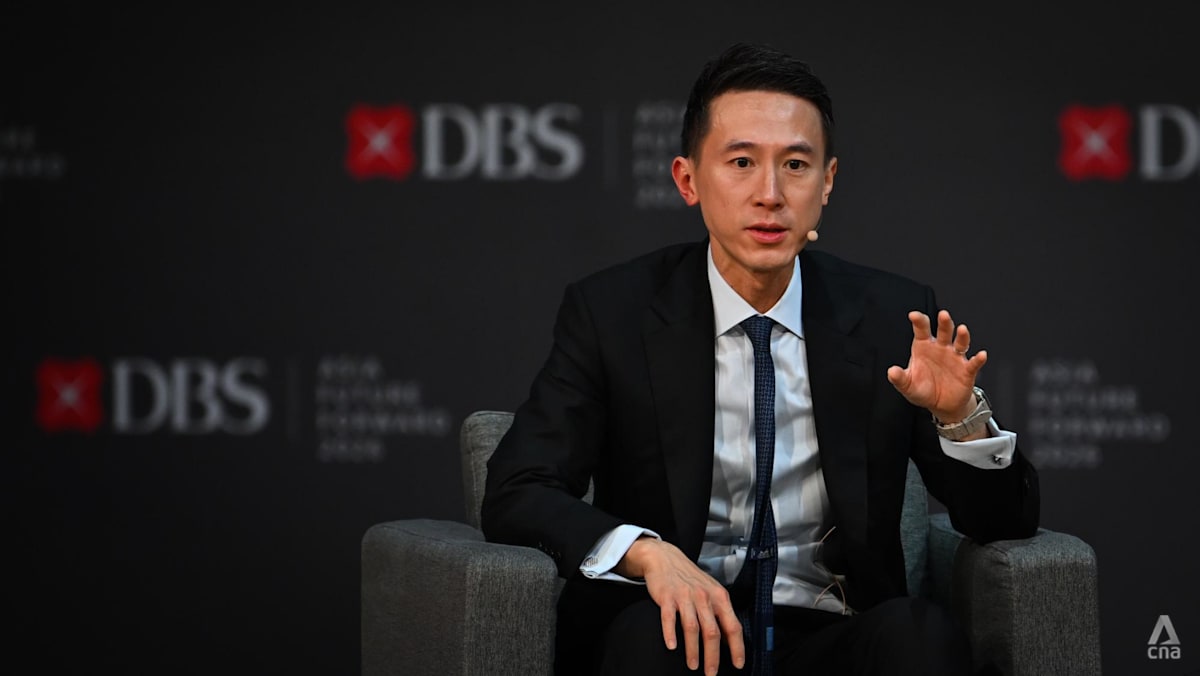
TikTok CEO Chew Shou Zi speaking at the DBS Asia Future Forward conference on Oct 12, 2026. (Photo: CNA/Syamil Sapari)
This audio is generated by an AI tool.
SINGAPORE: TikTok chief executive officer Chew Shou Zi on Monday (Oct 12) called for a better understanding of how to manage the risks that artificial intelligence (AI) will bring, adding that he sees the need for "a lot of education" in this area.
This was in response to a question about what areas of AI are not receiving enough attention during a dialogue at the DBS Asia Future Forward conference.
"I think the cybersecurity risks are quite real," said Mr Chew.
He said users may be giving agentic AI models permission to do things without really understanding what permissions they are actually giving, citing how those who give AI agents access to their credit cards to make purchases could end up buying much more than they need.
CNA Games Guess Word Crack the word, one row at a time Buzzword Create words using the given letters Mini Sudoku Tiny puzzle, mighty brain teaser Mini Crossword Small grid, big challenge Word Search Spot as many words as you can Show More Show Less Unlike large language models such as ChatGPT and Claude that mainly answer questions, AI agents are designed to carry out tasks. In the case of corporates, agentic models have dramatically reduced the cost of creating spam, he said. While spam on any platform cannot be reduced to zero, he said, the focus for businesses should be to "make it too expensive for people to do too much spam on your platform", he added . Businesses need the right tools to defend against the fast-falling cost of creating security problems for platforms like TikTok, said Mr Chew. The short-form video app now has about 2.21 billion users worldwide, reported digital research platform DataReportal in April. Highlighting that developing skills to use AI effectively will be important in the next two to three years, he urged individuals to be hands-on with AI. “If you don’t use these models and you don’t use these products yourself, you cannot figure out what exactly you can or cannot do just by reading about it,” he added. Employees have to be trained not to share trade secrets or privileged legal information with public chatbots, said Mr Chew. “It’s such a useful tool to have, so people sometimes are overenthusiastic about how they use it. Understanding where the boundaries of what is reasonable and acceptable use is important.” AI SHORT-TERM POTENTIAL OVERESTIMATED Responding to a question about extreme responses to AI from proponents and opponents alike, the TikTok CEO said the world is probably overestimating AI in the short term, but underestimating it in the long term. “The trend is very clear. We are only at the beginning of what artificial intelligence can probably do,” he said. Noting how AI has contributed to progress in areas of science, Mr Chew said he expects to see a real scientific breakthrough because of AI in the next two to three years. In the short term, humans need time to adopt this kind of technology, and this “sand in the gears” is probably going to slow down progress, he added. “But it’s risky to think that just because it’s slow in the shorter term, that it will not become very important in the long term. That’s the wrong conclusion.” When asked if he thinks of AI possibly replacing human beings, Mr Chew said it was “a little bit too early” to be conclusive about it. On one hand, the technology is still catching up, he said, highlighting that AI models still cannot learn certain things at the same speed as a human being. “But you can see a world where silicon is just superior to carbon,” he added. Silicon is a key material in the semiconductor chips that go into the machines that power AI, while carbon forms the structural framework for all major organic molecules, including all living things. Silicon will last longer, it’s more scalable, and it is easier to connect information using technology than through human beings, said Mr Chew. “It is a non-zero chance that it … could become superior in certain aspects.” TikTok still sees an imbalance between the percentage of videos that are AI-generated or created using AI, and the number of views they get, said the platform’s CEO. Even with a recommendation algorithm powered by AI, this shows what people want to see, he said. On TikTok, about 59 per cent of videos served to a new account’s For You feed are AI slop, according to a June report from San Francisco-based video creation tool company Kapwing. The report defined "AI slop" as videos with obvious AI-generated visuals, along with low-quality compilations using clearly AI-generated scripts and voiceovers. Mr Chew noted that viewers who just watch AI content on TikTok make up a low, single-digit percentage of users. People still value authenticity, he said, adding that when viewers see a video that is “very obviously not real”, there is still pushback in terms of consumption. “There’s a lot of experimenting with using AI to create more content, and a lot of it is a lot more creative than you can ever imagine. But at the same time, human adoption of just watching AI content is not the same at this moment in time.”
Unlike large language models such as ChatGPT and Claude that mainly answer questions, AI agents are designed to carry out tasks.
In the case of corporates, agentic models have dramatically reduced the cost of creating spam, he said. While spam on any platform cannot be reduced to zero, he said, the focus for businesses should be to "make it too expensive for people to do too much spam on your platform", he added .
Businesses need the right tools to defend against the fast-falling cost of creating security problems for platforms like TikTok, said Mr Chew. The short-form video app now has about 2.21 billion users worldwide, reported digital research platform DataReportal in April.
Highlighting that developing skills to use AI effectively will be important in the next two to three years, he urged individuals to be hands-on with AI.
“If you don’t use these models and you don’t use these products yourself, you cannot figure out what exactly you can or cannot do just by reading about it,” he added.
Employees have to be trained not to share trade secrets or privileged legal information with public chatbots, said Mr Chew.
“It’s such a useful tool to have, so people sometimes are overenthusiastic about how they use it. Understanding where the boundaries of what is reasonable and acceptable use is important.”
AI SHORT-TERM POTENTIAL OVERESTIMATED
Responding to a question about extreme responses to AI from proponents and opponents alike, the TikTok CEO said the world is probably overestimating AI in the short term, but underestimating it in the long term.
“The trend is very clear. We are only at the beginning of what artificial intelligence can probably do,” he said.
Noting how AI has contributed to progress in areas of science, Mr Chew said he expects to see a real scientific breakthrough because of AI in the next two to three years.
In the short term, humans need time to adopt this kind of technology, and this “sand in the gears” is probably going to slow down progress, he added.
“But it’s risky to think that just because it’s slow in the shorter term, that it will not become very important in the long term. That’s the wrong conclusion.”
When asked if he thinks of AI possibly replacing human beings, Mr Chew said it was “a little bit too early” to be conclusive about it.
On one hand, the technology is still catching up, he said, highlighting that AI models still cannot learn certain things at the same speed as a human being.
“But you can see a world where silicon is just superior to carbon,” he added.
Silicon is a key material in the semiconductor chips that go into the machines that power AI, while carbon forms the structural framework for all major organic molecules, including all living things.
Silicon will last longer, it’s more scalable, and it is easier to connect information using technology than through human beings, said Mr Chew.
“It is a non-zero chance that it … could become superior in certain aspects.”
TikTok still sees an imbalance between the percentage of videos that are AI-generated or created using AI, and the number of views they get, said the platform’s CEO.
Even with a recommendation algorithm powered by AI, this shows what people want to see, he said.
On TikTok, about 59 per cent of videos served to a new account’s For You feed are AI slop, according to a June report from San Francisco-based video creation tool company Kapwing. The report defined "AI slop" as videos with obvious AI-generated visuals, along with low-quality compilations using clearly AI-generated scripts and voiceovers.
Mr Chew noted that viewers who just watch AI content on TikTok make up a low, single-digit percentage of users.
People still value authenticity, he said, adding that when viewers see a video that is “very obviously not real”, there is still pushback in terms of consumption.
“There’s a lot of experimenting with using AI to create more content, and a lot of it is a lot more creative than you can ever imagine. But at the same time, human adoption of just watching AI content is not the same at this moment in time.”
Get our pick of top stories and thought-provoking articles in your inbox
Stay updated with notifications for breaking news and our best stories
Join our channel for the top reads for the day on your preferred chat app
TikTok 的高管认为,人工智能在某些方面超越人类的可能性“并非为零”。“技术在不断发展,但我们可以预见,未来硅基技术将完全超越碳基技术。”
TikTok首席执行官周守子于2026年10月12日在星展银行亚洲未来展望大会上发表讲话。(图片:CNA/Syamil Sapari)
这段音频由人工智能工具生成。
新加坡:TikTok 首席执行官周守子周一(10 月 12 日)呼吁更好地了解如何管理人工智能 (AI) 将带来的风险,并补充说,他认为这方面需要“大量的教育”。
这是在星展银行亚洲未来展望大会的一次对话中,针对“人工智能的哪些领域没有得到足够的关注”这一问题所作出的回应。
周先生说:“我认为网络安全风险是真实存在的。”
他表示,用户可能在不真正了解自己授予哪些权限的情况下,就授予了人工智能模型执行某些操作的权限。他举例说,那些允许人工智能代理访问其信用卡进行购物的人,最终可能会购买远超自身需求的商品。
CNA游戏猜词游戏:逐行破解单词;流行词游戏:用给定的字母组成单词;迷你数独:小巧的谜题,强大的脑力挑战;迷你填字游戏:小网格,大挑战;单词搜索:尽可能多地找出单词。显示更多 显示更少 与主要回答问题的ChatGPT和Claude等大型语言模型不同,人工智能代理旨在执行任务。他表示,就企业而言,代理模型已大幅降低了制造垃圾邮件的成本。他指出,虽然任何平台上的垃圾邮件都无法完全消除,但企业的重点应该是“让人们在你的平台上制造过多垃圾邮件的成本过高”。周先生表示,企业需要合适的工具来应对TikTok等平台安全问题成本快速下降的挑战。据数字研究平台DataReportal在4月份发布的报告显示,这款短视频应用目前在全球拥有约22.1亿用户。他强调,在未来两到三年内,培养有效使用人工智能的技能至关重要,并敦促个人积极参与人工智能的实践。 “如果你自己不使用这类模型和产品,就无法仅凭阅读相关资料来判断哪些操作可行,哪些操作不可行,”他补充道。周先生表示,员工必须接受培训,不得与公共聊天机器人分享商业机密或特权法律信息。“这是一个非常有用的工具,因此人们有时会过度热情地使用它。了解合理和可接受的使用界限至关重要。” 人工智能的短期潜力被高估 在回答有关支持者和反对者对人工智能的极端反应的问题时,TikTok首席执行官表示,世界可能高估了人工智能的短期潜力,但低估了其长期潜力。“趋势非常明显。我们目前所看到的只是人工智能潜力的冰山一角,”他说。周先生指出人工智能已经推动了科学领域的进步,并表示他预计在未来两到三年内,人工智能将带来真正的科学突破。他补充说,短期内,人类需要时间来接受这类技术,而这种“齿轮里的沙子”可能会减缓发展进程。“但仅仅因为短期内进展缓慢就认为它在长期内不会变得非常重要,这是冒险的。这是错误的结论。”当被问及他是否认为人工智能有可能取代人类时,周先生表示现在下结论“还为时过早”。一方面,他指出这项技术仍在发展完善中,人工智能模型在某些方面的学习速度仍然无法与人类相提并论。“但你可以预见,在未来的世界里,硅将超越碳,”他补充道。硅是驱动人工智能机器的半导体芯片的关键材料,而碳则构成了所有主要有机分子(包括所有生物体)的结构框架。周先生表示,硅的寿命更长,可扩展性更强,而且利用技术连接信息比通过人类更容易。“它在某些方面超越人类的可能性并非为零。” TikTok首席执行官表示,该平台仍然存在人工智能生成或使用人工智能创作的视频比例与其观看次数不平衡的问题。他指出,即使采用了人工智能驱动的推荐算法,这仍然反映了人们的观看偏好。旧金山视频创作工具公司Kapwing六月份发布的一份报告显示,TikTok上新用户“为你推荐”页面中约有59%的视频是人工智能生成的垃圾视频。该报告将“人工智能垃圾视频”定义为画面明显由人工智能生成的视频,以及使用明显由人工智能生成的脚本和配音的低质量合辑。周先生指出,在TikTok上只观看人工智能内容的用户仅占用户总数的个位数。他表示,人们仍然重视真实性,并补充说,当用户看到“明显不是真实的”视频时,仍然会对其观看量产生抵触情绪。 “目前有很多利用人工智能创作更多内容的实验,其中很多作品的创意远超你的想象。但与此同时,人们目前对观看人工智能创作的内容的接受度还不高。”
与主要回答问题的 ChatGPT 和 Claude 等大型语言模型不同,人工智能代理旨在执行任务。
他表示,对于企业而言,代理模型已大幅降低了垃圾邮件的制造成本。他指出,虽然任何平台上的垃圾邮件都无法完全消除,但企业应该着重于“让人们在你的平台上发送过多垃圾邮件的成本过高”。
周先生表示,企业需要合适的工具来应对TikTok等平台安全问题成本快速下降的现状。据数字研究平台DataReportal四月份发布的报告显示,这款短视频应用目前在全球拥有约22.1亿用户。
他强调,在未来两到三年内,培养有效使用人工智能的技能至关重要,并敦促个人积极参与人工智能实践。
“如果你自己不使用这些模型和产品,仅仅通过阅读相关资料是无法弄清楚你究竟能做什么或不能做什么的,”他补充道。
周先生表示,必须对员工进行培训,使其不得与公共聊天机器人分享商业秘密或特权法律信息。
“这是一个非常有用的工具,所以人们有时会过度热情地使用它。了解合理和可接受的使用界限非常重要。”
人工智能的短期潜力被高估了
针对支持者和反对者对人工智能的极端反应这一问题,TikTok 首席执行官表示,世界可能高估了人工智能的短期影响,但低估了其长期影响。
“趋势非常明显。我们目前所看到的,仅仅是人工智能潜力的冰山一角,”他说道。
周先生指出人工智能对科学领域的进步做出了贡献,并表示他预计在未来两到三年内,人工智能将带来真正的科学突破。
他补充说,短期内,人类需要时间来接受这种技术,而这种“齿轮中的沙子”可能会减缓进步的速度。
“但如果仅仅因为短期内发展缓慢就认为它在长期内不会变得非常重要,那就太冒险了。这种结论是错误的。”
当被问及他是否认为人工智能有可能取代人类时,周先生表示现在下结论“还为时过早”。
他指出,一方面,这项技术仍在发展之中,人工智能模型在某些方面的学习速度仍然无法与人类相提并论。
“但你可以看到一个硅比碳更优越的世界,”他补充道。
硅是构成人工智能机器所需半导体芯片的关键材料,而碳则构成了所有主要有机分子(包括所有生物)的结构框架。
周先生表示,硅的使用寿命更长,可扩展性更强,而且利用技术连接信息比通过人与人之间连接信息更容易。
“它在某些方面变得更胜一筹的可能性并非为零。”
该平台首席执行官表示,TikTok 仍然发现,人工智能生成或使用人工智能创建的视频比例与它们的观看次数之间存在不平衡。
他说,即使是人工智能驱动的推荐算法,也显示了人们想看到什么。
根据旧金山视频创作工具公司Kapwing六月份发布的一份报告,TikTok上新用户“为你推荐”页面中约有59%的视频是AI生成的垃圾视频。该报告将“AI垃圾视频”定义为画面明显由AI生成的视频,以及使用明显由AI生成的脚本和配音的低质量合辑视频。
周先生指出,在TikTok上只观看人工智能内容的用户只占用户总数的个位数比例很低。
他说,人们仍然重视真实性,并补充说,当观众看到“明显不是真的”的视频时,在消费方面仍然会受到抵制。
“目前有很多利用人工智能创作更多内容的实验,其中很多作品的创意远超你的想象。但与此同时,人们目前对观看人工智能创作的内容的接受度还不高。”
订阅我们的邮件,即可获取精选热点新闻和引人深思的文章。
订阅通知,第一时间获取突发新闻和精彩报道。
加入我们的频道,即可在您常用的聊天应用上获取当日热门文章。