Putrajaya ‘not discounting’ letting refugees work in sectors with critical labour shortages, says home minister内政部长表示,布城“不排除”让难民在劳动力严重短缺的行业工作。
KUALA LUMPUR, Oct 13 — Putrajaya is “not discounting” proposals to legalise work for refugees in sectors with a critical labour shortage, Home Minister Datuk Seri Saifuddin...
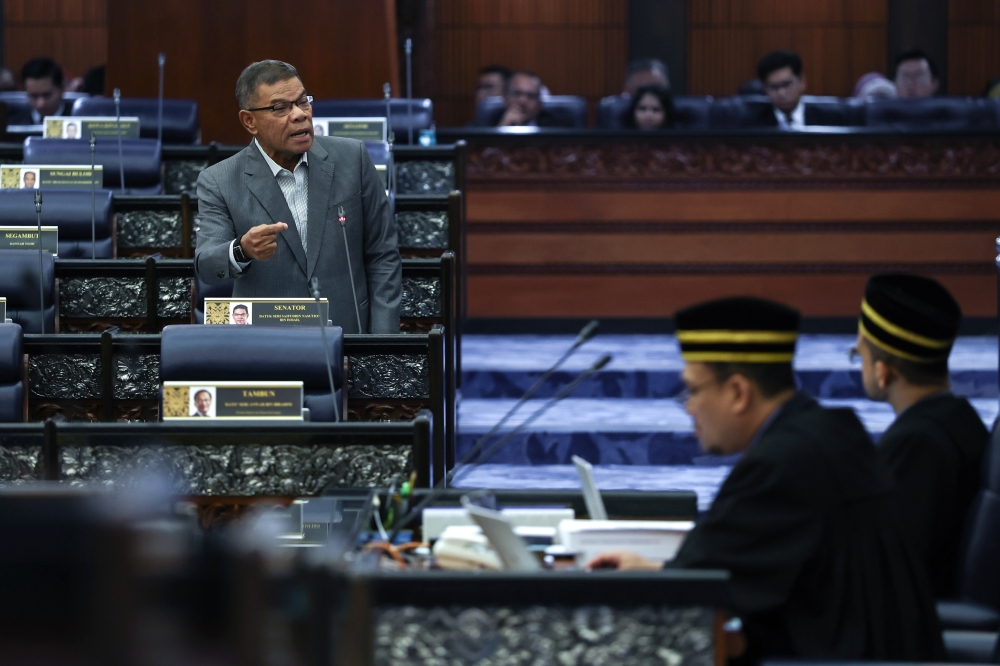
Home Minister Datuk Seri Saifuddin Nasution shared in Parliament that the Malaysian government is considering legalising refugee employment in sectors experiencing critical labour shortages, typically involving physically demanding jobs.
This approach aims to alleviate reliance on foreign workers and reduce associated costs, leveraging the local refugee population for workforce needs.
Despite Malaysia not being a UN Refugee Convention signatory, past efforts to integrate refugees into the workforce faced challenges such as inadequate regulations and poor job placements.
The potential move reflects a strategic response to both economic demands and migrant labour concerns.
KUALA LUMPUR, Oct 13 — Putrajaya is “not discounting” proposals to legalise work for refugees in sectors with a critical labour shortage, Home Minister Datuk Seri Saifuddin Nasution told Parliament’s House of Representatives this morning.
The idea comes as several key economic sectors face persistent labor shortages and rely heavily on foreign workers.
These industries typically involve high levels of manual, physical, or shift-based labor — often categorised as dirty, dangerous, and demanding, or “3D Jobs”.
“If only we could collect the data of these 225,000 people, then separate those who fall within a productive age range, ages 20, 25, 30 are still productive,” Saifuddin said during Question Time.
“Once filtered, we would have their data. So our intention is that workforce requirements wouldn’t necessarily have to be sourced from outside... I do not rule out the possibility that the path is heading in that direction to meet the real workforce needs in front of us.”
Saifuddin then presented a hypothetical example.
“Suppose Pasir Gudang has an oil palm plantation that needs 100 workers. There are two choices: either recruit from Bangladesh and pay all kinds of costs, or check against our refugee registration data of those who are already here, for instance. That is the decision we will make for now,” he said.
Several key sectors of the domestic economy (plantation, manufacturing, construction, services) rely heavily on foreign workers, but recruiting them can be expensive given the administrative costs and government-imposed levies.
Officials estimate put the number of foreign labourers in the Malaysia around 2.2 million at any given time, mostly from poorer countries like Bangladesh and Nepal.
Some migrant labour rights groups said the costs of hiring foreign workers have inadvertently turned the importation into “an industry” on its own, making workers susceptible to exploitation from transnational syndicates that often operate with the backing of corrupt officials.
Employers pay annual government levies that can range from RM640 a year for plantations, and up to RM1,850 a year for manufacturing and services. This is on top of other costs such as pass fees, medical screenings (FOMEMA), mandatory EPF and Socso contributions, as well as mandatory housing.
Malaysia is not a signatory to the 1951 UN Refugee Convention. Because of this, refugees are legally classified as “undocumented migrants” or “illegal immigrants” under the Immigration Act 1959/63, leaving them vulnerable to arrest, detention, and extortion despite holding UNHCR cards.
But past administrations had previously attempted pilot schemes for refugee work rights, including allowing Rohingya refugees to work in the plantation and manufacturing sectors, although some initiatives reportedly struggled with issues such as inadequate regulatory frameworks, unsuitable job placements and poor worker retention.
Johor police deploy 13 district control centres statewide to assist in haze monitoring
Irene Sofiya murder: Johor police awaiting DPP decision before remand expires
MCMC probes viral video over allegedly false, misleading Budget 2027 tax claims
内政部长拿督斯里赛夫丁·纳苏蒂安在国会表示,马来西亚政府正在考虑将难民就业合法化,尤其是在劳动力严重短缺的行业,这些行业通常涉及体力劳动强度较大的工作。
这种方法旨在减轻对外国工人的依赖,降低相关成本,利用当地难民人口来满足劳动力需求。
尽管马来西亚不是联合国难民公约的缔约国,但过去将难民融入劳动力的努力面临着监管不力、就业安置不佳等挑战。
这一潜在举措反映了政府对经济需求和移民劳工问题的战略性应对。
吉隆坡,10 月 13 日讯——内政部长拿督斯里赛夫丁·纳苏蒂安今早向国会下议院表示,布城“并未排除”将难民在劳动力严重短缺的行业合法化的提议。
这一想法的出现,是因为几个关键经济部门面临持续的劳动力短缺,并且严重依赖外国工人。
这些行业通常涉及大量体力劳动、体力劳动或轮班劳动——通常被归类为肮脏、危险和辛苦的工作,或“3D 工作”。
“如果我们能够收集到这 225,000 人的数据,然后将那些处于生产年龄段的人(20 岁、25 岁、30 岁仍然具有生产能力)区分开来就好了,”赛夫丁在问答环节说道。
“筛选之后,我们就能获得他们的数据。所以我们的目标是,劳动力需求不一定非要从外部招聘……我不排除未来会朝着这个方向发展,以满足我们眼前的实际劳动力需求。”
赛义夫丁随后举了一个假设的例子。
“假设巴西古当有一个油棕种植园需要100名工人。我们有两种选择:要么从孟加拉国招聘,并承担所有费用;要么查看我们现有的难民登记数据,看看是否有合适的人选。这就是我们目前将要做出的决定,”他说。
国内经济的几个关键部门(种植园、制造业、建筑业、服务业)严重依赖外国工人,但考虑到行政成本和政府征收的税费,招聘外国工人可能成本很高。
官方估计,马来西亚任何时候的外国劳工人数约为 220 万,其中大部分来自孟加拉国和尼泊尔等较贫穷的国家。
一些移工权益组织表示,雇用外籍劳工的成本无意中使外籍劳工的引进本身变成了一个“产业”,使工人容易受到跨国犯罪集团的剥削,而这些集团往往在腐败官员的支持下运作。
雇主每年需缴纳政府税费,种植园的税费最低为每年640令吉,而制造业和服务业的税费最高可达每年1850令吉。此外,雇主还需承担其他费用,例如通行证费用、体检费(FOMEMA)、强制性公积金(EPF)和社险(Socso)缴款,以及强制性住房补贴。
马来西亚并非1951年《联合国难民公约》的缔约国。因此,根据1959/63年《移民法》,难民在法律上被归类为“无证移民”或“非法移民”,即使持有联合国难民署的证件,也容易遭到逮捕、拘留和勒索。
但以往的政府曾尝试过难民工作权利试点计划,包括允许罗兴亚难民在种植园和制造业工作,但据报道,一些举措在监管框架不足、工作安排不合适和工人留任率低等问题上举步维艰。
柔佛警方在全州范围内部署13个地区控制中心,协助进行雾霾监测。
艾琳·索菲亚谋杀案:柔佛警方等待检控署的决定,羁押期限届满后将停止审理
马来西亚通信与多媒体委员会 (MCMC) 正在调查一段在网上疯传的视频,该视频涉嫌包含虚假、误导性的 2027 年财政预算案税务声明。