How haze from Indonesian fires impacts Southeast Asia印尼山火产生的烟雾如何影响东南亚
JAKARTA, Sept 5 — Thick smog has blanketed parts of Indonesia as the vast archipelago for weeks battles to contain fires that have burned large swathes of Borneo and Sumatra.The...
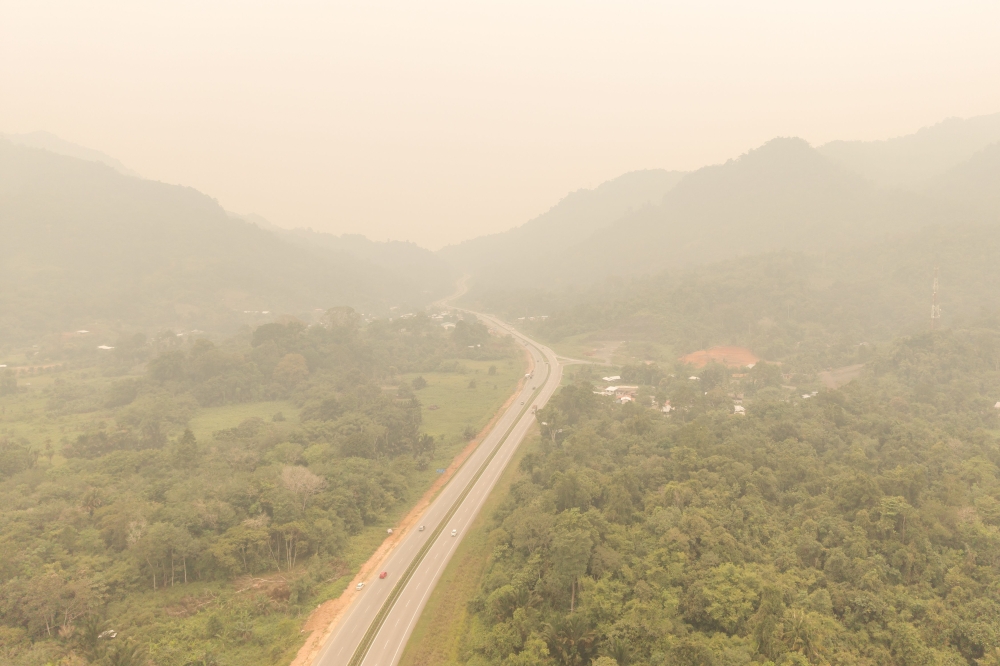
Thick smog from fires in Indonesia has caused severe respiratory issues, forced school closures, and affected neighbouring countries like Malaysia, Singapore, and the Philippines.
Fires, mainly on Borneo and Sumatra, have burned nearly 300,000 hectares this year, releasing over 23 million metric tons of carbon emissions between late August and early September.
The El Nino phenomenon and slash-and-burn practices have intensified the fires, which are particularly challenging to control due to Indonesia's peatland ecosystems.
JAKARTA, Sept 5 — Thick smog has blanketed parts of Indonesia as the vast archipelago for weeks battles to contain fires that have burned large swathes of Borneo and Sumatra.
The hazardous smoke has led to an increase in respiratory problems, forced schools to close, and has been drifting to neighbouring countries including — Malaysia, Singapore, and the Philippines.
Here’s what to know:
Where are the fires?
Most of the fires are concentrated on Borneo island, home to vast tropical jungle that Indonesia shares with Brunei and Malaysia, as well as Sumatra.
So far this year, nearly 300,000 hectares of land have burned in Indonesia, according to an independent estimate from the Nusantara Atlas portal.
Indonesia saw an uptick in carbon emissions since late July, and by the end of last month the levels were comparable to previous El Nino years of 2015 and 2019, Copernicus Atmosphere Monitoring Service (CAMS) senior scientist Mark Parrington told AFP.
“We’re seeing already now… really extreme fire emissions comparable to those previous strong El Nino years, and also the extent of the smoke and the haze and the air quality impacts,” Parrington said.
Fires in the archipelago have released more than 23 million metric tons of carbon emissions between August 28 and September 3, according to CAMS’ Fire Emission Watch portal.
It was higher than 20.7 million metric tons of emissions from fires over the same period in 2015, which was a strong El Nino year.
What causes the fires?
Analysts said that the El Nino weather phenomenon, which the United Nations said this week could turn out to be the strongest in four decades, has contributed to creating drier conditions in Indonesia and made it easier for fires to spread.
But slash-and-burn land-clearing practices also contributed to the damage, said David Gaveau, founder of the Nusantara Atlas.
“El Nino does not ignite fires. It creates the dry conditions that allow human-started fires to escape and become very large,” he told AFP.
The fires are difficult to extinguish because many occurred on peatlands, a wetland ecosystem with layers of partially decomposed organic materials that become flammable when dry.
Between January and August this year, more than 210,000 hotspots were detected in peatland areas across the country, according to NGO Pantau Gambut.
“Peat is a naturally wet ecosystem and stores large amounts of organic material. When peat is drained, this organic material is converted into fuel,” Pantau Gambut spokesman Wahyu Perdana said.
More than five million people across Borneo and Sumatra are directly exposed to the health risks from haze, deputy health minister Dante Saksono Harbuwono said last month.
Over 1.4 million students were attending classes remotely, with many schools closed due to worsening air quality, an education ministry official said this week.
In Malaysia, soaring pollution levels prompted the government yesterday to declare an emergency in a region of the Sarawak state in Borneo, with nearly 650 schools closed next week.
In the Philippines, air quality was slowly returning to normal after a week of reaching “very unhealthy” and “severely unhealthy” PM 2.5 levels that saw officials shutter schools in cities and provinces citing the drifting haze.
The haze also drove air quality in Singapore’s central region to an “unhealthy” level yesterday, the country’s National Environment Agency data showed. — AFP
Taanusiya Chetty finishes third in Miss World 2026, matches Malaysia’s best-ever result
Don’t stop them now: Fans party for Freddie Mercury’s 80th birthday
Batik artist Rosliza races three‑week deadline to craft Queen’s dazzling National Day dress
Anthony Loke says govt has 15 months to finish reforms, no need to rush GE16
DPM Zahid: Over 600 Orang Asli students now pursuing higher education, reflecting rising social mobility
PM term limit, AG-PP split: DAP wants both Bills tabled in Oct-Dec sitting
印尼火灾产生的浓烟导致严重的呼吸系统疾病,迫使学校停课,并影响了马来西亚、新加坡和菲律宾等邻国。
今年,主要发生在婆罗洲和苏门答腊的火灾已烧毁近 30 万公顷土地,在 8 月下旬至 9 月初期间释放了超过 2300 万吨碳排放。
厄尔尼诺现象和刀耕火种的做法加剧了火灾,由于印度尼西亚的泥炭地生态系统,火灾尤其难以控制。
雅加达,9月5日——由于大火已烧毁婆罗洲和苏门答腊的大片地区,印度尼西亚部分地区已被浓重的烟雾笼罩数周。
有害烟雾导致呼吸系统疾病增加,迫使学校关闭,并且已经飘向邻国,包括马来西亚、新加坡和菲律宾。
以下是您需要了解的内容:
火灾地点在哪里?
大部分火灾集中在婆罗洲岛,那里有广袤的热带丛林,印度尼西亚与文莱、马来西亚以及苏门答腊岛共享这片丛林。
据努桑塔拉地图集门户网站的独立估计,今年到目前为止,印度尼西亚已有近30万公顷土地被烧毁。
哥白尼大气监测服务中心(CAMS)高级科学家马克·帕林顿告诉法新社,自7月下旬以来,印度尼西亚的碳排放量有所上升,到上月底,其水平已与2015年和2019年的厄尔尼诺年份相当。
帕林顿说:“我们现在已经看到……与以往强厄尔尼诺年份相当的极端火灾排放量,以及烟雾、霾和空气质量影响的程度。”
根据中国气象局的火灾排放监测门户网站的数据,8 月 28 日至 9 月 3 日期间,该群岛的火灾释放了超过 2300 万吨的碳排放。
这一数字高于 2015 年同期火灾造成的 2070 万吨排放量,而 2015 年是强厄尔尼诺年。
是什么原因导致了火灾?
分析人士表示,厄尔尼诺现象(联合国本周表示,这可能是四十年来最强烈的厄尔尼诺现象)导致印度尼西亚气候更加干燥,并使火灾更容易蔓延。
努桑塔拉地图集创始人戴维·加沃表示,刀耕火种的土地清理方式也造成了破坏。
“厄尔尼诺现象本身不会引发火灾。它造成的干燥环境使得人为引发的火灾能够蔓延并迅速蔓延,”他告诉法新社。
这些火灾很难扑灭,因为很多火灾发生在泥炭地上,泥炭地是一种湿地生态系统,其中有多层部分分解的有机物,干燥后会变得易燃。
据非政府组织 Pantau Gambut 称,今年 1 月至 8 月期间,全国泥炭地地区共检测到 21 万多个热点地区。
“泥炭地是一个天然潮湿的生态系统,储存着大量的有机物质。当泥炭地排水后,这些有机物质就会转化为燃料,” Pantau Gambut 发言人 Wahyu Perdana 说。
卫生部副部长丹特·萨克索诺·哈布沃诺上个月表示,婆罗洲和苏门答腊有超过500万人直接受到雾霾带来的健康风险的影响。
教育部一位官员本周表示,超过140万名学生正在远程上课,许多学校因空气质量恶化而关闭。
马来西亚的污染水平飙升,促使政府昨天宣布婆罗洲砂拉越州的一个地区进入紧急状态,下周将有近 650 所学校停课。
在菲律宾,空气质量在经历了长达一周的“非常不健康”和“严重不健康”的 PM2.5 水平后,正在慢慢恢复正常。此前,由于雾霾弥漫,官员们关闭了城市和省份的学校。
新加坡国家环境局的数据显示,昨日雾霾还导致新加坡中部地区的空气质量降至“不健康”水平。——法新社
塔努西亚·切蒂 (Taanusiya Chetty) 在 2026 年世界小姐比赛中获得第三名,追平马来西亚有史以来的最佳成绩
现在别阻止他们:歌迷们为弗雷迪·默丘里庆祝80岁生日
蜡染艺术家罗丝丽扎争分夺秒,在三周内为女王制作出令人惊艳的国庆礼服。
陆兆福表示,政府有15个月的时间完成改革,无需急于举行第16届全国大选。
扎希德副总理:目前有超过600名原住民学生正在接受高等教育,这反映出社会流动性的增强。
总理任期限制、总检察长与人民党分裂:民主行动党希望两项法案均在10月至12月的会议上提交审议