Sabah, Sarawak’s one-third parliamentary share is constitutional safeguard, not just numbers, says state deputy minister沙巴和砂拉越各占三分之一的国会席位是宪法保障,而不仅仅是数字上的差异,州副部长表示。
KUCHING, Oct 14 — The one-third parliamentary representation of Sarawak and Sabah in the Dewan Rakyat serves as a constitutional safeguard for the balance of the federation and...
The one-third parliamentary representation for Sarawak and Sabah ensures a constitutional balance and originates from Malaysia's formation in 1963.
The federal government supports increasing their seats but it requires a constitutional amendment, which needs a two-thirds majority in Parliament.
Delimitation by the Election Commission is necessary to increase seats, and discussions with Sarawak and Sabah governments are ongoing.
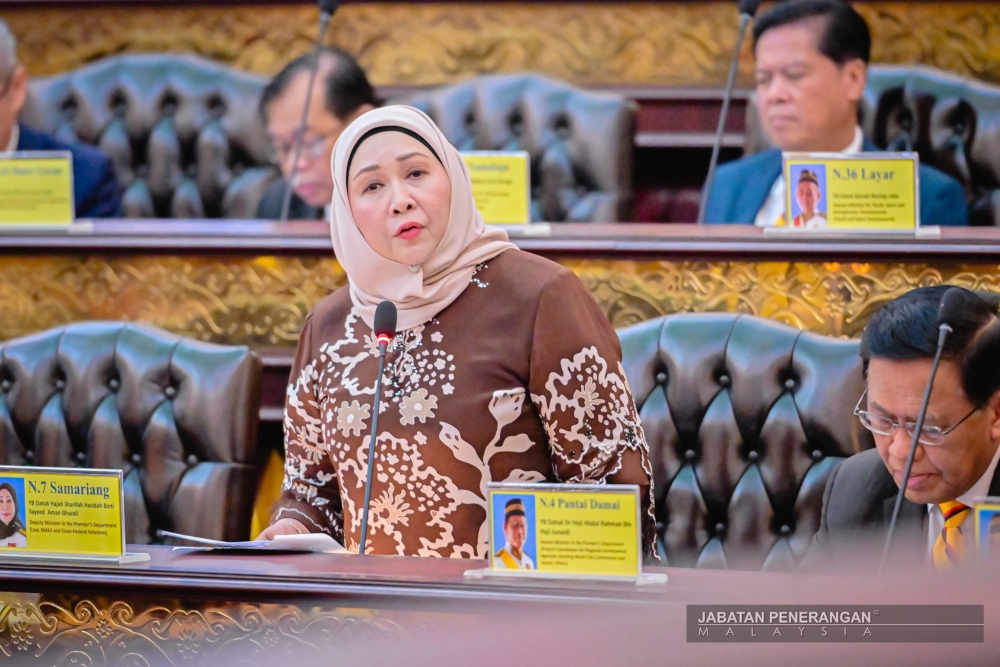
KUCHING, Oct 14 — The one-third parliamentary representation of Sarawak and Sabah in the Dewan Rakyat serves as a constitutional safeguard for the balance of the federation and is not merely a matter of numbers, said Datuk Sharifah Hasidah Sayeed Aman Ghazali.
The Deputy Minister in the Premier’s Department (Law, MA63 and State-Federal Relations) said the one-third ratio has its basis in the original formation of Malaysia.
“When Malaysia was formed in 1963, Parliament had 159 seats, namely Malaya with 104 seats, Sarawak (24), Sabah (16) and Singapore (15). Sarawak, Sabah and Singapore together held 55 seats, about one-third.
“After Singapore’s separation in 1965, this share was not reallocated. Today Sarawak (31) and Sabah (25) hold 56 of 222 seats, about 25 per cent.
“Applying one-third to the current 222 seats would mean 74 seats,” she told the august House at the State Legislative Assembly (DUN) sitting here.
She was responding to a question from Chieng Jin Ek (GPS-Bukit Assek) during the question-and-answer session.
Sharifah Hasidah said the ratio matters because constitutional amendments require a two-thirds majority, which currently is 148 of 222 MPS.
“In 1963, Malaya’s 104 seats fell short of the 106 then needed.
“Today the Peninsula holds 166 seats, enough to pass an amendment on its own,” she said.
She said the federal government has acknowledged that the one-third representation will require an amendment to the Federal Constitution.
“The agreement in principle is therefore the start of a constitutional process.
“The formula and the number of additional seats have yet to be determined and have to be discussed with the Sarawak and Sabah governments, she said, adding that this matter is separate from the ongoing re-delineation exercise by the Election Commission (EC).
On the constitutional process for increasing parliamentary representation, Sharifah Hasidah said any increase for Sarawak and Sabah requires a constitutional amendment passed by a two-thirds majority in Parliament.
“Delimitation is then carried out by the EC under Article 113 and the 13th Schedule of the Federal Constitution.
“Until these steps are complete, no additional parliamentary seats legally exist. This is why the EC has stated that there is currently no proposal to increase parliamentary constituencies in Sarawak.
“That statement and the federal government’s agreement in principle refer to different stages of the same process,” she explained.
She also said this is separate from the increase of Sarawak state assembly seats from 82 to 99.
“The DUN approved that in 2025, and the EC is now conducting the Seventh Sarawak Redelineation Review, with public inspection from September 1 to 30, 2026.
“The EC has indicated that the new state seats may not be ready in time for the next state election,” she said. — The Borneo Post
Federal agency chairman set to face corruption charge over Penang land sale
Mat Sabu welcomes MACC probe into fertiliser supply delays
Malaysia will not join US-backed Board of Peace, will monitor actions over Palestinian rights
沙捞越和沙巴在国会中占有三分之一的席位,这确保了宪法上的平衡,这一规定源于马来西亚在 1963 年的建国时期。
联邦政府支持增加他们的席位,但这需要修改宪法,而这需要议会三分之二的多数票通过。
选举委员会必须重新划分选区以增加议席,目前正在与砂拉越和沙巴政府进行磋商。
古晋,10月14日——拿督沙里法·哈西达·赛义德·阿曼·加扎里表示,砂拉越和沙巴在下议院拥有三分之一的议会代表权,是联邦平衡的宪法保障,而不仅仅是数字问题。
首相署副部长(法律、1963年马来西亚协议及州联邦关系)表示,三分之一的比例源于马来西亚最初的建国原则。
“马来西亚于 1963 年成立时,国会共有 159 个席位,其中马来亚占 104 个席位,砂拉越占 24 个席位,沙巴占 16 个席位,新加坡占 15 个席位。砂拉越、沙巴和新加坡三地共占 55 个席位,约占三分之一。
“新加坡于 1965 年脱离联邦后,这部分席位没有重新分配。如今,砂拉越(31 席)和沙巴(25 席)共占 222 个席位中的 56 个,约占 25%。
“将三分之一应用于目前的 222 个席位,意味着将有 74 个席位,”她在州立法议会 (DUN) 的庄严议会上说道。
在问答环节中,她回答了 Chieng Jin Ek(GPS-Bukit Assek)提出的问题。
沙里法·哈西达表示,这个比例很重要,因为宪法修正案需要三分之二的多数票,而目前这一比例是222名议员中的148人。
“1963年,马来亚的104个席位比当时所需的106个席位少了104个。
“如今半岛地区拥有 166 个席位,足以单独通过一项修正案,”她说。
她说,联邦政府已经承认,要实现三分之一的代表权需要修改联邦宪法。
“因此,该原则性协议标志着宪法进程的开始。”
她表示,“具体方案和新增席位数量尚未确定,需要与砂拉越和沙巴政府商议”,并补充说,此事与选举委员会正在进行的重新划分选区工作无关。
关于增加议会代表席位的宪法程序,莎丽法·哈西达表示,任何增加砂拉越和沙巴代表席位的提议都需要国会三分之二多数通过宪法修正案。
“然后,选举委员会根据联邦宪法第 113 条和第 13 附表进行选区划分。
“在这些步骤完成之前,砂拉越的国会席位在法律上并不存在。这就是为什么选举委员会声明目前没有增加砂拉越国会选区的提案。”
她解释说:“那份声明和联邦政府的原则性同意指的是同一过程的不同阶段。”
她还表示,这与砂拉越州议会席位从 82 个增加到 99 个无关。
“州议会于 2025 年批准了该方案,执行委员会目前正在进行第七次砂拉越重新划分选区审查,公众可于 2026 年 9 月 1 日至 30 日进行查阅。
“选举委员会已表示,新的州议席可能无法及时准备就绪,赶不上下次州选举,”她说道。——《婆罗洲邮报》
联邦机构主席将因槟城土地出售案面临贪污指控
马特·萨布欢迎反贪污委员会对化肥供应延误事件展开调查
马来西亚不会加入美国支持的和平委员会,并将监督有关巴勒斯坦权利的行动。