Failing foreign tourism sector at war over tourist levy and exactly who benefits from the billions raised外国旅游业举步维艰,双方就旅游税问题争执不下,究竟谁能从筹集的数十亿美元中获益。
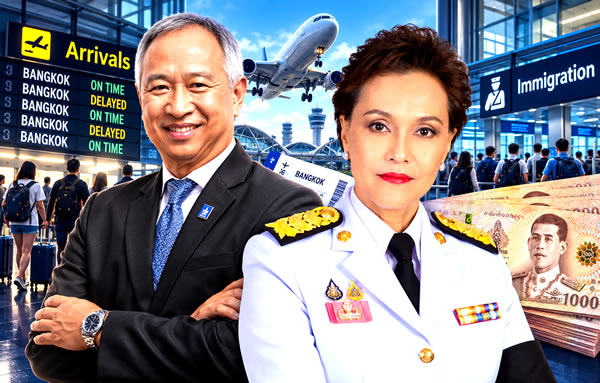
Deputy Prime Minister and Commerce Minister Suphajee Suthumpun wants a ฿450 tourist levy with insurance. THA President Thienprasith Chaiyapatranun questions ฿7bn in medical debts as… Read More ›
新闻视频
October 11, 2026 at 12:29 am
in Economy , Living , Media , Politics , Thailand
Deputy Prime Minister Suphajee Suthumpun is pushing ahead with Thailand’s proposed ฿450 tourist levy despite mounting opposition from hotel operators. The government promises accident insurance and billions in tourism funding, but its justification is coming under fire. At the centre of the row is ฿7 billion in unpaid foreign medical bills, including debts involving migrant workers rather than tourists. Yet serious accidents involving British holidaymakers have exposed another problem, with families raising over £150,000 to cover treatment and repatriation. The dispute comes as ASEAN arrivals fall and Thailand faces fierce competition from regional rivals, while already considering further passenger taxes. With insurance benefits still undefined and Cabinet approval pending, the battle now centres on who pays, who benefits and who controls the billions collected.
Deputy Prime Minister and Commerce Minister Suphajee Suthumpun backs the ฿450 tourist levy. Thai Hotels Association President Thienprasith Chaiyapatranun disputes ฿7 billion in medical debts. ( Source: The Nation )
Deputy Prime Minister and Commerce Minister Suphajee Suthumpun has reaffirmed her support for Thailand’s proposed ฿450 tourist levy over the weekend. However, growing resistance within the tourism industry is complicating the government’s plans.
The charge would provide accident and death insurance for foreign visitors while raising billions of baht for tourism development. Significantly, industry objections now extend to the insurance arrangements, healthcare costs and control of the revenue.
The dispute comes amid mounting international publicity over seriously injured tourists whose families face enormous hospital bills. Meanwhile, online fundraising appeals have exposed the financial risks of visiting Thailand without adequate insurance. The controversy adds to mounting difficulties for a tourism industry facing weaker regional arrivals, higher travel charges and intensifying competition.
Suphajee pushes ฿450 tourist levy towards Cabinet as officials prepare insurance and collection rules
On Friday, October 9, Suphajee instructed government agencies to finalise detailed arrangements for the proposed levy. Initially, the charge would apply to eligible foreign visitors arriving by air.
Collection from land and sea arrivals would follow under a phased introduction. However, Cabinet approval remains outstanding, while officials must settle insurance provisions, collection procedures and expenditure rules.
Tourism and Sports Minister Surasak Phancharoenworakul has targeted early 2027 for implementation. Nevertheless, that timetable remains dependent on completing the necessary legal and administrative procedures.
The proposal has already been discussed by the National Tourism Policy Committee. Earlier consultations also indicated substantial industry support for introducing the charge. Yet the latest objections reveal growing disagreement over how the proceeds should be distributed.
Suphajee, who oversees the Ministry of Tourism and Sports, has demanded transparent collection and expenditure arrangements. In particular, she wants financial procedures open to scrutiny before the proposal reaches Cabinet. Her intervention comes as tourism businesses increasingly question the government’s financial priorities.
Government backs tourist protection and development funding but insurance terms remain unresolved
Importantly, Suphajee identified tourist safety and insurance protection among the principal purposes of the levy. Revenue would also support attractions and infrastructure lacking sufficient development funding.
She pointed out that other countries already impose comparable visitor charges. At the same time, she acknowledged the need to establish precisely how Thailand would use the money. Her comments followed renewed efforts by the Tourism and Sports Ministry to advance the long-delayed measure.
Successive governments have considered imposing a foreign tourist entry charge. However, the current proposal has moved towards Cabinet consideration with a revised fee of ฿450. The initial collection system would concentrate on international air arrivals.
Subsequently, eligible visitors entering through land and sea borders would also face charges. The phased arrangements would allow officials to establish collection procedures before extending the system to other entry points.
Crucially, the insurance provisions remain unfinished. The government has not published final medical benefits, death compensation limits or detailed exclusions. Nor has it disclosed a complete breakdown showing how much of each payment would finance insurance.
These outstanding details have become increasingly important as tourism businesses examine the proposed financial arrangements. Indeed, the insurance component has emerged as a central issue in the dispute over the levy.
Hotel association challenges ฿7 billion healthcare debt figures used to justify new tourist charge
On Saturday, October 10, Thai Hotels Association president Thienprasith Chaiyapatranun challenged the government’s justification for imposing another charge on foreign visitors. Specifically, he questioned estimates suggesting that foreigners had accumulated approximately ฿7 billion in unpaid healthcare costs.
The association president highlighted the inclusion of Burmese, Cambodian and Lao nationals in the figures. Many foreigners from those countries receiving medical treatment are migrant workers rather than international tourists.
Thienprasith argued that their healthcare needs should be addressed through appropriate employment and social security arrangements. Consequently, he questioned whether their unpaid hospital bills justified imposing another charge on incoming holidaymakers.
The distinction is significant because the proposed insurance would cover qualifying visitors paying the levy. It would not automatically cover migrant workers, foreign residents or other people outside the scheme’s eligibility rules. Therefore, tourist insurance could not eliminate every category of unpaid foreign healthcare debt.
Nonetheless, the dispute over those figures does not resolve the separate problem of uninsured tourists requiring emergency treatment. That issue has repeatedly generated international news coverage following serious accidents involving foreign visitors.
Separately, the hotel association has raised concerns about allocating money to healthcare rather than tourism development. Its objections include questions over insurance benefits and how the proceeds would be managed. The association’s reported position does not establish outright opposition to every form of tourist insurance.
Industry resistance grows as proposed levy promises billions for tourism projects and protection
Instead, its criticism centres on the additional charge, the government’s healthcare calculations and the proposed distribution of revenue. Even so, the intervention represents significant resistance from one of Thailand’s principal tourism organisations.
It also exposes competing demands over a fund expected to control billions of baht annually. The government has suggested that the levy could generate substantial development revenue after insurance and collection expenses. Tourism and Sports Minister Surasak has indicated that at least ฿8 billion annually could remain available for tourism projects.
The money would support infrastructure, environmental restoration, destination improvements and community development. Additionally, tourism promotion and visitor protection are among the proposed purposes.
At 30 million chargeable arrivals, the ฿450 levy would theoretically produce ฿13.5 billion annually. Actual receipts, however, would depend on visitor numbers, exemptions and the phased implementation programme. Insurance premiums and collection expenses would then reduce the amount available for other purposes.
Even the government’s lower estimate represents a substantial new source of tourism funding. As a result, attention is turning towards who would control expenditure and determine which projects receive support.
The Association of Thai Travel Agents previously estimated that the scheme could generate approximately ฿10 billion annually. During discussions in August, industry representatives sought a role in decisions over how the money would be distributed. Former Tourism Minister Weerasak Kowsurat also proposed greater transparency in managing the fund.
Tourism fund faces scrutiny over spending rules as disputed medical debts complicate insurance plans
Notably, his suggestions included allowing public scrutiny of committee discussions. The government, however, has not finalised the fund’s management structure or the powers of private-sector representatives. Procedures for auditing expenditure and selecting projects also remain unsettled.
The dispute has therefore expanded beyond the original question of whether foreign tourists should pay another charge. Instead, it increasingly concerns insurance expenditure, healthcare funding and control over substantial tourism development revenue.
On another front, questions have emerged over the healthcare figures used to support the insurance component. Earlier government reporting in August referred to approximately ฿300 million to ฿400 million annually in unrecovered medical expenses involving foreigners. By October, discussions referred to approximately ฿7 billion.
The Tourism and Sports Ministry acknowledged that the larger figure covered different categories of foreign nationals. Consequently, the figures cannot be directly compared without establishing their accounting periods and patient populations.
The government has not published a definitive breakdown identifying unpaid hospital bills attributable exclusively to short-term tourists. That information is relevant when assessing the financial assumptions behind the proposed insurance scheme.
However, the wider problem of uninsured visitors remains separate from healthcare debts involving foreign workers. Indeed, a succession of serious accidents has exposed the financial consequences facing tourists without adequate protection. Several cases involving British visitors have generated extensive international coverage during the past two years.
British tourists face huge medical bills as families launch urgent appeals after serious accidents
In each case, families faced substantial medical or repatriation expenses following serious injuries in Thailand. Furthermore, the incidents prompted online fundraising campaigns that attracted attention through British news outlets and social media.
The appeals involved different accidents and insurance circumstances. Yet they shared a recurring feature: relatives seeking substantial public donations to meet treatment or repatriation costs. The amounts involved reached tens of thousands of pounds and, in one case, exceeded £150,000.
In February 2026, British backpacker Tiger Duggan, 23, suffered catastrophic injuries in a motorcycle accident on Koh Samui. His family subsequently launched an urgent appeal to finance medical treatment and possible repatriation.
Within six days, donations exceeded £150,000, approximately ฿6.44 million. The case attracted international publicity as concerns emerged about the insurance protection available. Moreover, the enormous fundraising target illustrated the financial consequences of serious accidents requiring prolonged medical care.
The incident was not an isolated example. In June 2026, British tourist Ethan Lacey, 20, suffered severe brain injuries after falling from a moving pickup in Pattaya. His travel insurance had expired after he extended his holiday.
Consequently, his family faced substantial hospital expenses and specialist repatriation costs without an active policy. Relatives began fundraising and seeking loans to finance his treatment and return home. The case subsequently attracted attention in the British Parliament.
Insurance exclusions leave injured British visitors facing major bills and public fundraising appeals
Elsewhere, another British holidaymaker faced substantial medical bills despite having purchased travel insurance. In April, Jo Ingram suffered serious spinal injuries during a beach pony ride in Thailand. She broke her back in three places.
Her insurer, however, classified the activity as an excluded extreme sport. Medical expenses reached at least £21,000, prompting another online fundraising appeal. The case demonstrated how policy exclusions can leave insured travellers facing substantial uncovered costs.
In particular, the nature of an activity can determine whether an insurer accepts responsibility for treatment. Similarly, British backpacker Okemena Sule, 31, suffered a severe brain injury in a Koh Samui motorcycle accident in March 2025.
His family could not establish whether he held valid travel insurance. Relatives consequently raised more than £38,000 as medical expenses mounted. The case also attracted international news coverage, adding to the series of reports involving injured British visitors.
Together, the four incidents involved different circumstances, injuries and insurance arrangements. All resulted in serious financial difficulties for injured tourists or their families. Moreover, each generated publicity involving Thailand, medical emergencies and urgent appeals for public donations.
The cases form part of wider international reporting concerning visitor safety and healthcare risks in Thailand. There is, however, no established figure measuring how many tourists have been discouraged specifically by these reports.
British travel warnings highlight motorcycle risks as Thailand finalises proposed tourist insurance
Nor has the financial impact of such coverage on Thailand’s tourism industry been quantified. Nevertheless, the incidents document the scale of medical expenses arising when insurance is absent or inadequate.
The British Foreign, Commonwealth and Development Office already warns travellers about Thailand’s road safety record. Its official guidance highlights the country’s high number of road accidents, particularly those involving motorcycles. Additionally, it warns that riding without the appropriate motorcycle licence can invalidate insurance.
British government healthcare advice also cautions visitors about the cost of private hospital treatment. Hospitals may require guarantees of payment before providing certain services. Accordingly, travellers are advised to obtain adequate medical and evacuation insurance before visiting Thailand.
These warnings are available to prospective British tourists before they book or undertake their journeys. Meanwhile, online fundraising cases provide further examples of the financial exposure associated with serious accidents abroad.
The proposed government-backed insurance scheme is intended to address some of those risks. Its effectiveness, however, will depend on the coverage limits, exclusions and procedures eventually approved.
The government has not yet disclosed the final policy conditions. In particular, motorcycle accidents present a significant unresolved issue. Motorcycle crashes feature prominently in reports involving seriously injured foreign visitors. Yet commercial travel insurance frequently includes conditions concerning licensing, engine size, helmets and alcohol consumption.
Motorcycle policy exclusions and repatriation costs raise questions over proposed insurance coverage
Some policies also exclude particular activities or circumstances. British government insurance guidance has previously highlighted a traveller facing a £23,000 medical bill after a motorcycle accident.
The policy covered motorcycles only up to 50cc, while the visitor had ridden a 125cc machine. As a result, the insurer’s conditions left the traveller facing substantial expenses. Thailand’s proposed insurance arrangements have not established how comparable claims would be handled.
Furthermore, the government has not explained whether the scheme would cover medical evacuation or specialist repatriation. Those expenses featured prominently in the cases involving injured British tourists.
Questions also remain over emergency hospital payments and procedures for submitting claims. A tourist paying the levy could receive some accident protection while remaining subject to significant exclusions. Ultimately, the final insurance specifications will determine the practical value of the proposed charge.
Thailand has previously operated a government-funded assistance programme for foreign tourists injured during their visits. In February 2024, the Tourism Authority of Thailand announced a ฿50 million allocation for accident assistance.
Earlier tourist accident assistance offered limited benefits as new levy insurance terms remain unclear
Under that programme, the death of a foreign tourist could qualify for assistance of up to ฿1 million. Accident-related medical treatment could attract up to ฿500,000. Meanwhile, permanent disability or organ loss could qualify for assistance of up to ฿300,000.
However, eligibility conditions applied, and certain circumstances were excluded. Those benefits belonged to the earlier government assistance programme. They are not confirmed benefits under the proposed ฿450 tourist levy.
Nevertheless, the programme established a precedent for state-supported accident assistance involving foreign visitors. The proposed levy would introduce a dedicated revenue source linked to international tourist arrivals.
Consequently, the government would have a recurring funding mechanism rather than relying solely on limited assistance allocations. The financial structure, however, has yet to be finalised. Officials must determine the premium paid for each insured visitor and the extent of the resulting coverage.
In addition, they must establish how claims will be processed and how medical providers will receive payment. The duration of insurance protection also remains an important consideration.
Foreign tourists can remain in Thailand for different periods, including extended holidays. Yet the government has not fully explained how the proposed coverage would operate across those different stays. Similarly, the treatment of visitors entering through land and sea borders remains tied to the phased introduction.
Hotel industry warns falling ASEAN arrivals and rising travel charges threaten Thailand’s competitiveness
These unresolved questions are becoming more significant as industry representatives challenge the insurance arrangements. At the same time, the proposed levy is encountering resistance over Thailand’s wider travel costs.
On October 10, Thai Hotels Association president Thienprasith warned that arrivals from ASEAN markets had fallen by approximately 20%. He argued that additional visitor charges could further weaken Thailand’s competitiveness.
Specifically, he identified Vietnam and Hong Kong among competing destinations. He also warned that rising travel costs could discourage price-sensitive tourists. Furthermore, he raised concerns about possible consequences for airline services and flight frequencies.
The objections come after Thailand increased its international airport passenger service charge to ฿1,120. Separately, the government is considering a proposed ฿1,000 international departure tax.
That measure remains under consultation and is distinct from the proposed ฿450 tourist levy. If all three charges applied, an eligible foreign air passenger would face a combined total of ฿2,570. However, that amount is not currently payable because the two proposed taxes have not received final approval.
Hotels oppose separate departure tax as government examines funding for tourism and foreign films
The Thai Hotels Association has formally objected to the separate departure tax. Its submission was made to the Revenue Department. Meanwhile, the association’s October 10 comments also challenged the tourist levy and its financial justification.
The reported formal submission, however, concerned the departure-tax proposal rather than the insurance scheme. The distinction is important because objections to several different travel charges are becoming intertwined.
Even so, the cumulative cost of visiting Thailand has become a prominent issue within the industry. The hotel association’s concerns arise as tourism businesses face competition from destinations offering alternative prices and travel arrangements.
In parallel, the government is seeking new funding for tourism development and visitor protection. The proposed insurance component has therefore become part of a wider disagreement over financial priorities.
There is also a further complication involving Thailand’s international film industry. On Friday, October 9, Suphajee revealed that officials were examining whether tourism-related revenue could support foreign film productions. She assigned former Tourism Minister Weerasak Kowsurat, now an adviser, to investigate the legal position.
The proposal concerns Thailand’s existing Cash Rebate scheme for international film productions. Under that programme, the government provides financial incentives to attract overseas filmmakers.
Film production rebates face funding questions as Suphajee reviews payments and legal arrangements
However, increasing production activity could place additional pressure on the available budget. As part of this, officials are studying whether alternative funding arrangements would be legally possible.
No decision has been made to allocate proceeds from the proposed tourist levy to film production incentives. The matter remains under examination. Separately, Suphajee addressed delays in payments under the existing film rebate programme.
She explained that the government transition had delayed the appointment of the relevant committee. A new committee has now been established. Consequently, officials can accelerate the processing of outstanding payments to film operators.
Suphajee also discussed closer coordination between foreign production incentives and support for Thailand’s domestic film industry. The foreign production programme falls under the Ministry of Tourism and Sports.
By contrast, support for Thai film operators is administered through the Ministry of Culture. She said closer cooperation could improve the management of film industry incentives. However, any proposal involving tourist levy proceeds would require an appropriate legal basis.
The discussion nevertheless introduces another possible beneficiary of the substantial revenue expected from the tourist charge. As such, the government’s promised transparency over expenditure has become increasingly important.
Tourism levy spending plans remain unsettled amid industry pressures and international accident reports
The proposed fund could finance infrastructure, destination improvements, environmental projects and tourist protection. Insurance costs must first be established before the amount available for development can be determined.
Similarly, the government must decide which agencies and industry representatives will participate in expenditure decisions. Those arrangements remain unfinished despite renewed political support for the levy.
The latest dispute also comes against the background of Thailand’s wider tourism difficulties. The industry faces pressure from competing destinations, rising travel charges and weaker arrivals from some regional markets.
At the same time, international reports continue to highlight serious accidents involving foreign visitors. Several have involved families seeking large public donations to pay for hospital treatment and repatriation. Those cases have received coverage far beyond Thailand.
Meanwhile, official foreign travel advisories continue to identify road accidents and medical costs as significant risks. The government’s proposed insurance scheme addresses the financial consequences of some tourist emergencies. However, it does not replace accident prevention, road safety enforcement or emergency medical services. Its actual coverage also remains unknown until the policy terms are finalised.
Hotel association disputes new visitor costs and healthcare figures as Cabinet decision remains pending
The Thai Hotels Association’s objections have therefore opened two separate disputes. The first concerns the additional cost imposed on foreign visitors and Thailand’s competitiveness.
The second concerns the financial justification for insurance and the allocation of revenue. The government’s use of unpaid healthcare figures involving migrant workers has become particularly contentious. However, the financial exposure facing uninsured holidaymakers remains a distinct issue.
The cases involving Duggan, Lacey, Ingram and Sule illustrate the scale of that exposure. They also show how serious accidents can generate substantial international publicity through fundraising appeals.
Nevertheless, it remains unclear whether the proposed insurance would have covered any of those particular incidents. That will depend on the final benefits and exclusions. For now, the government has not announced the premium structure or selected the definitive insurance arrangements.
Nor has it published a complete breakdown of the proposed fund’s expenditure. The Cabinet must still approve the levy before implementation can proceed. Furthermore, the government must complete the required administrative and legal steps. Suphajee’s October 9 intervention indicates that the proposal retains high-level political support. Her instructions also place transparency and detailed financial planning at the centre of the next stage.
Tourism sector challenges levy spending plans as rising costs and tourist accidents add to pressures
However, the October 10 objections from the Thai Hotels Association show that industry agreement remains incomplete. The association is challenging the healthcare figures, the proposed allocation of funds and the growing cost of visiting Thailand.
Meanwhile, other tourism representatives have sought greater participation in managing the expected revenue. The possibility of film industry funding has added another question over permitted expenditure.
Consequently, the debate now extends well beyond the original proposal to charge foreign visitors ฿450. It involves insurance protection, unpaid hospital bills, tourism infrastructure and the management of billions in annual receipts. The dispute is developing as Thailand’s tourism sector faces mounting commercial and reputational pressures.
Industry representatives are warning about falling arrivals from some markets and increasingly competitive regional destinations. At the same time, serious accidents involving uninsured or underinsured tourists continue to attract international attention.
The resulting fundraising appeals have exposed the substantial medical costs facing visitors and their families. However, the government’s insurance proposal remains incomplete, with coverage conditions and financial arrangements still unresolved.
The next stage will determine whether officials can settle those questions and secure Cabinet approval. Until then, Thailand’s proposed ฿450 tourist levy remains a significant source of disagreement within an industry facing growing pressure over visitor numbers, safety and international confidence.
New taxes simply for going in and out of Thailand in addition to higher airport tax already implemented
New tourist tax of 450 baht a step closer with officials targeting early 2027 after cabinet approval is obtained
End of 2026 or early 2027 for tourist levy which has risen to 450 baht and will apply to incoming air passengers
6th Minister of Tourism and Sports in 3 years promises a tourist levy, a policy first proposed in 2015
Hardline foreign tourism confirmed by new minster. More charges, shorter visas and mandatory insurance
Visa entry period to go from 60 to 30 days. Agreement in principle as foreign tourism numbers fall by 10%
60-day visa regime to be ended confirms Minister responding to rising industry security concerns
Tourism boss warns Thailand it is facing a Chinese blacklist if another security controversy erupts
Ung Ing finally gives the order. Thailand pulls the plug on scam centre electricity in Burma. Cut at 9 am
PM on a mission to China to ask President Xi Jinping to help rein in heavy online criticism of the kingdom
Joseph Anthony is an expat from Ireland who has lived in Thailand for the last decade. He has worked extensively in the media including editorial positions in Ireland and Thailand. He is focused on economic and business stories in Thailand as well as the expat lifestyle.
All posts by Joseph O' Connor
Eleven arrested in Saturday property raids linked to foreigners with links to criminality across Bangkok October 10, 2026 Police raid Bangkok’s luxury estates, targeting
Burmese drug kingpin with multiple identities and lives linked to massive cash seizure in Chiang Rai October 10, 2026 Dead in 2022. Arrested in South Korea in 2026. Noo
Thailand reels at story of mother taken against her will to a prison like nursing home with caged beds for inmates October 9, 2026 Police probe a family nightmare as Mother Phat, 63,
51 year old Frenchman arrested in Chiang Mai for running a tourist hostel through a nominee company October 9, 2026 Frenchman arrested after police raid a Chiang Mai
Queen is first Thai woman to fly a Swedish Gripen fighter jet. King in Surat Thani to congratulate her October 9, 2026 From Boeing jets to a supersonic fighter: Queen
Justice Minister and other cabinet members lead raids on Jewish centres in Bangkok as financial case grows October 8, 2026 A tiny Bangkok office registered to six entities, 61
Licenced online gambling site abroad linked to the husband of a government MP raises legal quandary October 8, 2026 A ฿1.9bn wealth controversy threatens to engulf
Horror care centre closed in Kanchanaburi where patients were locked into caged beds and prison cells October 7, 2026 Steel cage beds, barred rooms and psychiatric patients
New tourist tax of 450 baht a step closer with officials targeting early 2027 after cabinet approval is obtained October 7, 2026 Foreign tourists face a ฿450 Thai entry charge from
Corruption and crime crusader carted off to Bangkok Remand Prison after court refused last minute bail October 5, 2026 Atchariya is behind bars after losing bail as cyber
Vietnam’s economic growth races ahead of Thailand’s putting it on track to overtake its net GDP by 2029 October 5, 2026 Thailand’s economic lead is under pressure as
America reached out to Thais in Korat last weekend with a county fair show hosted by Ambassador O’ Neill October 5, 2026 Freedom, jazz and enterprise take centre stage in
Two Germans killed on Khao Lak died on a road that had already claimed foreign lives and seen carnage October 4, 2026 German couple killed at a Khao Lak crossing join a
Harrowing moments for husband in Chonburi who saw his wife killed by an angry elephant early Sunday October 4, 2026 Wild elephant pursues and kills Wanna Sridachama, 36,
Drunk driver mowed down a Thai woman and her German friend in Saturday’s early hours. Both died October 4, 2026 Double tragedy on Bangkok’s Thong Lor Road as Thai
Top anti corruption crusader arrested and charged by police in online gambling probe linked to boxing October 3, 2026 Thailand’s top crime fighter Atchariya is jailed
US raises the stakes on industrial capacity and transshipments posing trade barriers to Thai exports October 3, 2026 Bangkok’s US trade bargain faces a tariff
Counterfeiting racket selling on TikTok and Lazada busted in Samut Sakhon. Six foreigners arrested on site October 10, 2026
PM says he can explain. Denies power over impartial agencies as a no confidence motion is filed in House October 10, 2026
Murder in Trang over meth tablet dealing. Two men arrested after burned remains found near reservoir October 9, 2026
Commerce Minister says that a November signing of a US Thai trade deal is in sight as exporters stand by October 9, 2026
Armed police action in Nonthaburi as man wanted for attempted murder sought to evade an arrest warrant October 9, 2026
Thailand struggles economically even with revised World Bank GDP growth for 2026 coming in at 2% for 2026 October 8, 2026
New taxes simply for going in and out of Thailand in addition to higher airport tax already implemented October 8, 2026
Thaksin comes to Tax Court in Bangkok seeking temporary injunction to halt Revenue Department’s enforcement October 7, 2026
Senators from the ‘blue’ camp move against dissident Election Commissioner Sitthichot Intrawises October 6, 2026
Thai Airways defeats flood crisis but finds itself in a brewing crisis of confidence over its management October 5, 2026
Grab delivery driver strikes rich in Phuket by using trade to burgle 2 homes netting 3.69 million baht October 5, 2026
USS George HW Bush arrives in Phuket one day early and berths 3.3km offshore. Sailors landing ashore in holiday mode October 5, 2026
Police investigate a Burmese kingpin who entered Thailand by plane from India and had access to wealth October 4, 2026
Thai industrial base hammered by flooding crisis. Over 4k firms report a need for financial assistance October 4, 2026
House Committee chair Rome to call Bhumjaithai MP and Australian husband on Wednesday over wealth October 4, 2026
Two German tourists killed at Phang-nga zebra crossing. Pickup driver tore into them on Friday night October 3, 2026
Storm clouds gathering again as Thailand races to bolster its flood defences after last week’s deluge October 3, 2026
Bhumjaithai MP files police report against People’s Party’s Rangsiman Rome over scammer link remarks October 2, 2026
Thai Airways boss fired by the board chaired by Finance Ministry chief on Friday over baggage crisis October 2, 2026
Elderly woman seriously injured after an old man drove EV car at speed into a crowded Bangkok shrine October 2, 2026
Tuk Tuk driver in Phuket assaulted by Middle Eastern looking tourist who failed to pay his fare to a hotel October 2, 2026
Naturalised citizenship scrutinised as PM scraps Israeli’s Thai status over ongoing home passport use October 1, 2026
© 2026 Thai Examiner. All rights reserved.
2026年10月11日凌晨12:29
经济、生活、媒体、政治、泰国
尽管酒店经营者反对声浪日益高涨,泰国副总理素帕吉·素通蓬仍力推泰国拟议的450泰铢旅游税。政府承诺提供意外保险和数十亿泰铢的旅游资金,但其理由正受到质疑。争议的焦点在于高达70亿泰铢的未付外国医疗账单,其中包括涉及外籍劳工而非游客的债务。然而,英国游客遭遇的严重事故暴露了另一个问题,一些家庭筹集了超过15万英镑用于支付治疗和遣返费用。这场争议正值东盟秋季峰会之际,泰国面临着来自地区竞争对手的激烈竞争,同时还在考虑征收更多旅客税。由于保险福利尚未明确,且内阁尚未批准,目前的争论焦点在于谁来支付费用、谁来受益以及谁来掌控这数十亿泰铢的税收。
泰国副总理兼商务部长素帕吉·素通蓬支持征收450泰铢的旅游税。泰国酒店协会主席天普拉西·猜亚帕特拉努对70亿泰铢的医疗债务提出异议。(来源:《民族报》)
泰国副总理兼商务部长素帕吉·素通蓬周末重申了她对泰国拟议的450泰铢旅游税的支持。然而,旅游业内部日益增长的反对声浪正使政府的计划变得复杂。
这项收费将为外国游客提供意外和死亡保险,同时为旅游业发展筹集数十亿泰铢。值得注意的是,业界目前的反对意见还涉及保险安排、医疗保健成本以及收入控制等方面。
这场纠纷正值国际社会对严重受伤游客及其家属面临巨额医疗费用的关注度不断上升之际。与此同时,网络上的募捐活动也暴露了在未购买足够保险的情况下前往泰国旅游的经济风险。这场争议加剧了泰国旅游业本已面临的困境:区域游客数量减少、旅游费用上涨以及竞争加剧。
苏帕吉向内阁提交了征收450泰铢旅游税的提案,官员们正在制定保险和征收规则。
10月9日星期五,苏帕吉指示政府机构敲定拟议征税的具体安排。初期,该费用将适用于符合条件的乘飞机抵达的外国游客。
将分阶段实施陆路和海路入境货物的税收征收。然而,目前仍需内阁批准,官员们也必须敲定保险条款、征收程序和支出规则。
旅游与体育部长素拉萨·潘查伦沃拉库尔已将实施目标定于2027年初。然而,这一时间表仍取决于必要的法律和行政程序的完成情况。
该提案已提交国家旅游政策委员会讨论。此前的咨询也显示,业界对引入这项收费给予了相当大的支持。然而,最新的反对意见表明,各方对于如何分配收费所得存在越来越大的分歧。
负责旅游和体育部的苏帕吉要求财政收入和支出安排透明化。她尤其希望在提案提交内阁之前,所有财务程序都应接受审查。她的介入正值旅游企业对政府财政优先事项日益质疑之际。
政府支持旅游业保护和发展资金,但保险条款仍未解决。
苏帕吉特别指出,保障游客安全和提供保险是征收该税的主要目的之一。税收收入还将用于支持那些缺乏足够发展资金的景点和基础设施。
她指出,其他国家已经征收类似的游客费用。同时,她也承认需要明确泰国将如何使用这笔资金。此前,旅游和体育部为推进这项拖延已久的措施做出了新的努力。
历届政府都曾考虑过对外国游客征收入境费。然而,目前的提案已提交内阁审议,费用调整为450泰铢。初期收费将主要针对国际航空入境旅客。
随后,符合条件的旅客经陆路和海路边境入境也将面临收费。分阶段实施的安排将使官员们能够在将该系统推广到其他入境点之前,先建立起收费程序。
至关重要的是,保险条款仍未最终确定。政府尚未公布最终的医疗福利、死亡赔偿限额或详细的除外责任条款,也未披露每笔款项中用于支付保险费用的具体明细。
随着旅游企业仔细审查拟议的财务安排,这些悬而未决的细节变得日益重要。事实上,保险部分已成为征税争议的核心问题。
酒店协会对用于证明新增旅游税合理性的70亿泰铢医疗保健债务数据提出质疑。
10月10日星期六,泰国酒店协会主席Thienprasith Chaiyapatranun质疑政府对外国游客增收医疗费用的合理性。他特别质疑有关外国人累计未支付医疗费用约70亿泰铢的估算数据。
协会主席强调,统计数据中包含了缅甸、柬埔寨和老挝国民。来自这些国家的接受治疗的外国人中,许多人是务工人员,而非国际游客。
蒂恩普拉西特认为,他们的医疗保健需求应该通过适当的就业和社会保障安排来解决。因此,他质疑是否应该以此为由,向入境度假者额外收费,来弥补他们未支付的医疗费用。
这一区别意义重大,因为拟议的保险将涵盖缴纳相关费用的合格游客,但不会自动涵盖外籍劳工、外国居民或其他不符合该计划资格规定的人员。因此,旅游保险无法消除所有类型的未偿外国医疗债务。
然而,对这些数字的争议并不能解决无保险游客需要紧急救治的另一个问题。此前,外国游客遭遇严重事故后,这一问题已多次引发国际新闻报道。
此外,酒店协会对将资金用于医疗保健而非旅游发展表示担忧。其反对意见包括对保险福利以及收益管理方式的质疑。该协会的立场并非完全反对所有形式的旅游保险。
随着拟议征税方案承诺为旅游项目和保护工作提供数十亿美元的资金,业界的抵制情绪日益高涨。
相反,其批评主要集中在额外收费、政府的医疗保健预算计算以及拟议的收入分配方案上。即便如此,此次干预也代表了泰国主要旅游组织之一的强烈反对。
这也暴露了各方对这笔预计每年掌控数十亿泰铢资金的需求存在冲突。政府表示,扣除保险和征收费用后,该项税收可产生可观的发展收入。旅游和体育部长素拉萨克表示,每年至少有80亿泰铢可用于旅游项目。
这笔资金将用于支持基础设施建设、环境修复、旅游目的地改善和社区发展。此外,旅游推广和游客保护也是拟议用途之一。
假设每年有3000万游客需缴纳入境费,那么每人450泰铢的附加费理论上每年可带来135亿泰铢的收入。然而,实际收入将取决于游客数量、豁免情况以及分阶段实施计划。此外,保险费和征收费用将减少可用于其他用途的资金。
即使是政府较低的估算也意味着旅游业将获得一笔可观的新资金。因此,人们的关注点转向了谁将控制支出并决定哪些项目获得支持。
泰国旅行社协会此前估计,该计划每年可产生约100亿泰铢的收益。在8月份的讨论中,行业代表寻求参与资金分配决策。前旅游部长威拉萨·科苏拉特也提议提高基金管理的透明度。
旅游基金的支出规则正面临审查,而有争议的医疗债务使保险计划变得复杂。
值得注意的是,他的建议包括允许公众监督委员会的讨论。然而,政府尚未最终确定该基金的管理结构或私营部门代表的权力。支出审计和项目遴选程序也尚未确定。
因此,这场争议已不再局限于最初外国游客是否应该支付额外费用的问题,而是日益涉及保险支出、医疗保健资金以及对巨额旅游发展收入的控制权。
另一方面,用于支持保险部分的医疗保健数据也引发了质疑。政府8月份的报告显示,每年涉及外国人的未报销医疗费用约为3亿至4亿泰铢。而到了10月份,讨论的焦点却转向了约70亿泰铢。
旅游和体育部承认,较大的数字涵盖了不同类别的外国公民。因此,如果不确定它们的统计周期和患者群体,就无法直接比较这些数字。
政府尚未公布一份明确的明细清单,列出完全由短期游客造成的未付医院账单。而这些信息对于评估拟议保险方案背后的财务假设至关重要。
然而,未参保游客这一更广泛的问题与涉及外籍劳工的医疗债务问题仍是两回事。事实上,一系列严重的事故暴露了缺乏充分保障的游客所面临的经济后果。过去两年中,几起涉及英国游客的案件引起了国际社会的广泛关注。
英国游客遭遇严重事故,家属紧急呼吁,面临巨额医疗费用
在每起案例中,受害者家属在泰国遭受重伤后都面临着巨额医疗或遣返费用。此外,这些事件还引发了网络募捐活动,并引起了英国新闻媒体和社交媒体的关注。
这些求助案件涉及不同的事故和保险情况,但它们有一个共同点:家属需要大量公众捐款来支付治疗或遗体遣返费用。涉及的金额高达数万英镑,其中一起案件甚至超过了15万英镑。
2026年2月,23岁的英国背包客泰格·杜根在苏梅岛遭遇摩托车事故,身受重伤。他的家人随后发起紧急募捐,以筹集医疗费用和可能的遣返费用。
短短六天内,捐款就超过了15万英镑,约合644万泰铢。由于人们对现有保险保障的担忧,此案引起了国际社会的广泛关注。此外,如此巨大的筹款目标也凸显了严重事故需要长期医疗护理所带来的沉重经济负担。
这并非个例。2026年6月,20岁的英国游客伊桑·莱西在芭堤雅从一辆行驶中的皮卡车上摔下,头部严重受伤。由于他延长了假期,他的旅行保险已经过期。
因此,由于没有购买保险,他的家人面临着巨额的住院费用和专科医生转运回国的费用。亲属们开始筹款并寻求贷款,以支付他的治疗费用和回国费用。此案随后引起了英国议会的关注。
保险免责条款导致受伤的英国游客面临巨额账单和公开募捐。
另一方面,另一位英国游客尽管购买了旅行保险,仍然面临巨额医疗费用。今年4月,乔·英格拉姆在泰国海滩骑小马时脊椎严重受伤,背部三处骨折。
然而,她的保险公司将这项活动归类为除外责任的极限运动。医疗费用至少达到21000英镑,促使她再次发起网上募捐。此案表明,保单除外条款可能导致投保旅行者面临巨额未报销费用。
具体而言,活动的性质可能会决定保险公司是否承担治疗责任。同样,31岁的英国背包客奥克梅纳·苏莱 (Okemena Sule) 于2025年3月在苏梅岛发生摩托车事故,导致严重脑损伤。
他的家人无法确认他是否持有有效的旅行保险。随着医疗费用不断攀升,亲属们最终筹集了超过3.8万英镑。此案也引起了国际媒体的关注,使英国游客受伤的报道案例再添一例。
这四起事件涉及不同的情况、伤情和保险安排,但都给受伤游客或其家人造成了严重的经济困难。此外,每起事件都引发了公众对泰国、医疗紧急情况以及紧急募捐的关注。
这些案例是更广泛的国际报道的一部分,这些报道涉及泰国的游客安全和健康风险。然而,目前尚无确切数据统计有多少游客因这些报道而打消了赴泰旅游的念头。
英国旅行警告强调摩托车风险,与此同时,泰国最终敲定了拟议的旅游保险方案。
此类保险对泰国旅游业的经济影响尚未量化。然而,这些事件表明,当缺乏保险或保险不足时,医疗费用会造成多么巨大的损失。
英国外交、联邦及发展事务部已就泰国的道路安全状况向旅行者发出警告。其官方指南强调了泰国道路交通事故数量居高不下,尤其是涉及摩托车的事故。此外,指南还警告称,无证驾驶摩托车可能导致保险失效。
英国政府的医疗保健建议也提醒游客注意私立医院的治疗费用。医院可能要求在提供某些服务前提供付款担保。因此,建议旅行者在前往泰国之前购买足够的医疗和紧急医疗救援保险。
这些警告信息可供有意前往海外旅游的英国游客在预订或出行前查阅。与此同时,网上筹款案例也进一步表明了海外严重事故可能带来的经济损失。
拟议的政府支持保险计划旨在应对部分此类风险。然而,其有效性将取决于最终批准的承保范围、除外责任和程序。
政府尚未公布最终政策条款。尤其值得注意的是,摩托车事故是一个尚未解决的重要问题。在涉及外国游客重伤的报告中,摩托车事故占据了显著位置。然而,商业旅行保险通常包含有关驾照、发动机排量、头盔和饮酒等方面的条款。
摩托车保险的除外责任和遣返费用引发了人们对拟议保险范围的质疑。
部分保单还会将特定活动或情况排除在外。英国政府的保险指南此前曾指出,一名旅行者在发生摩托车事故后可能面临高达23,000英镑的医疗费用。
该保单仅承保排量不超过50cc的摩托车,而这位游客骑的是125cc的摩托车。因此,保险公司的条款导致这位游客面临巨额赔偿。泰国拟议的保险安排尚未明确如何处理类似的索赔。
此外,政府尚未说明该计划是否涵盖医疗转运或专科遣返。这些费用在涉及受伤英国游客的案例中占据了重要地位。
关于紧急住院费用支付和理赔程序仍存在疑问。缴纳此项费用的游客可以获得一定的意外保障,但仍会受到诸多除外责任的限制。最终,最终的保险条款将决定这项拟议费用的实际价值。
泰国此前曾实施一项政府资助的援助计划,为在泰国旅游期间受伤的外国游客提供帮助。2024年2月,泰国旅游局宣布拨款5000万泰铢用于意外伤害援助。
此前针对游客意外事故的援助提供的福利有限,因为新的征税保险条款仍不明确。
根据该计划,外国游客死亡可获得最高100万泰铢的援助。与事故相关的医疗费用可获得最高50万泰铢的援助。同时,永久性残疾或器官丧失可获得最高30万泰铢的援助。
但是,这些福利有资格条件,并且某些情况被排除在外。这些福利属于之前的政府援助计划,并非拟议的450泰铢旅游税项下的既定福利。
尽管如此,该项目为国家资助涉及外国游客的意外事故援助树立了先例。拟议的税收将引入一项与国际游客入境人数挂钩的专项收入来源。
因此,政府将拥有一个持续的资金机制,而不是仅仅依赖有限的援助拨款。然而,具体的财务结构尚未最终确定。官员们必须确定每位投保访客的保费以及由此产生的保障范围。
此外,他们还必须明确理赔流程以及医疗服务提供者如何收款。保险保障期限也是一个重要的考虑因素。
外国游客可在泰国停留不同时长,包括长假。然而,政府尚未充分解释拟议的保险政策将如何适用于这些不同的停留时长。同样,陆路和海路入境游客的待遇也与分阶段实施的政策挂钩。
酒店业警告称,东盟游客数量下降和旅游费用上涨威胁泰国竞争力。
随着行业代表对保险安排提出质疑,这些悬而未决的问题变得愈发重要。与此同时,由于泰国旅游成本较高,拟议的征税方案也遭遇了阻力。
10月10日,泰国酒店协会主席天普拉西特警告称,来自东盟市场的游客数量下降了约20%。他认为,增加游客收费可能会进一步削弱泰国的竞争力。
他特别指出越南和香港是竞争目的地之一。他还警告说,不断上涨的旅行成本可能会让对价格敏感的游客望而却步。此外,他还对航空公司服务和航班频次可能受到的影响表示担忧。
此前,泰国将国际机场旅客服务费提高至1120泰铢。此外,政府正在考虑征收1000泰铢的国际离境税。
该措施仍在咨询阶段,与拟议的450泰铢旅游税不同。如果三项费用全部适用,符合条件的外国航空旅客将需缴纳总计2570泰铢的费用。然而,由于这两项拟议税项尚未获得最终批准,因此目前无需缴纳该款项。
酒店反对单独征收离境税,政府正在审查对旅游业和外国电影的资助方案。
泰国酒店协会已正式反对单独征收离境税,并已向税务局提交了反对意见。同时,该协会在10月10日的评论中也对旅游税及其财务合理性提出了质疑。
然而,据报道,此次正式提交的文件涉及的是离境税提案,而非保险方案。这一区别至关重要,因为针对几种不同旅行收费的反对意见正变得错综复杂。
即便如此,前往泰国旅游的累计成本已成为业内一个突出问题。酒店协会的担忧源于旅游企业面临着来自其他提供不同价格和旅行安排的旅游目的地的竞争。
与此同时,政府正在寻求新的资金用于旅游业发展和游客保护。因此,拟议的保险部分已成为围绕财政优先事项的更广泛分歧的一部分。
此外,泰国国际电影产业还面临着另一个复杂问题。10月9日星期五,苏帕吉透露,官员们正在研究旅游相关收入是否可以用于支持外国电影制作。她指派前旅游部长、现任顾问维拉萨·科苏拉特负责调查相关法律问题。
该提案涉及泰国现行的国际电影制作现金返还计划。根据该计划,政府提供财政激励措施以吸引海外电影制作人。
电影制作退税面临资金问题,苏帕吉正在审查付款和法律安排
然而,生产活动的增加可能会给可用预算带来额外压力。为此,相关官员正在研究是否有合法可行的替代融资方案。
尚未决定是否将拟议旅游税的收益用于电影制作激励措施。此事仍在审查中。此外,苏帕吉还谈到了现有电影退税计划付款延迟的问题。
她解释说,政府换届导致相关委员会的任命被推迟。现在新的委员会已经成立。因此,官员们可以加快处理拖欠电影运营商的款项。
苏帕吉还讨论了加强外国电影制作激励措施与支持泰国国内电影产业之间的协调。外国电影制作计划隶属于旅游与体育部。
相比之下,对泰国电影运营商的支持则由文化部负责管理。她表示,加强合作可以改善电影产业激励措施的管理。然而,任何涉及旅游税收入的提案都需要有适当的法律依据。
然而,此次讨论也引出了旅游税预期带来的巨额收入的另一位潜在受益者。因此,政府承诺的支出透明度变得愈发重要。
在行业压力和国际事故报告的影响下,旅游税支出计划仍悬而未决。
拟议的基金可用于资助基础设施建设、目的地改善、环境项目和游客保护。在确定可用于开发的金额之前,必须首先确定保险成本。
同样,政府必须决定哪些机构和行业代表将参与支出决策。尽管该项税收获得了新的政治支持,但这些安排仍未完成。
此次争端也发生在泰国旅游业整体困境的大背景下。该行业面临着来自其他旅游目的地竞争、不断上涨的旅游费用以及部分区域市场游客数量下降的压力。
与此同时,国际媒体持续报道涉及外国游客的严重事故。一些家庭不得不向公众募捐,以支付医疗费用和遣返费用。这些案例在泰国以外也引起了广泛关注。
与此同时,官方发布的外国旅行建议仍然将道路交通事故和医疗费用列为重大风险。政府提出的保险方案旨在应对部分游客紧急情况造成的经济损失。然而,该方案并不能取代事故预防、道路安全执法或紧急医疗服务。其具体承保范围也需待保单条款最终确定后才能知晓。
酒店协会对新的游客费用和医疗保健数据提出异议,内阁决定仍待定。
因此,泰国酒店协会的反对意见引发了两场独立的争议。第一场争议涉及外国游客增加的额外费用以及泰国的竞争力。
第二个问题涉及保险的财务合理性和收入分配。政府使用涉及外籍劳工的未付费医疗保健数据引发了特别大的争议。然而,未投保度假者面临的财务风险仍然是一个不同的问题。
杜根、莱西、英格拉姆和苏勒的案例表明了这种影响的严重程度。这些案例也表明,严重的事故可以通过募捐活动引发巨大的国际关注。
然而,目前尚不清楚拟议的保险是否涵盖上述任何特定事件。这将取决于最终的保险范围和除外责任。目前,政府尚未公布保费结构或最终确定保险方案。
政府尚未公布拟议基金的完整支出明细。内阁仍需批准该项征税,方可实施。此外,政府还必须完成必要的行政和法律程序。苏帕吉10月9日的干预表明,该提案仍获得高层政治支持。她的指示还强调,透明度和详细的财务规划是下一阶段的核心。
旅游业面临税收支出计划方面的挑战,不断上涨的成本和游客事故加剧了压力。
然而,泰国酒店协会10月10日提出的反对意见表明,业界尚未达成最终协议。该协会对医疗保健数据、拟议的资金分配方案以及不断上涨的泰国旅游成本提出质疑。
与此同时,其他旅游业代表则寻求在预期收入管理方面拥有更大的参与权。电影业可能提供的资金支持,又为允许的支出范围增添了一个新的问题。
因此,这场争论如今已远远超出最初向外国游客收取450泰铢的提议,它涉及保险保障、未付医疗账单、旅游基础设施以及数十亿泰铢的年度收入管理等诸多方面。随着泰国旅游业面临日益增长的商业和声誉压力,这场争议也在不断升级。
业内人士警告称,部分市场的游客数量正在下降,区域旅游目的地之间的竞争也日益激烈。与此同时,涉及未投保或投保不足的游客的严重事故持续引发国际社会的关注。
由此引发的募捐活动揭示了游客及其家人面临的巨额医疗费用。然而,政府的保险方案仍不完善,承保范围和财务安排等问题尚未解决。
下一阶段将决定官员们能否解决这些问题并获得内阁批准。在此之前,泰国拟议的450泰铢旅游税仍然是旅游业内部一个重要的争议点,该行业正面临着游客数量、安全和国际信任度方面日益增长的压力。
除了已经实施的更高机场税之外,泰国还将新增出入境税。
新旅游税450泰铢的实施计划又向前迈进了一步,官员们计划在获得内阁批准后于2027年初实施。
旅游税将于2026年底或2027年初开始征收,目前已上调至450泰铢,并将适用于入境航空旅客。
三年内第六位旅游和体育部长承诺征收旅游税,这项政策最早于2015年提出。
新任部长确认将对外国旅游采取强硬措施。增加收费、缩短签证期限并强制购买保险。
签证入境期限由60天缩短至30天。鉴于外国游客数量下降10%,该提议已原则上达成一致。
部长确认将取消60天签证制度,以回应日益增长的行业安全担忧
泰国旅游业负责人警告称,如果再次爆发安全争议,泰国将面临被中国列入黑名单的风险。
翁英终于下达了命令。泰国切断了缅甸诈骗中心的电力供应。上午9点结束
首相奉命访问中国,请求习近平主席帮助遏制网络上对沙特阿拉伯王国的猛烈批评。
约瑟夫·安东尼是一位来自爱尔兰的侨民,过去十年一直居住在泰国。他曾在爱尔兰和泰国的媒体行业担任过编辑职务,拥有丰富的媒体从业经验。他主要关注泰国的经济和商业新闻,以及侨民的生活方式。
约瑟夫·奥康纳的所有帖子
2026年10月10日,曼谷警方周六突击搜查多处房产,逮捕11名与涉嫌犯罪活动有关联的外国人。警方突击搜查了曼谷的豪华住宅区,目标是……
缅甸毒枭,拥有多个身份和多条人命,与2026年10月10日清莱发生的巨额现金查获案有关。2022年死亡。2026年在韩国被捕。Noo
泰国震惊于一名母亲被强行送往如同监狱般的养老院,院内床位如同笼子一般,病人被关在笼子里。2026年10月9日,警方调查这起家庭噩梦:63岁的帕特母亲被强行送往养老院,院内床位如同笼子。
2026年10月9日,一名51岁的法国男子在清迈因通过代理公司经营旅游旅馆被捕。警方突袭清迈一家旅馆后,该法国男子被捕。
泰国王后成为首位驾驶瑞典鹰狮战斗机的泰国女性。国王于2026年10月9日前往素叻他尼府祝贺她。从波音喷气式飞机到超音速战斗机:王后
2026年10月8日,司法部长和其他内阁成员突击搜查曼谷的犹太中心,财务案件不断扩大。一家位于曼谷的小型办公室注册在六个实体名下,涉案金额达61美元。
一家与政府议员丈夫有关联的海外持牌在线赌博网站引发法律难题 2026年10月8日 一场19亿泰铢的财富纠纷或将席卷整个行业
2026年10月7日,北碧府一家恐怖的护理中心被关闭,该中心曾将病人锁在笼状床铺和牢房中。照片显示,该中心内有钢笼床、铁栅栏房间和精神病患者。
泰铢450泰铢的新旅游税计划在获得内阁批准后,于2027年初正式实施,距离实施又近了一步。2026年10月7日,外国游客将面临450泰铢的入境费。
反腐败和打击犯罪斗士阿查里亚(Atchariya)因网络犯罪被法院拒绝保释,于2026年10月5日被送往曼谷拘留监狱。
越南经济增长速度超过泰国,有望在2029年净GDP超过泰国(2026年10月5日)。泰国的经济领先地位正面临压力。
上周末,美国在呵叻府举办了一场由美国驻泰国大使奥尼尔主持的乡村集市演出,以此拉近了与泰国民众的距离。2026年10月5日,自由、爵士乐和创业精神成为焦点。
2026年10月4日,两名德国人在考拉遇难,他们死于一条此前已夺走多条外国人生命并造成惨重伤亡的道路上。这对德国夫妇在考拉的一个过境点被撞身亡。
2026年10月4日星期日清晨,春武里府一名丈夫亲眼目睹妻子被愤怒的大象咬死,经历了令人痛心的时刻。野生大象追逐并杀死了36岁的Wanna Sridachama。
周六凌晨,一名醉酒司机驾车撞倒了一名泰国女子和她的德国朋友。两人于2026年10月4日在曼谷通罗路不幸身亡。
泰国顶级反腐斗士因涉嫌参与与拳击相关的网络赌博案被警方逮捕并起诉 2026年10月3日 泰国顶级反腐斗士阿查里亚被判入狱
美国提高工业产能和转运方面的门槛,对泰国出口设置贸易壁垒 2026年10月3日 曼谷与美国达成的贸易协议面临关税威胁
沙没沙空府警方捣毁了一个在TikTok和Lazada上销售假冒商品的团伙。2026年10月10日,六名外国人在现场被捕。
首相表示他可以解释。他否认对公正机构拥有权力,此前众议院于2026年10月10日提交了不信任动议。
董里府因冰毒片剂交易发生谋杀案。2026年10月9日,两名男子在水库附近发现被焚烧的尸体后被捕。
商务部长表示,美泰贸易协议有望在11月签署,出口商已做好准备。(2026年10月9日)
2026年10月9日,暖武里府警方对一名因涉嫌谋杀未遂而被通缉的男子采取武装行动,该男子试图逃避逮捕令。
即使世界银行将泰国2026年的GDP增长率修正为2%,泰国经济依然举步维艰。(2026年10月8日)
除了已经实施的更高机场税之外,泰国还将对进出境征收新的税费,该税项已于2026年10月8日生效。
他信于2026年10月7日向曼谷税务法庭申请临时禁令,以阻止税务部门的执法行动。
来自“蓝营”的参议员们对持不同政见的选举专员西提乔特·因特拉怀斯采取行动 2026年10月6日
泰国航空克服了洪灾危机,但却发现自己正面临着管理层信任危机(2026年10月5日)
2026年10月5日,一名Grab外卖员在普吉岛利用行窃机会入室盗窃两户人家,共盗走369万泰铢。
“乔治·H·W·布什”号航空母舰提前一天抵达普吉岛,停泊在离岸3.3公里处。水兵们于2026年10月5日以度假模式上岸。
警方正在调查一名缅甸黑帮头目,他于2026年10月4日从印度乘飞机进入泰国,并拥有雄厚的财力。
泰国工业基础遭受洪灾重创。超过4000家企业表示需要财政援助。(2026年10月4日)
众议院委员会主席罗姆将于2026年10月4日星期三致电泰国议员布姆贾伊泰及其澳大利亚籍丈夫,讨论财富问题。
两名德国游客在攀牙府斑马线被撞身亡。2026年10月3日星期五晚,一辆皮卡车撞向他们。
上周泰国遭遇洪灾后,暴雨云团再次聚集,泰国正加紧加强防洪措施。(2026年10月3日)
泰自豪党议员就人民党议员兰西曼·罗姆涉嫌诈骗言论向警方报案 2026年10月2日
泰国航空公司首席执行官因行李危机于2026年10月2日(星期五)被财政部长主持的董事会解雇。
2026年10月2日,一名老人驾驶电动汽车高速冲入曼谷一座拥挤的寺庙,导致一名老妇重伤。
2026年10月2日,普吉岛一名嘟嘟车司机因未支付前往酒店的车费而被一名看起来像中东人的游客殴打。
2026年10月1日,总理因以色列人持续使用本国护照而取消其泰国公民身份,入籍公民身份受到审查。
© 2026 Thai Examiner。版权所有。