SGH head of neurosurgery under probe for failing to report patient's death to coroner新加坡中央医院神经外科主任因未向验尸官报告患者死亡而接受调查
Dr Jai Prashanth Rao said that he had mistakenly believed he had the discretion to decide whether to report the case to the coroner, and wanted to show compassion to the patient's family.
Dr Jai Prashanth Rao said that he had mistakenly believed he had the discretion to decide whether to report the case to the coroner, and wanted to show compassion to the patient's family.
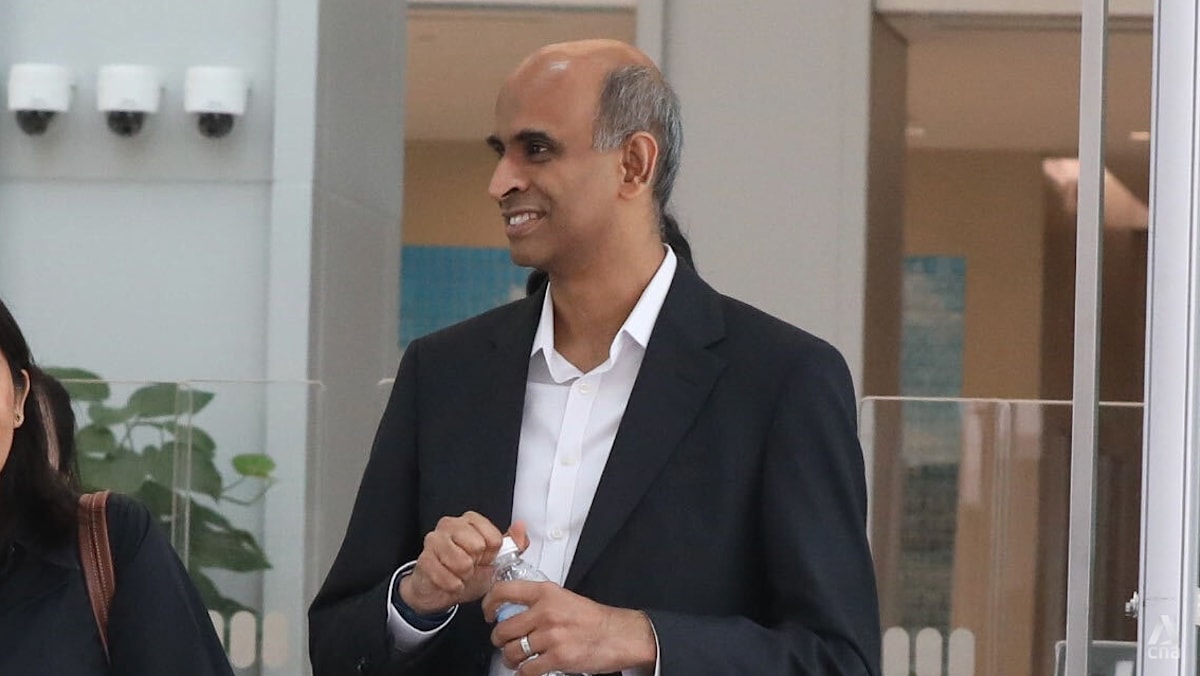
Dr Jai Prashanth Rao leaving the State Courts on Oct 14, 2026. (Photo: CNA/Mak Jia Kee)
This audio is generated by an AI tool.
SINGAPORE: The head of neurosurgery at the Singapore General Hospital (SGH) is being investigated for failing to report a patient's death to the coroner as required under the Coroners Act.
Clinical Assistant Professor Jai Prashanth Rao heads the neurosurgery department of the National Neuroscience Institute (NNI) at SGH.
The investigation came to light on Wednesday (Oct 14) during the opening of a coroner's inquiry into the death of Madam Tan Suan Lin, 75, who died six days after undergoing surgery by Dr Rao. The operation was meant to remove a brain tumour.
Complications during the surgery on Jan 3, 2024, led to brain swelling and about 3L of blood loss, prompting Dr Rao to abort the operation and close the wound.
Dr Rao testified on Wednesday that he had initially told Mdm Tan's daughter and husband that he had to report the case to the coroner.
However, he changed his mind out of compassion and a desire to give the family closure and instead issued a death certificate.
Dr Rao explained that "probably my heart overruled my brain" and said he did not push back against the family's reluctance to have the case reported to the coroner. They did not want Mdm Tan to undergo an autopsy or sustain any more cuts.
The death certificate stated the cause of death as "malignant neoplasm – brain, unspecified", which Dr Rao said was intended to indicate that Mdm Tan had died from a brain tumour.
However, a forensic pathologist from the Health Sciences Authority (HSA) indicated that a possible cause of death was instead bleeding complications during surgical intervention for the tumour.
The case was flagged to the coroner by the National Neuroscience Institute (NNI) only about a year later in February 2025, following which a police report was filed in March 2025 over Dr Rao's failure to report the death.
No autopsy was performed as a result of the delay.
Three witnesses took the stand for the state on Wednesday, the first of whom was investigation officer Benedict Lim Wei Sheng.
He said that Mdm Tan first had progressive vision deterioration in her left eye from early 2023.
A brain MRI scan later revealed that a large brain tumour was pressing against her optic nerve.
She was counselled by Dr Rao and agreed to undergo brain surgery to remove as much of the tumour as possible.
The surgery proceeded largely uneventfully on Jan 3, 2024, until the team encountered extreme difficulty stopping the bleeding.
There was massive surgical blood loss of about 3,000ml, the brain began to swell and would have come out of the skull cavity if the swelling had continued.
Dr Rao thus stopped the operation and closed the skin before telling Mdm Tan's husband and daughter outside the operating theatre about the complications and her poor prognosis.
The patient was transferred to the intensive care unit, but her condition later deteriorated, and she died on Jan 9, 2024.
In the interim, Dr Rao told the family that Mdm Tan's likelihood of survival was not high.
He also told them there was a possibility that an autopsy would have to be done, although he was not the one to make that decision.
Dr Rao, who testified as the second witness, said that Mdm Tan's husband was not keen on this at first, but he tried to accept the rationale with further explanation.
However, Mdm Tan's daughter said many times that she did not want her mother to go through the process, Dr Rao recounted.
He said that she wanted her mother to retain "dignity in death".
Dr Rao said he had been under the mistaken impression that only deaths occurring within 24 hours of a surgery required mandatory reporting to the coroner.
He thus assumed that he had discretion over whether to report the death.
He said he told the family that he would prefer to report the death to the coroner, but was motivated by the desire to "demonstrate compassion" and provide closure, as well as prevent further distress.
State Coroner Adam Nakhoda questioned whether Dr Rao had received any training on determining when a report should be made to the coroner.
Dr Rao said that such training occurs "when we are very junior". He added that he has since refreshed his memory and knows now that he ought to have reported the case.
"I work in a specialty that, unfortunately, when complications happen, they are severe," he said. "This is the only death I've had in 12 to 13 years."
He also said he was not sure where he got the mistaken impression that he only had to report deaths that occurred within 24 hours of surgery.
Dr Rao added that there were no unexpected events during the surgery that deviated from standard operating procedures, except for the brain swelling at the end.
"I couldn't explain the cause," he said. "But from my medical expertise, it seemed like a seizure to me."
He said Mdm Tan had been given the usual medication to reduce the electrical activity that causes seizures before the surgery, but such medication is not 100 per cent effective.
When questioned about the exact wording of the cause of death on Mdm Tan's death certificate , Dr Rao explained that a junior doctor had signed it.
This is because death can happen at any time, and junior doctors are usually on site.
Dr Rao said he had given instructions to indicate the cause of death as a brain tumour, but the junior doctor then went into the electronic system and selected the relevant category.
He was not required to review the cause of death after the junior doctor selected it, Dr Rao added.
An independent expert witness, who was called by the state, told the court it was obvious to him that the case should have been reported to the coroner, but said he empathised with Dr Rao.
"Yes, the death should have been reported because that is in our training and experience from the time we started this speciality, that has been one of the things that is highlighted," the expert said.
"However, the academic knowledge of it sometimes can be marred by emotions."
He added that as a surgeon himself he understood that the main surgeon is the one who bears "the most emotional burden", and it is "entirely reasonable" that this burden can sometimes cloud one's judgment.
The coroner's findings will be delivered at a later date.
Under the Coroners Act, any person who becomes aware of a death that is, or appears to be, a reportable death, must make a report to the police as soon as reasonably practicable.
Failure to do so without reasonable excuse is an offence, punishable by up to one month's jail or a fine of up to S$1,500, or both.
The Coroners Act lists examples of reportable deaths, including an unnatural or violent death, a death that resulted directly or indirectly from medical treatment or care, and any death in Singapore where the cause or manner is unknown.
CNA has contacted NNI for more information.
Get our pick of top stories and thought-provoking articles in your inbox
Stay updated with notifications for breaking news and our best stories
Join our channel for the top reads for the day on your preferred chat app
贾伊·普拉桑特·拉奥医生表示,他错误地认为自己有权决定是否将此案报告给验尸官,并且想要对病人家属表示同情。
Jai Prashanth Rao 博士于 2026 年 10 月 14 日离开州法院。(照片:CNA/Mak Jia Kee)
这段音频是由人工智能工具生成的。
新加坡:新加坡中央医院(SGH)神经外科主任因未按《验尸官法》规定向验尸官报告病人死亡情况而正在接受调查。
临床助理教授 Jai Prashanth Rao 领导新加坡中央医院 (SGH) 国家神经科学研究所 (NNI) 的神经外科部门。
这项调查于周三(10月14日)在对75岁的陈淑琳女士的死因进行死因调查的开庭审理中曝光。陈淑琳女士在接受饶医生的手术六天后去世。手术的目的是切除脑瘤。
2024 年 1 月 3 日的手术过程中出现并发症,导致脑肿胀和约 3 升失血,拉奥医生被迫中止手术并缝合伤口。
拉奥医生周三作证说,他最初告诉谭女士的女儿和丈夫,他必须将此案报告给验尸官。
然而,出于同情和希望给家属一个交代,他改变了主意,签发了死亡证明。
拉奥医生解释说,“或许是我的感情战胜了理智”,并表示他没有反对家属不愿将此案报告给验尸官的意愿。他们不希望谭女士接受尸检,也不希望她再受到任何伤害。
死亡证明上写明死因是“脑部恶性肿瘤,未具体说明”,拉奥医生说,这意在表明谭女士死于脑瘤。
然而,卫生科学局 (HSA) 的一名法医病理学家指出,可能的死因是肿瘤手术过程中出血并发症。
大约一年后的 2025 年 2 月,国家神经科学研究所 (NNI) 才将此案报告给验尸官,随后在 2025 年 3 月,警方就 Rao 医生未报告死亡事件提交了一份报告。
由于延误,未能进行尸检。
周三,三名证人代表控方出庭作证,第一位是调查官林伟生。
他说,谭女士从 2023 年初开始左眼视力逐渐恶化。
后来进行的脑部核磁共振扫描显示,一个巨大的脑瘤压迫着她的视神经。
拉奥医生为她做了心理咨询,她同意接受脑部手术,尽可能多地切除肿瘤。
2024 年 1 月 3 日,手术进行得相当顺利,直到团队在止血方面遇到了极大的困难。
手术中大量失血约 3000 毫升,大脑开始肿胀,如果肿胀继续下去,大脑就会从颅腔中脱出。
因此,拉奥医生停止了手术,缝合了皮肤,然后才在手术室外告诉谭女士的丈夫和女儿手术并发症和她糟糕的预后。
病人被转入重症监护室,但病情后来恶化,于 2024 年 1 月 9 日去世。
在此期间,拉奥医生告诉家属,谭女士的生存几率不高。
他还告诉他们,有可能需要进行尸检,尽管他不是做这个决定的人。
作为第二位证人出庭作证的拉奥医生表示,谭女士的丈夫起初并不热衷于此,但在进一步解释后,他试图接受这一理由。
然而,拉奥医生回忆说,谭女士的女儿多次表示不希望母亲经历这个过程。
他说,她希望母亲“在死亡时保持尊严”。
拉奥医生表示,他之前误以为只有手术后 24 小时内发生的死亡才需要强制向验尸官报告。
因此,他认为自己有权决定是否上报死亡事件。
他说,他告诉家属,他更愿意将死讯报告给验尸官,但出于“表达同情”和给予他们慰藉,以及防止进一步的痛苦,他决定先进行调查。
州验尸官亚当·纳霍达质疑拉奥医生是否接受过任何关于何时应该向验尸官提交报告的培训。
拉奥医生说,这种培训发生在“我们资历尚浅的时候”。他还补充说,他后来重新温习了一遍,现在知道自己当时应该上报这起案件。
“我从事的专业领域,不幸的是,一旦出现并发症,后果往往很严重,”他说。“这是我12到13年来遇到的唯一一例死亡病例。”
他还表示,他不确定自己是从哪里得出这样的错误印象:他只需要报告手术后 24 小时内发生的死亡病例。
Rao 医生补充说,手术过程中没有发生任何偏离标准操作程序的意外事件,除了最后出现的脑肿胀。
“我无法解释病因,”他说。“但以我的医学专业知识来看,这看起来像是癫痫发作。”
他说,谭女士在手术前服用了常规药物来减少引起癫痫发作的电活动,但这种药物并非百分之百有效。
当被问及谭女士死亡证明上死因的确切措辞时,饶医生解释说,是一位初级医生签的字。
这是因为死亡随时可能发生,而且现场通常只有初级医生在场。
拉奥医生说,他已指示将死因注明为脑瘤,但那位年轻医生随后进入电子系统并选择了相关类别。
拉奥医生补充说,初级医生选定死因后,他无需再进行复核。
州政府传唤的一名独立专家证人告诉法庭,在他看来,这起案件显然应该报告给验尸官,但他表示理解拉奥医生的感受。
“是的,这起死亡事件应该上报,因为从我们开始从事这个专业以来,我们的培训和经验告诉我们,死亡是需要重点关注的事情之一,”这位专家说。
“然而,对它的学术认知有时会受到情感的影响。”
他还补充说,作为一名外科医生,他明白主刀医生承受着“最大的情感负担”,这种负担有时会影响一个人的判断,这是“完全合理的”。
验尸官的调查结果将在稍后公布。
根据验尸官法,任何知悉死亡事件属于或看似属于应报告死亡事件的人,必须在合理可行的范围内尽快向警方报告。
无正当理由不履行此项义务属于违法行为,可处以最高一个月监禁或最高 1500 新元罚款,或两者并罚。
《验尸官法》列举了需要报告的死亡案例,包括非自然死亡或暴力死亡、直接或间接由医疗或护理导致的死亡,以及在新加坡死亡原因或方式不明的任何死亡。
CNA已联系NNI以获取更多信息。
订阅我们的邮件,即可获取精选热点新闻和引人深思的文章。
订阅通知,第一时间获取突发新闻和精彩报道。
加入我们的频道,即可在您常用的聊天应用上获取当日热门文章。