Singapore’s AI-led economic growth set to continue in 2027: MAS新加坡金融管理局:人工智能驱动的经济增长势头将在2027年继续保持
Activity in technology-related sectors is expected to moderate next year, but should remain a principal driver of economic growth, said the central bank on Wednesday (Oct 14).
Activity in technology-related sectors is expected to moderate next year, but should remain a principal driver of economic growth, said the central bank on Wednesday (Oct 14).
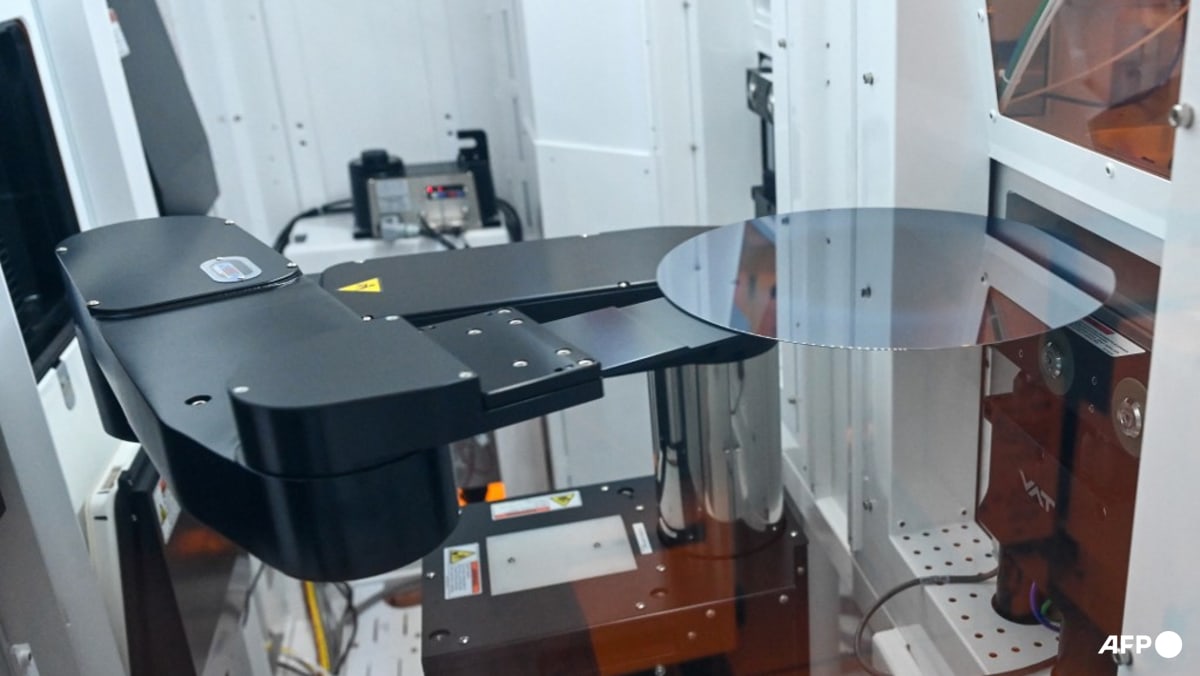
Industry forecasts for chip sales growth suggest that the AI-led semiconductor cycle is likely to remain in a phase of expansion, said MAS. (File photo: AFP/Roslan Rahman)
This audio is generated by an AI tool.
SINGAPORE: Artificial intelligence-driven expansion of Singapore’s economy is projected to continue next year, though the pace of growth may slow down, the Monetary Authority of Singapore (MAS) said on Wednesday (Oct 14).
Growth should be supported by strong order backlogs and capacity expansions in AI-related production, the central bank said in its latest quarterly macroeconomic review.
While activity may moderate compared with the “exceptional pace” in 2026, it should remain a “principal driver” of growth, said MAS.
Singapore’s economy grew 5.4 per cent in the third quarter of the year, after expanding 6.2 per cent in the second quarter, said the Ministry of Energy, Trade and Industry in its advance estimates on Wednesday.
“The technology-related sectors continued to expand robustly, accounting for around 75 per cent of overall (year-on-year) growth,” MAS said, describing the growth as “relatively concentrated”.
Tech-related sectors experienced “outsized expansion”, while non-tech and non-oil sectors saw “mixed” growth, the report said.
CNA Games Guess Word Crack the word, one row at a time Buzzword Create words using the given letters Mini Sudoku Tiny puzzle, mighty brain teaser Mini Crossword Small grid, big challenge Word Search Spot as many words as you can Show More Show Less
CAN AI-LED GROWTH CONTINUE?
The durability of the current economic expansion hinges on three key considerations, said MAS.
The first is the sustainability of the AI-driven global investment cycle. On this point, indicators constructed by the central bank’s economic policy group suggest that strong semiconductor production growth has persisted despite financial pressure on hyperscalers.
“While this points to rising downside risks, current strains remain short of levels that would suggest an imminent retrenchment in AI investment,” said MAS.
Even if capital expenditure is affected by financial vulnerabilities, there are substantial order backlogs and capacity expansions that have been committed to, which would cushion the near-term impact on production.
Industry forecasts for chip sales growth, together with increases in new orders, suggest that the AI-led semiconductor cycle is more likely to remain in a phase of expansion, said MAS.
The second consideration affecting the durability of Singapore’s current economic expansion is whether capacity constraints in the technology-related sectors will constrain the pace of further growth .
The central bank noted that significant additions are expected to come online in 2027 and 2028.
For example, Micron has embarked on multi-year investments, while GlobalFoundries and UMC are ramping up capacity.
“As additional production capacity comes onstream, firms could ramp up output further,” said MAS.
Thirdly, MAS said the sustained strength and the positive impact on overall business confidence and investment sentiment could support other parts of the economy.
“Sanguine business and investor sentiments would sustain robust financial intermediation and trading activity, contributing to firm growth within the financial sector,” it said, though it acknowledged that higher global interest rates could temper credit demand.
Overall, MAS believes that AI-led expansion will continue into 2027.
LABOUR MARKET OUTLOOK
Labour demand is expected to be supported by construction and domestic-oriented services next year, said MAS in the report.
Ongoing major infrastructure and building projects will support demand for workers in construction and in segments of professional services such as architectural and engineering services.
Employment in public administration and education is also expected to increase as plans to expand pre-school services take shape, while demand for financial investment activity, insurance and healthcare should boost hiring as well.
However, nominal wage growth is expected to moderate to levels broadly in line with the historical norm.
Despite firms planning to hire more, the share of companies that intend to raise wages edged down in the Manpower Ministry’s latest survey.
“Cyclically low resignation rates indicate limited job-to-job mobility, reducing pressure on firms to raise wages to retain workers,” the report said.
INFLATION TO EASE IN 2027
Despite the re-escalation of the Middle East conflict, MAS said oil and non-oil imported inflation are forecast to ease gradually over 2027 after remaining elevated in the near term.
Fuel prices are expected to remain high in the immediate months ahead, but as oil and gas flows normalise, prices of energy products are expected to moderate.
Similarly, weather-related disruptions could lift prices further, but food inventories in major producing countries should temper the extent of the increases.
“In the latter part of 2027, as the temporary weather-related shocks to agricultural production dissipate, the inflation impact on Singapore’s food prices is expected to fade progressively,” said MAS.
Get our pick of top stories and thought-provoking articles in your inbox
Stay updated with notifications for breaking news and our best stories
Join our channel for the top reads for the day on your preferred chat app
央行周三(10月14日)表示,预计明年科技相关行业的活动将有所放缓,但仍将是经济增长的主要驱动力。
新加坡金融管理局(MAS)表示,行业对芯片销售增长的预测表明,人工智能驱动的半导体周期可能仍将处于扩张阶段。(资料图片:法新社/Roslan Rahman)
这段音频由人工智能工具生成。
新加坡:新加坡金融管理局(MAS)周三(10月14日)表示,人工智能驱动的新加坡经济扩张预计明年将继续,尽管增长速度可能会放缓。
该央行在最新的季度宏观经济评估报告中表示,强劲的订单积压和人工智能相关产品的产能扩张将支撑经济增长。
新加坡金融管理局表示,虽然与 2026 年的“异常迅猛”相比,经济活动可能会有所放缓,但它仍将是经济增长的“主要驱动力”。
新加坡能源、贸易和工业部周三发布的初步数据显示,新加坡经济今年第三季度增长5.4%,此前第二季度增长6.2%。
新加坡金融管理局表示,“科技相关行业继续强劲扩张,约占整体(同比)增长的75%”,并称这种增长“相对集中”。
报告称,科技相关行业经历了“超大扩张”,而非科技和非石油行业则呈现“喜忧参半”的增长。
CNA游戏 猜词游戏 逐行破解单词 流行词游戏 用给定的字母组成单词 迷你数独 小小谜题,挑战你的大脑 迷你填字游戏 小方格,大挑战 单词搜索 尽可能多地找出单词 显示更多 显示更少
人工智能驱动的增长能否持续?
新加坡金融管理局表示,当前经济扩张的可持续性取决于三个关键因素。
首先是人工智能驱动的全球投资周期的可持续性。在这方面,央行经济政策小组构建的指标表明,尽管超大规模数据中心面临财务压力,但半导体生产依然保持强劲增长。
“虽然这表明下行风险正在上升,但目前的压力水平仍未达到表明人工智能投资即将收缩的程度,”新加坡金融管理局表示。
即使资本支出受到财务脆弱性的影响,但已承诺的大量订单积压和产能扩张将缓冲对生产的短期影响。
新加坡金融管理局表示,行业对芯片销售增长的预测,以及新订单的增加,表明人工智能驱动的半导体周期更有可能继续处于扩张阶段。
影响新加坡当前经济扩张可持续性的第二个考虑因素是,技术相关行业的产能限制是否会制约进一步增长的速度。
央行指出,预计2027年和2028年将有大量新增电力供应投入使用。
例如,美光科技已启动多年投资计划,而格罗方德和联电正在提高产能。
新加坡金融管理局表示:“随着更多产能投入使用,企业可能会进一步提高产量。”
第三,新加坡金融管理局表示,持续强劲的增长势头以及对整体商业信心和投资情绪的积极影响,可以支撑经济的其他领域。
报告称,“乐观的商业和投资者情绪将维持强劲的金融中介和交易活动,从而促进金融行业的稳健增长”,但报告也承认,全球利率上升可能会抑制信贷需求。
总体而言,MAS 认为人工智能驱动的扩张将持续到 2027 年。
劳动力市场前景
新加坡金融管理局在报告中指出,明年建筑业和面向国内的服务业预计将支撑劳动力需求。
正在进行的大型基础设施和建筑项目将支撑对建筑业以及建筑和工程服务等专业服务领域工人的需求。
随着扩大学前教育服务的计划逐步成形,公共管理和教育领域的就业预计也将增加,同时,对金融投资活动、保险和医疗保健的需求也将促进招聘。
然而,名义工资增长预计将放缓至与历史正常水平大致一致的水平。
尽管企业计划增加招聘,但人力部最新调查显示,打算提高工资的企业比例略有下降。
报告称:“周期性低离职率表明工作流动性有限,从而减轻了企业提高工资以留住员工的压力。”
通货膨胀将在2027年有所缓解
尽管中东冲突再次升级,但马来西亚金融管理局表示,石油和非石油进口通胀预计将在短期内保持高位后,于 2027 年逐步缓解。
预计未来几个月燃料价格将保持高位,但随着石油和天然气供应恢复正常,能源产品价格有望趋于缓和。
同样,天气相关的干扰可能会进一步推高价格,但主要生产国的粮食库存应该会抑制价格上涨的幅度。
“到 2027 年下半年,随着与天气相关的暂时性农业生产冲击逐渐消退,通胀对新加坡食品价格的影响预计将逐步减弱,”新加坡金融管理局表示。
订阅我们的邮件,即可获取精选热点新闻和引人深思的文章。
订阅通知,第一时间获取突发新闻和精彩报道。
加入我们的频道,即可在您常用的聊天应用上获取当日热门文章。