Tourism sector starkly divided over 30 days visa from September 15th. Top tycoon says it’s a big mistake旅游业对9月15日起实施的30天签证政策存在严重分歧。一位旅游业巨头称此举是一个巨大的错误。
Thailand’s 30-day visa-free rule splits tourism chiefs. Sisadiwat Cheewaratanaporn says genuine tourists need far less time, while William Heinecke warns the move threatens lucrative medical… Read More ›
新闻视频
September 6, 2026 at 1:47 pm
in Economy , Living , Media , Politics , Thailand
Thailand’s new 30-day visa-exemption rule is opening a sharp fault line across its tourism industry before the crucial fourth-quarter peak. The Association of Thai Travel Agents says most genuine tourists need only seven to 10 days. It also wants tougher action against foreigners abusing tourist status. However, Minor International founder William E. Heinecke warns the September 30 change could hurt medical and wellness tourism. Treatment and recovery can require longer stays. Northern operators also fear disruption to established long-stay markets in Chiang Mai and Pai. Meanwhile, the Association of Thai Travel Agents is pressing Prime Minister Anutin Charnvirakul to tackle illegal foreign business activity, improve Thailand’s safety image and counter growing competition from Vietnam and Malaysia, both of which are winning market share.
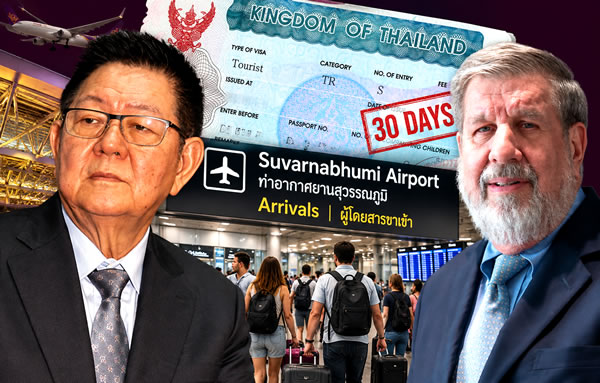
Sisadiwat Cheewaratanaporn of the Association of Thai Travel Agents (ATTA) backs 30-day visa-free stays, but Minor International Group’s William Heinecke warns the change could hurt medical and wellness tourism. ( Source: Khaosod )
Thailand’s tourism industry is divided over the government’s decision to cut visa-exempt stays from 60 days to 30 days. The new limit takes effect on September 15. Mainstream travel organisations broadly support the change. However, significant voices in hospitality warn that it could damage valuable long-stay tourism.
The dispute has produced two sharply different assessments of what Thailand needs from foreign visitors. The Association of Thai Travel Agents (ATTA) says 30 days is ample for genuine tourists. In contrast, Minor International founder and chairman William E. Heinecke warns of consequences for medical and wellness tourism.
Mr Heinecke is one of Thailand’s most prominent business leaders and hospitality entrepreneurs. His intervention therefore gives the opposition significant weight. He argues that medical visitors cannot always fit treatment and recovery into a conventional holiday timetable. Accordingly, a 30-day restriction can become an obstacle for precisely those customers.
ATTA backs 30-day stays as Sisadiwat says most genuine tourists need far less time in Thailand now
Sisadiwat Cheewaratanaporn takes the opposite position. He chairs ATTA’s advisory board and is the association’s honorary president. Mr Sisadiwat says the reduction is appropriate and sufficient for tourism. Moreover, he sees little justification for giving conventional holidaymakers 60 days.
According to Mr Sisadiwat, most tourists spend only seven to 10 days travelling in Thailand. Even longer conventional holidays generally last between 15 and 20 days. On those figures, a 30-day permission provides ample time for the overwhelming majority of visitors. ATTA therefore expects little disruption to normal tourism.
Mr Sisadiwat also rejects concerns about a negative psychological impact from the shorter period. Instead, he identifies the previous lengthy stay as a potential enforcement problem. Foreigners permitted to remain for two or three months have greater opportunities to pursue activities unrelated to tourism.
In particular, Mr Sisadiwat points to foreigners entering as tourists before working or operating businesses. Some exploit immigration loopholes to make a living inside Thailand, he says. Consequently, they can become direct competitors to Thai entrepreneurs and workers. Their activity then moves well beyond the purpose of tourist entry.
Local communities are already familiar with the problem, according to the ATTA veteran. Yet he says it has not been adequately resolved. For that reason, he wants faster government action against foreign investment groups operating outside Thai law. He also wants businesses exploiting legal loopholes targeted.
ATTA links longer tourist stays to illegal work, business activity and direct competition with Thais
ATTA’s support for 30 days consequently forms part of a wider economic argument. The organisation does not simply believe tourists require less time. Mr Sisadiwat also connects lengthy tourist permissions with illegal work and unlawful commercial activity. In response, he wants the government to tighten both immigration and enforcement.
Mr Heinecke approaches the issue from another end of Thailand’s tourism market. He warns that legitimate high-value visitors can require much longer periods. Medical tourism provides the clearest example. Treatment, rehabilitation and recovery can extend beyond one month.
Rather than using permitted stay length as the principal control, Mr Heinecke favours stronger screening. He has also called for improved immigration procedures and airport controls. In his assessment, those measures can distinguish genuine visitors from people abusing tourist entry. Meanwhile, legitimate medical customers could retain greater flexibility.
His argument is particularly significant because Thailand is seeking higher-value tourism. Medical and wellness visitors form an important part of that market. They can also behave very differently from ordinary holidaymakers. As a result, the dispute reaches beyond the simple question of whether 30 days is enough.
Heinecke warns 30-day limit could obstruct medical tourism as Thailand targets higher-value visitors
Mr Heinecke has additionally pointed towards growing competition from Malaysia. The neighbouring country is competing directly for medical and wellness customers. Thus, Thailand’s immigration arrangements become part of a wider regional contest for valuable visitors.
The competing positions expose a clear fault line within the industry. ATTA assesses the policy through conventional inbound tourism. Mr Heinecke focuses on specialised visitors who may require extended stays. Both are therefore examining different sections of Thailand’s foreign visitor market.
For ATTA, the calculation remains straightforward. A tourist staying seven days does not require a 60-day exemption. Neither does someone taking a two-week holiday. Even a 20-day visitor remains comfortably inside the new 30-day period.
Medical tourism operates differently. A patient may arrive for treatment lasting several weeks. Afterwards, rehabilitation or recovery may be required. Medical schedules can also extend beyond the original timetable. Consequently, the visitor’s immigration needs may bear little resemblance to those of an ordinary tourist.
Long-stay tourism in northern Thailand creates another pressure point. Chiang Mai has developed a market involving remote workers, digital nomads and other extended-stay foreigners. These visitors also fall outside ATTA’s seven-to-10-day model.
Malaysia rivalry sharpens visa dispute as medical tourists and northern long-stay markets face pressure
La-iad Bungsrithong, adviser to the Thai Hotels Association Northern Region, previously raised concerns about this market. She estimated long-stay visitors at around 5-8% of foreign arrivals across Chiang Mai and northern Thailand. While relatively small, the segment has become established within the regional tourism economy.
Importantly, Ms La-iad did not simply demand that the 60-day exemption remain unchanged. Instead, she called for alternative arrangements for genuine long-stay visitors. She also noted that competing destinations were simplifying their requirements. Accordingly, her concern centred on preserving legitimate extended stays rather than defending unrestricted tourist entry.
Pai has even greater exposure to the issue. Panudej Chaiyasakul, president of the Mae Hong Son Tourism Business Association, has addressed the impact there. Conventional tourists would be largely unaffected, he said. However, long-stay visitors represent approximately 15% of Pai’s market.
Some of those visitors remain for 30 or 60 days. Others stay considerably longer. Under the revised system, many will therefore need different immigration arrangements. Separately, Mr Panudej has called for government marketing measures to offset any resulting impact.
Chiang Mai and Pai operators warn shorter stays could disrupt established long-stay visitor markets
The dispute consequently runs through several different layers of Thailand’s tourism economy. It is not simply an argument between Thai businesses and foreign visitors. Instead, different Thai tourism sectors have different commercial exposures to longer stays.
The national leadership of the Thai Hotels Association broadly supports the shorter period. ATTA has taken an equally firm position. Both see 30 days as sufficient for conventional tourists. Their arguments also reflect how accommodation spending changes as stays become longer.
Long-stay foreigners frequently use condominiums, apartments and villas instead of conventional hotels. Therefore, extended visa exemptions do not necessarily deliver equivalent gains to the formal hotel industry. That helps explain why mainstream hotel interests have broadly supported the reduction.
By comparison, Chiang Mai and Pai depend more heavily on specific long-stay markets. Medical and wellness businesses face another set of circumstances. Their customers may deliberately remain longer because their treatment or lifestyle requires it. Consequently, the commercial effect of 30 days varies substantially between destinations and sectors.
Mr Heinecke’s intervention adds considerable force to that side of the debate. Minor International has extensive interests across hotels, restaurants and hospitality. He is therefore speaking from inside a major Thai tourism business. More importantly, his concern relates directly to the higher-value visitors Thailand has sought to attract.
Hotel groups back 30 days while long-stay, medical and wellness sectors face a different calculation
ATTA, meanwhile, remains focused on foreigners using tourist status for economic purposes. Mr Sisadiwat says some arrive ostensibly for holidays before earning money or establishing businesses. Once that happens, he argues, they can compete directly against Thai operators.
The problem becomes particularly serious when foreign investment structures also breach Thai requirements. Mr Sisadiwat therefore wants the government to accelerate legal action against such groups. As part of this, he wants business arrangements exploiting Thai people or circumventing restrictions tackled directly.
Yet immigration abuse is only one of ATTA’s concerns before the high season. Mr Sisadiwat has issued an equally strong warning about Thailand’s international safety image. He says safety remains the number one consideration for foreign tourists.
According to Mr Sisadiwat, Thailand’s image has not improved sufficiently. Frequent reports involving road accidents, fires and criminal incidents continue to reach foreign audiences. Notably, he highlighted the case involving two Russian siblings, which generated international headlines.
The effect of such reports has intensified as information travels faster. Foreign media and tourists can access negative stories almost immediately. Sometimes, Mr Sisadiwat said, information spreads abroad faster than awareness develops inside Thailand. That creates particular difficulties in major markets such as China.
ATTA turns focus to illegal foreign business and Thailand’s worsening international safety image
Negative reports can then influence destination choices. Mr Sisadiwat says some tourists are already avoiding Thailand and choosing Vietnam. He says the competing destination is perceived as safer and more affordable. Hence, Vietnam has become a growing concern for Thailand’s mainstream tourism industry.
Regional competition is therefore hitting Thailand from different directions. Vietnam challenges its conventional holiday market on safety and price. On another front, Malaysia is competing for medical and wellness visitors. The visa debate sits directly between those two competitive pressures.
Mr Sisadiwat wants Prime Minister Anutin Charnvirakul to take charge of the response. He sees the Prime Minister as having sufficient authority to coordinate all relevant agencies. Specifically, he wants Mr Anutin to examine the negative international perceptions surrounding Thailand.
The government should then order corrective measures across the relevant organisations, Mr Sisadiwat said. Security agencies should urgently address concerns affecting tourist confidence. At the same time, enforcement agencies should target foreigners exploiting Thailand’s immigration and business rules.
“The Prime Minister must build confidence to attract tourism and investment in a straightforward manner, protect the rights of Thai people, and ensure economic stability. He must not allow foreigners to invest in a way that exploits Thais. There must be clear policies and plans to counter those with malicious intentions, focusing on safeguarding Thai territory and the rights of Thai citizens. This is because we still hope that the tourism sector will perform better, especially in the short term, particularly in the fourth quarter of 2026, which is the peak tourist season,” Mr Sisadiwat said.
Vietnam and Malaysia raise regional pressure as Sisadiwat urges Anutin to restore tourist confidence
His demands place the 30-day rule inside a much broader tourism challenge. ATTA wants genuine visitors reassured about safety. Simultaneously, it wants foreigners abusing tourist permissions confronted more aggressively. The organisation sees both issues as urgent before the fourth-quarter peak.
The timing adds pressure. Thailand is entering the final quarter of 2026 and its most important foreign tourism period. ATTA hopes the sector will perform more strongly during the high season. However, regional competitors are fighting for many of the same visitors.
For mainstream tourism, ATTA sees no reason for the visa change to hurt that recovery. Its position rests heavily on actual visitor behaviour. Most tourists stay seven to 10 days, while longer holidays generally remain below 20 days. Accordingly, 30 days still provides a substantial buffer.
The association sees the other 30 days differently. Mr Sisadiwat argues that lengthy permissions create opportunities for foreigners with purposes unrelated to tourism. Those people can work, operate businesses or compete with Thai entrepreneurs. For ATTA, reducing the period therefore carries limited tourism cost while narrowing that opportunity.
Mr Heinecke’s warning challenges that calculation at the high-value end of the market. A medical visitor cannot always compress treatment into 30 days. Nor can every rehabilitation or recovery period be fixed around immigration rules. Thus, he sees the restriction as capable of creating difficulties for legitimate customers.
ATTA wants stronger safety and enforcement drive as Thailand heads into crucial fourth-quarter peak
Wellness tourism produces a related issue. This market is built partly around visitors prepared to spend more on specialised services. Some also remain longer than conventional holidaymakers. Consequently, Mr Heinecke sees flexibility as important when Thailand competes with Malaysia.
Northern operators face the same policy from yet another direction. Chiang Mai has an established remote-worker and digital-nomad market. Pai has a substantial long-stay segment representing about 15% of its visitors. Neither market closely resembles conventional package tourism.
Taken together, three broad industry positions have emerged. ATTA and mainstream hotel interests support the 30-day period. Mr Heinecke warns about its effect on medical and wellness tourism. Northern operators want workable alternatives for legitimate long-stay foreigners.
The differences become clearer when individual visitors are considered. Someone taking a 10-day holiday sees almost no practical change. A 20-day visitor also remains comfortably within the new period. By contrast, someone requiring six weeks faces an entirely different immigration calculation.
That distinction is central to the argument. ATTA wants the visa exemption designed around the behaviour of ordinary tourists. Longer-term visitors can use immigration arrangements intended for their circumstances. Mr Heinecke’s concern is that this creates extra barriers for valuable customers.
Wellness, Chiang Mai and Pai markets expose three-way industry split over Thailand’s 30-day rule
Meanwhile, Mr Sisadiwat wants no delay in dealing with people who exploit tourist status. He says some foreigners are already using lengthy stays to make money inside Thailand. Others become direct competitors to local businesses. He therefore wants enforcement intensified alongside the new visa regime.
At the same time, safety remains a separate threat to the approaching high season. Road accidents, fires and crime continue generating damaging international reports. The Russian siblings case demonstrated how rapidly one incident can reach foreign audiences, according to Mr Sisadiwat.
China is particularly important because negative information can spread quickly among prospective travellers. Vietnam then offers an immediate alternative. Mr Sisadiwat says its perceived safety and lower prices are already drawing some visitors away from Thailand.
Thailand consequently approaches the fourth quarter under pressure on several fronts. It must defend conventional tourism against Vietnam. Its medical and wellness sector faces competition from Malaysia. Meanwhile, northern destinations must manage tighter conditions for long-stay visitors.
The government also faces demands for stronger enforcement against foreigners using tourist status for illegal economic activity. In parallel, ATTA wants a coordinated campaign to restore confidence in tourist safety. Mr Sisadiwat has placed responsibility for both issues directly with the Prime Minister.
Sisadiwat presses for tougher enforcement as safety fears and regional rivals weigh on high season
Against that backdrop, the 30-day change has exposed a genuine division within Thailand’s tourism industry. ATTA sees the shorter stay as practical and sufficient. It also sees extended permissions as creating opportunities for abuse.
Mr Heinecke sees a different commercial risk. Legitimate medical and wellness visitors sometimes require substantially longer stays. Consequently, he argues that better screening and immigration controls offer another way to tackle abuse.
Chiang Mai and Pai add a third dimension. Their tourism economies contain established long-stay markets that cannot be measured against a typical 10-day holiday. Those operators therefore want alternatives that preserve legitimate extended visits.
The government’s new limit takes effect on September 30. From that point, the argument moves from policy into practical operation. Conventional tour operators, medical businesses and northern destinations will experience the same rule in markedly different ways.
Thirty-day rule exposes industry fault line as operators prepare for sharply different market impacts
For ATTA, however, the immediate priorities are clear before the high season. Mr Sisadiwat wants safety confidence restored and illegal foreign businesses targeted. He also wants Prime Minister Anutin to coordinate the response personally.
Mr Heinecke has meanwhile placed one of Thailand’s biggest business names firmly on the other side of the visa argument. His warning centres on high-value visitors whose legitimate requirements can exceed one month.
Thailand therefore enters its peak tourism period with an important industry fault line exposed. One side says 30 days is ample for genuine tourism and reduces opportunities for abuse. The other warns that some of Thailand’s most valuable legitimate visitors simply need longer.
Blunder over Indian visa policy saw Thailand lose tourists in August. Quick volte face to a 30 day visa
Tourism bosses in the South ask Minister to improve planned visa regime for Indian arrivals to Thailand
India may be biggest loser in new get tough foreign tourism visa policy approved by cabinet on Tuesday
Hardline foreign tourism confirmed by new minster. More charges, shorter visas and mandatory insurance
Visa entry period to go from 60 to 30 days. Agreement in principle as foreign tourism numbers fall by 10%
60-day visa regime to be ended confirms Minister responding to rising industry security concerns
Tourism boss warns Thailand it is facing a Chinese blacklist if another security controversy erupts
Ung Ing finally gives the order. Thailand pulls the plug on scam centre electricity in Burma. Cut at 9 am
PM on a mission to China to ask President Xi Jinping to help rein in heavy online criticism of the kingdom
PM Paetongtarn to speak Chinese with AI to address security fears in China as foreign tourism suffers over scam farms
Visa waiver scheme questioned with another China Crisis for foreign tourism driven by security fears
฿13 million swindled and robbed in Chinese criminal exploits in central Bangkok on Thursday afternoon
Tourism cryptocurrency sandbox payment plan is bound to face stiff opposition from the central bank
Joseph Anthony is an expat from Ireland who has lived in Thailand for the last decade. He has worked extensively in the media including editorial positions in Ireland and Thailand. He is focused on economic and business stories in Thailand as well as the expat lifestyle.
All posts by Joseph O' Connor
Cash is the name of game as the US Navy returns to its old Pattaya stomping ground in a 4 day city boost September 3, 2026 Mobile ATMs roll into Pattaya as 5,000 US sailors hit
Thai wife’s nose smelt out her husband’s infidelity and proved it in court to finalise ‘smelly underwear’ case September 2, 2026 Wife sniffs out her husband’s adultery after perfume
Stock market 2026 recovery not built on a sound footing. Depends on foreign capital and one company September 2, 2026 Bangkok’s stock market roared back 26% after three
New visa regime hits Western visitors and expats in Thailand hard with shorter stays and long haul trips September 1, 2026 Thailand’s new visa squeeze halves tourist stays to
Thais take to government TH AI project on the first day with ChatGPT reporting outages later on Monday September 1, 2026 More than 1.36 million Thais register for the TH-AI
Devastating tragedy in Bangkok as pregnant teacher takes her life after paternity fight with boyfriend September 1, 2026 A customer finds a pregnant Bangkok teacher dead
Thailand’s stiff restrictions on small foreign investors a significant problem for its daring OECD aspirations August 31, 2026 Thailand chases OECD membership by 2028 while
Travel Blogger claims he was accosted by cocaine hucksters in broad daylight on Bangkok’s Sukhumvit August 31, 2026 Sukhumvit’s cocaine hucksters approach a travel
Business tenants of Bangkok’s Khlong Thom Centre wiped out after decades of work went up in flames August 31, 2026 Generations of family enterprise go up in flames as
Thailand wins Asian Women’s Volleyball title for the third time in a thrilling win over China on Sunday August 30, 2026 Thailand’s volleyball queens conquer China 3-2 on
PM Anutin raises questions about Tuesday’s Songkhla cabinet meeting after renewed insurgency violence August 30, 2026 Pattani gunmen storm Global House, clear shoppers,
Underage woman ran up 60,000 baht tab at host bar after pursuing a man. Bill paid by shaving her hair August 30, 2026 A Bangkok host-bar manager shaves an 18-year-old
Thai government pushes AI in two programmes one aimed at the public and the other aimed at startups August 29, 2026 Yotsanan brings OpenAI’s first official Asian
Nationalist group meets Minister urging probes into illegal activity linked to foreigners on Koh Samui August 29, 2026 Polpeera receives Thai Mai Thon’s dossier on
Norway’s King Haakon VIII ascends the throne in Oslo after death on Friday of much loved King Harald V August 29, 2026 King Harald V dies peacefully at 89 as Haakon VIII
Israeli Embassy urges the media to be accurate about reporting nationalities after Phuket dine and dash August 29, 2026 Israel’s embassy demands false reports be removed
Police probing Chinese woman’s kidnapping on the trail of human trafficking gang. More victims feared August 28, 2026 Photos of bound Chinese people found on a suspect’s
Younger brother kills sibling after finding him drinking as their mother fought for life in hospital September 3, 2026
Former PM Paetongtarn files police complaint over false social media post linking her with Israeli land September 2, 2026
People’s Party firebrand attacks flagship TH AI project launched this week with corruption agency filing of claims September 2, 2026
The boys are back in town. US servicemen return to Pattaya, a town they helped create, for wartime R&R September 2, 2026
Pot shop worker attacks UK man on his motorbike over 29,200 baht fraud on Monday in broad daylight September 1, 2026
Woman in northern Thailand builds thriving concern farming and selling live cockroaches for fishing in nearby rivers September 1, 2026
Pattaya police probe a nightclub shooting on the city’s Southside in the early hours of Monday morning August 31, 2026
Anutin begins week with twin economic headaches as car makers and rail consortium threaten to walk August 31, 2026
American man arrested in Phuket on US state and federal warrants relating to sexual abuse of minors at home August 31, 2026
Bangkok storm’s nightlife charts to be crowned the World’s number one and the most visited city on earth August 30, 2026
Pattaya police operation targets street sex workers ahead of expected arrival of US sailors on Wednesday August 30, 2026
Thailand approaches a seminal moment in politics as Senate collusion case decision set for September 14 August 30, 2026
Thailand’s America’s Got Talent star returned home on Friday ahead of her September date with destiny August 30, 2026
Myanmar authorities remain tight lipped over death of US diplomat in May and his jailed Thai partner August 29, 2026
New face of Thailand’s Tourism Police. Minister visits HQ and speaks of a new era of high tech security August 29, 2026
Police respond within 10 minutes to drunk foreign tourist attacking and breaking into ATM for lost card August 29, 2026
Huge fire in central Bangkok at a major electronics retail centre. Governor Chadchart was on the scene August 29, 2026
Pheu Thai leader Julapun insists coalition government is ‘very strong’ at Government House on Friday August 28, 2026
Police cordon off mountain area to manhunt for man who murdered his lover’s husband after affair ended August 28, 2026
Tourism Authority of Thailand (TAT) turns to railway to boost the appeal of Thailand to foreign tourists August 27, 2026
Koh Samui zoo dispute morphs into wider protest at Israelis and foreigners misbehaving in Thailand August 27, 2026
Tourism chiefs monitor Chinese media after rescue of young woman by Kamphaeng Phet police. 4 arrested August 27, 2026
© 2026 Thai Examiner. All rights reserved.
2026年9月6日下午1点47分
经济、生活、媒体、政治、泰国
泰国新的30天免签政策在关键的第四季度旅游旺季到来之前,给泰国旅游业带来了巨大的冲击。泰国旅行社协会表示,大多数真正的游客只需要7到10天的停留时间。该协会还希望对滥用旅游身份的外国人采取更严厉的措施。然而,Minor International创始人威廉·E·海内克警告说,9月30日的新规可能会对医疗和养生旅游造成冲击。治疗和康复通常需要更长的停留时间。北部地区的旅行社也担心清迈和拜县等地的长期旅游市场会受到冲击。与此同时,泰国旅行社协会正在敦促总理阿努廷·查恩维拉库尔打击非法外国商业活动,提升泰国的安全形象,并应对来自越南和马来西亚日益激烈的竞争——这两个国家都在不断抢占市场份额。
泰国旅行社协会 (ATTA) 的 Sisadiwat Cheewaratanaporn 支持 30 天免签停留政策,但美诺国际集团的 William Heinecke 警告称,此举可能会损害医疗和养生旅游业。(来源:Khaosod)
泰国政府将免签停留期限从60天缩短至30天的决定在泰国旅游业引发分歧。新规将于9月15日生效。主流旅游机构普遍支持这一改变。然而,酒店业的重要人士警告称,此举可能会损害宝贵的长期旅游市场。
这场争论导致各方对泰国需要外国游客的数量产生了截然不同的看法。泰国旅行社协会(ATTA)认为,30天的停留时间对于真正的游客来说已经足够了。而美诺国际集团创始人兼董事长威廉·E·海内克则警告说,这将对医疗和养生旅游造成不利影响。
海内克先生是泰国最杰出的商业领袖和企业家之一。因此,他的介入赋予了反对意见相当大的分量。他认为,医疗访客并非总能将治疗和康复安排进传统的假期日程。因此,30天的限制恰恰会成为这些访客的障碍。
ATTA支持30天的停留期限,Sisadiwat表示,现在大多数真正的游客在泰国需要的时间要少得多。
西萨迪瓦·切瓦拉塔纳蓬持相反观点。他是ATTA顾问委员会主席,也是该协会的名誉会长。西萨迪瓦先生表示,此次削减对于旅游业而言是适当且足够的。此外,他认为没有理由给予传统度假者60天的假期。
据西萨迪瓦特先生称,大多数游客在泰国的旅行时间仅为7至10天。即使是更长的传统假期,通常也只有15至20天。根据这些数据,30天的许可足以满足绝大多数游客的需求。因此,泰国旅游协会预计不会对正常的旅游业造成太大影响。
西萨迪瓦特先生也驳斥了关于缩短停留期限会对外国人造成负面心理影响的担忧。相反,他认为以往的长期停留可能会造成执法问题。获准停留两到三个月的外国人有更多机会从事与旅游无关的活动。
西萨迪瓦特先生特别指出,一些外国人以游客身份入境,之后便开始在泰国工作或经商。他说,有些人利用移民漏洞在泰国谋生。因此,他们可能成为泰国企业家和工人的直接竞争对手。他们的活动也远远超出了游客入境的目的。
据泰国旅游协会(ATTA)资深人士称,当地社区早已熟悉这个问题。但他表示,这个问题尚未得到妥善解决。因此,他希望政府加快对在泰国法律之外运营的外国投资集团采取行动。他还希望政府能够重点打击那些钻法律漏洞的企业。
ATTA将游客停留时间过长与非法工作、商业活动以及与泰国人的直接竞争联系起来。
ATTA支持30天的停留期限,这构成了一个更广泛的经济论点的一部分。该组织并非仅仅认为游客需要的停留时间更短。西萨迪瓦特先生还将过长的旅游许可与非法工作和非法商业活动联系起来。为此,他希望政府收紧移民政策并加强执法力度。
海内克先生从泰国旅游市场的另一个角度探讨了这个问题。他警告说,真正高价值的游客可能需要更长的停留时间。医疗旅游就是一个最明显的例子。治疗、康复和恢复期可能超过一个月。
海内克先生认为,与其将允许停留时间作为主要管控手段,不如加强筛查。他还呼吁改进入境程序和机场管控。他认为,这些措施能够区分真正的访客和滥用旅游入境的人。同时,合法的医疗旅客也能享有更大的灵活性。
他的论点尤其重要,因为泰国正在寻求发展高价值旅游。医疗养生游客是这一市场的重要组成部分。他们的行为方式也与普通度假者截然不同。因此,这场争论的意义远不止于30天是否足够这一简单问题。
海内克警告称,30天的停留期限可能会阻碍泰国吸引高价值游客的医疗旅游。
海内克先生还指出,来自马来西亚的竞争日益激烈。这个邻国正在直接争夺医疗和健康领域的客户。因此,泰国的移民政策也成为更广泛的区域性旅游市场竞争的一部分。
这些不同的立场暴露了行业内部的明显分歧。ATTA 通过传统的入境旅游来评估这项政策。而海内克先生则专注于可能需要长期停留的特殊游客。因此,他们各自关注的是泰国外国游客市场的不同细分领域。
对于ATTA而言,计算方法依然简单明了。停留七天的游客无需享受60天的豁免期。同样,休假两周的游客也无需享受豁免期。即使是停留20天的游客,也完全符合新的30天期限。
医疗旅游的运作方式有所不同。患者可能需要接受数周的治疗。治疗结束后,可能还需要进行康复或休养。医疗行程也可能超出原定计划。因此,医疗游客的入境需求可能与普通游客截然不同。
泰国北部地区的长期旅游带来了另一个压力点。清迈已经发展出一个以远程办公人员、数字游民和其他长期停留的外国人为主要客源的市场。这些游客也不符合泰国旅游协会(ATTA)7至10天的旅游模式。
马来西亚之间的竞争加剧了签证争端,医疗游客和北部长期停留市场面临压力
泰国酒店协会北部地区顾问拉伊亚德·邦斯里通此前曾对这一市场表示担忧。她估计,在清迈和泰国北部地区,长期游客约占外国游客总数的5%至8%。虽然规模相对较小,但这一群体已在区域旅游经济中占据了一席之地。
重要的是,拉伊亚德女士并非仅仅要求维持60天的豁免政策不变。相反,她呼吁为真正需要长期停留的游客制定替代方案。她还指出,其他旅游目的地正在简化入境要求。因此,她关注的重点在于维护合法的长期停留,而非捍卫不受限制的游客入境。
拜县受此问题的影响更大。湄宏顺府旅游商业协会主席帕努德·柴亚萨库尔(Panudej Chaiyasakul)已就此问题发表了看法。他表示,传统游客基本不会受到影响。然而,长期游客约占拜县市场的15%。
部分游客停留30或60天,而另一些游客则停留时间更长。因此,在新制度下,许多人将需要不同的入境安排。此外,帕努德先生呼吁政府采取市场推广措施,以抵消新制度可能带来的任何影响。
清迈和拜县的旅游经营者警告称,缩短停留时间可能会扰乱已有的长期游客市场。
因此,这场争端涉及泰国旅游经济的多个层面。它不仅仅是泰国企业和外国游客之间的争论。相反,泰国旅游业的不同领域对游客长期停留的商业影响各不相同。
泰国酒店协会全国领导层普遍支持缩短停留时间。泰国旅游协会(ATTA)也持同样坚定的立场。双方都认为30天的停留时间对普通游客来说已经足够。他们的观点也反映了随着停留时间延长,住宿支出也会发生变化。
长期居留的外国人通常选择公寓、别墅而非传统酒店。因此,延长签证豁免期限未必能给正规酒店业带来同等收益。这也解释了为什么主流酒店业普遍支持减少签证豁免。
相比之下,清迈和拜县则更依赖特定的长期住宿市场。医疗和养生产业则面临着另一番情况。他们的顾客可能因为治疗或生活方式的需要而特意延长停留时间。因此,30天的商业效应在不同的目的地和行业之间差异显著。
海内克先生的介入无疑为这场辩论增添了强有力的分量。美诺国际集团在酒店、餐饮和旅游服务领域拥有广泛的业务。因此,他的观点是来自泰国大型旅游企业内部的。更重要的是,他所关注的问题直接关系到泰国一直致力于吸引的高价值游客。
酒店集团的营业时间将推迟30天,而长住酒店、医疗和养生酒店则面临不同的计算方式。
与此同时,ATTA仍然关注那些以游客身份从事经济活动的外国人。西萨迪瓦特先生表示,有些人表面上来泰国是为了度假,实际上却是为了赚钱或创业。他认为,一旦他们这样做,就可以直接与泰国本土企业竞争。
当外国投资结构也违反泰国相关规定时,问题就变得尤为严重。因此,西萨迪瓦先生希望政府加快对这类团体采取法律行动。作为其中的一部分,他希望直接打击那些剥削泰国人民或规避限制的商业安排。
然而,在旅游旺季到来之前,移民违规行为只是泰国旅游协会(ATTA)担忧的问题之一。西萨迪瓦特先生也对泰国的国际安全形象发出了同样强烈的警告。他表示,安全仍然是外国游客的首要考虑因素。
西萨迪瓦先生认为,泰国的国际形象尚未得到充分改善。交通事故、火灾和犯罪事件等新闻仍然频繁出现在外国媒体的报道中。他特别提到了两名俄罗斯兄妹的案件,该案曾引起国际关注。
随着信息传播速度的加快,此类报道的影响也日益加剧。外国媒体和游客几乎可以立即获取负面新闻。西萨迪瓦特先生表示,有时信息在国外传播的速度甚至超过了泰国国内的认知速度。这给中国等主要市场带来了尤为严重的困难。
ATTA将关注点转向非法外国商业活动和泰国日益恶化的国际安全形象。
负面报道会影响游客的目的地选择。西萨迪瓦特先生表示,一些游客已经开始避开泰国,转而选择越南。他说,越南被认为更安全、更实惠。因此,越南已成为泰国主流旅游业日益关注的焦点。
因此,区域竞争正从各个方向冲击泰国。越南在安全性和价格方面对泰国传统的度假市场构成挑战。另一方面,马来西亚则在争夺医疗养生游客。签证问题恰好处于这两种竞争压力之间。
西萨迪瓦先生希望由总理阿努廷·查恩维拉库尔亲自负责应对此事。他认为总理拥有足够的权力来协调所有相关机构。具体而言,他希望阿努廷总理能够审视国际社会对泰国的负面看法。
西萨迪瓦特先生表示,政府随后应责令相关机构采取纠正措施。安全部门应紧急解决影响游客信心的各种问题。同时,执法部门应重点打击利用泰国移民和商业法规牟利的外国人。
“总理必须以坦诚的方式建立信心,吸引旅游和投资,保护泰国人民的权利,并确保经济稳定。他绝不能允许外国人以剥削泰国人的方式进行投资。必须制定明确的政策和计划来打击那些心怀恶意的人,重点是维护泰国领土和泰国公民的权利。因为我们仍然希望旅游业能够表现得更好,尤其是在短期内,特别是2026年第四季度,也就是旅游旺季,”西萨迪瓦特先生说道。
越南和马来西亚加大地区施压,西萨迪瓦特敦促阿努廷恢复游客信心
他的诉求将30天停留限制置于更广泛的旅游业挑战背景下。ATTA希望真正的游客对安全感到放心。同时,它也希望对滥用旅游许可的外国人采取更强硬的打击措施。该组织认为,在第四季度旅游高峰到来之前,这两个问题都迫在眉睫。
时机加剧了压力。泰国即将进入2026年最后一个季度,这是该国最重要的外国游客旅游旺季。泰国旅游协会(ATTA)希望旅游业在旺季期间表现更加强劲。然而,区域竞争对手也在争夺许多相同的游客。
对于主流旅游业而言,ATTA认为签证政策的改变不会对旅游业的复苏造成不利影响。其立场主要基于游客的实际行为。大多数游客的停留时间为7至10天,而较长的假期通常也不超过20天。因此,30天的停留期限仍然提供了相当大的缓冲空间。
该协会对剩余的30天持不同看法。西萨迪瓦特先生认为,较长的许可期限会给那些目的与旅游无关的外国人创造机会。这些人可以工作、经商或与泰国企业家竞争。因此,对于泰国旅游协会(ATTA)而言,缩短许可期限虽然会减少此类机会,但对旅游业造成的损失却有限。
海内克先生的警告对高端市场的这种计算方式提出了质疑。医疗访客不可能总能在30天内完成治疗。康复期也并非总能根据移民规定来安排。因此,他认为这项限制可能会给合法客户带来困难。
泰国交通运输协会(ATTA)希望在泰国进入关键的第四季度高峰期之际,加强安全和执法力度。
健康旅游也带来了一个相关问题。这个市场的部分构成是围绕那些愿意为特色服务支付更多费用的游客展开的。有些游客的停留时间也比传统度假者更长。因此,海内克先生认为,在泰国与马来西亚竞争时,灵活性至关重要。
北部地区的旅游运营商也面临着同样的政策挑战,只是方向不同。清迈拥有成熟的远程办公者和数字游民市场。拜县则拥有相当可观的长期住宿游客群体,约占游客总数的15%。这两个市场都与传统的跟团旅游截然不同。
综合来看,目前已形成三种主要的行业立场。ATTA(澳大利亚旅游贸易协会)和主流酒店业支持30天的入境限制。海内克先生警告称,此举会对医疗和养生旅游造成影响。北方地区的酒店经营者则希望为合法长期停留的外国游客提供切实可行的替代方案。
如果考虑个体访客,这些差异就更加明显了。进行10天假期的访客几乎不会受到任何实际影响。20天的访客也完全符合新的规定期限。相比之下,需要停留六周的访客则面临着完全不同的移民计算方式。
这一区别是争论的核心。ATTA希望签证豁免政策的设计能够适应普通游客的行为。长期访客可以使用专为他们情况制定的移民安排。海内克先生担心这会给重要的客户群体设置额外的障碍。
健康产业、清迈和拜县市场揭示了泰国30天禁令引发的三方行业分歧
与此同时,西萨迪瓦先生希望尽快处理那些滥用旅游身份的人。他表示,一些外国人已经利用长期停留在泰国牟利,还有一些人直接与当地企业竞争。因此,他希望在新签证制度实施的同时,加强执法力度。
与此同时,安全问题仍然是即将到来的旅游旺季面临的另一大威胁。交通事故、火灾和犯罪事件持续引发国际舆论的负面报道。西萨迪瓦特先生指出,俄罗斯兄妹案表明,一起事件可以多么迅速地传遍海外。
中国尤其重要,因为负面信息很容易在潜在游客中迅速传播。越南则提供了一个直接的替代选择。西萨迪瓦特先生表示,越南的安全感和较低的价格已经吸引了一些游客放弃泰国。
因此,泰国在进入第四季度时面临着多方面的压力。它必须抵御来自越南的传统旅游业竞争。其医疗和养生产业也面临着来自马来西亚的竞争。与此同时,北部旅游目的地必须对长期游客实施更严格的限制。
政府还面临着加强执法力度打击利用游客身份从事非法经济活动的外国人的呼声。与此同时,菲律宾旅游协会(ATTA)希望开展一项协调一致的行动,以恢复游客对安全的信心。西萨迪瓦特先生已将这两个问题的责任直接交由首相承担。
由于安全担忧和地区竞争对手的影响,Sisadiwat 敦促加强执法力度,以应对旺季的挑战。
在此背景下,30天停留期限的调整暴露了泰国旅游业内部的真正分歧。泰国旅游协会(ATTA)认为较短的停留期限既实用又足够,同时认为延长停留期限会为滥用行为提供可乘之机。
海内克先生看到了另一种商业风险。合法的医疗和健康访客有时需要更长的停留时间。因此,他认为,加强筛查和移民管控是打击滥用行为的另一种途径。
清迈和拜县的情况则更为复杂。它们的旅游经济中存在成熟的长期旅游市场,无法用典型的10天假期来衡量。因此,这些地区的旅游经营者希望找到既能满足游客需求,又能保障游客合理延长停留时间的替代方案。
政府的新限制将于9月30日生效。届时,争论的焦点将从政策层面转移到实际操作层面。传统旅行社、医疗机构和北方旅游目的地将以截然不同的方式体验同一项规定。
30天规则暴露了行业的断层线,运营商们正在为截然不同的市场冲击做准备。
然而,对于ATTA而言,旺季到来之前,当务之急十分明确。西萨迪瓦特先生希望恢复公众对安全的信心,并打击非法外国企业。他还希望阿努廷总理亲自协调应对措施。
与此同时,海内克先生已将泰国一家大型企业明确置于签证争议的另一方。他的警告主要针对那些合法停留时间可能超过一个月的高价值访客。
因此,泰国在旅游旺季来临之际,也暴露出该行业的一个重要分歧。一方认为30天足以满足真正的旅游需求,并能减少滥用行为的发生。另一方则警告说,泰国一些最有价值的合法游客需要更长的停留时间。
由于印度签证政策失误,泰国8月份流失了大量游客。迅速调整政策,改为30天签证。
泰国南部旅游业负责人请求部长改进针对印度游客赴泰签证的计划。
印度可能是周二内阁批准的新的、更加严格的外国旅游签证政策的最大输家。
新任部长确认将对外国旅游采取强硬措施。增加收费、缩短签证期限并强制购买保险。
签证入境期限由60天缩短至30天。鉴于外国游客数量下降10%,该方案已原则上达成一致。
部长确认将取消60天签证制度,以回应日益增长的行业安全担忧
泰国旅游业负责人警告称,如果再次爆发安全争议,泰国将面临被中国列入黑名单的风险。
翁英终于下达了命令。泰国切断了缅甸诈骗中心的电力供应。上午9点结束
首相奉命访问中国,请求习近平主席帮助遏制网络上对沙特阿拉伯王国的猛烈批评。
为应对中国境内非法农场问题导致外国旅游业遭受重创,泰国总理白东腾将与人工智能进行中文对话,以消除人们对中国安全的担忧。
签证豁免计划因另一场以安全担忧为驱动的中国危机而受到质疑,这场危机阻碍了外国游客的旅游。
周四下午,一群中国犯罪分子在曼谷市中心行骗,诈骗和抢劫了1300万泰铢。
旅游业加密货币沙盒支付计划势必会遭到央行的强烈反对。
约瑟夫·安东尼是一位来自爱尔兰的侨民,过去十年一直居住在泰国。他曾在爱尔兰和泰国的媒体行业担任过编辑职务,拥有丰富的媒体从业经验。他主要关注泰国的经济和商业新闻,以及侨民的生活方式。
约瑟夫·奥康纳的所有帖子
2026年9月3日,美国海军重返其位于芭堤雅的老地盘,展开为期四天的城市振兴行动,现金交易成为关键。随着5000名美国海军官兵抵达芭堤雅,移动ATM机也随之投入使用。
泰国妻子凭借嗅觉嗅出丈夫不忠,并在法庭上证明其行为,最终结案“内裤异味案”(2026年9月2日)。妻子通过香水嗅出丈夫的婚外情。
2026年股市复苏并非建立在稳固的基础之上,而是依赖于外资和一家公司。2026年9月2日,曼谷股市在经历了三个月的低迷后强劲反弹,涨幅达26%。
新签证政策对在泰西方游客和外籍人士造成沉重打击,缩短停留时间和增加旅行次数 2026年9月1日 泰国新的签证紧缩政策将游客停留时间减半
泰国民众踊跃参与政府的TH人工智能项目,但ChatGPT在9月1日星期一晚些时候报告出现故障。超过136万泰国人注册了TH-AI项目。
曼谷发生令人痛心的悲剧:一名怀孕女教师因与男友争夺孩子抚养权而自杀身亡(2026年9月1日) 一名顾客发现这名怀孕的曼谷女教师已死亡
泰国对小型外国投资者的严格限制对其雄心勃勃的经合组织入盟目标构成重大障碍 2026年8月31日 泰国力争在2028年加入经合组织
一位旅游博主声称,2026年8月31日,他在曼谷素坤逸路光天化日之下遭到可卡因兜售者的骚扰。
2026年8月31日,曼谷空通中心的一家商户在一场大火中损失惨重,数十年的心血付之一炬。几代人的家族企业化为灰烬。
2026年8月30日星期日,泰国女排在与中国队的比赛中以3比2的比分险胜,第三次夺得亚洲女子排球锦标赛冠军。
2026年8月30日,在叛乱暴力事件再次爆发后,阿努廷总理对周二的宋卡府内阁会议提出质疑。北大年武装分子冲进环球大厦,清空购物者。
2026年8月30日,一名未成年女子在一家男招待酒吧消费6万泰铢,因追求一名男子而被酒吧经理剃光头发以支付账单。
泰国政府推出两项人工智能计划,一项面向公众,另一项面向初创企业。2026年8月29日,Yotsanan 出席了 OpenAI 的首个亚洲官方会议。
民族主义团体会见部长,敦促调查与外国人在苏梅岛有关的非法活动(2026年8月29日);Polpeera收到泰国Mai Thon提交的档案。
挪威国王哈康八世于2026年8月29日星期五在奥斯陆登基,此前深受爱戴的哈拉尔五世国王去世。哈拉尔五世国王安详辞世,享年89岁,哈康八世继位。
以色列大使馆敦促媒体在报道普吉岛“吃霸王餐”事件后准确描述涉事人员的国籍(2026年8月29日)。以色列大使馆要求删除不实报道。
警方正在调查一起中国女子被绑架案,并追踪人口贩卖团伙。担心会有更多受害者。2026年8月28日,在一名嫌疑人身上发现了被捆绑的中国人的照片。
2026年9月3日,弟弟发现哥哥酗酒后将其杀害,当时他们的母亲正在医院与死神搏斗。
前总理佩通坦就社交媒体上有关她与以色列土地有关联的虚假帖子向警方报案 2026年9月2日
人民党激进派人士抨击本周启动的旗舰人工智能项目TH AI,并向反腐机构提交索赔申请(2026年9月2日)
士兵们回来了。2026年9月2日,美国军人返回他们曾参与创建的芭堤雅城,进行战时休假。
2026年9月1日星期一,光天化日之下,一名大麻店店员因29200泰铢的诈骗案袭击了一名骑摩托车的英国男子。
2026年9月1日,泰国北部一名女子通过养殖和出售活蟑螂供附近河流的渔民捕鱼,建立了一项蓬勃发展的生意。
芭堤雅警方正在调查2026年8月31日星期一凌晨发生在芭堤雅南区一家夜总会的枪击案。
阿努廷本周伊始就面临双重经济难题:汽车制造商和铁路财团威胁要退出合作。2026年8月31日
2026年8月31日,一名美国男子在普吉岛被捕,他因涉嫌在家中性侵未成年人而被美国州和联邦政府通缉。
曼谷夜生活风靡全球,有望在2026年8月30日荣膺世界第一和全球游客最多的城市。
芭堤雅警方在美军预计于2026年8月30日星期三抵达前夕,针对街头性工作者展开行动。
泰国政治即将迎来一个关键时刻,参议院串谋案的判决将于9月14日公布(2026年8月30日)。
这位来自泰国的《美国达人秀》明星于周五返回家乡,准备迎接她9月份的命运之约(2026年8月30日)。
缅甸当局对5月份美国外交官的死亡及其被监禁的泰国同伴的事件(2026年8月29日)保持沉默。
泰国旅游警察迎来新面貌。部长视察总部,谈及高科技安保新时代(2026年8月29日)
2026年8月29日,一名醉酒的外国游客袭击并撬开自动取款机寻找丢失的银行卡,警方在10分钟内赶到现场。
曼谷市中心一家大型电子产品零售中心发生大火。查查特府于2026年8月29日赶赴现场。
为泰党领袖朱拉蓬于2026年8月28日星期五在总理府坚称联合政府“非常强大”。
2026年8月28日,警方封锁山区,追捕一名男子,该男子在与情人分手后谋杀了情人的丈夫。
泰国旅游局(TAT)转向铁路以提升泰国对外国游客的吸引力 2026年8月27日
苏梅岛动物园纠纷演变为针对以色列人和外国人在泰国不当行为的更大规模抗议活动 2026年8月27日
旅游部门负责人密切关注中国媒体,此前甘烹碧府警方解救了一名年轻女子。4人于2026年8月27日被捕。
© 2026 Thai Examiner。版权所有。