From Morocco to South Africa, Israel election watched closely across Africa从摩洛哥到南非,整个非洲都在密切关注以色列大选。
October 27 vote could test whether Israel’s ties with African countries withstand the fallout from the war on Gaza.
October 27 vote could test whether Israel’s ties with African countries withstand the fallout from the war on Gaza.
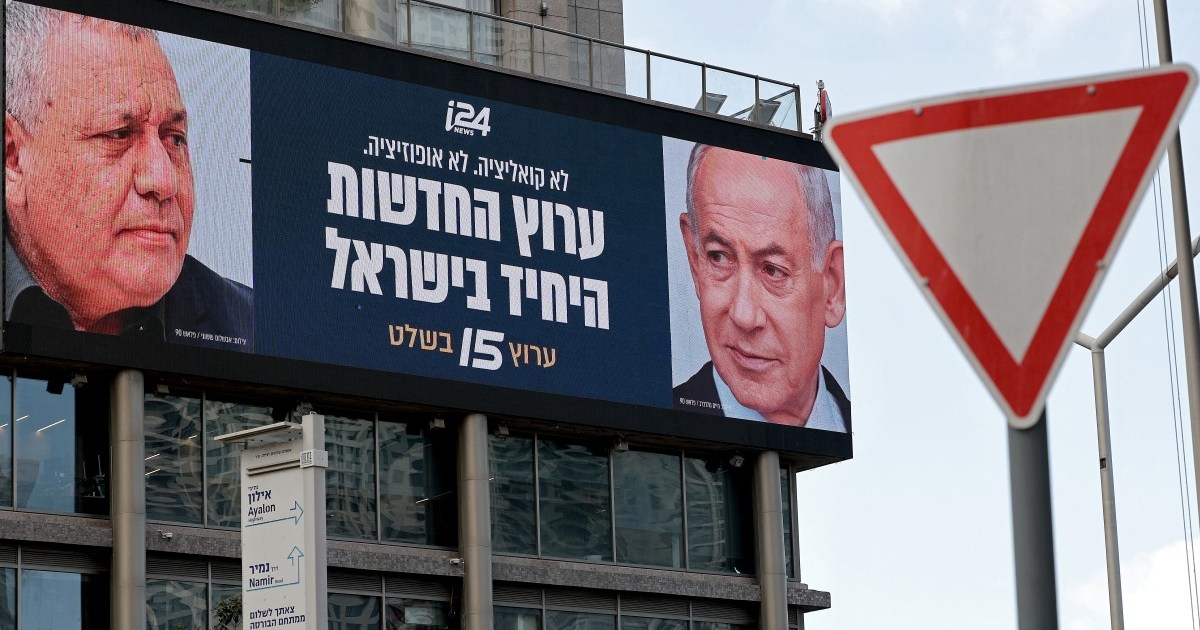
An election advert featuring Prime Minister Benjamin Netanyahu and centrist party leader Gadi Eisenkot in Ramat Gan, ahead of Israel’s election on October 27 [File: Jack Guez/AFP]
Lagos, Nigeria – As Israelis prepare to vote on October 27, African governments from Pretoria to Rabat are weighing what the result could mean for their own foreign and domestic policies.
The war on Gaza has exposed sharp differences across the continent, with some governments pursuing diplomatic measures against Israel while others maintain commercial and security ties.
Recent polling has shown a closely contested race between Prime Minister Benjamin Netanyahu’s Likud party and the far-right coalition it leads and a bloc of Jewish-led opposition parties .
Neither is projected to win the 61 seats needed for a majority in the 120-seat Knesset, with a protracted period of coalition talks expected to follow the vote.
The next government’s approach to Gaza and the Palestinian question could influence Israel’s efforts to preserve and expand its partnerships across the continent.
Israel’s relationships across Africa are shaped by competing priorities. While the Gaza war has intensified diplomatic pressure and public opposition in many countries, security needs, commercial interests and longstanding bilateral partnerships continue to influence government decisions.
Diplomatic strain vs closer ties
Since the war began in October 2023, South Africa has emerged as one of Israel’s most vocal critics in Africa. Its government brought a case against Israel at the International Court of Justice (ICJ), alleging violations of the 1948 Genocide Convention. Israel rejects the allegations. The court’s so-called provisional measures in 2024, including an order for Israel to take action to prevent acts of genocide, are not a final ruling on whether genocide has occurred.
In November 2023, South Africa’s National Assembly adopted a motion calling on the government to close the Israeli embassy and suspend diplomatic relations. The motion did not itself implement those measures, but it underscored the strength of political opposition to Israel’s military campaign.
Other African governments have taken different approaches that reflect national political priorities and foreign policy calculations rather than a single continental position.
Chad recalled its ambassador to Israel in November 2023, while some countries have maintained relations despite criticism of Israel’s military campaign in Gaza.
Morocco offers a contrasting example. It restored relations with Israel in 2020 under a US-backed arrangement linked to Washington’s recognition of Moroccan sovereignty over Western Sahara. Despite public demonstrations opposing normalisation, Rabat has continued to pursue closer ties.
On September 16, Israeli Foreign Minister Gideon Sa’ar and Moroccan Foreign Minister Nasser Bourita met in New York at a trilateral summit hosted by US Ambassador to the United Nations Mike Waltz. The three countries reaffirmed plans to upgrade diplomatic relations, elevate their respective missions to embassies and appoint ambassadors.
They also agreed to conclude investment protection and double taxation agreements by the end of this year, expand flights to include Moroccan airlines and arrange reciprocal high-level visits in the coming months. These were announced commitments, rather than confirmation that the changes had already been implemented.
For Idowu Johnson, associate professor of international relations at the University of Ibadan, the diversity of African states makes it difficult to predict a uniform response to Israel’s election.
“Africa’s heterogeneity means individual states have handled relations with Israel separately. Since the October 7, 2023 attacks, African criticism has focused on Israel’s denial of Palestinian statehood.
“The October 27 election will therefore be pivotal, as a new government’s stance on the Palestinian cause will shape how far Africa cooperates on agriculture, trade, security and technology, guided by self-determination and international law as well as bilateral interests,” Johnson said.
Israel’s relationship with the African Union (AU) also reflects these divisions. In 2021, the AU Commission chairperson accredited Israel’s representative to the organisation, prompting objections from member states.
In February 2022, the AU Assembly established a committee of heads of state and government to consult on Israel’s observer status. The dispute continued into 2023, when the AU moved to suspend Israel’s accreditation pending further consideration.
The disagreement has reflected wider divisions over Israel’s treatment of Palestinians and the organisation’s approach to the conflict.
A new Israeli government could seek to ease those tensions, but any change would depend on its policies as well as the positions of AU member states.
Security ties may outlast diplomatic tensions
Security cooperation has been a significant part of Israel’s relationships with some African governments. Israeli companies have pursued defence and security contracts involving equipment, surveillance technology and training.
But the nature and scale of those relationships vary by country and claims about particular agreements or technologies should be tied to documented cases rather than treated as evidence of a uniform Israeli security presence across the continent.
The Democratic Republic of the Congo offers a recent example of efforts to deepen cooperation. Congolese President Felix Tshisekedi visited Israel on August 31 and September 1, meeting Prime Minister Benjamin Netanyahu and President Isaac Herzog. Discussions covered security, defence, agriculture, infrastructure, energy and high technology. Both sides expressed a desire to strengthen their strategic partnership and expand cooperation across several sectors.
The visit followed memorandums of understanding signed on July 27. Congolese officials said the visit would review those agreements and explore further Israeli investment, including opportunities linked to the Lobito Corridor. The meetings demonstrate the potential scope of bilateral cooperation, but do not establish that a specific new security contract has been concluded.
For governments confronting armed groups, insecurity can create incentives to seek equipment, intelligence and training from foreign partners. Yet the importance of Israeli cooperation differs between countries and diplomatic tensions will not necessarily have the same effect on every security relationship.
The limits of Israel’s diplomatic outreach were also evident after it recognised Somaliland as an independent state on December 26, last year, the first country to do so. Somalia and other critics rejected the move, arguing that it undermined Somalia’s territorial integrity. The decision triggered demonstrations in Somalia and Somaliland.
Speaking to Al Jazeera this month, President Hassan Sheikh Mohamud said Somalia will not accept Israeli presence in the country “under any circumstances”. He added that Israel was planning to establish a naval base in Berbera and use the city’s airport, adding that its real aim was to get closer to the Gulf states and Iran.
According to the Armed Conflict Location & Event Data project (ACLED), 110 demonstrations directly linked to Israel’s Somaliland recognition had been recorded by the time of its February 2026 Africa overview. Only seven supported the move, all in Somaliland; the others opposed it. The figures cover demonstrations linked to that particular decision, not all African views of Israel, and should not be treated as a continent-wide measure of public opinion.
Hossamaldeen Ibrahim, an Africa analyst at the Bloomsbury Intelligence and Security Institute, argues that public opposition can constrain governments even when they see strategic value in maintaining ties.
“The strongest constraint, however, may come from African publics rather than governments: the Somaliland recognition drew widespread opposition, the African Union and many governments reaffirmed Somalia’s territorial integrity, and ACLED logged 110 related demonstrations, only seven in support.
“Depending on its approach, the next Israeli government could therefore either deepen strategic cooperation in Morocco, Sudan and the Red Sea, or face a legitimacy problem if it continues policies seen as tied to the Gaza war, widening the gap between state-level cooperation and public sentiment,” Ibrahim told Al Jazeera.
The Somaliland episode shows how a diplomatic move can provoke opposition when it is perceived to challenge a core principle of sovereignty.
It does not, by itself, establish that African governments will abandon security agreements with Israel. The consequences will depend on the countries involved, the terms of their cooperation and the domestic political costs of maintaining them.
Trade, agritech and the contest for influence
Trade and development cooperation offer Israel another route to maintaining relationships in Africa. Israeli firms and officials have pursued partnerships in areas including agriculture, irrigation, water management, health and technology.
Such cooperation can offer practical benefits to governments seeking investment and technical expertise, but commercial ties do not necessarily translate into public support for Israel’s policies.
Zambia illustrates Israel’s efforts to deepen bilateral engagement. Israel opened a resident embassy in Lusaka in August last year, after a 52-year absence. Agriculture, water management, health, education and technology have been identified as potential areas for closer cooperation. The move formed part of Israel’s broader effort to strengthen its engagement with African countries.
Some analysts have interpreted Israel’s renewed engagement with Zambia as an attempt to cultivate partners who could counterbalance South Africa’s influence in the region. That remains an interpretation, not an established explanation for the relationship.
Zambia has its own reasons for seeking investment and cooperation, particularly in agriculture, water management and technology; closer bilateral ties alone do not prove that countering South Africa is Israel’s objective.
Professor Iwebunor Okwechime, of Obafemi Awolowo University, points to the historical roots of South Africa’s position towards Israel.
“If we trace the stance South Africa took, it goes back to the apartheid era, when Israel backed the apartheid regime and refused to support the struggle against the minority government. This historical context is important for understanding South Africa-Israel relations today,” Okwechime told Al Jazeera.
For African governments, the challenge will be to balance security and commercial interests against public opposition, commitments to Palestinian rights and positions on international law. For Israel, the upcoming election will test whether a new government can ease diplomatic tensions across Africa without fundamentally changing the policies that have fuelled them.
As Okwechime told Al Jazeera, “There won’t be a radical change in sentiments regardless of the government in power”.
10月27日的投票可能会检验以色列与非洲国家的关系能否经受住加沙战争带来的冲击。
在以色列10月27日大选前夕,总理本杰明·内塔尼亚胡和中间派政党领袖加迪·艾森科特在拉马特甘拍摄了一则竞选广告。[图片:Jack Guez/AFP]
尼日利亚拉各斯——以色列将于10月27日举行投票,与此同时,从比勒陀利亚到拉巴特的非洲各国政府都在权衡投票结果对其自身外交和内政政策可能产生的影响。
加沙战争暴露了非洲大陆内部的巨大分歧,一些政府对以色列采取外交措施,而另一些政府则维持着与以色列的商业和安全联系。
最近的民意调查显示,总理本杰明·内塔尼亚胡领导的利库德集团及其领导的极右翼联盟与犹太人领导的反对党联盟之间的竞争非常激烈。
预计两人都无法赢得在拥有 120 个席位的以色列议会中获得多数所需的 61 个席位,投票后预计将进行一段漫长的组阁谈判。
下一届政府对加沙和巴勒斯坦问题的立场可能会影响以色列维护和扩大其在整个非洲大陆的伙伴关系的努力。
以色列与非洲各国的关系受到各种相互冲突的优先事项的影响。尽管加沙战争加剧了许多国家的外交压力和公众反对,但安全需求、商业利益和长期存在的双边伙伴关系仍然影响着各国政府的决策。
外交紧张关系与更紧密联系
自2023年10月战争爆发以来,南非已成为非洲对以色列批评最激烈的国家之一。南非政府向国际法院提起诉讼,指控以色列违反了1948年《防止及惩治灭绝种族罪公约》。以色列否认了这些指控。国际法院于2024年采取的所谓临时措施,包括责令以色列采取行动防止种族灭绝行为,并非对种族灭绝是否发生的最终裁决。
2023年11月,南非国民议会通过一项动议,呼吁政府关闭以色列大使馆并中止外交关系。该动议本身并未实施这些措施,但它凸显了南非民众对以色列军事行动的强烈政治反对。
其他非洲国家政府采取了不同的做法,反映的是国家政治优先事项和外交政策考量,而不是单一的非洲大陆立场。
乍得于 2023 年 11 月召回了驻以色列大使,而一些国家尽管批评以色列在加沙的军事行动,但仍与以色列保持关系。
摩洛哥的情况则截然不同。2020年,在美方支持下,摩洛哥与以色列恢复了外交关系,而这一安排与华盛顿承认摩洛哥对西撒哈拉的主权挂钩。尽管民众举行了反对关系正常化的示威活动,拉巴特方面仍继续寻求与以色列建立更紧密的联系。
9月16日,以色列外交部长吉迪恩·萨尔和摩洛哥外交部长纳赛尔·布里塔在纽约举行三方峰会,峰会由美国常驻联合国代表迈克·沃尔兹主持。三国重申了提升外交关系、将各自使团升格为大使馆并互派大使的计划。
双方还同意在今年年底前完成投资保护和避免双重征税协定,扩大航班覆盖范围,纳入摩洛哥航空公司,并在未来几个月安排互访。这些只是公开承诺,而非确认相关变更已经落实。
伊巴丹大学国际关系副教授伊多乌·约翰逊认为,非洲国家的多样性使得预测各国对以色列当选的统一反应变得困难。
“非洲的异质性意味着各个国家都各自独立地处理与以色列的关系。自2023年10月7日袭击事件以来,非洲的批评主要集中在以色列否认巴勒斯坦建国的问题上。”
约翰逊说:“因此,10月27日的选举将至关重要,因为新政府在巴勒斯坦问题上的立场将决定非洲在农业、贸易、安全和技术等领域的合作程度,而这些合作将以自决权和国际法以及双边利益为指导。”
以色列与非洲联盟(非盟)的关系也反映了这些分歧。2021年,非盟委员会主席认可以色列驻非盟代表,此举引发成员国的反对。
2022年2月,非盟大会成立了一个由各国元首和政府首脑组成的委员会,就以色列的观察员地位进行磋商。这场争端持续到2023年,非盟随后决定暂停以色列的认证资格,等待进一步审议。
这一分歧反映了以色列对待巴勒斯坦人的方式以及该组织处理冲突的方式上存在的更广泛的分歧。
以色列新政府可能会寻求缓和这些紧张局势,但任何改变都将取决于其政策以及非盟成员国的立场。
安全关系可能比外交紧张局势持续更久
安全合作一直是以色列与一些非洲国家政府关系的重要组成部分。以色列公司积极争取涉及设备、监控技术和培训的国防和安全合同。
但这些关系的性质和规模因国家而异,有关特定协议或技术的说法应与有据可查的案例联系起来,而不是将其视为以色列在整个非洲大陆拥有统一安全存在的证据。
刚果民主共和国是近期深化合作的一个例证。刚果(金)总统费利克斯·齐塞克迪于8月31日至9月1日访问以色列,会见了以色列总理本雅明·内塔尼亚胡和总统伊萨克·赫尔佐格。双方就安全、国防、农业、基础设施、能源和高科技等领域进行了讨论。双方均表示希望加强战略伙伴关系,并在多个领域拓展合作。
此次访问是在7月27日签署谅解备忘录之后进行的。刚果(金)官员表示,此次访问将审查这些协议,并探讨以色列的进一步投资,包括与洛比托走廊相关的投资机会。会晤表明了双边合作的潜在范围,但并不意味着双方已达成具体的新的安全合同。
对于面临武装团体威胁的各国政府而言,不安全局势可能促使其寻求外国伙伴提供的装备、情报和训练。然而,以色列合作的重要性因国家而异,外交紧张局势也未必会对每段安全关系产生相同影响。
以色列外交手段的局限性在去年12月26日以色列承认索马里兰为独立国家后也显露无疑。以色列是第一个承认索马里兰的国家。索马里和其他批评人士拒绝接受这一举动,认为这损害了索马里的领土完整。该决定在索马里和索马里兰引发了示威游行。
本月早些时候,哈桑·谢赫·马哈茂德总统在接受半岛电视台采访时表示,索马里“在任何情况下”都不会接受以色列在该国的存在。他还补充说,以色列计划在柏培拉建立海军基地并使用该市的机场,其真正目的是为了拉近与海湾国家和伊朗的关系。
根据武装冲突地点与事件数据项目(ACLED)的数据,截至2026年2月发布的非洲概览,已记录到110起与以色列承认索马里兰直接相关的示威活动。其中仅有7起支持该决定,且全部发生在索马里兰;其余示威活动均表示反对。这些数据仅涵盖与该特定决定相关的示威活动,并非代表非洲所有民众对以色列的看法,因此不应被视为整个非洲大陆民意的衡量标准。
布鲁姆斯伯里情报与安全研究所的非洲分析师霍萨马尔丁·易卜拉欣认为,即使政府认为维持关系具有战略价值,公众的反对也会对其施加限制。
“然而,最强有力的制约可能来自非洲公众,而不是政府:对索马里兰的承认遭到了广泛的反对,非洲联盟和许多国家的政府重申了索马里的领土完整,ACLED记录了110起相关示威活动,其中只有7起是支持的。
“因此,根据以色列政府采取的策略,下一届以色列政府要么会深化在摩洛哥、苏丹和红海地区的战略合作,要么会面临合法性问题,因为它会继续推行被认为与加沙战争有关的政策,从而扩大国家层面的合作与公众情绪之间的差距。”易卜拉欣告诉半岛电视台。
索马里兰事件表明,当外交举动被认为挑战主权这一核心原则时,会如何引发反对。
这本身并不能证明非洲各国政府会放弃与以色列的安全协议。其后果将取决于相关国家的具体情况、合作条款以及维持这些协议在国内的政治代价。
贸易、农业科技与影响力之争
贸易和发展合作为以色列提供了另一条维系与非洲关系的途径。以色列企业和官员已在农业、灌溉、水资源管理、卫生和技术等领域寻求合作。
这种合作可以为寻求投资和技术专长的政府带来实际好处,但商业联系并不一定能转化为公众对以色列政策的支持。
赞比亚的例子体现了以色列深化双边合作的努力。以色列在卢萨卡设立常驻大使馆,结束了长达52年的空白期。农业、水资源管理、卫生、教育和科技已被确定为加强合作的潜在领域。此举是以色列加强与非洲国家合作的更广泛努力的一部分。
一些分析人士将以色列重新与赞比亚接触解读为试图发展能够制衡南非在该地区影响力的伙伴。但这仍然只是一种解读,并非对两国关系的既定解释。
赞比亚寻求投资与合作有其自身的理由,尤其是在农业、水资源管理和技术领域;仅仅加强双边关系并不能证明对抗南非是以色列的目标。
奥巴费米·阿沃洛沃大学的伊韦布诺尔·奥克韦奇梅教授指出,南非对以色列的立场有其历史根源。
奥克韦奇梅告诉半岛电视台:“如果我们追溯南非的立场,就会发现它源于种族隔离时期,当时以色列支持种族隔离政权,拒绝支持反对少数派政府的斗争。了解这一历史背景对于理解当今的南非-以色列关系至关重要。”
对非洲各国政府而言,挑战在于如何在安全和商业利益与公众反对、对巴勒斯坦人权利的承诺以及国际法立场之间取得平衡。对以色列而言,即将到来的选举将检验新政府能否在不从根本上改变加剧非洲紧张局势的政策的前提下,缓和整个非洲的外交紧张局势。
奥克韦奇梅告诉半岛电视台:“无论哪个政府执政,人们的情绪都不会发生根本性的变化。”