‘Start dating earlier’: Lunch Actually CEO on finding a life partner in S’pore“早点开始约会”:Lunch Actually首席执行官谈在新加坡寻找人生伴侣
Lunch Actually CEO Violet Lim says Singaporeans should start dating earlier to improve marriage prospects amid falling birth rates. Read more at straitstimes.com.
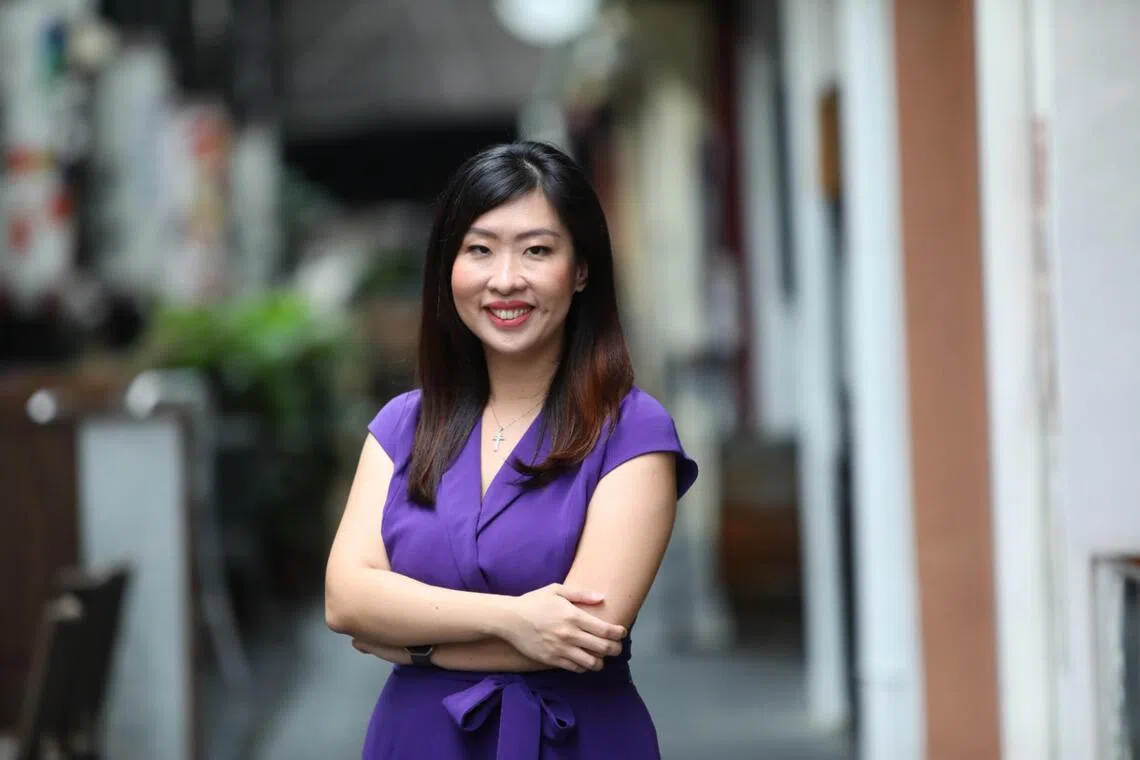
Lunch Actually co-founder Violet Lim says demanding expectations, a desire for certainty and a reluctance to commit are making it harder for singles to build lasting relationships.
PHOTO: LUNCH ACTUALLY
Published Oct 15, 2026, 12:30 PM
Updated Oct 15, 2026, 02:02 PM
SINGAPORE – Young people should start dating while they are still in university, instead of waiting until their careers are established to look for a life partner, said Violet Lim, chief executive of regional matchmaking agency Lunch Actually.
At that early stage, men and women are on a more similar footing and can grow together, rather than assess each other against increasingly exacting standards after entering the workforce, she told The Straits Times in an interview.
“Relationships and personal ambitions can develop together.”
Her advice comes as Singapore grapples with fewer marriages, later unions and declining birth rates.
According to the National Population and Talent Division, Singapore’s resident total fertility rate fell to 0.87 in 2025, from 0.97 in 2024. There were 21,671 citizen marriages in 2025, down 5.6 per cent, while the median age at first marriage for citizen grooms and brides rose to 30.8 and 29.1 years, from 30.1 and 27.9 a decade earlier.
While dating apps have made meeting potential partners easier, Lim said increasingly demanding expectations, a desire for certainty and a reluctance to commit are making it harder for singles to build lasting relationships.
She said encouraging relationships earlier is an important part of addressing the problem, as couples must first find each other before they can consider having children.
“Please do not stop your kids from dating when they are in university. Encourage them to date,” Lim said.
Lim noted that more young people view relationships as a distraction from their studies or careers, where hard work offers a clearer return on investment (ROI).
When she speaks at universities and polytechnics, students often tell her they are not dating, with some saying that investing in their careers offers better ROI than spending years building relationships without a guaranteed outcome.
Some of the traditional reasons for marrying have weakened, as children are no longer seen as necessary to contribute to household income or provide support in old age, Lim added, noting that a rising number of couples are opting to keep pets instead.
With less parental and societal pressure to settle down, remaining single has become more widely accepted, Lim said. Some also cite longer lifespans as a reason to put off marriage until their 40s or even 50s, rather than spend many decades with the same person.
Meanwhile, among those seeking partners, expectations have become more demanding, with clients now seeking much more information before agreeing to a match.
Physical attraction remains a priority for men, while women increasingly assess how men carry themselves, Lim said, adding that women tend to have higher expectations for a match than men.
Financially independent, well-educated women who enjoy comfortable lifestyles often want partners at a similar or higher level. But the men who match these requirements may have different preferences, narrowing the pool of mutually interested partners, she added.
Some women are also reluctant to consider older men who are further along in their careers, but who may suit the bill.
That is why pairing up at university allows couples to build relationships before differences in professional achievement become a barrier, she said.
Lunch Actually helps compatible and like-minded singles meet through pre-screened, pre-matched and pre-arranged one-to-one dates, alongside offering dating and relationship coaching.
The company claims to have arranged more than 150,000 dates and matched more than 4,500 married couples.
Lim, who started the agency with her husband 22 years ago, noted that the dating environment in Singapore has changed considerably since 2004, when singles often lacked opportunities to meet potential partners.
Today, apps and other platforms offer ample opportunities for folks to meet and date. What is now harder is persuading people to choose a partner and commit.
The way Lim sees it, dates have become more commoditised. “With another potential match readily available, more people wonder whether the next person they meet may be better.”
That “paradox of choice” can produce an endless search, followed by dating fatigue where swiping, chatting and repeatedly making small talk begin to feel like work.
Lim said singles increasingly want certainty before agreeing to a first date, while some spend weeks or months messaging, only to find that the person they eventually meet differs from the image they have built in their minds.
She recommends deciding after about a week of chatting whether to meet, then arranging a date to establish whether there is enough interest to continue.
She urges singles to give an unremarkable first date another chance.
“Many people rule out a second date right after the first. But attraction often develops over several dates, as people take time to discover different sides of each other.”
A first meeting does not need to deliver instant sparks to warrant a second, she said. “A reasonably pleasant encounter can be enough.”
It takes two to make things work
That is where Lunch Actually’s matchmaking and coaching can help, by encouraging clients to examine their requirements and what they bring to a relationship, said Lim.
She recalled a wealthy, highly educated and accomplished client who wanted to be matched with the top 5% of men in the agency’s database in terms of career and financial success.
Beyond narrowing her options, she had overlooked a crucial question: What were these men looking for in a partner, and would they be interested in her?
“The people she wants might not be looking for her profile,” Lim said, adding that the woman was not aware of their preferences.
The example illustrates how finding a partner requires mutual interest and a willingness to consider the other person’s needs and preferences, rather than simply presenting a checklist, she said.
“We choose people, but they must also choose us. It needs to be two ways.”
Lim recalled another woman who had been on multiple first dates, but few had led to a second. When asked what she wanted to achieve on a first date, the woman said her objective was to gather information.
Lim said this risked making the encounter feel like an interview or interrogation, leaving the other person uncomfortable and putting him off right away. She encouraged singles to approach a first date with the aim of securing a second instead.
Coaching also helps clients reconsider rigid limits. She recalled having one client who accepted a match outside the preferred age range after discussions with the team, and the pair eventually became a couple.
Artificial intelligence could add another complication to the search for a partner. Lim said she initially doubted that people would embrace AI boyfriends or girlfriends, but has since found that some are happy with such companionship.
Unlike a human relationship, which requires mutual attraction and compromise, an AI partner can be tailored to someone’s preferences, she said.
“You can actually create the perfect AI boyfriend or girlfriend .”
Lim predicts that some people may eventually choose humanoid companions, although she is unsure how large this group will be.
Despite the mounting challenges and emerging alternatives though, Lim said there will always be demand for human relationships from the majority of singles.
“I am still hopeful that more in Singapore will find love and that business for Lunch Actually will continue to grow.”
She noted that client numbers are growing and their ages range from the early 20s to the 80s, with more people in their late 50s, 60s and 70s seeking companionship.
“Many will still marry and some will go on to have children,” she said, adding that some of her former clients have visited her with gifts after their babies are born, while others, having found partners, have also referred new clients to her.
Kang Wan Chern is deputy business editor at The Straits Times.
Dating/Relationships
Lunch Actually 联合创始人 Violet Lim 表示,过高的期望、对确定性的渴望以及不愿做出承诺,使得单身人士更难建立持久的关系。
照片:午餐实录
发布于2026年10月15日下午12:30
更新于2026年10月15日下午2:02
新加坡——区域婚介机构 Lunch Actually 的首席执行官 Violet Lim 表示,年轻人应该在大学期间就开始谈恋爱,而不是等到事业稳定后再寻找人生伴侣。
她在接受《海峡时报》采访时表示,在早期阶段,男性和女性的地位更加相似,可以共同成长,而不是在进入职场后,用越来越严格的标准来评判彼此。
“人际关系和个人抱负可以齐头并进。”
在她提出建议之际,新加坡正努力应对结婚人数减少、结婚年龄推迟和出生率下降的问题。
根据新加坡国家人口与人才署的数据,新加坡居民总和生育率将从2024年的0.97降至2025年的0.87。2025年,新加坡公民结婚人数为21671对,下降5.6%,而公民新郎和新娘的初婚年龄中位数分别从十年前的30.1岁和27.9岁上升至30.8岁和29.1岁。
林表示,虽然约会软件让结识潜在伴侣变得更容易,但日益增长的期望、对确定性的渴望以及不愿做出承诺,使得单身人士更难建立持久的关系。
她表示,鼓励人们尽早建立恋爱关系是解决这个问题的重要组成部分,因为夫妻必须先找到彼此,才能考虑要孩子。
林说:“请不要阻止孩子们在大学期间谈恋爱,要鼓励他们谈恋爱。”
林指出,越来越多的年轻人认为恋爱会分散他们对学习或事业的注意力,而努力工作能带来更清晰的投资回报(ROI)。
当她在大学和理工学院演讲时,学生们经常告诉她他们没有谈恋爱,一些学生表示,投资事业比花费数年时间建立没有保证结果的恋爱关系更有投资回报率。
林先生补充说,一些传统的结婚理由已经减弱,因为人们不再认为孩子是家庭收入的必要贡献者或在老年时提供支持,越来越多的夫妇选择养宠物。
林先生表示,由于父母和社会对结婚的压力减轻,单身状态已被更广泛地接受。有些人还认为,寿命延长也是他们推迟结婚到四五十岁的原因之一,而不是与同一个人相伴数十年。
与此同时,在寻找伴侣的人群中,人们的期望也越来越高,客户现在在同意配对之前会寻求更多信息。
林表示,外表吸引力仍然是男性优先考虑的因素,而女性则越来越重视男性的举止,并补充说,女性对伴侣的期望往往比男性更高。
经济独立、受过良好教育、生活方式舒适的女性通常希望伴侣的条件与她们相当或更高。但她补充说,符合这些条件的男性可能有不同的偏好,这缩小了双方都感兴趣的伴侣范围。
有些女性也不愿意考虑那些事业有成、年纪较大的男性,尽管他们可能符合她们的择偶标准。
她表示,正因如此,大学里的结对学习可以让情侣在职业成就的差异成为障碍之前建立起感情。
Lunch Actually 通过预先筛选、预先匹配和预先安排的一对一约会,帮助志趣相投的单身人士相识,同时还提供约会和恋爱关系指导。
该公司声称已安排超过 15 万次约会,并促成了超过 4500 对夫妇结婚。
林女士和她的丈夫在 22 年前创办了这家婚介机构。她指出,自 2004 年以来,新加坡的约会环境发生了很大的变化,当时单身人士往往缺乏结识潜在伴侣的机会。
如今,各种应用程序和其他平台为人们提供了大量的相识和约会机会。现在更难的是说服人们选择伴侣并建立稳定的关系。
林认为,约会变得越来越商品化。“由于很容易找到下一个潜在对象,越来越多的人会想,他们遇到的下一个人会不会更好。”
这种“选择悖论”会导致无休止的搜索,进而引发约会疲劳,让滑动屏幕、聊天和反复闲聊都感觉像是在工作。
林表示,单身人士在同意第一次约会前越来越希望得到确定性,而有些人花费数周或数月的时间互发信息,最终却发现他们最终见到的人与他们心中构建的形象有所不同。
她建议在聊天一周左右后决定是否见面,然后安排一次约会,以确定是否有足够的兴趣继续发展。
她鼓励单身人士给一次平淡无奇的初次约会再一次机会。
“很多人在第一次约会后就直接排除第二次约会的可能性。但吸引力往往是在几次约会后逐渐产生的,因为人们需要时间去发现彼此的不同方面。”
她表示,初次见面并不需要立刻擦出火花才能促成第二次见面。“一次相当愉快的邂逅就足够了。”
凡事都需要两个人才能成功
林表示,Lunch Actually 的婚介和辅导服务正可以在这方面提供帮助,它鼓励客户审视自己的需求以及他们能为一段关系带来什么。
她回忆起一位富有、受过高等教育且事业有成的客户,她希望与该机构数据库中事业和经济成就排名前 5% 的男性进行匹配。
除了缩小选择范围之外,她还忽略了一个关键问题:这些男人在伴侣身上寻找什么,他们会对她感兴趣吗?
林说:“她想找的人可能并没有关注她的个人资料。”他还补充说,这位女士并不了解他们的喜好。
她表示,这个例子说明,寻找伴侣需要双方的兴趣,以及愿意考虑对方的需求和偏好,而不是简单地列出一份清单。
“我们选择人才,但人才也必须选择我们。这必须是双向的。”
林女士回忆起另一位曾多次约会的女性,但很少有第二次约会。当被问及第一次约会的目的是什么时,这位女性表示,她的目的是收集信息。
林女士表示,这样做可能会让约会感觉像是在接受采访或审问,让对方感到不自在,并立即打消约会的念头。她鼓励单身人士在第一次约会时,应该以争取第二次约会为目标。
辅导还能帮助客户重新审视自己固有的界限。她回忆起一位客户,在与团队讨论后,接受了一位年龄超出预期范围的伴侣,最终两人走到了一起。
人工智能可能会给寻找伴侣增添新的复杂性。林女士表示,她最初怀疑人们是否会接受人工智能男友或女友,但后来发现有些人对这种陪伴方式感到满意。
她表示,与需要相互吸引和妥协的人际关系不同,人工智能伴侣可以根据个人的喜好进行定制。
“你完全可以打造出完美的AI男友或女友。”
林预测,有些人最终可能会选择人形伙伴,尽管她不确定这个群体会有多大。
尽管面临越来越多的挑战和不断涌现的替代方案,林表示,大多数单身人士对人际关系的需求始终存在。
“我仍然希望新加坡有更多人能找到真爱,也希望Lunch Actually的生意能继续增长。”
她指出,客户数量正在增长,年龄从 20 岁出头到 80 多岁不等,其中 50 多岁、60 多岁和 70 多岁的人寻求陪伴的情况越来越多。
“许多人仍然会结婚,有些人还会继续生孩子,”她说道,并补充说,她的一些前客户在孩子出生后带着礼物来看望她,而另一些找到伴侣的客户也向她介绍了新的客户。
康婉珍是《海峡时报》商业版副主编。
约会/恋爱关系