Malaysian tycoon piling into Singapore property eyes $979m deal for Chijmes, Capitol Kempinski马来西亚富豪进军新加坡房地产市场,拟以9.79亿美元收购赞美广场和凯宾斯基酒店
Malaysian tycoon Lee Yeow Seng’s IOI Properties is in talks to buy Singapore’s Chijmes and Capitol Kempinski in a potential $979m deal. Read more at straitstimes.com.
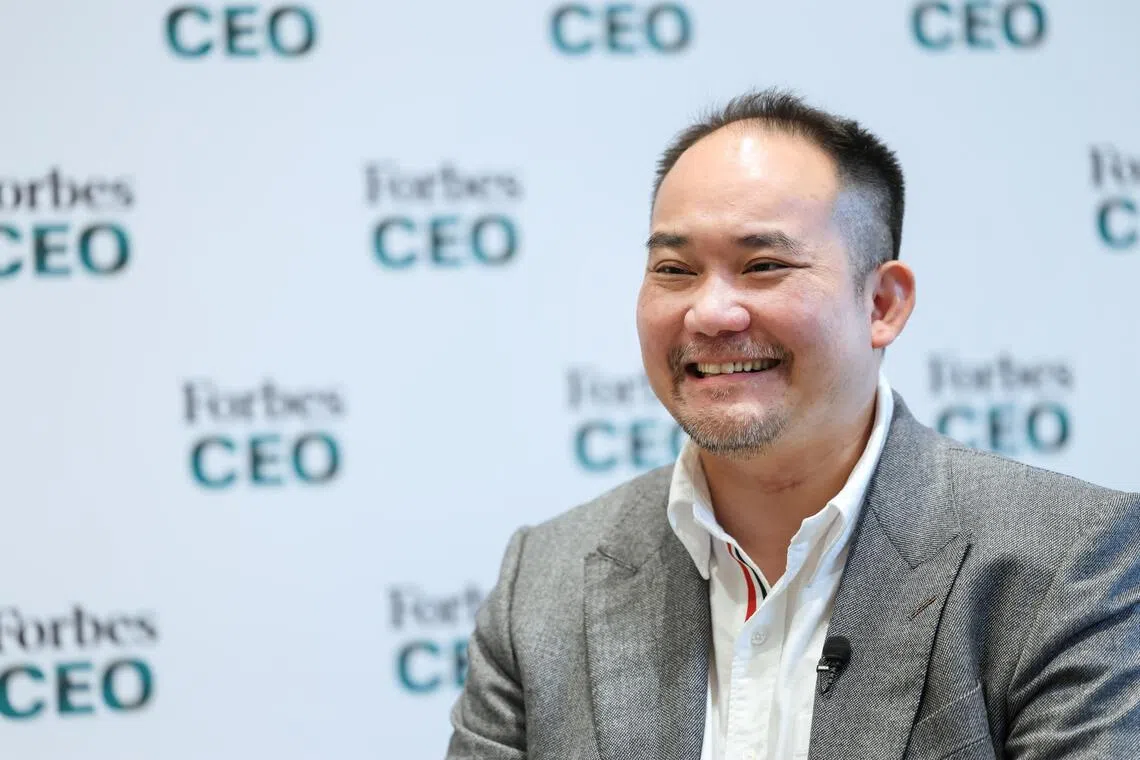
Lee Yeow Seng’s Malaysia-listed IOI Properties Group has splashed out on a range of Singapore properties in recent years.
PHOTO: THE BUSINESS TIMES
Published Oct 15, 2026, 01:30 PM
Updated Oct 15, 2026, 02:04 PM
KUALA LUMPUR – Malaysian property tycoon Lee Yeow Seng is making waves as one of the most aggressive buyers of commercial real estate in Singapore , and he is not done yet.
His IOI Properties Group is in exclusive talks and due diligence to purchase two property assets: Chijmes, a retail venue inside a former Catholic convent in the civic district, and the nearby Capitol Kempinski hotel, chief executive officer Lee said in an interview.
He declined to disclose how much a final agreement will value the two assets at, citing ongoing negotiations.
Singapore developer Perennial Holdings has been trying to sell the Kempinski hotel, which was being marketed for about $600 million, according to sources familiar with the matter.
Chijmes was valued at $379 million at the end of 2025.
IOI’s debt-fuelled buying spree has spurred a record year for real estate deals in Singapore. The firm is courting investors for a new fund to ease the burden and give room for further expansion, as Lee seeks to challenge the wealthy clans that dominate the country’s property market.
“I’m a latecomer and I want to catch up with the rest,” the 47-year-old CEO said on the sidelines of a Forbes event in Singapore earlier in October. “Most of them don’t share the vision of me.”
Perennial controls about a third of Chijmes, and about 80% of Capitol Singapore, a broader complex that contains the hotel, as well as a retail mall and residential units.
A vehicle backed by an unnamed South-east Asian sovereign wealth fund has a minority stake in both assets, corporate records show.
Other Chijmes investors include local food chain Breadtalk Group and Ronald Ooi, the former chair and CEO of Kim Eng, a stock brokerage.
Representatives for Perennial, which is backed by investors including palm oil tycoon Kuok Khoon Hong and Chinese private equity veteran Fang Fenglei, did not respond to requests for comment.
IOI is in talks to bring high-end fashion brands into Chijmes to raise rents, which have been depressed by a predominance of food and beverage outlets, said Lee. It also wants a global ultra-luxury hotel brand to replace the Kempinski, he said.
Lee’s Malaysia-listed firm, which has a large presence in its home country, including one of the world’s largest malls, has in recent years splashed out on a range of Singapore properties.
It gained full control of South Beach, an office complex that also houses his luxury penthouse and the JW Marriott hotel, after buying the majority stake from partner City Developments, which was looking to reduce debt.
More recently, it bought office building Asia Square Tower 2, ballooning Lee’s commercial portfolio to $10 billion.
It is also looking to form a joint venture with CapitaLand Investment, a property manager backed by Temasek Holdings, to buy One Raffles Place, sources familiar with the matter said in August.
The office complex is majority-owned by OUE REIT, which confirmed earlier in October that it is in exclusive discussions with the firms on a potential sale.
IOI’s rapid acquisitions have fuelled a surge in its borrowings, with its net debt rising to 85% of equity as of end-June.
In 2024, its board rebuffed a proposal by Lee to acquire Shenton House in Singapore, amid concerns about heavy capital commitments in Singapore and Malaysia.
Lee, a scion of a wealthy palm oil family in Malaysia, made the purchase on his own.
The firm eventually agreed to acquire the office building and its liabilities in October to redevelop it.
Even with a planned Malaysia real estate investment trust listing, that is expected to raise the firm’s gearing further. Lee said he aims to reduce the net debt to 30%-50% of its equity in the next three to five years.
His plans largely hinge on the success of a private fund, which Lee said will be set up in two months.
He has tapped former Pimco Prime Real Estate executive Varun Singh to oversee the vehicle, which will initially include two assets totalling $6 billion: the office portion of South Beach and the firm’s marquee office building IOI Central Boulevard Towers, whose tenants include Morgan Stanley and Jane Street Capital.
Lee said the fund has courted investors including private equity firms, sovereign wealth funds and insurers, but declined to share names.
It is targeting an internal rate of return of 10%-11%, with semi-annual distributions, he said.
The firm is looking to pare down its stake in the assets to about half, by marketing minimum holdings of about $500 million with a five- to seven-year lock up.
It will look to inject more of its Singapore assets into the fund during that period, and eventually list it as a REIT.
Lee is more optimistic about real estate prospects in Singapore than rival financial hub Hong Kong, saying the former does not have the baggage of being fully absorbed back into China in 2047 and will continue to be favoured by the wealthy and global companies.
Still, other bets in Singapore have stumbled, including IOI’s plans to build a city centre luxury residential project with 683 homes.
The firm is liable to pay a higher tax, having sold only about 15 units there. Lee said he has secured a short-term reprieve from the Singapore authorities to next April and will keep appealing against paying the charge.
The firm is pivoting towards renting out its units to expatriates, he said, blaming a 60% levy imposed on most foreigner purchases in 2023 for the poor sales.
But he remains undeterred in investing in Singapore, saying lenders and the company’s board remains supportive.
“If I can expand, why should I hold myself back?” he said. “No one has asked me to slow down.” BLOOMBERG
Property investments
Central Business District
李耀生旗下在马来西亚上市的IOI地产集团近年来在新加坡斥巨资购置了一系列房产。
图片来源:《商业时报》
发布于2026年10月15日下午1:30
更新于2026年10月15日下午2:04
吉隆坡——马来西亚房地产大亨李耀生是新加坡商业地产领域最积极的买家之一,他的行动正在引起轰动,而且他的收购行动尚未结束。
IOI地产集团首席执行官李在接受采访时表示,该集团正在就收购两项物业进行独家谈判和尽职调查:一是位于市政区前天主教修道院内的零售场所Chijmes,二是附近的Capitol Kempinski酒店。
他以谈判仍在进行为由,拒绝透露最终协议对这两项资产的估值。
据知情人士透露,新加坡开发商 Perennial Holdings 一直试图出售凯宾斯基酒店,该酒店的售价约为 6 亿美元。
截至 2025 年底,赞美广场的估值为 3.79 亿美元。
IOI集团凭借债务融资进行的疯狂收购,推动新加坡房地产交易创下历史新高。该公司正在寻求投资者设立新基金,以减轻债务负担并为进一步扩张腾出空间。李显龙总理此举意在挑战主导新加坡房地产市场的富裕家族。
“我入局较晚,想赶上其他人,”这位47岁的首席执行官10月初在新加坡举行的福布斯活动间隙表示。“他们中的大多数人并不认同我的愿景。”
Perennial 控制着赞美广场约三分之一的股份,以及首都新加坡约 80% 的股份。首都新加坡是一个更大的综合体,包含酒店、零售商场和住宅单元。
公司记录显示,一家由未具名的东南亚主权财富基金支持的公司持有这两项资产的少数股权。
赞美广场的其他投资者包括本地食品连锁店面包新语集团和股票经纪公司金英证券的前董事长兼首席执行官黄荣亮。
Perennial 的代表没有回应置评请求,该公司背后的投资者包括棕榈油大亨郭孔丰和中国私募股权资深人士方峰磊。
李先生表示,IOI正在洽谈将高端时尚品牌引入赞美广场,以提高租金。此前,由于餐饮店占据主导地位,租金一直被压低。他还透露,IOI希望引入一家全球超豪华酒店品牌来取代凯宾斯基酒店。
李氏在马来西亚上市的公司在其本土拥有庞大的业务,包括世界上最大的购物中心之一,近年来在新加坡斥巨资购置了一系列房地产。
在从合作伙伴 City Developments 手中收购了 South Beach 的多数股权后,该公司完全控制了 South Beach,这是一个办公综合体,其中还包括他的豪华顶层公寓和 JW 万豪酒店。City Developments 当时正寻求减少债务。
最近,李氏家族又收购了亚洲广场二期办公大楼,使其商业地产投资组合规模膨胀至 100 亿美元。
据知情人士8月份透露,该公司还计划与淡马锡控股支持的房地产管理公司凯德集团成立合资企业,收购莱佛士坊一号。
该办公楼群的大部分股份由 OUE REIT 持有,该公司在 10 月初证实,正在与相关公司就潜在的出售事宜进行独家谈判。
IOI 的快速收购导致其借款激增,截至 6 月底,其净债务已升至权益的 85%。
2024 年,由于担心在新加坡和马来西亚承担巨额资本义务,该公司董事会拒绝了李光耀收购新加坡珊顿府的提议。
李是马来西亚一个富裕的棕榈油家族的后裔,这笔交易是他独自完成的。
该公司最终于 10 月份同意收购该办公楼及其负债,以便进行重新开发。
即使计划在马来西亚房地产投资信托基金上市,预计也会进一步提高公司的负债率。李显龙表示,他的目标是在未来三到五年内将净债务降至股本的30%至50%。
他的计划很大程度上取决于一个私人基金的成功,李表示该基金将在两个月内成立。
他已任命前 Pimco Prime Real Estate 高管 Varun Singh 负责管理该基金,该基金最初将包括两项总价值 60 亿美元的资产:南海滩的办公部分和该公司标志性的办公楼 IOI Central Boulevard Towers,其租户包括摩根士丹利和 Jane Street Capital。
李表示,该基金已向包括私募股权公司、主权财富基金和保险公司在内的投资者抛出橄榄枝,但他拒绝透露具体名称。
他表示,该基金的目标是实现 10%-11% 的内部收益率,并按半年分红。
该公司正寻求将其在该资产中的持股比例减少到大约一半,方法是出售最低约 5 亿美元的股份,并设定 5 至 7 年的锁定期。
在此期间,该公司将寻求向该基金注入更多新加坡资产,并最终将其上市为房地产投资信托基金。
李光耀对新加坡的房地产前景比对竞争对手金融中心香港更为乐观,他表示,新加坡没有在2047年完全回归中国的包袱,并将继续受到富人和全球公司的青睐。
不过,新加坡的其他投资项目也遭遇了挫折,包括 IOI 计划在市中心建造一个拥有 683 套住宅的豪华住宅项目。
由于该公司在新加坡仅售出约15套房产,因此需缴纳更高的税款。李先生表示,他已获得新加坡当局的短期宽限期,将宽限期延长至明年4月,并将继续上诉,拒绝缴纳税款。
他表示,公司正在转向将房产出租给外籍人士,并将销售不佳归咎于2023年对大多数外国人购房征收的60%的税款。
但他仍然毫不动摇在新加坡的投资决心,并表示贷款方和公司董事会仍然给予支持。
“如果我能扩张,为什么要自我设限呢?”他说道。“没有人要求我放慢脚步。”彭博社
房地产投资
中央商务区