Wait list for kidney hits 10-year high; NKF actively encouraging living donor transplants肾移植等待名单人数达到十年来最高水平;美国肾脏基金会积极鼓励活体捐献肾移植
Kidney transplant waiting list hits 10-year high as NKF steps up support for living donor transplants in Singapore. Read more at straitstimes.com.
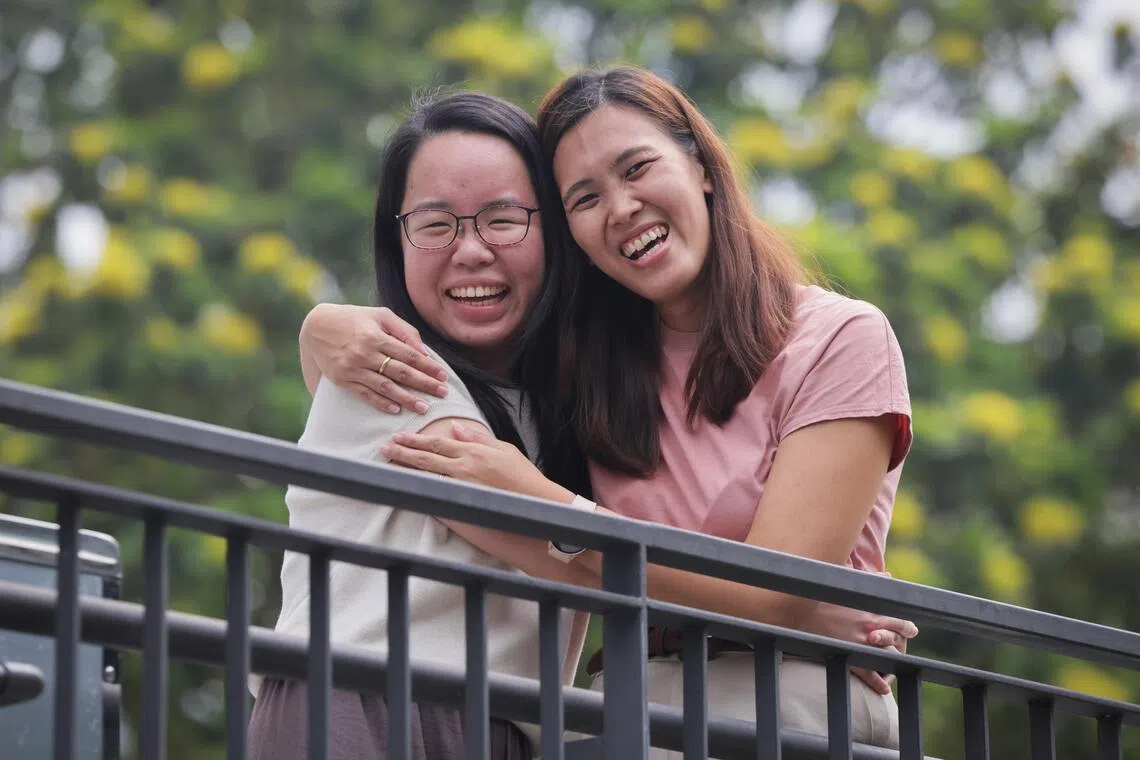
Kelly Chua (right) donated her left kidney in August 2025 to Tan Xin Yi, her close friend since they were students at Ngee Ann Secondary School.
Published Oct 15, 2026, 07:30 PM
Updated Oct 15, 2026, 07:30 PM
Singapore’s kidney transplant waiting list hit a 10-year high, rising to 433 in June 2026, while the average wait for a deceased-donor kidney was more than 8 1/2 years.
NKF is working with NOTU, NUH and SGH to teach patients about transplants earlier, and is reviewing donor support to ease costs without turning donation into a payment.
Doctors and patients said living donor transplants can offer better survival and quality of life, with real cases showing the strain of kidney failure and the relief of successful family or friend donations.
SINGAPORE – With the waiting list for deceased donor kidney transplants in Singapore hitting a high in 10 years and the waiting time for an available organ averaging nine years, more living transplants are encouraged to ease the wait for patients.
The National Kidney Foundation (NKF) said on Oct 15 that it is working with partners such as hospitals to help patients with kidney failure learn about transplant earlier.
If patients decide with their doctors that this option is suitable for them, they can source for a living donor, and for some, they can even complete the transplant before having to start on dialysis, said A. Vathsala, the director of the National University Hospital’s (NUH) National University Centre for Organ Transplantation.
“This type of transplant, called pre-emptive transplant, is associated with higher success rates than those done after starting dialysis, and can allow the transplant to be planned with the patient and donor,” Vathsala added.
In June 2026, there were 433 patients on the kidney transplant waiting list – an increase of more than 56% from 2016.
Terence Kee, director of Singapore General Hospital’s (SGH) kidney transplantation programme, said living donor transplant is an option which “can offer better survival and quality of life, without the long wait for a deceased donor kidney”. Living donors are usually blood-related family members, but can also be non-blood-related .
The first living donor kidney transplant was performed in Singapore in 1976 at SGH.
At an event on Oct 15 commemorating the 50th anniversary of that milestone, NKF said it is working with the National Organ Transplant Unit (NOTU), NUH and SGH to have around 100 “transplant champions” help medically suitable patients understand living donor kidney transplant as one of their treatment options.
The champions – including nurses, social workers, and kidney donors and recipients – aim to help address the patients’ initial questions and concerns, as well as connect interested patients and families with hospital transplant teams.
From 2016 to 2025, an average of about 81 kidney transplants was done each year.
Of these, about 35 kidneys were transplanted from deceased donors, and 46 from living donors each year.
‘Who am I to deserve this kidney?’
Tan Xin Yi, 31, who suffered from kidney failure in 2021 due to an autoimmune condition, received a kidney from Kelly Chua, her close friend since they were students at Ngee Ann Secondary School. Tan said that after her mother passed away from cancer in December 2020, her own health deteriorated significantly. She had initially attributed her symptoms such as breathlessness, swelling in her face, body and both legs, and lethargy, to the grief and stress from her first job. But when she had difficulty walking even a short distance between two HDB blocks, coupled with other symptoms , a general practitioner advised her to seek emergency care. In February 2021, about a week after she was admitted to hospital, she was confirmed to have kidney failure. The cause was the autoimmune condition known as antineutrophil cytoplasmic antibody-associated vasculitis . Kidney dialysis served Tan well for a few years. But she eventually suffered from various complications such as recurrent infections and two bouts of pneumonia, one of which led to a 15-day hospitalisation. When a transplant for Tan was discussed, her younger sister and three friends who were willing to donate were found to be unsuitable donors. Her father was unable to donate as he had existing health conditions. On Aug 28, 2025, Chua donated her left kidney to Tan. Chua’s husband had some concerns, but agreed for her to donate when Tan’s medical problems mounted. Chua , who works as an accountant and has no plans for children , said that the transplant has not affected her long-term health. All she needs to do now is go for regular checks and to watch her diet, which she said is what everyone should do anyway. Tan also had a smooth recovery, and is now on medications and supplements for life.
Kelly Chua (right) donated her left kidney to her close friend Tan Xin Yi. PHOTO COURTESY OF KELLY CHUA
Kelly Chua (right) donated her left kidney to her close friend Tan Xin Yi.
PHOTO COURTESY OF KELLY CHUA
She is grateful to Chua for the donation, which has significantly improved her quality of life.
One recurring thought she used to have when she was mulling over a transplant is now far behind her: “Who am I to deserve this kidney?”
Review of funding support for donors and recipients
Separately, NKF is currently reviewing its Kidney Live Donor Support Fund, which supports 163 beneficiaries currently, with the aim of lightening the financial burden for donors and recipients.
The fund currently covers pre-transplant screening and evaluation costs, as well as the cost of annual health screenings and medical follow-ups ordered by transplant physicians in the public hospitals, among other expenses .
NKF reiterated that the support through the fund is intended to help defray costs, and does not constitute a payment or reward for donating a kidney.
Transport costs may also be covered in the future, as NKF’s survey showed that both donors and recipients have to make frequent trips to the hospital for pre-transplant assessments, medical consultations and post-transplant follow-up care.
NKF chairman Ang Hao Yao said, “A potential donor’s decision must remain entirely voluntary, and choosing not to donate will not affect the care provided to the patient.”
MP Hamid Razak’s sister received kidney from mother
At the Oct 15 NKF event, MP for West Coast-Jurong West GRC Hamid Razak revealed that his younger sister, Badrun Nisa, had received a kidney from their mother in 2022.
(From left) Mariam Bee Bee with her children, MP for West Coast-Jurong West GRC Hamid Razak and Badrun Nisa, who received a kidney from her in 2022. ST PHOTO: CHONG JUN LIANG
(From left) Mariam Bee Bee with her children, MP for West Coast-Jurong West GRC Hamid Razak and Badrun Nisa, who received a kidney from her in 2022.
ST PHOTO: CHONG JUN LIANG
Nisa shared with the audience that she started suffering symptoms in May 2021 when she was 34 years old, including weight loss, breathlessness and fatigue.
She was eventually diagnosed with kidney failure, though her doctors could not identify the cause or when the failure started.
Although she started on dialysis, transplant was the longer-term option .
After a few family members and a close friend were tested for suitability to donate a kidney to her, her mother turned out to be the most ideal candidate.
Nisa had misgivings at first – she was worried about the age of her mother, then 58 years old. “I didn’t want my chance at better health to come at the expense of hers”, said Nisa.
After much consultation and discussion, the transplant was completed in November 2022.
Hamid, who is an orthopaedic surgeon, said: “Seeing what kidney transplant has made possible for my sister is why I believe families should at least have the opportunity to understand the option, ask the difficult questions and make an informed decision together with their medical team.”
National University Hospital
SGH/Singapore General Hospital
Kelly Chua(右)于 2025 年 8 月将她的左肾捐献给了 Tan Xin Yi,Tan Xin Yi 是她从义安中学读书时就结识的好朋友。
发布于2026年10月15日晚上7:30
更新于2026年10月15日晚上7:30
新加坡肾移植等待名单人数达到 10 年来的最高点,2026 年 6 月增至 433 人,而等待已故捐献者肾脏的平均时间为 8 年半以上。
NKF 正在与 NOTU、NUH 和 SGH 合作,尽早向患者普及器官移植知识,并正在审查捐赠者支持情况,以减轻成本,同时避免将捐赠变成支付。
医生和患者表示,活体肾移植可以提高生存率和生活质量,真实案例表明肾衰竭带来的痛苦以及家人或朋友成功捐献肾所带来的解脱。
新加坡——由于新加坡已故捐献者肾脏移植的等待名单已达到 10 年来的最高水平,而等待可用器官的平均时间为 9 年,因此鼓励进行更多活体移植,以减轻患者的等待时间。
美国国家肾脏基金会(NKF)于 10 月 15 日表示,它正在与医院等合作伙伴合作,帮助肾衰竭患者更早地了解肾移植。
新加坡国立大学医院(NUH)国家器官移植中心主任 A. Vathsala 表示,如果患者与医生商定这种方案适合他们,他们可以寻找活体捐献者,对于一些患者来说,甚至可以在开始透析之前完成移植手术。
瓦特萨拉补充说:“这种被称为先发制人移植的移植手术,其成功率比开始透析后进行的移植手术更高,而且可以与患者和捐赠者一起计划移植手术。”
2026 年 6 月,肾移植等待名单上有 433 名患者,比 2016 年增加了 56% 以上。
新加坡中央医院(SGH)肾移植项目主任Terence Kee表示,活体肾移植是一种“无需漫长等待遗体捐献肾脏,即可提供更高生存率和生活质量”的选择。活体捐献者通常是血亲,但也可能是非血亲。
新加坡首例活体肾移植手术于 1976 年在新加坡中央医院 (SGH) 进行。
在 10 月 15 日举行的纪念这一里程碑 50 周年的活动上,NKF 表示,它正与国家器官移植中心 (NOTU)、新加坡国立大学医院 (NUH) 和新加坡中央医院 (SGH) 合作,让大约 100 名“移植倡导者”帮助符合医学条件的患者了解活体肾移植作为他们的治疗选择之一。
这些志愿者——包括护士、社工、肾脏捐献者和接受者——旨在帮助解决患者的初步疑问和担忧,并将有兴趣的患者及其家人与医院移植团队联系起来。
从 2016 年到 2025 年,平均每年进行约 81 例肾移植手术。
其中,每年约有 35 个肾脏来自已故捐献者,46 个肾脏来自活体捐献者。
“我凭什么配得上这颗肾?”
31岁的陈欣怡(Tan Xin Yi)于2021年因自身免疫性疾病导致肾衰竭,她的好友蔡凯莉(Kelly Chua)捐献了她一颗肾脏。两人自义安中学时期就已是挚友。陈欣怡表示,2020年12月母亲因癌症去世后,她的健康状况急剧恶化。起初,她将呼吸困难、面部、身体和双腿肿胀以及嗜睡等症状归咎于失去母亲的悲痛和第一份工作带来的压力。但当她甚至难以在两栋组屋之间行走一小段距离,并伴有其他症状时,一位全科医生建议她寻求紧急医疗救助。2021年2月,入院约一周后,她被确诊为肾衰竭,病因是抗中性粒细胞胞浆抗体相关性血管炎(ANCA-VAV)。肾透析在几年内对陈欣怡的病情起到了很好的控制作用。但她最终还是出现了各种并发症,例如反复感染和两次肺炎,其中一次导致她住院15天。当讨论为谭女士进行肾移植时,她的妹妹和三位愿意捐肾的朋友都被认为不适合捐献。她的父亲由于自身健康状况不佳也无法捐献。2025年8月28日,蔡女士将自己的左肾捐献给了谭女士。蔡女士的丈夫起初有些顾虑,但在谭女士病情加重后,他还是同意了妻子的捐肾决定。蔡女士是一名会计,没有生育计划。她说,肾移植手术并没有影响她的长期健康。她现在只需要定期复查并注意饮食,她说这本来就是每个人都应该做的。谭女士的术后恢复也很顺利,目前需要终身服用药物和补充剂。
蔡慧玲(右)将左肾捐献给了好友谭欣怡。照片由蔡慧玲提供。
蔡慧玲(右)将她的左肾捐献给了她的好友谭欣怡。
照片由蔡凯莉提供
她非常感谢蔡先生的捐赠,这极大地改善了她的生活质量。
她过去在考虑是否进行肾移植时经常会想到的一个问题现在已经彻底消失了:“我凭什么配得上这个肾脏?”
对捐助者和受援者的资金支持进行审查
此外,NKF 目前正在审查其肾脏活体捐赠者支持基金,该基金目前支持 163 名受益人,目的是减轻捐赠者和接受者的经济负担。
该基金目前涵盖移植前筛查和评估费用,以及公立医院移植医生要求的年度健康检查和医疗随访费用等其他费用。
美国肾脏基金会重申,通过该基金提供的支持旨在帮助支付费用,并不构成对捐献肾脏的支付或奖励。
未来交通费用也可能得到报销,因为 NKF 的调查显示,捐赠者和接受者都需要频繁前往医院进行移植前评估、医疗咨询和移植后随访护理。
NKF主席Ang Hao Yao表示:“潜在捐赠者的决定必须完全出于自愿,选择不捐赠不会影响患者所接受的护理。”
议员哈米德·拉扎克的妹妹接受了母亲捐献的肾脏。
在 10 月 15 日的 NKF 活动上,西海岸-裕廊西集选区议员哈米德·拉扎克透露,他的妹妹巴德伦·尼萨于 2022 年接受了母亲捐赠的肾脏。
(从左至右)玛丽安·比比与她的孩子们、西海岸-裕廊西集选区议员哈米德·拉扎克以及2022年接受她肾脏移植的巴德伦·尼萨。海峡时报摄影:庄俊良
(从左至右)玛丽亚姆·比比和她的孩子们,西海岸-裕廊西集选区议员哈米德·拉扎克和巴德伦·尼萨,巴德伦·尼萨于 2022 年接受了她的肾脏移植。
《海峡时报》照片:梁崇俊
妮莎向观众透露,她从 2021 年 5 月开始出现症状,当时她 34 岁,症状包括体重减轻、呼吸困难和疲劳。
她最终被诊断出患有肾衰竭,但医生无法确定病因或衰竭何时开始。
虽然她一开始接受透析治疗,但移植才是更长远的选择。
在对几位家庭成员和一位密友进行肾脏捐献资格测试后,她的母亲被证明是最理想的候选人。
妮莎起初有些犹豫——她担心母亲的年龄,当时母亲已经58岁了。“我不想让我的健康机会以牺牲她的健康为代价,”妮莎说。
经过多次磋商和讨论,移植手术于 2022 年 11 月完成。
身为骨科医生的哈米德说:“看到肾移植给我姐姐带来的改变,我才相信,至少应该让家庭有机会了解这种选择,提出棘手的问题,并与他们的医疗团队一起做出明智的决定。”
国立大学医院
新加坡中央医院