Mother of bodybuilder, who died at 20 from effects of banned weight-loss substance, questions how he got illicit drug一名健美运动员因服用违禁减肥药过量,年仅20岁便去世,他的母亲质疑他是如何获得这种非法药物的。
The state coroner found that the youth had probably taken dinitrophenol, which can only be obtained illicitly in Singapore.
The state coroner found that the youth had probably taken dinitrophenol, which can only be obtained illicitly in Singapore.
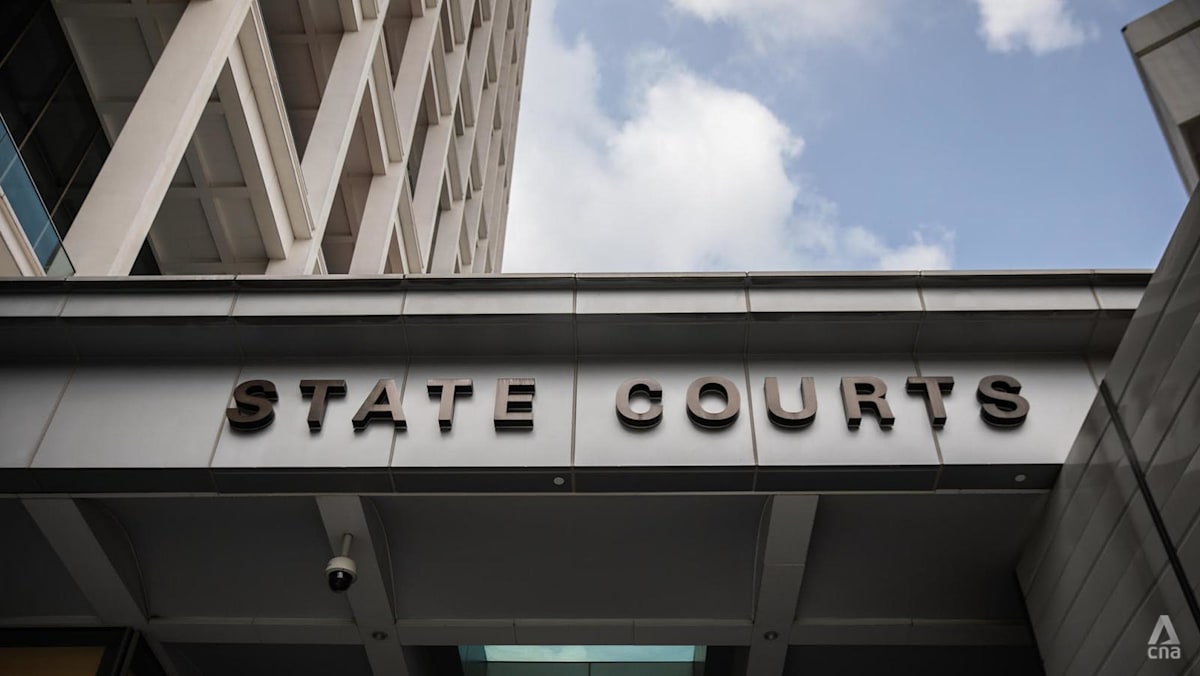
A view of the State Courts building in Singapore. (Photo: CNA/Ili Mansor)
This audio is generated by an AI tool.
SINGAPORE: The mother of a 20-year-old competitive bodybuilder, who died from the toxic effects of a banned weight-loss drug , raised questions about how her son obtained the illicit substance at the conclusion of a coroner's inquiry on Friday (Oct 16).
Police were unable to establish the source of the drug, dinitrophenol, during investigations for the coroner's inquiry. The youth's mobile phone could not be unlocked, and no trace of the drug was found in medication and substances seized from his home.
"The fact is that there are youth in Singapore who can get such and be given such (illicit drugs) even despite authorities' best efforts, and that would be something that continues to affect our family," the mother said tearfully in court.
She said she hoped "that no other life should be lost due to such illicit drugs that continue to be around us".
She also questioned whether her son had been "encouraged" or "made" to take the drug while preparing for a bodybuilding competition, and said he was "under tremendous pressure to keep to a certain weight and a physique".
After the mother said she wished to give the police a statement with further evidence on this, the coroner's court made arrangements for her to do so at a later date.
State Coroner Adam Nakhoda noted that the coroner's inquiry could thereafter be reopened if necessary to consider further evidence.
Coroner's inquiries are to establish the circumstances that led to a death, and are not supposed to ascribe liability. The mother was addressing the court after being asked if she had any questions as the next-of-kin present at the delivery of the coroner's findings.
The police do not suspect any foul play in the youth's death. Judge Nakhoda on Friday found that the death was a substance-related accident.
BODYBUILDING EFFORTS
The deceased youth, who cannot be named due to gag orders protecting his identity imposed by the coroner's court, died at Tan Tock Seng Hospital on Dec 22, 2024. He was a polytechnic student at the time of his death.
The final cause of death was dinitrophenol toxicity. Dinitrophenol is a substance listed under the Poisons Act. It is used as a weight-loss agent, but is prohibited due to concerns of toxicity. It has been banned for human use in the United States since 1938.
The youth had dreams of becoming a professional bodybuilder, and his mother had plans to help open a gym for him to run so he could excel at his chosen path, according to the coroner's report.
He was noted to be extremely disciplined in what he ate when preparing for bodybuilding competitions, Judge Nakhoda said in the findings.
However, during a clinic visit in August 2024, he reported issues with uncontrollable binge-eating that he attributed to the stress of competition preparations. He asked for and was prescribed weight-loss medication, which was not linked to the toxic substance.
Months later, in the early hours of Dec 22, 2024, he was hospitalised after experiencing heart palpitations, difficulty breathing, feverishness and excessive sweating.
His condition deteriorated in the hospital and he suffered a cardiac arrest, with resuscitation efforts ending after 40 minutes. He was pronounced dead the same morning.
After his death, a fatal amount of dinitrophenol was detected in toxicology tests.
Judge Nakhoda found that it was probable the youth had taken dinitrophenol shortly before he died, as the substance was found in a sample of stomach contents taken after his death, and in the hospital, he showed symptoms of having consumed the drug.
The youth had also told hospital staff that he had taken "fat burners", although there was no evidence the staff knew it was dinitrophenol.
Judge Nakhoda said it was uncertain whether the youth himself knew he had taken dinitrophenol, since no evidence of it was found in substances seized from his bedroom.
Since dinitrophenol is not allowed for clinical use in Singapore, the drug is only available illicitly, said the state coroner.
He added that while the sale and use of dinitrophenol is banned in several countries, it is still sold clandestinely online under different names, with the promise of fast weight loss.
He also noted that 34 types of medication and substances were seized from the youth's bedroom and kitchen of his family home. These included prescription medication for conditions like breast cancer, high blood pressure, high cholesterol and asthma.
There was no evidence that the youth suffered from any of the conditions these medicines were meant to treat.
Judge Nakhoda cited a medical report on the medication and substances found in the youth's home, in which doctors observed that bodybuilders aim to develop a muscular physique with a "shredded" appearance.
This requires increasing muscular mass while reducing body fat, and bodybuilders are known to engage in the "off-label" use of medicines to accelerate this, the medical report stated.
Another class of substances is then used to address the adverse effects arising from the "off-label" use of the medicines, said the doctors.
The doctors also said it was known that bodybuilders were highly vulnerable to muscle dysmorphia.
Judge Nakhoda said the youth's immense drive, dedication and discipline in his chosen sport of bodybuilding was undeniable.
"It is a profound tragedy that someone so full of potential passed away so young," he said.
Get our pick of top stories and thought-provoking articles in your inbox
Stay updated with notifications for breaking news and our best stories
Join our channel for the top reads for the day on your preferred chat app
国家验尸官发现,这名青年可能服用了二硝基苯酚,这种物质在新加坡只能非法获得。
新加坡国家法院大楼一景。(图片:CNA/Ili Mansor)
这段音频由人工智能工具生成。
新加坡:一名20岁健美运动员因服用违禁减肥药中毒身亡,其母亲在周五(10月16日)验尸官调查结束后,对儿子如何获得这种违禁药物提出了质疑。
警方在验尸官调查过程中未能确定毒品二硝基苯酚的来源。这名青年的手机无法解锁,而且在他家中搜出的药品和物品中也没有发现该毒品的痕迹。
“事实是,即使当局尽了最大努力,新加坡仍然有一些年轻人能够获得并被提供这类(非法毒品),而这将继续影响我们的家庭,”这位母亲在法庭上含泪说道。
她说,她希望“不要再有生命因为这些仍然存在于我们周围的非法毒品而逝去”。
她还质疑她的儿子在备战健美比赛期间是否被“鼓励”或“逼迫”服用这种药物,并表示他“承受着巨大的压力,要保持一定的体重和体型”。
母亲表示希望就此事向警方提供进一步证据后,验尸官法庭安排她在稍后的日期进行陈述。
州验尸官亚当·纳霍达指出,如有必要,验尸官调查可以重新开始,以考虑进一步的证据。
验尸官的调查旨在查明导致死亡的情况,而非追究责任。在验尸官宣读调查结果时,死者母亲作为在场的近亲被问及是否有任何问题,随后她向法庭发言。
警方并未怀疑这名青年的死亡存在任何谋杀嫌疑。纳霍达法官周五裁定,这起死亡事件是一起与毒品相关的意外事故。
健美努力
由于验尸官法庭下达了保护其身份的禁言令,死者姓名无法公开。他于 2024 年 12 月 22 日在陈笃生医院去世。去世时,他是一名理工学院学生。
最终死因是二硝基苯酚中毒。二硝基苯酚是《毒物法》中列出的物质之一。它曾被用作减肥药,但由于其毒性问题已被禁用。自1938年以来,美国已禁止将其用于人体。
据验尸官报告,这名青年梦想成为一名职业健美运动员,他的母亲计划帮助他开一家健身房,让他经营,以便他在自己选择的道路上取得成功。
纳霍达法官在调查结果中指出,他在备战健美比赛期间,对饮食有着极其严格的自律。
然而,在2024年8月的一次诊所就诊中,他报告了无法控制的暴食问题,他认为这是由于备战比赛的压力造成的。他要求并获得了减肥药处方,而这种药物与之前提到的有毒物质无关。
几个月后,2024 年 12 月 22 日凌晨,他因出现心悸、呼吸困难、发烧和大量出汗等症状而入院治疗。
他在医院病情恶化,心脏骤停,抢救40分钟后停止。当天上午,他被宣布死亡。
他死后,毒理学检测发现他体内含有致命剂量的二硝基苯酚。
纳霍达法官认为,这名青年很可能在死前不久服用了二硝基苯酚,因为在他死后采集的胃内容物样本中发现了这种物质,而且他在医院里也表现出了服用该药物的症状。
这名青年还告诉医院工作人员他服用了“减肥药”,尽管没有证据表明工作人员知道那是二硝基苯酚。
纳霍达法官表示,尚不确定这名青年是否知道自己服用了二硝基苯酚,因为从他卧室查获的物品中没有发现任何证据。
新加坡验尸官表示,由于二硝基苯酚在新加坡不允许用于临床,因此这种药物只能通过非法途径获得。
他还补充说,虽然二硝基苯酚在多个国家已被禁止销售和使用,但它仍然以不同的名称在网上秘密销售,并承诺可以快速减肥。
他还指出,警方从这名青少年的卧室和厨房查获了34种药物和违禁品,其中包括治疗乳腺癌、高血压、高胆固醇和哮喘等疾病的处方药。
没有证据表明这名青少年患有这些药物旨在治疗的任何疾病。
纳霍达法官引用了一份关于在该青年家中发现的药物和物质的医疗报告,医生在报告中指出,健美运动员的目标是练就肌肉发达、线条分明的体格。
该医学报告指出,这需要增加肌肉质量,同时减少体脂,而众所周知,健美运动员会“超适应症”使用药物来加速这一过程。
医生们表示,另一类物质则用于解决药物“超适应症用药”引起的不良反应。
医生们还表示,众所周知,健美运动员极易患肌肉畸形症。
纳霍达法官表示,这位年轻人在他所选择的健美运动中展现出的巨大动力、奉献精神和自律精神是毋庸置疑的。
他说:“一位如此有潜力的人英年早逝,这真是一个巨大的悲剧。”
订阅我们的邮件,即可获取精选热点新闻和引人深思的文章。
订阅通知,第一时间获取突发新闻和精彩报道。
加入我们的频道,即可在您常用的聊天应用上获取当日热门文章。