AI cracks Napoleon’s 200-year-old secret code in just six hours人工智能仅用六小时就破解了拿破仑两百年前的秘密密码
TOKYO, Oct 16 — Napoleon Bonaparte ordered a wartime message written in code, creating a puzzle that remained unsolved for more than 200 years — until artificial intelligence...
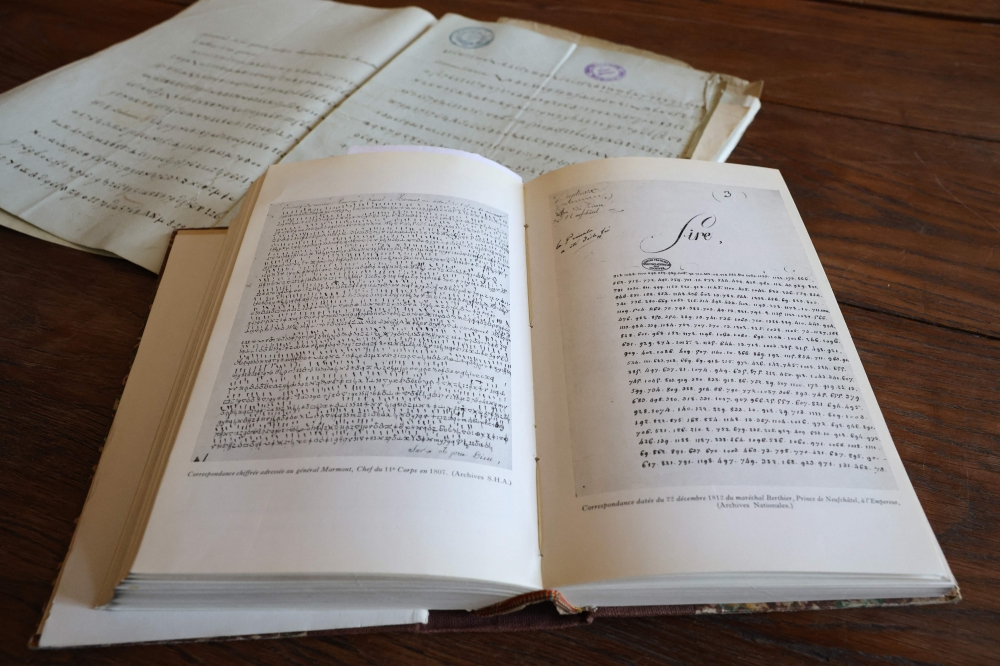
In a significant advancement for historical research, artificial intelligence has cracked a 200-year-old code from a Napoleonic wartime missive within hours, showcasing the potential of AI tools in fields traditionally dominated by scholars.
This breakthrough, led by AI engineer Carter Church, emphasizes the technology's ability to swiftly solve complex ciphers and analyze vast quantities of historical documents.
While AI is enhancing research capabilities, there are mixed sentiments in the cryptographic community about the ease with which these longstanding puzzles are being resolved.
The development marks a transformative moment for codebreaking and the study of historical texts, as AI continues to uncover and link vast amounts of previously inaccessible information.
TOKYO, Oct 16 — Napoleon Bonaparte ordered a wartime message written in code, creating a puzzle that remained unsolved for more than 200 years — until artificial intelligence cracked it in a matter of hours.
AI is helping non-specialists unlock the secrets of historical sources, a development described as a “turning point” in a field previously dominated by scholars and dedicated hobbyists.
One new sleuth is Carter Church, a 27-year-old AI engineer who deciphered a 19th-century letter to one of Napoleon’s generals.
Without digital tools, the task could have taken weeks, but the latest model from ChatGPT-maker OpenAI broke the cipher in just six hours.
“What AI mostly brings is persistence,” Church told AFP, saying he felt “an unbelievable sense of satisfaction and excitement when I saw the result”.
The message, dating from 1809, detailed the positions of French and allied troops in two dozen lines of symbols, numbers and letters, but had been left untouched in an online academic archive.
Traditional, low-tech methods of cracking ciphers are effective but time-consuming and labour-intensive, meaning historians “have more important problems to solve, so many ciphers like this often sit unattended”, Church said.
Church, who works at US cybersecurity firm SentinelOne, needed to learn “very little” about code-breaking techniques or the historical period to solve the puzzle.
After spending several evenings working on it, he consulted Japanese patent engineer Satoshi Tomokiyo, who maintains an online list of unsolved ciphers, to verify the solution.
“2026 will be remembered as a turning point for codebreaking of historical ciphers,” Tomokiyo wrote on his website Cryptiana, a go-to resource for the small but enthusiastic global community of amateur cryptographers.
Researchers had already been developing AI models to crack ciphers, but the public release of advanced general-purpose tools has unleashed a wave of new solutions.
Although Church used OpenAI’s most powerful model, GPT-6 Astra, others have turned to leading offerings from rival US AI company Anthropic.
Tomokiyo said that since mid-September, AI had been used to crack most of the ciphers on his list.
“There remain some tough problems” that could stay unsolved for years because there is less relevant data available to help AI decipher them, the 58-year-old told AFP.
“I’m excited long-time problems are now solved, but on the other hand, I have mixed feelings, because AI seems to have solved these difficult problems so easily,” he said.
As the technology threatens to take away the satisfaction of being the first to crack a cipher, one fellow code-breaker told Tomokiyo: “I feel useless.”
AI is surpassing human abilities in fields ranging from mathematics to computer programming, while threatening to transform or even eliminate many jobs.
The technology is also changing historical research beyond code-breaking, helping researchers analyse millions of medieval manuscripts and decipher ancient scrolls.
The Herculaneum Papyri – hundreds of papyrus scrolls carbonised by the eruption of Mount Vesuvius in AD 79 – are too fragile to be unrolled without risking their destruction.
Researchers are now using X-rays and AI to reveal the hidden writing inside them.
In June, researchers in Italy announced the first complete virtual unrolling of a scroll, which turned out to contain a treatise on ethics.
‘Facebook of the past’
AI is also being used to build a vast, searchable collection of previously inaccessible sources on Jewish history and culture by transcribing 10 million pages of Hebrew manuscripts.
“It’s gigantic. No human being could process such a quantity of data,” said project leader Daniel Stoekl Ben Ezra of the École Pratique des Hautes Études in Paris.
Researchers hope databases built from the digitised texts – which he likens to a “huge Facebook of the past” – will help uncover connections between people, places and ideas.
At Notre-Dame Cathedral in Paris, an AI system has been trained to transcribe 14,600 pages of Latin from the church’s medieval archives, a task that also involves deciphering difficult historical writing.
“These are minutes drawn up by notaries who abbreviate their decisions. The script is highly administrative, very pragmatic... with rather technical vocabulary,” said historian Julie Claustre, who leads the e-NDP project.
With character recognition rates ranging from 88 to 94 per cent, the project has revealed information about the cathedral’s daily life, construction work, staff and care of abandoned children.
Doing the same work by hand would take “several decades”, Claustre said, adding that the benefits went beyond saving time.
Automation enables “inquiries that were not previously possible; it transforms the conditions of research”. — AFP
Mexico turns to AI to age thousands of missing children’s faces and help families find answers
Malaysian indie studio Metronomik steals the show with three wins at Level Up SEA Game Awards 2026
Meta is taking on China’s open AI giants — with a little help from Apple
Zahid says Malaysia ready to help Indonesia fight forest fires after Prabowo accepts foreign aid
Perlis MACC recovers nearly RM700,000 through forfeitures since 2024
El Niño could hit fishermen, fish farms as temperatures soar to 40°C, says Mat Sabu
人工智能在历史研究领域取得了重大进展,在短短几个小时内就破解了拿破仑战争时期一份信件中 200 年前的密码,展现了人工智能工具在传统上由学者主导的领域中的潜力。
这项由人工智能工程师卡特·丘奇领导的突破性进展,凸显了该技术能够迅速破解复杂密码并分析大量历史文献的能力。
虽然人工智能正在增强研究能力,但密码学界对于这些长期存在的难题如此轻易地得到解决,却褒贬不一。
这一进展标志着密码破译和历史文本研究迎来了一个变革性的时刻,因为人工智能不断发现并关联大量以前无法获取的信息。
东京,10 月 16 日——拿破仑·波拿巴下令用密码写一份战时信息,这造成了一个 200 多年来一直未被破解的谜题——直到人工智能在几个小时内将其破解。
人工智能正在帮助非专业人士揭开历史资料的秘密,这一发展被誉为该领域的“转折点”,此前该领域一直由学者和专注的业余爱好者主导。
一位新晋侦探是 27 岁的人工智能工程师卡特·丘奇,他破译了一封 19 世纪写给拿破仑一位将军的信件。
如果没有数字工具,这项任务可能需要数周时间,但 ChatGPT 的制造商 OpenAI 的最新模型仅用了 6 个小时就破解了密码。
“人工智能带来的主要是坚持不懈,”丘奇告诉法新社,他说,当他看到结果时,他感到“难以置信的满足感和兴奋感”。
这份日期为 1809 年的信息,用二十多行符号、数字和字母详细记录了法国及其盟军的位置,但却一直被保存在一个在线学术档案馆中,未曾修改过。
丘奇说,传统的、低技术的密码破解方法虽然有效,但耗时费力,这意味着历史学家“还有更重要的问题要解决,所以很多这样的密码常常无人问津”。
在美国网络安全公司 SentinelOne 工作的 Church 只需要了解“很少”关于密码破解技术或历史时期的知识就能解开这个谜题。
经过几个晚上的努力,他咨询了维护着未破解密码在线列表的日本专利工程师智清聪,以验证解决方案。
“2026 年将被铭记为历史密码破译的转折点,”Tomokiyo 在他的网站 Cryptiana 上写道,该网站是全球业余密码学家这个虽小但充满热情的群体的重要资源。
研究人员此前一直在开发人工智能模型来破解密码,但先进通用工具的公开发布引发了一波新的解决方案。
尽管 Church 使用了 OpenAI 最强大的模型 GPT-6 Astra,但其他人则转向了竞争对手美国人工智能公司 Anthropic 的领先产品。
Tomokiyo表示,自9月中旬以来,人工智能已经被用来破解他名单上的大部分密码。
这位 58 岁的男子告诉法新社:“仍然存在一些棘手的问题”,这些问题可能多年都无法解决,因为可用于帮助人工智能破译这些问题的相关数据较少。
“我很高兴长期存在的问题现在得到了解决,但另一方面,我的心情很复杂,因为人工智能似乎如此轻易地解决了这些难题,”他说。
随着科技的发展,破解密码的成就感可能会逐渐消失,一位密码破译员告诉 Tomokiyo:“我觉得自己没用了。”
人工智能在从数学到计算机编程等各个领域都超越了人类的能力,并有可能改变甚至取代许多工作岗位。
这项技术也在改变历史研究,其应用范围不仅限于密码破译,它还能帮助研究人员分析数百万份中世纪手稿,并解读古代卷轴。
赫库兰尼姆纸莎草纸——数百卷纸莎草纸卷轴,因公元 79 年维苏威火山爆发而碳化——非常脆弱,如果展开,就会有损毁的风险。
研究人员现在正利用X射线和人工智能来揭示其中隐藏的文字。
今年6月,意大利的研究人员宣布首次完整地虚拟展开了一卷卷轴,结果发现其中包含一篇伦理学论文。
“过去的Facebook”
人工智能还被用于构建一个庞大的、可搜索的犹太历史和文化资料库,该资料库此前无法访问,其方法是转录 1000 万页希伯来语手稿。
“这太庞大了。没有任何人类能够处理如此庞大的数据量,”巴黎高等研究实践学院的项目负责人丹尼尔·斯托克尔·本·埃兹拉说道。
研究人员希望利用数字化文本建立的数据库(他将其比作“过去的大型 Facebook”)能够帮助揭示人、地点和思想之间的联系。
在巴黎圣母院,一个人工智能系统经过训练,能够转录教堂中世纪档案馆中的 14600 页拉丁文文献,这项任务还包括破译晦涩难懂的历史文献。
“这些是由公证员起草的会议记录,他们对决定进行了简化。这份文件具有很强的行政性,非常务实……而且使用了相当专业的术语,”领导电子国家发展计划 (e-NDP) 的历史学家朱莉·克劳斯特雷说道。
该项目的字符识别率在 88% 到 94% 之间,揭示了大教堂的日常生活、建设工作、工作人员以及对弃婴的照顾等信息。
克劳斯特表示,如果用手工完成同样的工作,需要“几十年”,他还补充说,这样做的好处不仅仅是节省时间。
自动化使得“以前无法进行的调查成为可能;它改变了研究的条件”。——法新社
墨西哥利用人工智能技术鉴定数千名失踪儿童的面部年龄,帮助其家人寻找答案。
马来西亚独立游戏工作室 Metronomik 在 Level Up SEA 游戏大奖 2026 中大放异彩,斩获三项大奖。
Meta正在挑战中国的开源人工智能巨头——而苹果公司也提供了一些帮助。
扎希德表示,在普拉博沃接受外国援助后,马来西亚准备帮助印尼扑灭森林火灾。
自2024年以来,玻璃市反贪污委员会通过没收财产追回了近70万令吉。
马特·萨布表示,厄尔尼诺现象可能导致气温飙升至40摄氏度,对渔民和养鱼场造成冲击。