‘MaiKea’: To encourage the use of Hokkien in Penang, an artist invites the public to write on walls at an exhibition“MaiKea”:为了鼓励在槟城使用福建话,一位艺术家邀请公众在展览的墙上涂鸦。
GEORGE TOWN, Oct 17 — Graffiti in public toilet stalls and even schools filled with vulgar Hokkien phrases, crude drawings and declarations of love is largely frowned upon.We...
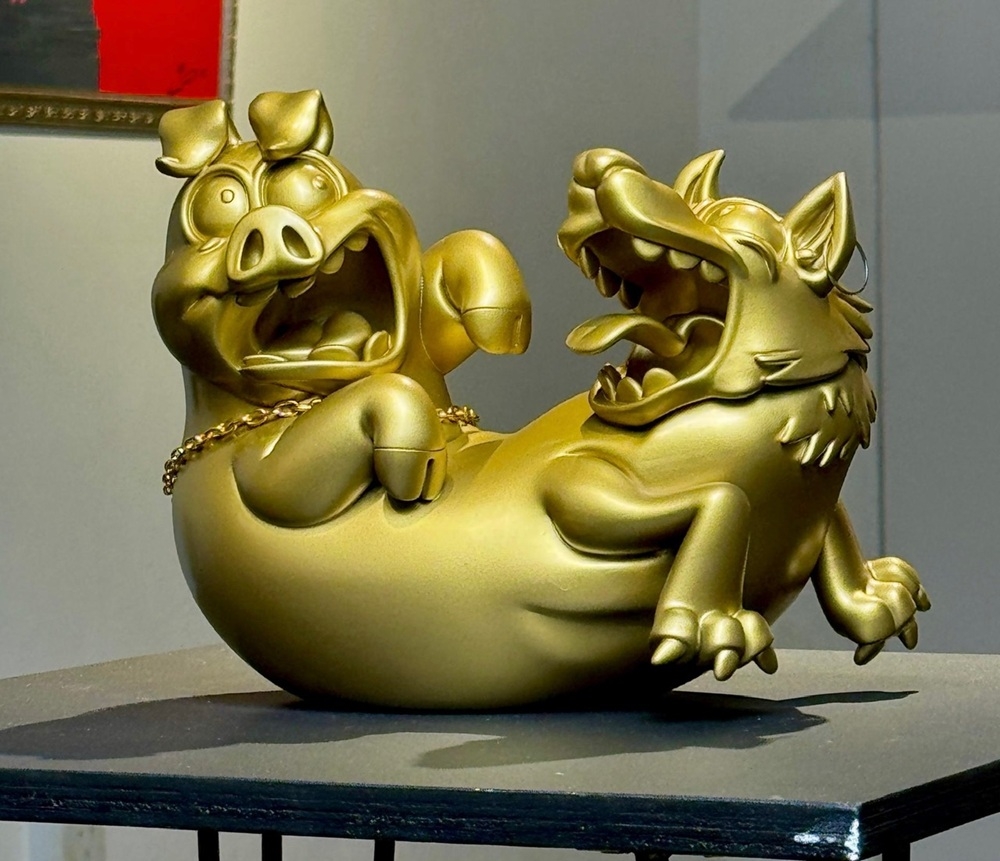
The "MaiKea" exhibition by artist Sumidik, held at MassHaus in George Town, highlights the Hokkien language's cultural significance through interactive installations and artworks.
Featuring a unique toilet stall for visitors to express Hokkien graffiti, the exhibition aims to promote the use of Hokkien among younger generations by showcasing familiar phrases and expressions.
Sumidik's work includes 14 prints from his Hokkien Calendar Illustration series, paintings, and sculptures that blend humor with cultural reflection.
The exhibition is open to the public until October 31, inviting engagement with the language's evolving heritage.
GEORGE TOWN, Oct 17 — Graffiti in public toilet stalls and even schools filled with vulgar Hokkien phrases, crude drawings and declarations of love is largely frowned upon.
We don’t see so many of them anymore though and it’s a good thing.
But artist Sumidik is using his memory of this as a way to encourage the use of Hokkien – once widely spoken by Penangites of all races – again.
Sumidik’s solo exhibition even features a toilet stall complete with a toilet bowl with walls for visitors to scribble their Hokkien graffiti on.
“I want to use this exhibition as a fun way to shine a spotlight on Hokkien as I feel many in the younger generation cannot speak Hokkien now,” he said.
His exhibition is titled MaiKea which means “fear not” in Hokkien, a clever call-out to people to not be afraid to use Hokkien and to come visit the exhibition.
The exhibition, after all, is Sumidik’s way of encouraging the use of Hokkien among the younger generation and to remind them of phrases used by the older generation.
He said Hokkien is a living language that evolved over the years and used to be spoken in public spaces from kopitiams to the markets.
Phrases such as kopi-o peng mai liao (black coffee without sugar), teh si juak (hot milk tea without sugar), wah, tjin kui! (That’s so expensive!) or khi si lang! (Stressing me out!) were often heard in kopitiams or in markets.
“So, I want to spotlight all these familiar Hokkien phrases and expressions by putting a fun wordplay on them through direct translation in my art,” he said.
The exhibition features 14 prints of his Hokkien Calendar Illustration series, three paintings and sculptures of his iconic TuKao .
TuKao is the shortened form of the common Hokkien phrase ah tu ah kao (pig and dog) which was used to describe the common person on the street who is rough around the edges, loud and maybe even a little bit vulgar.
Among his calendar series are common phrases such as buai ya (a Hokkien adaptation of the Malay word buaya ) which is often used to describe a playboy and beneath it is chi ko pek which is a closely linked phrase meaning pervert or dirty old man.
“There are also three paintings and the main attraction is the toilet stall for visitors to scribble their own phrases,” Sumidik said.
The exhibition, which opened on October 9, has already seen many visitors letting loose and scribbling various phrases on the three walls of the toilet stall including some vulgar ones.
“It’s very interesting, the visitors went all out to conteng on the walls... there were even Singaporeans spelling their own version of Hokkien phrases,” he said.
The exhibition at Masshaus, 147A, Lebuh Victoria in George Town, is open to the public from Friday to Sunday (12pm to 6pm) until October 31.
Beyond the meat and money: Miri team hunts crocodiles to protect lives
Far from plain: Fans worldwide discover Sao Tome’s niche vanilla
She thought it was just a sportswear ad: How Malaysian model Vibha Rajish ended up on set with Zendaya (VIDEO)
JPN urges public to verify facts and stop spreading misleading claims about 2023 civil marriage video
Budget 2027: Record RM57b allocation to boost Malaysian MSMEs’ resilience amid global economic uncertainty
JBPM officer Mohd Sani, missing after Nepal floods, among 121 honoured at KPKT appreciation night (VIDEO)
艺术家 Sumidik 的“MaiKea”展览在乔治市 MassHaus 举办,通过互动装置和艺术作品突出了福建话的文化意义。
展览设有一个独特的厕所隔间,供参观者用福建话涂鸦,旨在通过展示熟悉的短语和表达方式,促进年轻一代使用福建话。
Sumidik 的作品包括他的福建日历插图系列中的 14 幅版画、绘画和雕塑,这些作品将幽默与文化反思融合在一起。
展览将持续向公众开放至10月31日,旨在邀请公众参与了解该语言不断发展的文化遗产。
乔治市,10 月 17 日讯——在公共厕所隔间甚至学校里涂写粗俗的福建话短语、粗糙的图画和爱情宣言,这种行为普遍受到人们的谴责。
不过我们现在很少见到他们了,这是一件好事。
但艺术家苏米迪克正利用他对这段历史的记忆,鼓励人们再次使用福建话——福建话曾是槟城各族人民广泛使用的语言。
Sumidik 的个人展览甚至还设有一个厕所隔间,里面有马桶,墙壁上还留有供参观者涂鸦福建话的空白。
他说:“我想利用这次展览,以一种有趣的方式来推广福建话,因为我觉得现在很多年轻一代都不会说福建话了。”
他的展览名为“MaiKea”,在福建话中意为“不要害怕”,巧妙地呼吁人们不要害怕使用福建话,并前来参观展览。
毕竟,这次展览是苏米迪克鼓励年轻一代使用福建话,并让他们记住老一辈使用的短语的一种方式。
他说,福建话是一种活的语言,经过多年的发展演变,过去人们在从咖啡店到市场等公共场所使用福建话。
在咖啡店或市场里,经常会听到诸如“kopi-o peng mai liao”(不加糖的黑咖啡)、“teh si juak”(不加糖的热奶茶)、“wah, tjin kui!”(好贵啊!)或“khi si lang!”(压力好大!)之类的短语。
“所以,我想通过在我的艺术作品中直接翻译这些熟悉的福建话短语和表达方式,并加以有趣的文字游戏,来突出它们,”他说。
本次展览展出了他的14幅福建日历插图系列版画、3幅绘画作品以及他标志性的土高雕塑。
“TuKao”是闽南语常用语“啊 tu ah kao”(猪和狗)的缩写形式,用来形容街上那些粗鲁、吵闹甚至有点粗俗的普通人。
在他的日历系列中,有一些常用短语,例如 buai ya(马来语 buaya 的福建话改编版),通常用来形容花花公子,其下方是 chi ko pek,这是一个密切相关的短语,意思是变态或肮脏的老男人。
“这里还有三幅画作,最吸引人的是厕所隔间,游客可以在上面涂鸦自己的短语,”苏米迪克说。
该展览于 10 月 9 日开幕,已经有很多参观者在厕所隔间的三面墙上涂鸦,其中不乏一些粗俗的词语。
“这很有趣,游客们在墙上尽情涂鸦……甚至还有新加坡人用福建话拼出他们自己的版本,”他说。
展览在乔治市维多利亚街 147A 号 Masshaus 举行,从周五到周日(中午 12 点至下午 6 点)向公众开放,展期至 10 月 31 日。
超越肉和金钱:美里团队猎杀鳄鱼是为了保护生命
绝非平淡无奇:世界各地的粉丝发现了圣多美小众香草
她以为这只是个运动服广告:马来西亚模特维芭·拉吉什 (Vibha Rajish) 是如何与赞达亚 (Zendaya) 一起出现在片场的(视频)
日本政府敦促公众核实事实,停止传播有关2023年民事婚姻视频的误导性说法。
2027年财政预算案:拨款创纪录的570亿令吉,以增强马来西亚中小微企业在全球经济不确定性中的韧性
尼泊尔洪灾后失踪的JBPM官员Mohd Sani,在KPKT表彰晚会上与其他121人一起受到表彰(视频)