Singapore to accredit first five TCM providers under broader Chinese-Western medicine push新加坡将在更广泛的中西医结合推广计划下,认证首批五家中医医疗机构。
Read more at straitstimes.com.
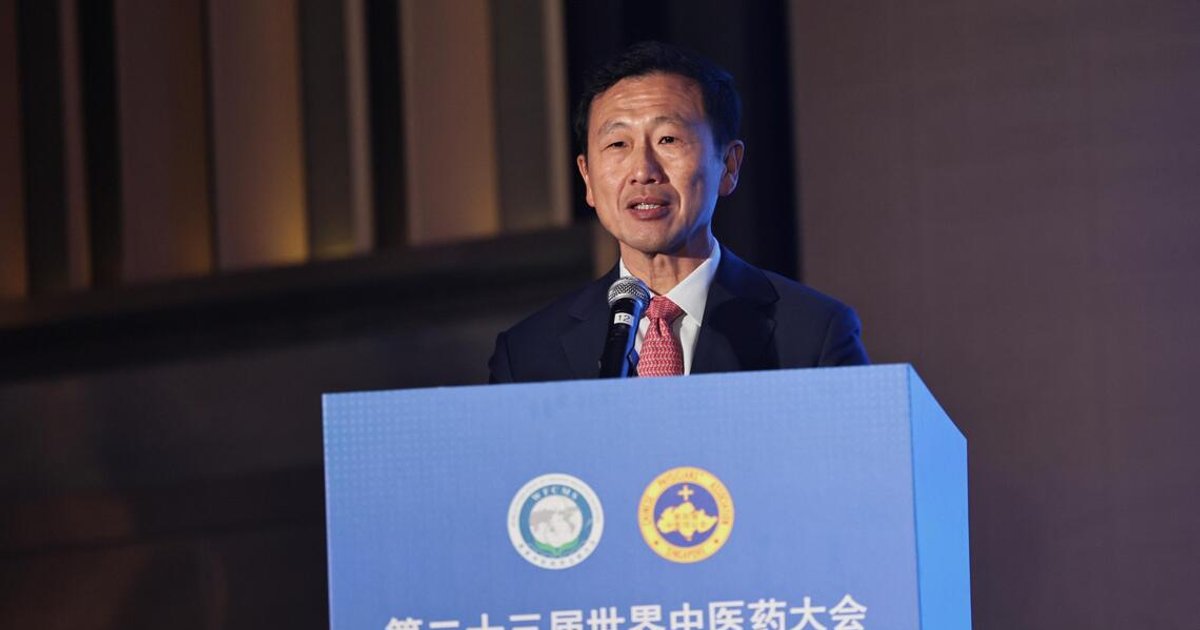
Health Minister Ong Ye Kung said at the opening of the 23rd World Congress of Chinese Medicine on Oct 17 that accreditation shows a commitment to stronger governance, consistent standards and public confidence.
Published Oct 17, 2026, 01:03 PM
Updated Oct 17, 2026, 01:03 PM
SINGAPORE - Singapore is introducing a voluntary accreditation framework for traditional Chinese medicine (TCM) providers. It will also study whether accredited TCM practitioners, working with general practitioners, can be allowed to order X-rays.
These moves are part of a broader push to explore integrative medicine and expand the role of TCM in mainstream medicine.
They come alongside efforts to introduce local degree and master’s programmes in TCM, to undertake sandbox studies to bring TCM treatments into mainstream care, and to explore how TCM can contribute to preventive care programme Healthier SG.
Launched on Oct 17, the TCM Accreditation Programme will accredit the first five TCM providers.
They are: Kwong Wai Shiu TCM Centre in Serangoon; NTU Chinese Medicine; Singapore Chung Hwa Medical Institution Headquarters; Singapore Thong Chai Medical Institution Headquarters; and Thomson Chinese Medicine in Novena.
“Our objective is to establish accreditation as something beyond licence of practice,” Health Minister Ong Ye Kung said at the opening of the 23rd World Congress of Chinese Medicine on Oct 17. He said accreditation it shows a commitment to stronger governance, consistent standards and public confidence.
“It creates opportunities for accredited practitioners and providers to work with the Ministry of Health in co-designing future TCM care models and contributing to our national healthcare initiatives,” he added.
The TCM Accreditation Programme, administered by The Academy of Chinese Medicine, Singapore, has separate tracks for organisations and individuals. Organisations are assessed on factors including governance, hygiene and infection control, equipment, and the preparation and dispensing of TCM medications. Practitioners are assessed on qualifications, clinical experience and professional standing, among other criteria.
Accreditation goes beyond the existing requirements for TCM practitioners to be registered with the TCM Practitioners Board and hold valid practising certificates. Registered practitioners and providers can continue practising and operating without accreditation.
MOH will also open a second call for proposals under its TCM Integrative Sandbox from Nov 3. The initiative allows public healthcare institutions to test and evaluate selected TCM treatments in hospital settings.
The sandbox, launched in January 2025, evaluates whether treatments are clinically effective and cost-effective. Those that demonstrate positive results over one to two years could be considered for wider adoption and financial support.
Ong said MOH wants to support further work involving Chinese proprietary medicines, including their use in managing chronic diseases.
“The call for sandbox proposals will therefore remain open for another three years,” he said.
Seven acupuncture projects were selected for trials, out of 18 proposals submitted under the first call.
They cover stroke rehabilitation, migraine, knee osteoarthritis, female infertility, drug-resistant epilepsy and supportive cancer care, including the management of pain, insomnia and fatigue.
Currently, the only TCM treatments subsidised in public hospitals are acupuncture for neck pain and lower back pain.
“What we should not compromise on when developing integrative medicine is to build rigorous evidence for safety and effectiveness,” said Ong.
But he added: “TCM should not be forced into research approaches of modern medicine that do not recognise its long history of development and accumulated empirical evidence.”
“For example, randomised controlled trials may not always be practical for TCM. At the same time, neither should TCM be exempt from rigorous evaluation.”
MOH is also aiming to test how collaborative care between TCM practitioners and GPs could work, under Healthier SG, in the first half of 2027.
It has received 30 proposals and is shortlisting applications for further discussion.
The Agency for Integrated Care will also facilitate more partnerships between accredited TCM providers and active ageing centres to bring services closer to seniors. Kwong Wai Shiu TCM Centre and Singapore Chung Hwa Medical Institution have started collaborating with AACs, said Ong.
Traditional Chinese medicine
卫生部长王乙康在10月17日举行的第23届世界中医药大会开幕式上表示,认证表明了对加强治理、统一标准和公众信任的承诺。
发布于 2026 年 10 月 17 日下午 1:03
更新于2026年10月17日下午1:03
新加坡——新加坡正推行中医从业人员自愿认证制度。新加坡还将研究是否允许获得认证的中医从业人员与全科医生合作,开具X光检查单。
这些举措是探索整合医学、扩大中医在主流医学中作用的更广泛努力的一部分。
与此同时,政府也在努力引入本地中医学位和硕士学位课程,开展沙盒研究,将中医治疗纳入主流医疗保健,并探索中医如何为“更健康的新加坡”预防保健计划做出贡献。
中医认证计划于 10 月 17 日启动,将认证首批五家中医医疗机构。
它们分别是:实龙岗广伟肇中医中心;南洋理工大学中医学院;新加坡中华医学院总部;新加坡同济医学院总部;以及诺维娜汤申中医学院。
“我们的目标是使认证超越执业许可证的范畴,”卫生部长王乙康在10月17日举行的第23届世界中医药大会开幕式上表示。他指出,认证表明了对加强治理、统一标准和公众信任的承诺。
“这为获得认证的从业人员和医疗服务提供者创造了与卫生部合作的机会,共同设计未来的中医护理模式,并为我们的国家医疗保健计划做出贡献,”他补充道。
新加坡中医学院管理的中医认证项目,针对机构和个人分别设有不同的认证途径。机构的评估标准包括管理规范、卫生和感染控制、设备以及中药的配制和分发。执业医师的评估标准则包括资质、临床经验和专业地位等。
认证的要求高于目前对中医从业人员在中医从业人员委员会注册并持有有效执业证书的要求。已注册的从业人员和服务提供者无需认证即可继续执业和运营。
卫生部将于11月3日起启动第二轮中医综合沙盒项目提案征集。该项目旨在让公立医疗机构在医院环境中测试和评估选定的中医治疗方法。
该沙盒试验于2025年1月启动,旨在评估各种疗法的临床疗效和成本效益。那些在一到两年内展现出积极效果的疗法,可能会被考虑推广应用并获得资金支持。
Ong表示,卫生部希望支持更多涉及中成药的研究工作,包括中成药在慢性病治疗中的应用。
“因此,沙盒方案的征集将继续开放三年,”他说。
在第一轮征集活动中,共收到 18 个针灸项目提案,最终选出 7 个针灸项目进行试验。
他们的服务涵盖中风康复、偏头痛、膝关节骨关节炎、女性不孕症、耐药性癫痫和癌症支持治疗,包括疼痛、失眠和疲劳的治疗。
目前,公立医院唯一补贴的中医治疗项目是针灸治疗颈痛和腰痛。
Ong表示:“在发展综合医学时,我们不应该妥协的是要建立严格的安全性和有效性证据。”
但他补充道:“不应强迫中医采用现代医学的研究方法,因为这些方法不承认中医悠久的发展历史和积累的经验证据。”
“例如,随机对照试验对于中医来说可能并不总是切实可行的。但同时,中医也不应免于接受严格的评估。”
卫生部还计划在 2027 年上半年,在“更健康的新加坡”计划下,测试中医从业者和全科医生之间的协作护理模式。
目前已收到 30 份提案,正在筛选申请进行进一步讨论。
综合护理机构还将促进更多经认证的中医机构与长者安老中心之间的合作,以便为长者提供更便捷的服务。王先生表示,广伟肇中医中心和新加坡中华医学中心已开始与长者安老中心合作。
中药