DPM Zahid strengthens Malaysia-China ties, advances global TVET cooperation after five-day visit马来西亚副总理扎希德五日访华后,加强了马中关系,推进了全球职业技术教育与培训合作。
TIANJIN, Oct 17 — Deputy Prime Minister Datuk Seri Ahmad Zahid Hamidi’s five-day working visit to China has strengthened Malaysia-China strategic cooperation in Technical and...
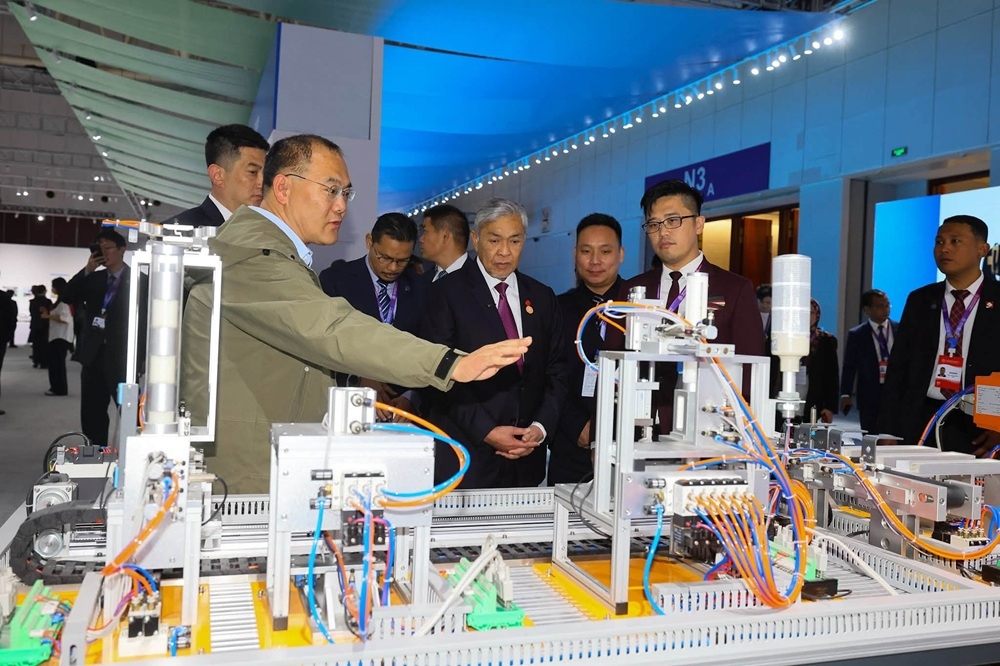
Deputy Prime Minister Ahmad Zahid Hamidi's visit to China has boosted Malaysia-China cooperation in TVET, high-tech investment, security, and disaster management, creating opportunities for economic growth.
Discussions included expanding trade, investment, and tech collaboration, with Malaysia ready to facilitate ASEAN-China-GCC ties and detailed proposals on security cooperation and mutual legal assistance with China.
The visit solidified plans for Malaysia-China cooperation in nuclear technology and high-tech research, highlighting both nations' dedication to a strategic partnership for shared prosperity and regional stability.
TIANJIN, Oct 17 — Deputy Prime Minister Datuk Seri Ahmad Zahid Hamidi’s five-day working visit to China has strengthened Malaysia-China strategic cooperation in Technical and Vocational Education and Training (TVET), high-tech investment, security and disaster management, thereby opening new opportunities for human capital development and national economic growth.
The October 12-16 visit also saw commitments to expand cooperation in artificial intelligence (AI), semiconductor, electric vehicles (EVs), nuclear technology and digital economy, while also strengthening bilateral ties under the Malaysia-China Comprehensive Strategic Partnership framework.
One of the key focus was the development of the Malaysia-China Institute (MCI) as a strategic platform to strengthen the country’s TVET ecosystem, especially in future industries such as smart manufacturing, robotics, EVs and industrial digitalisation through technology transfer and expertise from strategic partners in China.
Ahmad Zahid, who is also Rural and Regional Development Minister and chairs the National TVET Council, highlighted the importance of the TVET 2.0 approach in closing the gap between educational institutions, industries and the job market, while ensuring that skills training remained relevant with the needs of the rapidly growing high-tech sector.
When delivering the keynote address at the opening of the 2026 World Vocational and Technical Education Development Conference (WVTEDC) in Tianjin yesterday (October 16), he also emphasised the importance of international collaboration in exchanging expertise, developing skills standards and exposure to new technologies to produce a highly skilled workforce.
Malaysia also proposed the establishment of a World TVET Council as a platform to strengthen international cooperation, coordinate the sharing of best practices and drive the development a more integrated global skills ecosystem.
It was proposed that China be made the permanent secretariat or host for the council, thus strengthening the role of Malaysia-China collaboration in advancing the TVET agenda on an international scale.
During the WVTEDC Ministerial Roundtable Meeting, Malaysia also proposed a framework for the mutual recognition of qualifications and cross-border accreditation, while highlighting MCI’s potential in strengthening practical training, technology transfer and trainer development programmes through the Train-the-Trainer approach.
During a bilateral meeting with Chinese Vice-Premier Ding Xuexiang at the Great Hall of the People in Beijing on Thursday (October 15), both parties discussed expanding trade, investment and technology cooperation, including the renewal of the Investment Guarantee Agreement (ICA) to strengthen investment protection in strategic and high-impact sectors.
Malaysia also expressed its readiness to act as a bridge between Asean, China and the Gulf Cooperation Council (GCC), including expanding trade and investment cooperation and the use of the Renminbi in related transactions.
In his meeting with Chinese State Councillor and Minister of Public Security Wang Xiaohong in Beijing on Tuesday (October 13), Ahmad Zahid discussed strengthening security cooperation, intelligence sharing and joint operations to combat transnational crime, especially online job scams and cybercrime.
Both parties also focused on finalising the Memorandum of Understanding (MoU) on security to be signed during Prime Minister Datuk Seri Anwar Ibrahim’s visit to Shenzhen for the Asia-Pacific Economic Cooperation (APEC) Economic Leaders’ Meeting (AELM) in November, as well as proposing the resumption of negotiations on an Extradition Treaty and strengthening the implementation of Mutual Legal Assistance (MLA).
Regarding disaster management, Malaysia proposed technical cooperation with China to enhance preparedness for climate change-related risks through the use of satellite monitoring technology, AI and early warning systems, alongside joint training, capacity building, expert exchanges and operational simulations.
The visit also included discussions with China National Nuclear Corporation (CNNC) to explore cooperation in nuclear technology, science and high-tech research and industrial capacity development.
Among the proposals were identifying Malaysian students to pursue studies at suitable higher education institutions in China before undergoing intensive training at CNNC’s training centres and skills institutions, as well as preparing local industries to participate in the nuclear sector’s supply chain.
Overall, Ahmad Zahid’s visit reflected Malaysia’s commitment to strengthening bilateral ties with China through more comprehensive, results-oriented cooperation based on mutual interests, including China’s support for Malaysia’s full participation in Brics.
The two countries also reaffirmed their aspirations to build a High-Level Strategic Malaysia-China Community with a Shared Future for the prosperity of their peoples and regional stability. — Bernama
Suspicious packages at Nilai, Tampin schools: MOE leaves probe to police, says Fadhlina
Children must not be stigmatised for life over birth status, says religious affairs minister
Woman sending son to school killed as Hilux hits motorcycle in Kota Marudu; teen dies in separate Tawau collision
马来西亚副总理艾哈迈德·扎希德·哈米迪访问中国,促进了马来西亚与中国在职业技术教育、高科技投资、安全和灾害管理领域的合作,为经济增长创造了机遇。
双方讨论的内容包括扩大贸易、投资和技术合作,马来西亚准备促进东盟-中国-海湾合作委员会关系,并就与中国的安全合作和司法互助提出了详细建议。
此次访问巩固了马来西亚和中国在核技术和高科技研究领域的合作计划,凸显了两国致力于建立战略伙伴关系以实现共同繁荣和地区稳定的决心。
天津,10月17日讯——马来西亚副首相拿督斯里阿末扎希哈米迪对中国进行了为期五天的工作访问,加强了马来西亚与中国在技术和职业教育培训(TVET)、高科技投资、安全和灾害管理等领域的战略合作,从而为人力资本发展和国家经济增长开辟了新的机遇。
10月12日至16日的访问还促成了双方承诺扩大在人工智能、半导体、电动汽车、核技术和数字经济领域的合作,同时在马来西亚-中国全面战略伙伴关系框架下加强双边关系。
重点之一是发展马来西亚-中国研究院 (MCI),使其成为一个战略平台,通过从中国战略合作伙伴那里获得技术转让和专业知识,加强马来西亚的职业技术教育与培训生态系统,尤其是在智能制造、机器人、电动汽车和工业数字化等未来产业领域。
艾哈迈德·扎希德同时也是农村和区域发展部长以及国家职业技术教育与培训委员会主席,他强调了职业技术教育与培训 2.0 方法在缩小教育机构、行业和就业市场之间的差距方面的重要性,同时确保技能培训与快速发展的高科技行业的需求保持相关性。
昨天(10月16日),他在天津举行的2026年世界职业技术教育发展大会(WVTEDC)开幕式上发表主旨演讲时,也强调了国际合作在交流专业知识、制定技能标准和接触新技术方面的重要性,以培养高技能劳动力。
马来西亚还提议成立世界职业技术教育与培训理事会,作为加强国际合作、协调最佳实践分享和推动更一体化的全球技能生态系统发展的平台。
有人提议让中国成为该理事会的常设秘书处或东道国,从而加强马来西亚与中国在国际层面推进职业技术教育议程方面的合作作用。
在世界高等教育发展中心部长级圆桌会议上,马来西亚还提出了资格互认和跨境认证的框架,同时强调了马来西亚培训委员会(MCI)通过“培训师培训”方法加强实践培训、技术转让和培训师发展计划的潜力。
10月15日星期四,在北京人民大会堂与中国国务院副总理丁学祥举行双边会晤期间,双方讨论了扩大贸易、投资和技术合作,包括续签《投资保障协定》,以加强对战略性和高影响力行业的投资保护。
马来西亚也表示愿意充当东盟、中国和海湾合作委员会(GCC)之间的桥梁,包括扩大贸易和投资合作以及在相关交易中使用人民币。
周二(10月13日),艾哈迈德·扎希德在北京会见了中国国务委员兼公安部部长王晓红,讨论了加强安全合作、情报共享和联合行动,以打击跨国犯罪,特别是网络求职诈骗和网络犯罪。
双方还重点讨论了在首相拿督斯里安华·易卜拉欣11月访问深圳出席亚太经合组织(APEC)领导人非正式会议期间签署的关于安全的谅解备忘录(MoU),并提议恢复引渡条约谈判,加强司法互助(MLA)的实施。
在灾害管理方面,马来西亚提议与中国开展技术合作,通过使用卫星监测技术、人工智能和预警系统,以及联合培训、能力建设、专家交流和业务模拟,来加强应对气候变化相关风险的准备工作。
此次访问还包括与中国核工业集团公司(CNNC)的会谈,探讨在核技术、科学和高新技术研究以及产业能力发展方面的合作。
这些提议包括:选拔马来西亚学生到中国合适的高等教育机构学习,然后在中核集团的培训中心和技能机构接受强化培训;以及让当地产业做好参与核能行业供应链的准备。
总体而言,艾哈迈德·扎希德的访问体现了马来西亚致力于通过基于共同利益的更全面、更注重成果的合作来加强与中国的双边关系,包括中国支持马来西亚全面参与金砖国家。
两国还重申了构建马中命运共同体的愿景,以促进两国人民的繁荣和区域稳定。——马新社
尼莱和淡边学校发现可疑包裹:教育部将调查交由警方负责,法德琳娜表示
宗教事务部长表示,不应让儿童因出生状况而终身遭受歧视。
一名女子在哥打马鲁都驾车撞上一辆摩托车,送儿子上学途中不幸身亡;另一起发生在斗湖的交通事故中,一名青少年丧生。