SM Lee calls for renewed tripartite ties to safeguard port jobs amid AI, trade headwinds李显龙总理呼吁加强三方关系,以在人工智能和贸易逆风中保障港口就业。
SM Lee calls for renewed tripartite ties to protect Singapore port jobs amid AI and trade headwinds Read more at straitstimes.com.
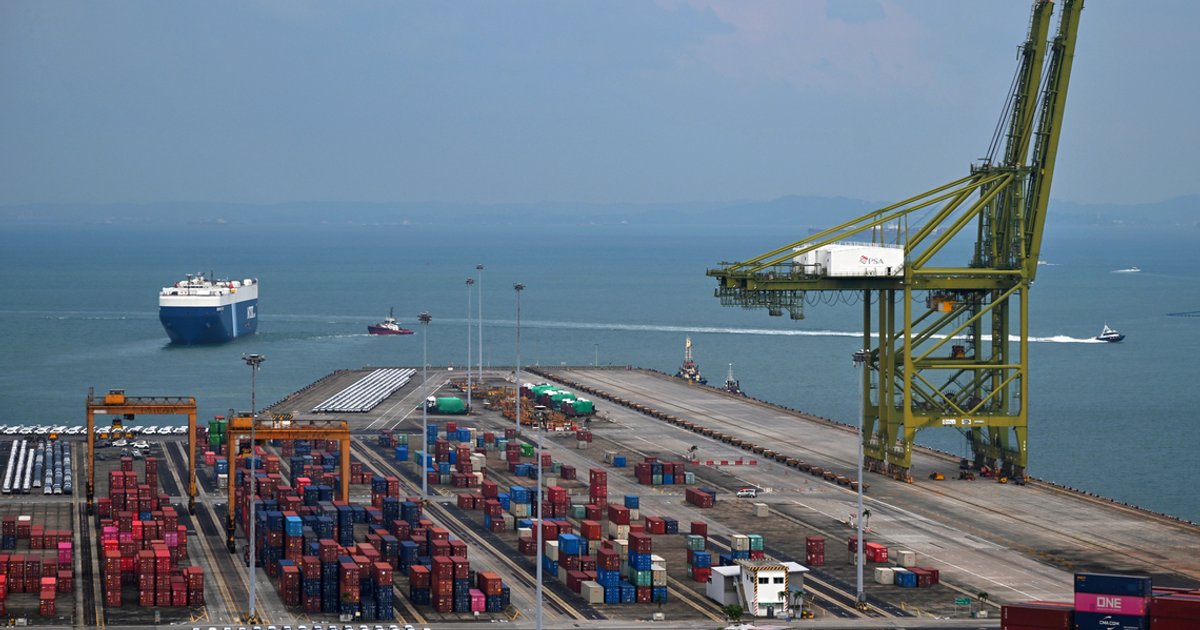
Senior Minister Lee Hsien Loong called on unions and the leaders at the Port of Singapore Authority to work with the government help workers adapt through continuous reskilling just like in the past.
ST PHOTO: KUA CHEE SIONG
Published Oct 17, 2026, 08:30 PM
Updated Oct 17, 2026, 08:30 PM
SINGAPORE - Protecting port workers from being left behind by technological disruption and shifting global trade patterns requires a strong, forward-thinking partnership between unions, port management, and the government.
Making this comment at the Singapore Port Workers Union’s (SPWU) 80th anniversary dinner on Oct 17, Senior Minister Lee Hsien Loong called on unions and the leaders at the Port of Singapore Authority (PSA) to work with the government help workers adapt through continuous reskilling just like in the past.
Only with upskilling will workers be able to take on higher-value, technology-driven roles and safeguard their long-term livelihoods.
“As in past waves of transformation, we must not leave workers to face the changes alone. More than ever, we will need a strong and well-led SPWU, working closely with a competent and innovative PSA management team, to secure PSA’s success, and workers’ livelihoods,” said SM Lee.
“This is the way to build a disciplined and skilled workforce with a strong Singapore core, and secure for them a fair share of the fruits of their labours.”
The port industry in the past has undergone several rounds of transformation as technology advanced , with the change from manual stevedoring and operators controlling yard cranes, to remotely-operated Automated-Guided Vehicles.
Each time the jobs changed, the PSA retrained workers to take up new roles while the union leaders persuaded workers to adopt a flexible mindset and upgrade themselves, said SM Lee.
He was speaking to over 600 attendees that included union leaders, members, and management representatives at The Ritz-Carlton, where he was also conferred the SPWU Honarary Membership for his longstanding support and commitment to the industry, union, and tripartism.
The union, which was first established in 1946, currently represents over 10,000 members from various organisations such as PSA Corporation, PSA International, and several port logistics companies.
Apart from competition from other ports that are catching up quickly with digitalisation and automation, he warned that the industry itself is currently faced with supply chain disruptions, climate change, and geopolitical tensions that affects all shippers and port operators.
“Green fuels such as ammonia and methanol will require new processes, skills and safety protocols, (and) rapid advances in AI, autonomous technology, sensors and robotics are already dramatically transforming port operations,” said SM Lee, adding that repetitive physical tasks such as coning and de-coning may be done by embodied AI in the future.
These comes with new challenges and new opportunities, such as higher-value tasks that are less demanding and completely new roles that do not exist yet, such as in sustainability management and alternative fuel options.
Reaffirming the government’s commitment to supporting this transition, he called for a renewed tripartite compact to safeguard jobs, deepen worker expertise, and ensure all port employees share fairly in the benefits of future growth.
Singapore’s port handled 44.66 million shipping containers, or twenty-foot equivalent units (TEUs), in 2025 – its highest on record – eclipsing the 41.12 million in the previous year.
The capacity of Tuas Port when port operations are fully consolidated there by the 2040s will have a capacity of 65 TEUs, said SM Lee, adding that this was unimaginable back in 1965.
“To outsiders, the past six decades look like an unbroken string of successes,” he said, adding that mutual trust had only been forged through a laborious process of organisational change and personal adjustment.
He cited the launch of new port locations - such as Keppel, Brani, Pasir Panjang, and Tuas - that required workers to adjust to new working environments and commute arrangements.
“Tuas, in particular, made commuting significantly longer,” said SM Lee, adding that PSA made extensive transport arrangements, while the union helped workers adjust to the new work locations.
Bus services to Tuas South have also been increased through the union’s participation in a tripartite committee with PSA management and government agencies, said SM Lee, adding that the authorities are also studying the feasibility of a Bus Rapid Transit system .
PSA’s loss of several major shipping clients to the Port of Tanjung Pelepas in the early 2000s also meant retrenchments and wage reduction, said SM Lee.
SPWU negotiated hard with PSA management to secure the best possible deal for the workers who had to leave, while keeping sight of the bigger picture. But when PSA made a strong recovery, it made a gain-sharing payout to its workers in 2005.
The intimate cooperation between management and the unions, through both ups and downs, was instrumental in building trust between them, and a key reason for PSA’s sustained success, said SM Lee.
He thanked SPWU for its forward-looking and enlightened approach, contrasting it to that of other port unions elsewhere which resist technology and progress with the goal of protecting jobs and members’ interest.
“Over time their ports suffered, and so did their members,” said SM Lee. “I am deeply grateful to SPWU, and I know so is PSA’s management. Long may this relationship of mutual trust and cooperation continue.”
Maritime and shipping
李显龙高级部长呼吁工会和新加坡港务局领导人与政府合作,像过去一样,通过持续的技能再培训帮助工人适应变化。
《海峡时报》摄影:郭志雄
发布于2026年10月17日晚上8:30
更新于2026年10月17日晚上8:30
新加坡——要保护港口工人免受技术变革和全球贸易格局变化的影响,需要工会、港口管理部门和政府之间建立强有力的、具有前瞻性的伙伴关系。
10月17日,李显龙高级部长在新加坡港口工人联合会(SPWU)成立80周年晚宴上发表讲话,呼吁工会和新加坡港务局(PSA)的领导人与政府合作,帮助工人像过去一样通过不断的技能再培训来适应变化。
只有通过提升技能,劳动者才能承担更高价值、技术驱动型的工作岗位,并保障其长期生计。
“正如以往的变革浪潮一样,我们绝不能让工人独自面对变革。我们比以往任何时候都更需要一个强大且领导有方的新加坡港务集团工人联合会(SPWU),与一支能力卓越、锐意创新的新加坡港务集团管理团队紧密合作,以确保新加坡港务集团的成功和工人的生计,”李世明表示。
“这是打造一支纪律严明、技能精湛、以新加坡为核心的劳动力队伍,并确保他们公平分享劳动成果的途径。”
随着技术的进步,港口行业在过去经历了数轮变革,从人工装卸和操作员控制码头起重机,转变为远程操作的自动导引车。
李先生表示,每次工作发生变化时,PSA都会对工人进行再培训,使他们能够胜任新的角色,而工会领导人则会劝说工人采取灵活的思维方式并提升自身能力。
他在丽思卡尔顿酒店向 600 多名与会者发表了讲话,其中包括工会领导人、成员和管理层代表。他还因长期以来对行业、工会和三方合作的支持和承诺而被授予 SPWU 荣誉会员资格。
该工会成立于 1946 年,目前代表着来自 PSA 公司、PSA 国际公司和多家港口物流公司等各个组织的 10,000 多名成员。
除了其他港口在数字化和自动化方面迅速赶上带来的竞争之外,他还警告说,该行业目前还面临着供应链中断、气候变化和地缘政治紧张局势,这些都会影响到所有托运人和港口运营商。
“氨和甲醇等绿色燃料将需要新的工艺、技能和安全规程,人工智能、自主技术、传感器和机器人技术的快速发展已经极大地改变了港口运营,”李世明表示,并补充说,未来像锥形和不锥形作业这样的重复性体力劳动可能会由具身人工智能来完成。
这带来了新的挑战和新的机遇,例如更高价值、要求更低的任务,以及目前尚不存在的全新角色,例如可持续发展管理和替代燃料选择。
他重申政府致力于支持这一转型,并呼吁重新达成三方协议,以保障就业、深化工人技能,并确保所有港口员工公平地分享未来增长的成果。
新加坡港口在 2025 年处理了 4466 万个集装箱(即 20 英尺标准箱),创历史新高,超过了前一年的 4112 万个。
李先生表示,到 2040 年代,当大士港的港口运营完全整合后,其吞吐能力将达到 65 个标准箱,这在 1965 年是不可想象的。
“在外人看来,过去六十年似乎是一连串的成功,”他说道,并补充说,相互信任只是通过艰苦的组织变革和个人调整过程才建立起来的。
他提到了吉宝港、布拉尼港、巴西班让港和图阿斯港等新港口的启用,这要求工人们适应新的工作环境和通勤安排。
“尤其是Tuas,大大延长了通勤时间,”SM Lee说道,并补充说,PSA做出了广泛的交通安排,而工会则帮助工人适应新的工作地点。
李先生表示,通过工会与PSA管理层和政府机构组成的三方委员会,前往大士南的巴士服务也得到了增加。他还补充说,当局也在研究快速公交系统的可行性。
SM Lee表示,PSA在2000年代初期流失了几家主要航运客户到丹戎帕拉帕斯港,这也意味着裁员和减薪。
SPWU与PSA管理层进行了艰苦的谈判,力求为被迫离职的工人争取到尽可能好的待遇,同时也兼顾了整体利益。但当PSA业绩强劲复苏后,于2005年向其员工支付了利润分成。
李先生表示,管理层与工会之间在起起伏伏中保持密切合作,这对建立彼此间的信任至关重要,也是PSA持续成功的关键原因。
他感谢SPWU具有前瞻性和开明的态度,并将其与其他地方的港口工会进行了对比,这些工会为了保护就业和成员利益而抵制技术和进步。
“随着时间的推移,他们的港口遭受了损失,他们的会员也受到了影响,”李先生说。“我非常感谢新加坡港务工人联合会(SPWU),我知道新加坡港务集团(PSA)的管理层也同样如此。希望这种互信合作的关系能够长久延续下去。”
海事和航运