‘Please don’t make us poorer’: Bangkok protesters challenge IMF, World Bank over spending cuts“请不要让我们更穷”:曼谷抗议者就国际货币基金组织和世界银行削减开支提出质疑
BANGKOK, Oct 17 — Coconut farmer Sombat Chuekrod travelled more than 200km to join hundreds on the streets of Bangkok yesterday demanding that the International Monetary Fund and...
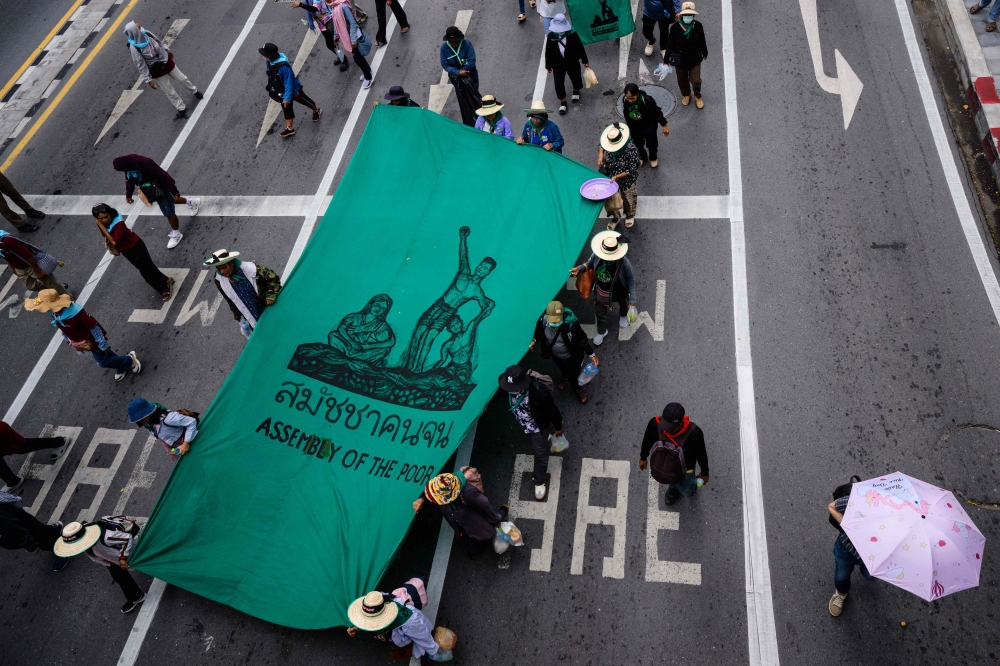
Hundreds of protesters, including coconut farmer Sombat Chuekrod, gathered in Bangkok to urge the IMF and World Bank to reassess their policies towards developing nations, particularly in light of the IMF's call for fiscal consolidation amidst an inflation crisis.
Protesters argued against spending cuts that would impact essential social services, stressing the need for reforms that focus on climate financing and tax policies supporting poorer communities.
Analysts and rights groups highlight the potential exacerbation of inequality and poverty due to the IMF's current advisory.
Activists emphasized the importance of citizen involvement in shaping development policies that affect countries' future directions.
BANGKOK, Oct 17 — Coconut farmer Sombat Chuekrod travelled more than 200km to join hundreds on the streets of Bangkok yesterday demanding that the International Monetary Fund and World Bank change how they deal with the developing world.
Finance ministers, central bank governors and other top policymakers gathered this week in the Thai capital for the IMF-World Bank Annual Meetings, as decision-makers tackle an inflation crisis fuelled by the US war on Iran and other economic shocks.
The message from the IMF has been clear: after years of economic crises starting with the pandemic and continuing through the wars in Ukraine and the Middle East, worldwide debt is too high and governments need to cut spending.
For the hundreds at the protest in Bangkok, as well as for rights groups and analysts interviewed by AFP, that message is the wrong one.
“We want the IMF and World Bank to rethink their role,” said 51-year-old Sombat, as he walked alongside banners demanding reform of the institutions.
“Thai people are already poor. Please don’t make them any poorer.”
Protest organisers called on institutions like the IMF to focus on climate financing and tax reforms that aid poorer citizens rather than demand governments cut subsidies and social spending.
“Governments across the Global South are being forced to squeeze vital spending on public health, education, and social protection just to service illegitimate debts to wealthy nations and private creditors,” Lidy Nacpil, one of the protest organisers, said in a statement.
‘Inequality emergency’
Speaking to AFP on the sidelines of the meetings, Oxfam Executive Director Amitabh Behar said the world was facing an “inequality emergency”, and that the IMF’s calls for fiscal consolidation were code for cutting spending on essential social support during the war-fuelled inflation crisis.
“It will lead to (more) price rises. It might lead to hunger,” he said. “You will see cuts further happening in terms of health, in terms of education, in terms of basic social security.
“So all that is going to suffer in a time when you actually need it more.”
The IMF this week upgraded its world economic outlook, citing unexpected “resilience” in economic growth. But it warned that that prosperity was fragmented, with vulnerable countries falling even further behind.
It highlighted oil-importing low-income countries not exposed to the boom in artificial intelligence investment as being the most vulnerable.
Yet the Fund’s advice to all countries at a time of rising global debt levels has been to cut spending and rebuild fiscal buffers after years of spending on crises.
Asked what vulnerable countries should do, IMF deputy chief of research Petya Koeva Brooks told AFP that while their situation was indeed “more difficult”, they had “no other choice” but to address their fiscal balances by either cutting spending or increasing revenues.
The IMF has proposed making energy and food subsidies offered in the wake of the Iran war more targeted, even as the UN Development Programme warned this week that if such subsidies were cut entirely, it could plunge 130 million people into poverty.
Protest organiser Nacpil questioned in an interview how one could draw a line between who deserves a subsidy and who does not.
“How poor do you have to be for them to think that you will need some support?” she asked.
Reza Baqir of Alvarez & Marsal’s Sovereign Advisory Services said he has experience with the difficult trade-offs policymakers in low-income countries face in such crises.
“During my time as Pakistan’s central bank governor, I saw firsthand how difficult it can be for countries to balance the needs of the countries’ citizens with the needs of the IMF programme,” he said.
“At the same time, it also reinforced the importance of addressing domestic governance challenges, so countries can build their own resources and fiscal buffers, reduce their reliance on the IMF and support their citizens in a targeted and prudent manner.”
Christina Segal-Knowles of the Rockefeller Foundation said developing countries are “effectively being given two bad options” — either take on debt at currently sky-high interest rates, or make extraordinary spending cuts and potentially give up on development goals.
She proposed a “growth and investment reset” that ramps up funding to countries in need as part of a set of measures designed to provide sustained support at concessional rates.
On the streets of Bangkok yesterday, protesters prepared to spend the night under a flyover.
“We are raising our voices because we believe that the network of citizens present here are key stakeholders in the negotiations,” said activist Supaporn Malailoy.
“This is not merely a matter of borrowing money; it is about shaping the very structure and direction of the nation’s development.” — AFP
The next global crisis could be on your dinner plate, UN warns
Wrong city, wild rumours and suspicious powder: A strange week on the US midterm campaign trail
‘A gun solved the problem of a gun’: Oregon school shooting leaves grandmother grappling with tragedy
Boy dies after running onto road to retrieve ball in Terengganu
Civil Defence Force to run emergency control centres round the clock for monsoon season
Missing father and son found weak after three days in Terengganu forest without food
包括椰农颂巴·楚克罗德在内的数百名抗议者聚集在曼谷,敦促国际货币基金组织和世界银行重新评估其对发展中国家的政策,尤其是在国际货币基金组织呼吁在通货膨胀危机中进行财政整顿的情况下。
抗议者反对削减开支,因为这会影响到基本的社会服务,他们强调需要进行改革,重点关注气候融资和支持贫困社区的税收政策。
分析人士和人权组织强调,国际货币基金组织目前的建议可能会加剧不平等和贫困。
活动人士强调公民参与制定影响国家未来发展方向的发展政策的重要性。
曼谷,10 月 17 日——椰农 Sombat Chuekrod 跋涉 200 多公里,昨天加入数百名走上曼谷街头的民众,要求国际货币基金组织和世界银行改变他们对待发展中国家的方式。
本周,各国财政部长、央行行长和其他高级政策制定者齐聚泰国首都,参加国际货币基金组织和世界银行年会。决策者们正在努力应对由美国对伊朗的战争和其他经济冲击引发的通胀危机。
国际货币基金组织的信息很明确:经历了从新冠疫情开始,到乌克兰和中东战争持续多年的经济危机之后,世界债务过高,各国政府需要削减开支。
对于曼谷抗议活动中的数百人,以及法新社采访的人权组织和分析人士来说,这个信息是错误的。
“我们希望国际货币基金组织和世界银行重新思考它们的作用,”51岁的松巴特一边说着,一边走过要求改革这些机构的横幅。
“泰国人民已经很穷了,请不要让他们更穷。”
抗议组织者呼吁国际货币基金组织等机构将重点放在气候融资和帮助贫困公民的税收改革上,而不是要求政府削减补贴和社会支出。
“全球南方各国政府被迫削减公共卫生、教育和社会保障等重要开支,仅仅是为了偿还对富裕国家和私人债权人的非法债务,”抗议活动组织者之一莉迪·纳克皮尔在一份声明中表示。
“不平等危机”
乐施会执行主任阿米塔布·贝哈尔在会议间隙接受法新社采访时表示,世界正面临“不平等紧急状况”,国际货币基金组织呼吁财政整顿,实际上是在战争引发的通货膨胀危机期间削减基本社会支持支出。
“这将导致物价上涨,甚至可能导致饥饿,”他说。“你会看到医疗、教育和基本社会保障方面的支出进一步削减。”
“所以,在你们真正更需要它们的时候,所有这些都将受到影响。”
国际货币基金组织本周上调了世界经济展望,理由是经济增长展现出意想不到的“韧性”。但该组织警告称,这种繁荣并不均衡,脆弱国家的发展步伐进一步放缓。
报告指出,那些没有接触到人工智能投资热潮的石油进口低收入国家是最脆弱的。
然而,在全球债务水平不断上升之际,基金组织给所有国家的建议是削减开支,并在多年应对危机支出之后重建财政缓冲。
当被问及脆弱国家应该怎么做时,国际货币基金组织研究部副主管佩蒂亚·科耶娃·布鲁克斯告诉法新社,虽然它们的处境确实“更加艰难”,但它们“别无选择”,只能通过削减开支或增加收入来解决财政收支平衡问题。
国际货币基金组织提议使伊朗战争后提供的能源和食品补贴更有针对性,但联合国开发计划署本周警告说,如果完全取消此类补贴,可能会使 1.3 亿人陷入贫困。
抗议组织者纳克皮尔在一次采访中质疑,如何界定谁应该获得补贴,谁不应该获得补贴。
她问道:“你得穷到什么程度,他们才会觉得你需要帮助?”
Alvarez & Marsal 主权咨询服务部的 Reza Baqir 表示,他有经验了解低收入国家的政策制定者在危机中面临的艰难权衡。
他说:“在我担任巴基斯坦中央银行行长期间,我亲眼目睹了各国在平衡本国公民的需求与国际货币基金组织项目的需求方面有多么困难。”
“与此同时,这也强调了解决国内治理挑战的重要性,以便各国能够建立自己的资源和财政缓冲,减少对国际货币基金组织的依赖,并以有针对性和审慎的方式支持其公民。”
洛克菲勒基金会的克里斯蒂娜·西格尔-诺尔斯表示,发展中国家“实际上面临着两个糟糕的选择”——要么以目前极高的利率承担债务,要么大幅削减开支,并有可能放弃发展目标。
她提出了一项“增长和投资重置”计划,旨在加大对有需要国家的资金投入,作为一系列旨在以优惠利率提供持续支持的措施的一部分。
昨天在曼谷街头,抗议者准备在立交桥下过夜。
“我们发出这样的声音,是因为我们相信,在场的公民网络是谈判的关键利益相关者,”活动人士苏帕蓬·马拉伊洛伊说道。
“这不仅仅是借钱的问题;它关乎国家发展的结构和方向。”——法新社
联合国警告:下一次全球危机可能就摆在你的餐桌上。
选错城市,谣言四起,还有可疑的粉末:美国中期竞选之路上的怪异一周
“一把枪解决了枪支的问题”:俄勒冈州校园枪击案令祖母陷入悲痛之中
登嘉楼一名男孩为捡球跑到马路上身亡
民防部队将在季风季节24小时运转应急控制中心
失踪三天的父子在登嘉楼森林中被发现时已虚弱不堪,且未进食