Home buyers using more cash and CPF for down payment even as mortgage loans rise即使抵押贷款增加,购房者仍更多地使用现金和公积金支付首付。
More mortgage loans are exceeding $1 million, but banks said borrowers remain financially resilient. Read more at straitstimes.com.
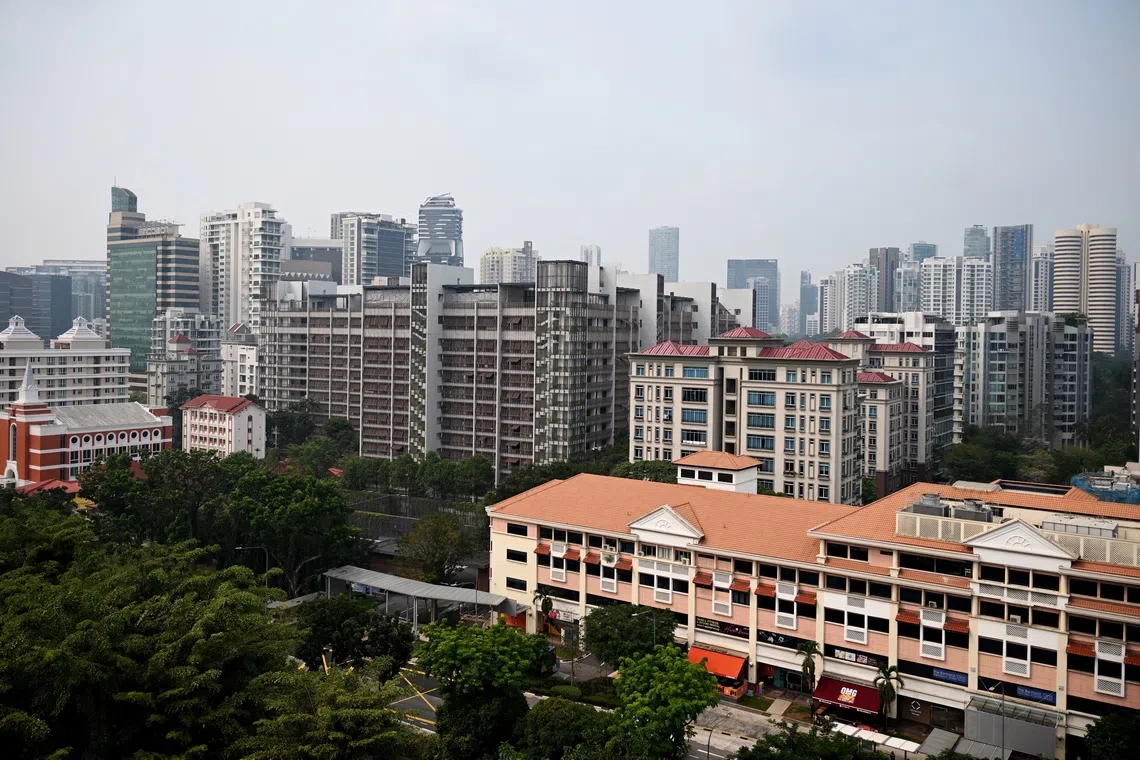
The rise in home prices has pushed many mortgages above the $1 million mark.
ST PHOTO: KUA CHEE SIONG
Published Oct 18, 2026, 12:00 PM
Updated Oct 18, 2026, 12:00 PM
More home buyers in Singapore are taking mortgage loans of $1 million or more due to rising property prices, with nearly 80% of new private launch buyers at OCBC borrowing this amount in early 2026.
Despite rising mortgage sizes, banks report stable debt servicing ratios and few signs of borrowers defaulting, as many use more cash or savings for downpayments instead of maxing out loans.
Mortgagee-sale listings have hit a six-year high, reflecting financial pressures from earlier years and increased interest rates; auction activity is expected to continue but may moderate later in 2026.
SINGAPORE – Home buyers are putting more of their own money into property purchases, even as home prices and mortgage sizes have climbed sharply over the past five years.
This suggests that buyers are not simply borrowing proportionately more to keep up with property prices, said OCBC’s group head of consumer secured lending Tok Geok Peng.
Instead, they are using more cash or Central Provident Fund savings to fund their down payments .
Tok attributed this to OCBC borrowers’ incomes growing faster than property prices. The bank financed more than a third of private property market transactions in 2025.
“With the median age of our borrowers being around 38, most of them have saved up over the years or have sufficient CPF that can contribute to their property purchase, reducing the loan amount that they need,” she said.
While home prices and mortgage sizes both increased between 2021 and the first half of 2026, OCBC’s figures showed that loan sizes did not rise as quickly.
For new private launches, purchase prices rose 49% between 2021 and the first half of 2026, while median mortgage sizes increased 35% .
For private resale homes, prices rose 36% while mortgages grew 32%. For HDB resale flats, both purchase prices and median mortgage sizes increased 32%.
This suggests that buyers are funding a larger share of their purchases with cash or CPF, rather than debt.
But the rise in home prices has nevertheless pushed many mortgages above the $1 million mark.
Nearly eight in 10 borrowers buying new private launches took out home loans of at least $1 million in the first six months of 2026, up from four in 10 in 2021 , Tok noted.
This does not mean buyers are becoming more leveraged because mortgage sizes have risen more slowly than the prices of homes being bought.
Banks have also observed that home buyers are financing a smaller proportion of their property’s value through borrowing.
UOB’s head of group personal financial services Jacquelyn Tan said it has seen a similar trend. Its average housing loan quantum for private properties grew at 8% on average from 2023 to the first half of 2026, to more than $1 million.
The share of home buyers taking out loans of $1 million or more rose by 15 percentage points from 2023 to 2025.
Both OCBC and UOB said borrowers’ debt-servicing levels have remained broadly stable despite larger loans, while DBS said the overwhelming majority of its customers continue to meet their repayments and delinquencies remain extremely low.
Tok also noted fewer customers are maximising the loan-to-value limit of 75%.
Under the loan-to-value or LTV limit, a borrower can generally finance up to 75% of a property’s value for their first housing loan with a bank.
Among OCBC customers buying new private property launches, the proportion of those maximising their LTV limit has fallen from 67% in 2021 to 52% in the first half of 2026.
Similarly, the proportion of private resale home buyers who maximised their loan limit dipped from 66% to 61% over the same period.
Chelsea Ling, head of deposits and secured lending at DBS Singapore’s consumer banking group, similarly noted that DBS’ LTV ratio for private property home loans is lower year-on-year, indicating that customers are financing a smaller proportion of their property’s value through borrowing and are therefore less highly leveraged against their homes.
The relatively healthy picture among current borrowers comes as mortgagee-sale listings rose to their highest level since the first half of 2021. Such listings refer to properties put up for sale by banks after borrowers defaulted on their home loans.
Why are mortgagee-sale listings rising?
Property consultancy firm ETC recorded 292 auction listings from January to June 2026, the highest half-yearly total since the first half of 2021.
Of these, 216 or 74% were mortgagee-sale listings. Residential properties accounted for 144 listings or almost half of the total, with industrial and retail properties accounting for the rest.
Joy Tan, head of auction and sales at ETC, a member of Realion Group, said the apparent contradiction could be due to a time lag as properties reaching auction today may reflect financial difficulties that began several years earlier.
“Banks do not repossess and auction a property after a single missed payment. Home owners are typically given time to restructure, refinance, or sell via private treaty,” said Tan.
“As a result, a mortgagee-sale listing usually reflects financial pressure that has been building over several years rather than a sudden, recent deterioration.”
Joy Tan said ETC is seeing a mixture of borrowers among the mortgagee-sale cases. These include highly leveraged investors who purchased properties between 2020 and 2022, as well as owners of investment or rental properties where rental income may no longer be sufficient to cover mortgage instalments, maintenance fees and taxes.
Between 2020 and 2022, there was a sharp upswing in the property market. Private residential prices rose 2.2% in 2020, before it surged to 10.6% in 2021 and 8.6% in 2022.
Price growth gradually fell to 6.8% in 2023, 3.9% in 2024 and 3.3% in 2025. In the first half of 2026, prices rose 1.4%.
Much of the early price surges also coincided with very cheap financing, noted property analysts.
Three-year fixed mortgage rates were around 1.15% in late 2021, before climbing sharply as global interest rates rose. By November 2022, fixed-rate packages at the three local banks reached between 4.25% and 4.5% .
Joy Tan said she expects auction activity to remain active in the second half of 2026 with residential and industrial listings expected to continue featuring prominently, although the pace could moderate.
“The level of mortgagee-sale activity will be influenced by several factors, including interest rates, job market conditions, business performance, and whether banks continue to provide distressed borrowers with additional time to restructure their loans,” she added.
Joyce Lim covers Singapore’s property market and redevelopment trends.
Mortgages/Real estate credit
Property market/sector
房价上涨已使许多抵押贷款金额超过 100 万美元。
《海峡时报》摄影:郭志雄
发布于2026年10月18日下午12:00
更新于2026年10月18日中午12:00
由于新加坡房价上涨,越来越多的购房者选择申请 100 万美元或以上的抵押贷款,预计到 2026 年初,华侨银行新推出的私人住宅项目中,近 80% 的购房者将借贷这一金额。
尽管抵押贷款规模不断扩大,但银行报告称,偿债率保持稳定,借款人违约的迹象也很少,因为许多借款人使用更多现金或储蓄来支付首付,而不是最大限度地申请贷款。
抵押贷款拍卖房源数量已达到六年来的最高水平,反映出早年的财务压力和利率上升;预计拍卖活动将继续,但可能会在 2026 年晚些时候有所缓和。
新加坡——尽管过去五年房价和抵押贷款额度大幅上涨,但购房者仍将更多自有资金投入到房产购买中。
华侨银行消费担保贷款部门主管 Tok Geok Peng 表示,这表明购房者并非只是按比例增加贷款来跟上房价上涨的步伐。
相反,他们更多地使用现金或公积金储蓄来支付首付。
Tok 将此归因于华侨银行借款人的收入增长速度超过了房地产价格的增长速度。该银行在 2025 年为超过三分之一的私人房地产市场交易提供了融资。
“我们的借款人平均年龄在 38 岁左右,他们中的大多数人多年来都有积蓄,或者拥有足够的公积金可以用于购房,从而减少他们所需的贷款金额,”她说。
尽管 2021 年至 2026 年上半年房价和抵押贷款规模均有所增长,但华侨银行的数据显示,贷款规模的增长速度并没有那么快。
对于新推出的私人住宅,2021 年至 2026 年上半年的购买价格上涨了 49%,而抵押贷款中位数规模增长了 35%。
私人转售房屋价格上涨了36%,抵押贷款增长了32%。组屋转售组屋的购买价格和抵押贷款中位数均上涨了32%。
这表明,买家越来越多地使用现金或公积金(CPF)而非债务来支付购买款项。
但房价上涨仍然导致许多抵押贷款金额超过了 100 万美元。
Tok 指出,在 2026 年上半年,近 80% 购买新私人住宅的借款人获得了至少 100 万美元的住房贷款,高于 2021 年的 40%。
但这并不意味着购房者的杠杆率正在上升,因为抵押贷款规模的增长速度慢于房屋价格的增长速度。
银行也观察到,购房者通过贷款来支付房产价值的比例越来越小。
大华银行集团个人金融服务主管陈嘉玲表示,他们也观察到了类似的趋势。从2023年到2026年上半年,该行私人住宅的平均住房贷款额平均增长8%,超过100万新元。
2023 年至 2025 年,贷款金额达 100 万美元或以上的购房者比例上升了 15 个百分点。
华侨银行和大华银行均表示,尽管贷款额增加,但借款人的偿债水平总体保持稳定;星展银行表示,其绝大多数客户继续按时还款,拖欠率仍然极低。
Tok 还指出,使用 75% 贷款价值比上限的客户越来越少。
在贷款价值比(LTV)限制下,借款人通常可以从银行获得最高相当于房产价值 75% 的首笔住房贷款。
在华侨银行购买新私人住宅的客户中,达到贷款价值比上限的客户比例已从 2021 年的 67% 下降到 2026 年上半年的 52%。
同样,同期私人二手房买家中,贷款额度用尽的比例从 66% 下降到 61%。
星展银行新加坡消费银行集团存款及担保贷款主管Chelsea Ling也指出,星展银行私人房产房屋贷款的贷款价值比同比下降,这表明客户通过借贷为其房产价值融资的比例较小,因此其房屋杠杆率也较低。
尽管目前借款人的财务状况相对健康,但抵押贷款出售房产的挂牌数量却升至 2021 年上半年以来的最高水平。此类挂牌房产指的是借款人拖欠住房贷款后,银行挂牌出售的房产。
为什么抵押贷款出售的房源数量在增加?
房地产咨询公司 ETC 记录了 2026 年 1 月至 6 月期间的 292 个拍卖房源,这是自 2021 年上半年以来最高的半年总数。
其中,216套(占74%)为抵押权人出售房源。住宅物业占144套,几乎占总数的一半,其余为工业和零售物业。
Realion集团成员ETC的拍卖和销售主管Joy Tan表示,这种明显的矛盾可能是由于时间滞后造成的,因为今天拍卖的房产可能反映了几年前就开始的财务困难。
“银行不会因为一次逾期付款就收回并拍卖房产。房主通常会有时间进行债务重组、再融资或通过私下协议出售,”谭说道。
“因此,抵押权人出售房产的挂牌信息通常反映的是多年来不断积累的财务压力,而不是近期突然出现的恶化。”
Joy Tan表示,ETC在抵押贷款出售案例中发现借款人类型多样。其中包括在2020年至2022年间购买房产的高杠杆投资者,以及投资或出租房产的业主,这些业主的租金收入可能已不足以支付抵押贷款月供、维护费和税款。
2020年至2022年间,房地产市场出现大幅上涨。2020年私人住宅价格上涨2.2%,随后在2021年飙升至10.6%,2022年又上涨了8.6%。
价格增速在 2023 年逐步下降至 6.8%,2024 年下降至 3.9%,2025 年下降至 3.3%。2026 年上半年,价格上涨了 1.4%。
房地产分析师指出,早期价格飙升的大部分时间也与非常低廉的融资成本同时发生。
2021年底,三年期固定抵押贷款利率约为1.15%,随后随着全球利率上升而大幅攀升。到2022年11月,三家本地银行的固定利率抵押贷款产品利率已达到4.25%至4.5%之间。
Joy Tan表示,她预计2026年下半年拍卖活动将保持活跃,住宅和工业地产挂牌预计仍将占据重要地位,尽管速度可能会放缓。
她补充说:“抵押贷款出售活动的水平将受到多种因素的影响,包括利率、就业市场状况、企业业绩,以及银行是否会继续为陷入困境的借款人提供更多时间来重组贷款。”
Joyce Lim负责报道新加坡房地产市场和重建趋势。
抵押贷款/房地产信贷
房地产市场/行业