Old Perkeso contributions open door to life-changing stroke rehabilitation旧Perkeso的捐助为改变人生的中风康复打开了大门
IPOH, Oct 18 — For five years, a wheelchair was Salinah Osman’s constant companion, confining the once-active massage therapist to a life far removed from the independence she...
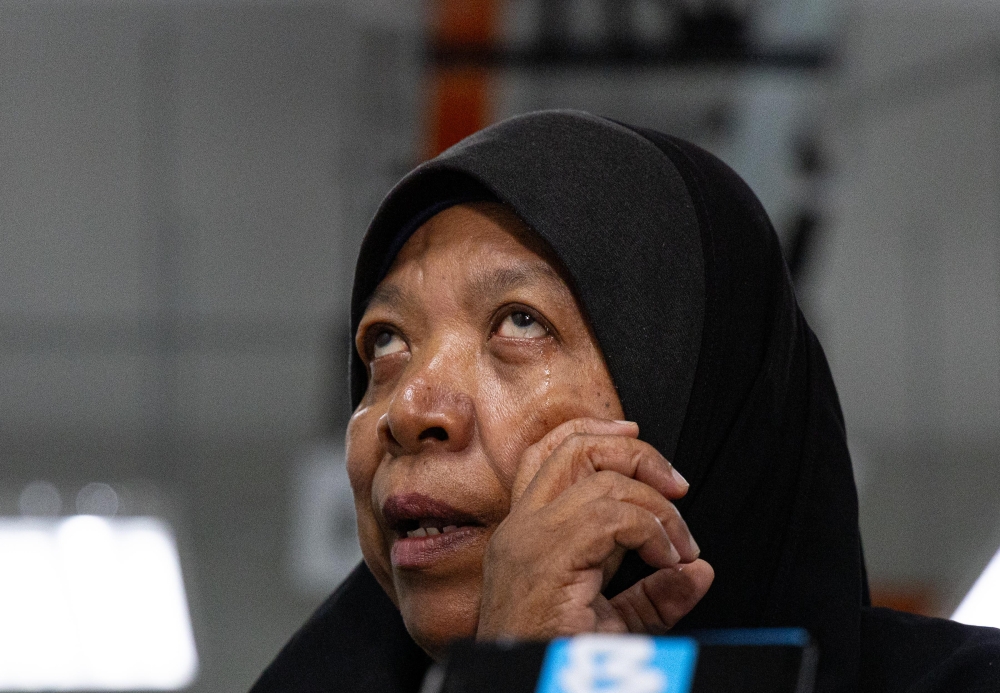
Salinah Osman, a 58-year-old former massage therapist, faced significant life challenges after being confined to a wheelchair following her second stroke in 2021.
Through the Social Security Organisation (Perkeso), she accessed an intensive rehabilitation program that helped restore her mobility, enabling her to work towards rebuilding her massage business and resuming community services.
The rehabilitation, held at Sultan Nazrin Shah Perkeso Rehabilitation Centre, offers comprehensive stroke recovery treatments, catering to both Perkeso contributors and non-contributors under varying cost schemes.
Perkeso's offerings include financial benefits and rehabilitation support for those whose work capacity is impaired due to stroke.
IPOH, Oct 18 — For five years, a wheelchair was Salinah Osman’s constant companion, confining the once-active massage therapist to a life far removed from the independence she had enjoyed before suffering a second stroke in 2021.
The 58-year-old, originally from Bukit Mertajam, Penang, still remembers the morning she tried to stand up from a seated position, only for both legs to suddenly give way and her right hand to grow weak.
Unlike her first stroke about two decades earlier, the second robbed her of the strength and mobility she needed to practise her profession, which had brought relief and comfort to hundreds of clients through her home-based spa business.
It also kept her away from the community and volunteer work she loved, leaving her dependent on her husband, Md Rasid Mehat, 66, for daily care while she grappled with other health problems, including heart failure and chronic asthma.
“The ordeal was difficult. I could no longer go out to do charity work, and watching my friends continue with it was heartbreaking. From then on, I had to depend on my husband to take care of me,” she told Bernama.
Despite the setbacks, the mother of two refused to give up, seeking traditional treatments and hospital care while praying for a chance to regain her independence.
Her breakthrough came when she learnt about the rehabilitation benefits available to contributors of the Social Security Organisation (Perkeso) who had suffered strokes, prompting her to submit an application.
In a turn of events she had hardly imagined, contributions she had made while working in a factory more than 20 years ago became the key to accessing the treatment she needed. Although she had long left factory work to become a self-employed massage therapist, her past contributions continued to entitle her to protection under the scheme.
In April, Salinah was offered an intensive rehabilitation programme at the Sultan Nazrin Shah Perkeso Rehabilitation Centre in Meru here, with the cost fully covered by Perkeso.
She spent nearly four months undergoing treatment and staying at the centre, supported by her case manager, medical officers and other staff, while using advanced rehabilitation equipment to help her regain movement and strength.
“The desire to get back on my feet kept me going. At first, I had to train for hours every day despite my asthma, and I wondered whether I could do it.
“But one day, I began to move my hand and feel my leg again. That was when I became confident that I could recover here,” said Salinah, who has also been receiving a Perkeso Invalidity Pension since November 2006, which has risen from RM269 to RM573.69 a month.
In the final months of her rehabilitation, she progressed from relying on a wheelchair to taking steps with a walking stick. She also completed a computer networking course to help improve her business when she is ready to resume work.
Salinah was discharged on September 3, and just a week later, while at home, she was able to discard the walking stick and walk without it.
Having gone from being bedridden and fully dependent on a wheelchair to regaining her mobility, she is now working towards rebuilding her massage business and returning to the community service that once formed a major part of her life.
Perkeso chief executive officer Datuk Seri Dr Mohammed Azman Aziz Mohammed said the centre offered comprehensive stroke rehabilitation combining clinical expertise, various therapies and advanced technology, adding that it was open to everyone who required stroke rehabilitation, not just Perkeso contributors.
“For insured persons who meet the eligibility requirements, Perkeso will fully cover rehabilitation costs, subject to an assessment of their condition and suitability for treatment.
“Those who do not qualify for Perkeso benefits may still receive treatment at the centre on a self-funded basis, subject to the same assessment,” he said in a statement to Bernama.
Dr Mohammed Azman said treatment costs varied according to each patient’s condition, needs and rehabilitation goals. The centre offers physiotherapy, occupational therapy, hydrotherapy, speech and swallowing therapy, neuro-robotic rehabilitation, psychological support and vocational rehabilitation, including its Return to Work (RTW) programme.
Its advanced equipment includes the Cyberdyne Hybrid Assistive Limb (HAL), Luna EMG, Vibramoov, MetaMotus Galileo platform and Brain-Computer Interface (BCI), as well as brain neuromodulation technologies such as rTMS and tDCS, and NESA.
He said Perkeso also focused on prevention and long-term protection through its Health Screening Programme, introduced in 2013 to help detect non-communicable disease risks early.
Contributors whose ability to work was impaired by stroke could be considered for benefits under the Invalidity Scheme, including a lifelong Invalidity Pension, Invalidity Grant, Constant Attendance Allowance and rehabilitation aids, subject to medical certification and eligibility requirements. — Bernama
EIS benefits rise to RM25,000 as Perkeso steps up support for jobseekers
Flood relief centres shut in Penang, Pahang and Kedah, Perak keeps two open
Public Service Dept says Hybrid Workday policy can be used to adapt to haze conditions
58 岁的萨利娜·奥斯曼曾是一名按摩治疗师,2021 年第二次中风后只能依靠轮椅出行,面临着巨大的生活挑战。
通过社会保障组织(Perkeso),她参加了一项强化康复计划,该计划帮助她恢复了行动能力,使她能够重建按摩生意并恢复社区服务。
该康复治疗在苏丹纳兹林沙阿康复中心进行,提供全面的中风康复治疗,根据不同的费用方案,为Perkeso缴费者和非缴费者提供服务。
Perkeso 提供的服务包括为因中风而导致工作能力受损的人提供经济援助和康复支持。
怡保,10 月 18 日讯——五年来,轮椅一直是萨利娜·奥斯曼的忠实伴侣,这位曾经活跃的按摩治疗师的生活与她在 2021 年第二次中风之前所享有的独立生活相去甚远。
这位 58 岁的女士原籍槟城武吉默塔占,至今仍记得那天早上她试图从坐姿站起来,结果双腿突然无力,右手也变得无力。
与大约二十年前的第一次中风不同,第二次中风剥夺了她从事本职工作所需的体力和行动能力。她通过家庭水疗业务,为数百名客户带来了缓解和舒适。
这也使她远离了她所热爱的社区和志愿工作,导致她不得不依靠 66 岁的丈夫 Md Rasid Mehat 的日常照顾,同时还要应对其他健康问题,包括心力衰竭和慢性哮喘。
“那段日子很艰难。我再也无法外出做慈善工作了,看着朋友们继续做下去,我心如刀绞。从那时起,我只能依靠丈夫照顾我,”她告诉马新社。
尽管遭遇挫折,这位两个孩子的母亲仍拒绝放弃,她寻求传统疗法和医院护理,同时祈祷能有机会重获独立生活的能力。
她了解到社会保障组织 (Perkeso) 的缴款人如果中风,可以享受康复福利,这促使她提交了申请,从而取得了突破性进展。
出乎她意料的是,20多年前在工厂工作时缴纳的税款,竟成了她获得所需治疗的关键。尽管她早已离开工厂,成为一名自雇按摩理疗师,但她过去的税款仍然使她有资格享受该计划的保障。
今年四月,萨利娜在梅鲁的苏丹纳兹林沙康复中心接受了强化康复治疗,费用由Perkeso全额承担。
在她接受治疗和住在中心近四个月的时间里,她的个案经理、医务人员和其他工作人员都给予了她支持,同时她还使用了先进的康复设备来帮助她恢复行动能力和力量。
“重新站起来的渴望支撑着我继续前进。起初,尽管患有哮喘,我还是必须每天训练几个小时,我怀疑自己是否能做到。”
“但有一天,我的手开始能动了,腿也重新有了感觉。那时我才确信我可以在这里康复,”萨利娜说道。她自 2006 年 11 月起也一直在领取马来西亚社会保险机构 (Perkeso) 的残疾抚恤金,该抚恤金已从每月 269 令吉增至 573.69 令吉。
在康复的最后几个月里,她从依赖轮椅进步到能够拄拐行走。她还完成了计算机网络课程,以便在她准备重返工作岗位时更好地开展业务。
萨利娜于 9 月 3 日出院,仅仅一周后,她回到家后就能扔掉拐杖走路了。
她从卧床不起、完全依赖轮椅,到恢复行动能力,现在正努力重建她的按摩事业,并重返曾经是她生活重要组成部分的社区服务领域。
印尼社会保险机构 Perkeso 首席执行官 Datuk Seri Dr Mohammed Azman Aziz Mohammed 表示,该中心提供全面的中风康复服务,结合了临床专业知识、各种疗法和先进技术,并补充说,该中心向所有需要中风康复的人开放,而不仅仅是 Perkeso 的缴款人。
“对于符合资格要求的被保险人,Perkeso 将全额支付康复费用,但需对其病情和是否适合治疗进行评估。
他在给马新社的一份声明中说:“那些不符合马来西亚社会保险机构(Perkeso)福利资格的人,仍然可以自费在该中心接受治疗,但需接受同样的评估。”
穆罕默德·阿兹曼医生表示,治疗费用因每位患者的病情、需求和康复目标而异。该中心提供物理治疗、职业治疗、水疗、言语和吞咽治疗、神经机器人康复、心理支持和职业康复,包括其重返工作岗位(RTW)计划。
其先进设备包括 Cyberdyne 混合辅助肢体 (HAL)、Luna EMG、Vibramoov、MetaMotus Galileo 平台和脑机接口 (BCI),以及 rTMS 和 tDCS 等脑神经调节技术,以及 NESA。
他表示,Perkeso 还通过其于 2013 年推出的健康筛查计划,注重预防和长期保护,以帮助及早发现非传染性疾病风险。
因中风导致工作能力受损的缴款人,可根据残疾抚恤金计划申请福利,包括终身残疾抚恤金、残疾补助金、长期护理津贴和康复辅助器具,但需提供医疗证明并符合资格要求。——马新社
就业保险计划 (EIS) 福利提高至 25,000 令吉,马来西亚社会保险机构 (Perkeso) 加大对求职者的支持力度
槟城、彭亨和吉打的防洪救济中心关闭,霹雳州保留两个开放。
公共服务部门表示,混合工作制政策可用于应对雾霾天气。