Safety comes first for squishy toy fans, S’pore retailers amid rise in fakes假货增多,安全是软萌玩具爱好者的首要考虑因素,新加坡零售商也持相同观点。
Singapore retailers warn of fake squishy toys as safety concerns rise amid reports of toxic materials and counterfeits. Read more at straitstimes.com.
新闻视频
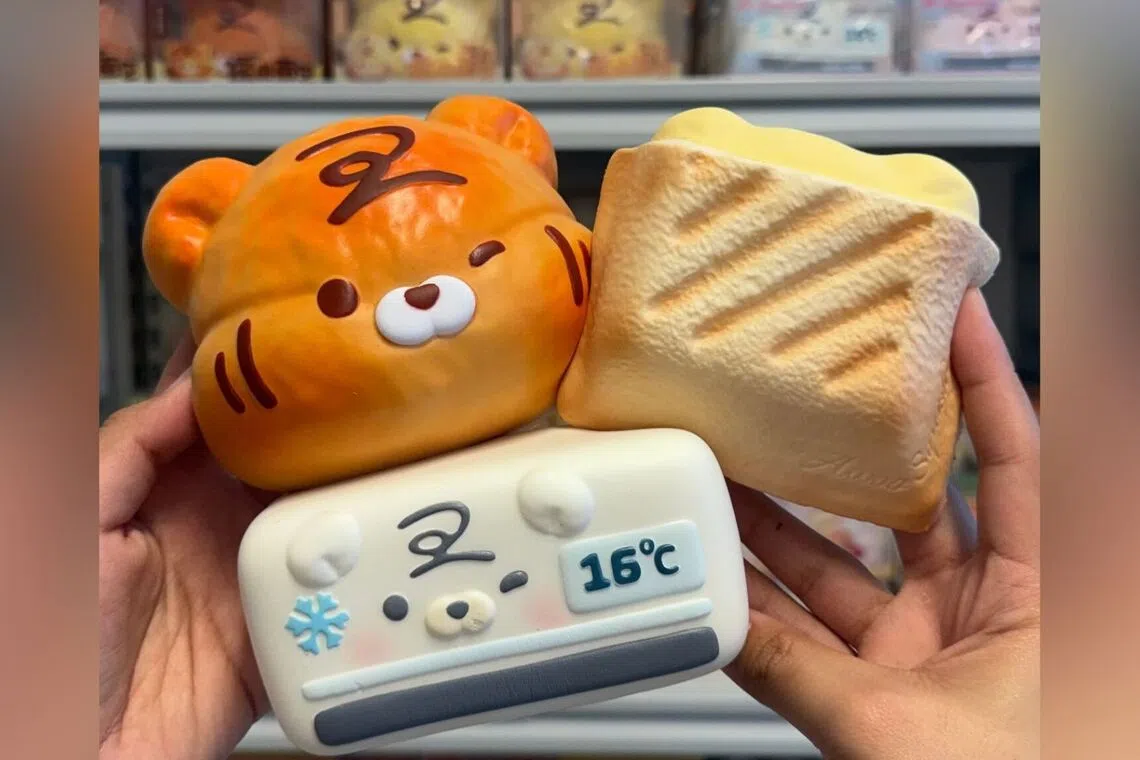
A number of independent stores selling squishies have opened in Singapore amid a resurgence of interest in the toys.
PHOTO: COURTESY OF TRYPHENA NG
Published Oct 19, 2026, 12:30 PM
Updated Oct 19, 2026, 12:30 PM
Singapore retailers and parents are worried about squishy toy safety as fake brands spread and overseas recalls report toxic materials and a “deadly ingestion hazard”.
The Consumer Product Safety Office says it has seen only a “small number” of complaints since 2026 and no evidence of a widespread local problem, but it will keep monitoring the market.
Sellers urge buyers to check certificates, anti-counterfeit labels and trusted buying channels, because fake toys may contain unknown fillings and unsafe chemicals.
SINGAPORE – Making squishies from scratch used to be a fun mother-daughter activity for Rena Heng, amid a huge comeback in the toys driven in large part by social media.
But since news reports emerged about toxic materials found in such toys overseas, Heng has decided to err on the side of caution, bagging up all their handmade squishies as well as those gifted by others as a precaution.
This despite her five-year-old daughter not showing any signs of allergies or adverse reactions.
“I was slightly shocked when I came across the reports,” said Heng , a 37-year-old who works in marketing , adding that she had initially viewed playing with squishies as simply offering a sensory hands-on experience.
“ It didn’t really cross my mind to check the authenticity and safety of the materials used in the toys, because there are so many videos of children, and even adults, buying squishies ,” she said.
Concerns over the safety of squishy toys, especially for children and young people, have spiked across the world as fake replicas of popular toy brands - such as NeeDoh - have become more easily available.
Such unregulated counterfeits could contain toxic chemicals or harmful fillings.
Rena Heng bagged all the squishy toys in her house after she came across reports of toxic materials used in products overseas. PHOTO: COURTESY OF RENA HENG
Rena Heng bagged all the squishy toys in her house after she came across reports of toxic materials used in products overseas.
PHOTO: COURTESY OF RENA HENG
In August, nearly 20,000 illegal squishy toys were seized in Thailand , for substances associated with cancer risks.
Another 37,000 squishies were recalled in the US in early October due to warnings of a “deadly ingestion hazard”.
Singapore’s Consumer Product Safety Office (CPSO) , in a media reply to The Straits Times, said it has seen a “small number” of complaints and enquiries on squishy toys since the start of 2026 .
Many consumers report concerns over chemical odours, skin irritation and product safety compliance , it said.
“CPSO has reviewed and followed up on these as appropriate, and the feedback received does not, on its own, establish that the products were unsafe or non-compliant, ” it added.
The office said it has been monitoring overseas developments and there has been no evidence of a widespread safety issue affecting squishy toys sold in Singapore thus far.
The products identified in the recent US recalls also “do not appear to have been distributed in Singapore” , it said, adding that it will continue to conduct market surveillance of products sold in physical stores here or online, and will act on any credible safety concerns.
Rise in counterfeits
Local retailers who spoke to ST said they have seen a rise in fake squishy toys in recent months, prompting them to be more upfront with customers about the safety checks they have in place for their products.
Tan Wei Jie , the founder of independent toy store Spintaku , said he has noticed squishies being sold at more shops here since September , including at neighbourhood stores and markets , which has raised concerns that there could be fakes in the mix.
Some of these have a strong smell of paint, which could be harmful to children, the 34-year-old said.
Several customers, which include parents, have asked him about the contents of his squishy toys after learning about the risks of fake ones.
He added that the toys he imports from the US come with certificates from the US Consumer Product Safety Commission (CPSC) .
The Squishy Town founder Tryphena Ng , 37 , said that it is good practice for consumers to ask for the relevant safety certificates when buying squishy toys.
For instance, reputable sellers carrying toys imported from China would be able to produce the “China Compulsory Certificate” or CCC , which shows that the product has met China’s national safety and quality standards, she said.
These sellers should also have a lab report that proves their products are compliant with standards set by one of these organisations: International Organization for Standardization , International Electrotechnical Commission , European Committee for Standardi z ation or ASTM International.
“As a seller, I should show them (these certifications),” Ng said, cautioning consumers against patronising stores that do not have, or are not willing to provide, these certifications.
To further reassure her customers, Ng has also obtained official partnership certificates from popular overseas brands that she works with, such as Mido Squishy from China, which sells slow-rising squishies in the design of baked goods.
Kevin Kwok, the director of toy distributor Kids Village Asia , said that the appearance of fake NeeDoh toys in physical stores has been particularly worrying, “because a parent walking into a shop reasonably assumes what’s on the shelf has been checked”.
His company is the official distributor of the viral squishy toy brand in Singapore and Malaysia .
Kwok said that in some cases, stores may display printed “product test reports” next to an item being sold, but a closer look may reveal that these are for a different product.
“A piece of paper on a shelf isn’t proof of anything,” he said. “On its own, on a shelf, a fake can look convincing, which is why the anti-counterfeit label and the purchase channel matter most.”
All NeeDoh toys carry an anti-counterfeit label with a unique code that consumers can use to confirm that the product in their hands is authentic, he said.
“The practical risk with a fake is that you have no idea what’s inside it, no way to trace it, and nobody is accountable if it goes wrong.”
Some possible tell-tale signs of counterfeits would be those retailing at “well below normal” prices or are unbranded, he added. According to listings on the official NeeDoh site, most products are priced between about $9 and $30.
Consumers can also look out for unsealed boxes, misaligned printing, retyped small print or sparse fillings .
But the clearest giveaway would be if the product comes in a colour that does not exist or is marketed as part of a fake collaboration, such as with some food and beverage chains.
For fans such as Chua Ying Xuan, 23 , there is still joy to be had in owning squishy toys and playing with them, as long as some safeguards are in place.
The part-time teacher first stumbled on squishy toys while on a trip to Vietnam in July, and enjoyed the feeling of “squeezing it as hard as you want, and releasing the tension and stress you have” .
“I don’t see a concern, unless the toy bursts or breaks,” she said, adding that damaged ones in her collection are quickly thrown away. She currently owns about 10 squishy toys, which are mostly gifts.
Squishy trading - which was popularised on TikTok and involves swopping toys with other collectors - has also become a way for her to bond with her students.
Chua, who teaches children from three to seven years old , said that she would be willing to buy squishies for her students who are in primary school, but would warn them about potential dangers.
While Heng has sworn off squishy toys for now, she said that she remains open to buying them for her daughter in the future - this time with more research done beforehand.
She said: “Now that I know there are risks, going to more reputable sellers would be one of the things I pay more attention to. ”
Ann Chen is a journalist at the ST Now team, covering breaking news and international affairs.
随着人们对软萌玩具的兴趣再度高涨,新加坡涌现出许多销售软萌玩具的独立商店。
照片:由 TRYPHENA NG 提供
发布于2026年10月19日下午12:30
更新于2026年10月19日下午12:30
新加坡零售商和家长们担心软绵绵玩具的安全性,因为假冒品牌泛滥,海外召回事件报告称,这些玩具含有有毒物质,存在“致命的摄入危险”。
消费者产品安全办公室表示,自 2026 年以来,他们只收到“少量”投诉,也没有证据表明存在普遍的局部问题,但他们将继续监测市场。
卖家敦促买家检查证书、防伪标签和可信赖的购买渠道,因为假冒玩具可能含有未知填充物和不安全的化学物质。
新加坡——在社交媒体的推动下,软萌玩具强势回归,而对于Rena Heng来说,亲手制作软萌玩具曾经是一项有趣的母女活动。
但自从有新闻报道称海外此类玩具中发现了有毒物质后,Heng 决定谨慎起见,将所有手工制作的软绵绵玩具以及别人赠送的玩具都装袋起来以防万一。
尽管她五岁的女儿没有表现出任何过敏或不良反应的迹象。
“当我看到这些报道时,我有点震惊,”37岁的市场营销人员Heng说道,她还补充说,她最初认为玩软绵绵的玩具只是提供了一种感官上的动手体验。
“我根本没想过要去检查玩具所用材料的真实性和安全性,因为网上有很多视频,都是孩子甚至成年人在购买捏捏乐,”她说。
随着 NeeDoh 等热门玩具品牌的仿冒品越来越容易获得,世界各地对软绵绵玩具(尤其是儿童和青少年玩具)安全性的担忧急剧上升。
此类未经监管的假冒产品可能含有有毒化学物质或有害填充物。
雷娜·亨(Rena Heng)在看到有关海外产品使用有毒物质的报道后,将家里所有的软萌玩具都装进了袋子里。照片:雷娜·亨提供
Rena Heng在看到有关海外产品使用有毒物质的报道后,将家里所有的软绵绵玩具都装进了袋子里。
照片:由 RENA HENG 提供
8 月,泰国查获了近 2 万件非法软胶玩具,这些玩具含有与致癌风险相关的物质。
10月初,美国又召回了37000个软绵绵的玩具,原因是存在“致命的摄入危险”的警告。
新加坡消费品安全办公室 (CPSO) 在回复《海峡时报》的媒体采访时表示,自 2026 年初以来,他们收到了“少量”关于软绵绵玩具的投诉和咨询。
报告称,许多消费者反映对化学气味、皮肤刺激和产品安全合规性存在担忧。
“CPSO已对这些情况进行了审查和适当跟进,收到的反馈本身并不能证明这些产品不安全或不合规,”该机构补充道。
该机构表示,他们一直在密切关注海外事态发展,目前尚未发现任何证据表明新加坡销售的软绵绵玩具存在大范围的安全问题。
该机构表示,最近美国召回的产品“似乎并未在新加坡分销”,并补充说,将继续对在新加坡实体店或网上销售的产品进行市场监测,并将对任何可信的安全问题采取行动。
假冒产品增多
接受《海峡时报》采访的当地零售商表示,近几个月来,他们发现假冒的软绵绵玩具数量有所增加,这促使他们更加坦诚地向顾客说明他们对其产品进行的安全检查措施。
独立玩具店 Spintaku 的创始人谭伟杰表示,他注意到自 9 月以来,本地越来越多的商店开始销售软萌玩具,包括社区商店和市场,这引发了人们对其中可能存在假货的担忧。
这位34岁的男子说,其中一些油漆气味很重,可能会对儿童造成伤害。
一些顾客,包括一些家长,在了解到假冒玩具的风险后,都曾向他询问过他出售的软绵绵玩具的成分。
他还补充说,他从美国进口的玩具都附有美国消费品安全委员会 (CPSC) 颁发的证书。
Squishy Town 的创始人,37 岁的 Tryphena Ng 表示,消费者在购买软萌玩具时索要相关的安全证书是一种良好的做法。
她举例说,信誉良好的商家销售从中国进口的玩具时,能够出示“中国强制性产品认证证书”(CCC),这表明该产品符合中国的国家安全和质量标准。
这些卖家还应提供实验室报告,证明其产品符合以下组织之一制定的标准:国际标准化组织、国际电工委员会、欧洲标准化委员会或 ASTM 国际标准组织。
“作为卖家,我应该向他们出示(这些认证)。”吴先生说,并告诫消费者不要光顾那些没有或不愿意提供这些认证的商店。
为了进一步让顾客放心,Ng 还获得了与她合作的知名海外品牌的官方合作证书,例如来自中国的 Mido Squishy,该品牌销售设计成烘焙食品形状的慢回弹软胶玩具。
玩具经销商 Kids Village Asia 的总监 Kevin Kwok 表示,实体店中出现假冒 NeeDoh 玩具尤其令人担忧,“因为家长走进商店时,理所当然地会认为货架上的商品都经过了检查”。
他的公司是该爆款软萌玩具品牌在新加坡和马来西亚的官方经销商。
郭先生表示,在某些情况下,商店可能会在出售的商品旁边展示打印的“产品测试报告”,但仔细观察可能会发现这些报告是针对其他产品的。
“货架上的一张纸并不能证明任何事情,”他说。“假货单独摆在货架上可能看起来很逼真,所以防伪标签和购买渠道才是最重要的。”
他说,所有 NeeDoh 玩具都带有防伪标签,标签上有一个唯一的代码,消费者可以使用该代码来确认他们手中的产品是否为正品。
“假货的实际风险在于,你根本不知道里面装的是什么,也无法追踪来源,如果出了问题,也没有人需要承担责任。”
他还补充说,假货的一些常见特征包括售价“远低于正常水平”或没有品牌标识。根据NeeDoh官网的商品信息,大多数产品的价格在9美元到30美元之间。
消费者还可以注意包装盒是否未密封、印刷错位、小字印刷是否重打或填充物是否稀少。
但最明显的破绽是,如果产品采用不存在的颜色,或者作为虚假合作的一部分进行营销,例如与某些食品和饮料连锁店合作。
对于像 23 岁的蔡颖璇这样的粉丝来说,只要采取一些安全措施,拥有和玩耍软绵绵的玩具仍然能带来快乐。
这位兼职教师在七月份去越南旅行时第一次偶然发现了软绵绵的玩具,她很享受“随心所欲地挤压它,释放紧张和压力”的感觉。
“除非玩具爆裂或损坏,否则我觉得没什么问题,”她说道,并补充说她收藏的损坏玩具都会很快扔掉。她目前拥有大约10个软绵绵的玩具,大部分都是别人送的。
软萌玩具交易——这种在 TikTok 上流行起来的现象,指的是与其他收藏家交换玩具——也成为了她与学生们建立联系的一种方式。
蔡老师教的是三岁到七岁的孩子,她说她愿意为小学生购买软绵绵的玩具,但会提醒他们注意潜在的危险。
虽然Heng目前已经不再给女儿买软绵绵的玩具,但她表示将来还是会考虑买来给女儿玩——不过这次她会事先做更多功课。
她说:“既然我知道存在风险,那么选择信誉更好的卖家将是我更加关注的事情之一。”
Ann Chen 是 ST Now 团队的记者,负责报道突发新闻和国际事务。