Amid a ‘friendship recession’, some young Singaporeans are building bonds through shared interests在“友谊衰退”的背景下,一些新加坡年轻人正通过共同的兴趣爱好建立联系。
Friendship circles in Singapore are shrinking, with only 48 per cent of young people in 2025 saying they have more than three close friends. Read more at straitstimes.com.
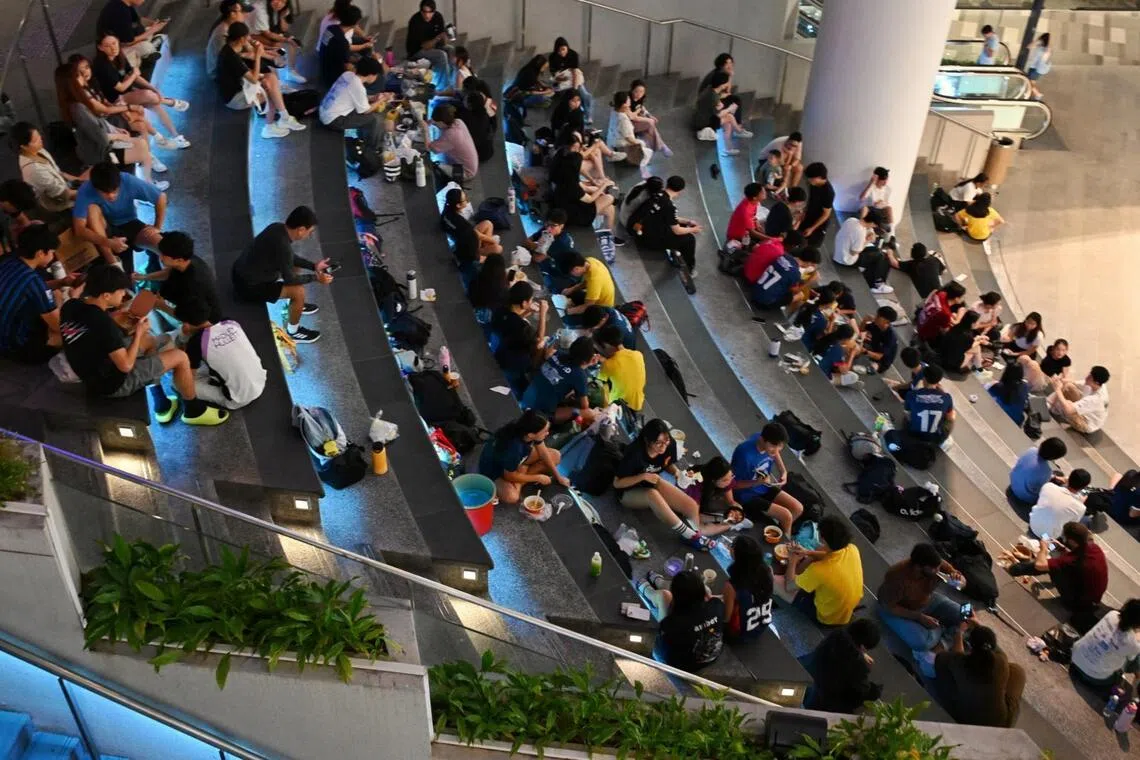
Friendship circles in Singapore are shrinking, with only 48 per cent of young people in 2025 saying they have more than three close friends, down from 56 per cent in 2013
According to a survey done by NYC in 2025, one in three youth say they are keen to make new friends, and over one in two want to improve their current relationships.
Jan Lee, Brand Newsroom
Published Sep 07, 2026, 04:00 AM
Ryan Wee has what he considers a good number of friends.
The self-professed introvert does not need many. He is content with his current circle of friends, which includes about five people he calls close friends – those he can confide in and be vulnerable with.
But maintaining those ties has taken more effort as the 26-year-old, who works in a content marketing agency, ages into adulthood.
“It’s hard to arrange a date to meet when people have jobs and are getting married,” Wee says. “There are many competing interests.”
Making new friends is even tougher, he thinks.
“I think people are a bit more guarded in Singapore; we’re not so outgoing that we’ll strike up a conversation with someone on the train,” says Wee, who studied history at University College London.
“We’ll approach people in a specific setting, like some sort of common interest club or (social) event,” he adds. “But outside of that it’s quite unusual.”
Wee is likely not alone in feeling this. Friendship circles in Singapore have been shrinking, especially among young people. But some young people are also discovering that a shared purpose can bring them closer to others.
Maintaining friendships
According to the National Youth Council’s (NYC) National Youth Survey, the proportion of youth with more than three close friends dropped from 56 per cent in 2013 to 48 per cent in 2025. Eight per cent say they have no close friends in 2025, up from 4 per cent in 2013.
The National Youth Council’s National Youth Survey found that 48 per cent of youth respondents have more than three friends in 2025, down from 56 per cent in 2013. PHOTO: ST FILE
The National Youth Council’s National Youth Survey found that 48 per cent of youth respondents have more than three friends in 2025, down from 56 per cent in 2013.
But young people do want to forge strong friendships. One in three youth say they are keen to make new friends, and over one in two want to improve their current relationships, according to a NYC Youth Needs Survey conducted in 2025.
Such findings come together to shape the SG Youth Plan, launched in July 2026. The five-year roadmap, based on responses from over 60,000 youth aged 15 to 35, aims to help young Singaporeans become more confident, connected and able to contribute.
Narasimman Tivasiha Mani, co-founder and executive director of Impart, a non-profit organisation dedicated to helping youth facing adversities, says young people face different challenges in forming and maintaining friendships at different junctures in their lives.
Those in school often have their time taken up with classes, tuition and extracurricular activities, he says. Meanwhile, youth transitioning from school to work face “an abrupt drop-off in relational health once they step outside institutional safety nets”, he adds, such as the natural common spaces schools offer.
Building stronger bonds
Spearheaded by the Ministry of Culture, Community and Youth (MCCY) and the National Youth Council (NYC), the SG Youth Plan is a five-year roadmap shaped by responses from over 60,000 youth aged 15 to 35.
The SG Youth Plan aims to help young Singaporeans develop confidence to navigate life transitions, forge meaningful connections, and give back to society.
“Third spaces” are defined as casual places outside of school, work and home, where people can mingle and hang out. PHOTO: ST FILE
“Third spaces” are defined as casual places outside of school, work and home, where people can mingle and hang out.
One of the key initiatives is the creation of 12 “third spaces” – casual places outside of school, work or home where youth can hang out.
NYC will also create about 20,000 social, hobby, and interest-based opportunities for youth to explore what they enjoy. These can be found on its digital platform Discover.
“Friendship requires unstructured, low-pressure shared hours,” says Narasimman Tivasiha Mani, the co-founder and executive director of Impart.
“Third spaces and interest groups act as physical ‘containers’ – safe, consistent spaces where youth can regularly interact without pressure,” he adds.
Volunteering, joining and starting ground-up projects are some ways youth can forge connections while giving back to society.
Elijah Chao, 22, co-founded The Resonance Project (Reso) in 2021 while he was studying at Anglo-Chinese School (Independent). Reso is a youth-led non-profit collective that brings music education to the community.
Chao plays the drums and later taught himself the guitar. Jamming with his friends led him and his co-founder – a fellow schoolmate – to think about those who did not have the privilege of learning music.
Youth-led music education collective The Resonance Project runs ukulele lessons for seniors in active ageing centres. PHOTO: CMG
Youth-led music education collective The Resonance Project runs ukulele lessons for seniors in active ageing centres.
“We wanted to (teach music to) kids who may not have had access to the same musical experiences that we did,” he says. The initiative has since expanded to include seniors in active ageing centres.
NYC says it will commit $20 million to support up to 3,000 youth-led projects over the next five years.
An inaugural youth action marketplace – Impact, IRL – co-organised by NYC and the National Volunteer and Philanthropy Centre, will be held on Oct 31 to bring together public, private and philanthropic partners to help fund such projects.
NYC will also create 16,000 volunteering opportunities annually by 2030 through its volunteering arm, Youth Corps Singapore.
Narasimman says long-term volunteering habits can help young people find their footing and support system.
He says: “When young people join persistent, ground-up community networks, their mental well-being improves because they gain a stable social identity and a permanent community home.”
Nathaniel Chan (bottom right), co-president of youth-led music education collective The Resonance Project with fellow volunteers of the group. PHOTO: COURTESY OF NATHANIEL CHAN
Nathaniel Chan (bottom right), co-president of youth-led music education collective The Resonance Project with fellow volunteers of the group.
PHOTO: COURTESY OF NATHANIEL CHAN
Outside of school, helping others is how Secondary Four student Nathaniel Chan met several of his close friends.
The 16-year-old teaches kids how to play ukulele at a student care centre every Wednesday as part of The Resonance Project (Reso).
Reso is a youth-led and volunteer-run non-profit collective founded in 2021. It brings music education to underserved seniors and primary school pupils, providing music lessons at places like active ageing centres, student care centres and family service centres.
Chan joined in 2024 after attending one of Reso’s outreach concerts. He has been one of two co-presidents of the group since July 2026. He considers many of his fellow volunteers his close friends.
Volunteer teams at each centre are fixed, he explains. “You do debriefs, planning calls and generally spend a lot of time with (the same people). Naturally, you’ll get to meet and find people that way.”
The Resonance Project’s annual recital in November 2025 brought its beneficiaries from different centres together to perform for one another and showcase their musical progress. PHOTO: COURTESY OF NATHANIEL CHAN
The Resonance Project’s annual recital in November 2025 brought its beneficiaries from different centres together to perform for one another and showcase their musical progress.
Nearly 80 per cent of youth surveyed by NYC say they want to do good and take action, but 43 per cent are unsure how to start.
“I think for people who are a bit hesitant (about volunteering), my advice would be to bring a friend along,” says Chan. “It’s more comforting to go through the experience with someone you already know.”
What keeps them going once they start? Young people value genuine contribution, says Narasimman, but they tend to become disengaged if they feel their involvement in a cause is tokenistic.
“Youth derive a sense of purpose only when they possess authentic agency; the knowledge that their choices directly shape real-world outcomes,” he says.
It is this sense of agency that has kept Chan active in Reso, an entirely youth-run project. It currently has more than 350 active volunteers, most of whom are aged 12 to 18.
“The fact that everything is run by us – that gives us a lot of ownership, in the sense that we know we’re the ones making real impact,” says Chan.
Like Chan, volunteering is a part of Wee’s life. The competitive Scrabble player – ranked third in Singapore – helps to run Scrabble workshops, sessions and tournaments for community centres as a member of Singapore’s Scrabble Association since 2014.
“If they need someone to liaise with participants during a tournament, or they need a slightly better player to show new players the ropes, I volunteer to teach people,” he says.
Competitive Scrabble has not only earned Ryan Wee (above) tournament titles, but also a diverse group of friends he says he would not have found otherwise. PHOTO: COURTESY OF RYAN WEE
Competitive Scrabble has not only earned Ryan Wee (above) tournament titles, but also a diverse group of friends he says he would not have found otherwise.
PHOTO: COURTESY OF RYAN WEE
Competitive Scrabble has not only earned Wee tournament titles, but also a diverse group of friends he says he would not have found otherwise.
He met one of his close friends – a fellow player in his 50s – through Scrabble. They meet regularly to train and sharpen their skills, and Wee visits his home every Hari Raya.
It would have been hard to befriend somebody at such a different life stage in any other context, he adds.
“I would not have known him if not for Scrabble,” says Wee.
In Perspective is a research-led content programme by SPH Media that combines insight-driven storytelling with expert perspectives on key issues shaping society.
In partnership with the National Youth Council
新加坡的社交圈子正在缩小,预计到2025年,只有48%的年轻人表示他们拥有三个以上的亲密朋友,低于2013年的56%。
根据纽约市 2025 年进行的一项调查,三分之一的年轻人表示他们渴望结交新朋友,超过一半的年轻人希望改善他们目前的人际关系。
Jan Lee,品牌新闻编辑室
发布于 2026 年 9 月 7 日 上午 4:00
Ryan Wee认为自己有很多朋友。
这位自称内向的人并不需要很多朋友。他对目前的朋友圈很满意,其中包括大约五个他称之为挚友的人——那些他可以倾诉心事、袒露脆弱一面的人。
但随着这位在内容营销机构工作的 26 岁年轻人步入成年,维持这些关系需要付出更多努力。
“人们都有工作,还要结婚,很难安排时间见面,”魏说。“大家都有很多事情要忙。”
他认为,结交新朋友更加困难。
“我觉得新加坡人比较谨慎;我们没那么外向,不会在火车上主动和人搭讪,”曾在伦敦大学学院学习历史的魏说道。
“我们会选择特定的场合接触人们,比如某种兴趣俱乐部或(社交)活动,”他补充道。“但在其他场合,这种做法相当罕见。”
魏女士的这种感受可能并非个例。在新加坡,朋友圈正在缩小,尤其是在年轻人当中。但一些年轻人也发现,共同的目标可以拉近彼此的距离。
维系友谊
根据全国青年理事会(NYC)的全国青年调查,拥有三个以上亲密朋友的青年比例从2013年的56%下降到2025年的48%。8%的青年表示,到2025年他们没有亲密朋友,高于2013年的4%。
全国青年理事会的全国青年调查发现,到2025年,只有48%的受访青年拥有三个以上的朋友,低于2013年的56%。图片:海峡时报档案
全国青年理事会的全国青年调查发现,到 2025 年,48% 的受访青年拥有三个以上的朋友,低于 2013 年的 56%。
但年轻人确实渴望建立牢固的友谊。根据纽约市2025年进行的一项青少年需求调查,三分之一的青少年表示他们渴望结交新朋友,超过一半的青少年希望改善他们现有的人际关系。
这些调查结果共同构成了新加坡青年计划,该计划于2026年7月启动。这项为期五年的路线图基于超过6万名15至35岁青年的反馈,旨在帮助新加坡青年增强自信心、加强人际联系并提高贡献能力。
致力于帮助面临逆境的青年的非营利组织 Impart 的联合创始人兼执行董事 Narasimman Tivasiha Mani 表示,年轻人在人生的不同阶段,在建立和维持友谊方面面临着不同的挑战。
他表示,在校学生的时间往往被课程、学费和课外活动占据。与此同时,他还补充说,从学校过渡到工作的年轻人一旦离开学校等机构提供的安全网(例如学校提供的自然公共空间),就会面临“人际关系健康状况的急剧下降”。
建立更牢固的联系
由文化、社区及青年部 (MCCY) 和国家青年理事会 (NYC) 牵头的新加坡青年计划是一项为期五年的路线图,其制定参考了 6 万多名 15 至 35 岁青年的反馈意见。
新加坡青年计划旨在帮助新加坡青年建立自信,以应对人生转变,建立有意义的人际关系,并回馈社会。
“第三空间”指的是学校、工作场所和家庭之外的休闲场所,人们可以在这里交流和消磨时光。图片:ST FILE
“第三空间”指的是学校、工作场所和家庭以外的休闲场所,人们可以在那里交流和消磨时间。
其中一项关键举措是创建 12 个“第三空间”——学校、工作场所或家庭以外的休闲场所,供青少年消磨时间。
纽约市还将为青少年创造约2万个社交、爱好和兴趣方面的活动机会,让他们探索自己喜欢的事物。这些活动信息可以在其数字平台“发现”(Discover)上找到。
Impart 的联合创始人兼执行董事 Narasimman Tivasiha Mani 表示:“友谊需要轻松自在、无压力的相处时光。”
“第三空间和兴趣小组就像实体的‘容器’——安全、稳定的空间,让年轻人可以在没有压力的情况下定期互动,”他补充道。
青年人可以通过志愿服务、参与和发起基层项目来建立联系,同时回馈社会。
22岁的赵以利亚(Elijah Chao)于2021年在英华中学(自主)就读期间,与人共同创立了共鸣计划(Reso)。Reso是一个由青年主导的非营利性团体,致力于为社区提供音乐教育。
赵会打鼓,后来自学了吉他。和朋友们一起玩音乐让他和他的联合创始人——一位校友——开始思考那些没有机会学习音乐的人。
由青年主导的音乐教育团体“共鸣计划”(The Resonance Project)在老年活动中心为老年人开设尤克里里课程。图片:CMG
由青年主导的音乐教育团体“共鸣计划”在老年活动中心为老年人开设尤克里里课程。
他说:“我们想让那些可能没有机会接触到和我们一样音乐体验的孩子们也能学习音乐。” 这项计划后来扩展到包括老年活动中心的老年人。
纽约市表示,将在未来五年内投入 2000 万美元,支持多达 3000 个由青年主导的项目。
由纽约市和国家志愿者和慈善中心联合举办的首届青年行动市场——Impact, IRL——将于 10 月 31 日举行,旨在汇聚公共、私人和慈善合作伙伴,帮助资助此类项目。
纽约市还将通过其志愿服务机构新加坡青年团,到 2030 年每年创造 16,000 个志愿服务机会。
纳拉辛曼表示,长期的志愿服务习惯可以帮助年轻人找到立足之地和支持系统。
他说:“当年轻人加入持续的、自下而上的社区网络时,他们的心理健康状况会得到改善,因为他们获得了稳定的社会身份和永久的社区归属感。”
纳撒尼尔·陈(右下)是青年音乐教育团体“共鸣计划”(The Resonance Project)的联合主席,图中他与该团体的其他志愿者合影。照片由纳撒尼尔·陈提供。
纳撒尼尔·陈(右下),青年音乐教育团体“共鸣计划”的联合主席,与该团体的其他志愿者合影。
照片:由 Nathaniel Chan 提供
在校外,中四学生陈纳撒尼尔通过帮助他人结识了几位好朋友。
这位 16 岁的少年每周三都会在学生托管中心教孩子们弹尤克里里,这是“共鸣计划”(Reso)的一部分。
Reso 是一个由青年领导、志愿者运营的非营利性团体,成立于 2021 年。它为服务不足的老年人和小学生提供音乐教育,在诸如老年活动中心、学生托管中心和家庭服务中心等场所提供音乐课程。
Chan在2024年参加了Reso的一场公益音乐会后加入了该组织。自2026年7月以来,他一直是该组织的两位联合主席之一。他视许多志愿者伙伴为挚友。
他解释说,每个中心的志愿者团队都是固定的。“你们会进行工作总结、计划会议,通常会花很多时间和(同一批人)在一起。自然而然地,你就会通过这种方式结识新朋友。”
2025年11月,“共鸣计划”的年度音乐会汇聚了来自不同中心的受益者,他们互相表演,展示各自的音乐进步。照片:由陈纳撒尼尔提供
2025 年 11 月,共鸣计划的年度音乐会将来自不同中心的受益者聚集在一起,互相表演,并展示他们的音乐进步。
纽约市一项调查显示,近 80% 的受访青年表示他们想做好事并采取行动,但 43% 的人不确定如何开始。
“我认为对于那些对做志愿者有点犹豫的人,我的建议是带个朋友一起去,”陈女士说。“和认识的人一起经历会更安心。”
一旦他们开始行动,是什么让他们坚持下去?纳拉西曼说,年轻人重视真正的贡献,但如果他们觉得自己的参与只是形式主义,他们往往会失去动力。
他说:“只有当年轻人拥有真正的自主权,知道他们的选择会直接影响现实世界的结果时,他们才能获得使命感。”
正是这种自主感让陈一直积极参与Reso项目,这是一个完全由青年运营的项目。目前,Reso拥有超过350名活跃志愿者,其中大多数年龄在12至18岁之间。
“所有事情都由我们自己运营——这让我们拥有了很大的自主权,因为我们知道是我们产生了真正的影响,”陈说。
和陈一样,志愿服务也是魏的生活一部分。这位在新加坡排名第三的拼字游戏高手,自2014年以来一直是新加坡拼字游戏协会的成员,帮助社区中心举办拼字游戏工作坊、课程和比赛。
“如果他们需要有人在比赛期间与参赛者联络,或者需要水平稍高的球员来指导新球员,我都会自愿教他们,”他说。
竞技拼字游戏不仅为瑞恩·韦(上图)赢得了锦标赛冠军,还让他结识了一群形形色色的朋友,他说如果没有这项运动,他不可能认识他们。照片:由瑞恩·韦提供
竞技拼字游戏不仅为 Ryan Wee(上图)赢得了锦标赛冠军,还让他结识了一群形形色色的朋友,他说,如果没有这项运动,他不可能认识他们。
照片:由 Ryan Wee 提供
竞技拼字游戏不仅为他赢得了小型锦标赛的冠军头衔,还让他结识了一群形形色色的朋友,他说,如果没有参加比赛,他不可能认识他们。
他通过拼字游戏结识了一位挚友——一位五十多岁的同好玩家。他们定期聚会训练,提高牌技,而且魏先生每年开斋节都会去他家拜访。
他还补充说,在其他任何情况下,在人生如此不同的阶段结交朋友都是很困难的。
“如果不是因为拼字游戏,我就不会认识他,”韦说道。
《视角》是由新加坡报业控股媒体推出的以研究为主导的内容节目,它将以洞察力驱动的故事讲述与专家对塑造社会的关键问题的观点相结合。
与国家青年委员会合作