Seniors with dementia spark memories with old objects like vinyl records under NTUC Health programme在全国职工总会健康计划下,患有痴呆症的老年人可以通过黑胶唱片等旧物品唤起记忆。
NTUC Health rolls out heritage-based dementia engagement programme after successful pilot with Geri and NHB Read more at straitstimes.com.
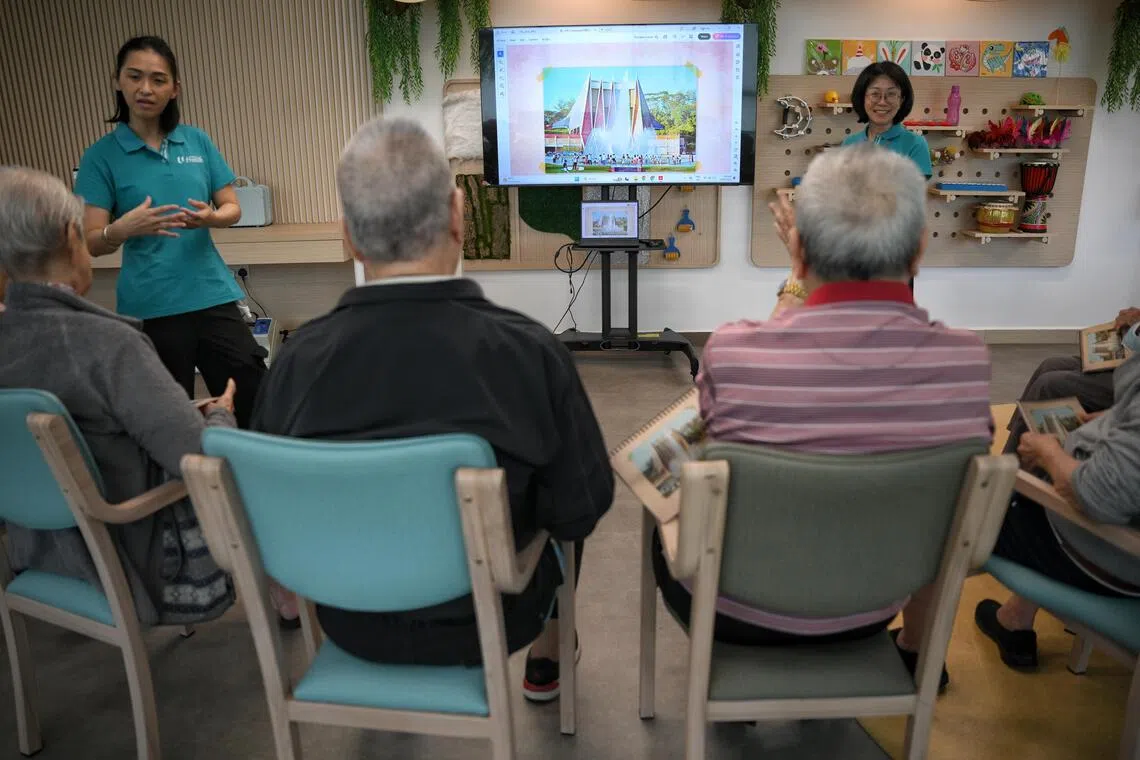
A pilot study had shown that 72% of the participants had sustained positive moods and became more expressive after going through the programme.
ST PHOTO: MARK CHEONG
Published Oct 19, 2026, 08:10 PM
Updated Oct 19, 2026, 08:10 PM
NTUC Health has launched an eight-week heritage-based dementia programme using vinyl records, old tickets and a digital app to help seniors recall memories and talk.
A GERI pilot with 25 clients found 72% kept positive moods and became more expressive, with benefits in memory reactivation and sharing family stories.
The programme has been rolled out at five day care centres, with 10 trained facilitators, and plans to expand to 27 NTUC Health day care centres in about three years.
SINGAPORE – Seniors with mild to moderate dementia are getting help to recall their personal memories with vinyl records and other familiar items from a bygone era, under a new programme by NTUC Health.
The heritage-based dementia engagement programme uses physical objects from the 1950s to 1980s – such as vinyl records and old movie tickets, picture kits – and a digital app with thematic images, captions and audio clips to also help seniors spark conversations and connect with their peers.
Launched in September, it will be run at five day care centres by 2027.
NTUC Health developed the eight-week structured programme with the National Heritage Board, with clinical inputs from Khoo Teck Puat Hospital and the Geriatric Education and Research Institute (GERI) leading the research evaluation.
A pilot study conducted by GERI, with input from Khoo Teck Puat Hospital, had shown that 72% of the participants had sustained positive moods and became more expressive after going through the programme.
The programme’s key benefit is helping these seniors with mild to moderate dementia with memory reactivation, which include remembering how their family was like, contrasting life then and now, and bringing back smells, sounds and colours into their lives, said Yu Chou Chuen, who led the pilot study when he was a senior research fellow at GERI.
“We were surprised that through just looking at a simple picture, they can start to sing songs and talk about movies that they liked back then,” he said.
The pilot study observed 25 clients across four NTUC Health day care centres alongside qualitative interviews with care staff between October 2024 and March 2025.
Along with two facilitators, participants in the programme attended a 45-minute session once a week for eight weeks.
Yu, who is now the deputy head of gerontology programmes at the Singapore University of Social Sciences, said eight weeks is a sweet spot as it allows time for familiarity and rapport to be developed among the group while balancing manpower constraints at each centre.
At a session at the NTUC Health Senior Day Care in Jurong West on Oct 19, senior community care associate Beh Swee Suan, using a mix of Mandarin, Hokkien and Malay, interacted skilfully with a group of seven participants .
Calling the seniors individually by name to get them to speak, she and dementia practitioner Kuo Yen-Chun kept up the conversation and injected a lively mood to the session. Kuo also spoke one-on-one with the quieter participants.
When shown a photo of the old Cathay cinema, 85-year-old Foo Ngiap Tong told the group that he used to attend movie screenings there. He is among those who spoke up more often.
Seniors with mild to moderate dementia are getting help to recall their personal memories with vinyl records and other familiar items from a bygone era. ST PHOTO: MARK CHEONG
Seniors with mild to moderate dementia are getting help to recall their personal memories with vinyl records and other familiar items from a bygone era.
But Beh also said she has seen the quiet ones slowly opening up and talking about their past, including a client who used to remain quiet in the presence of his wife, who attends the same day care centre.
NTUC Health has trained 10 facilitators for the programme so far. Its manager of dementia care, Cindy Koe, said they plan to expand the dementia engagement programme to 27 centres in around three years’ time.
Slightly more than half of its 2,400 seniors across 27 of its day care centres are currently living with dementia.
Alongside the expansion of the programme, NHB’s heritage-based resources will be incorporated more broadly across NTUC Health’s existing day care activities and programmes, said Koe.
一项试点研究表明,72% 的参与者在完成该项目后保持了积极的情绪,并且变得更加善于表达。
《海峡时报》照片:张马克
发布于2026年10月19日晚上8:10
更新于2026年10月19日晚上8:10
NTUC Health推出了一项为期八周的以文化遗产为基础的痴呆症治疗计划,利用黑胶唱片、旧车票和数字应用程序来帮助老年人回忆往事并进行交流。
GERI 的一项针对 25 名客户的试点研究发现,72% 的客户保持了积极的情绪,变得更加善于表达,并在记忆力恢复和分享家庭故事方面获得了益处。
该计划已在 5 个日托中心推出,配备 10 名受过培训的辅导员,并计划在大约三年内扩展到 27 个 NTUC Health 日托中心。
新加坡——全国职工总会保健集团推出一项新计划,帮助患有轻度至中度痴呆症的老年人通过黑胶唱片和其他来自过去时代的熟悉物品来回忆起他们的个人记忆。
这项以文化遗产为基础的痴呆症参与计划利用 20 世纪 50 年代至 80 年代的实物(例如黑胶唱片、老电影票、照片套装)以及一款包含主题图片、说明文字和音频片段的数字应用程序,帮助老年人开启对话并与同龄人建立联系。
该项目于9月启动,到2027年将在五个日托中心开展。
职总保健集团与国家文物局共同制定了为期八周的结构化计划,邱德拔医院提供了临床支持,老年医学教育与研究所 (GERI) 牵头进行研究评估。
GERI 在邱德拔医院的协助下进行的一项试点研究表明,72% 的参与者在完成该计划后保持了积极的情绪,并且变得更加善于表达。
该计划的主要益处是帮助患有轻度至中度痴呆症的老年人重新激活记忆,包括回忆起他们的家庭是什么样子,对比过去和现在的生活,并将气味、声音和颜色重新带回他们的生活。领导这项试点研究的余周泉(音译)说道,他当时是老年医学研究所(GERI)的高级研究员。
他说:“我们很惊讶,仅仅通过看一张简单的图片,他们就能开始唱歌,并谈论他们当时喜欢的电影。”
该试点研究于 2024 年 10 月至 2025 年 3 月期间,对 NTUC Health 四家日托中心的 25 名客户进行了观察,并对护理人员进行了定性访谈。
该项目的参与者在两名辅导员的带领下,每周参加一次 45 分钟的课程,持续八周。
现任新加坡社会科学大学老年学项目副主任的余先生表示,八周是一个理想的时长,既能让团队成员彼此熟悉、建立融洽的关系,又能兼顾各中心的人力限制。
10 月 19 日,在裕廊西 NTUC Health 老年日间护理中心举办的一场活动中,老年社区护理助理 Beh Swee Suan 熟练地运用普通话、福建话和马来语与七名参与者进行了互动。
她逐一叫出老人们的名字,引导他们发言,并与失智症专家郭彦君一起,持续进行交谈,为会议营造了活跃的气氛。郭彦君还与一些比较安静的老人们进行了单独交谈。
当被问及旧国泰电影院的照片时,85岁的傅业栋告诉大家,他以前经常去那里看电影。他是比较活跃的发言者之一。
患有轻度至中度痴呆症的老年人正在通过黑胶唱片和其他来自过去时代的熟悉物品来唤起个人记忆。(海峡时报照片:MARK CHEONG)
患有轻度至中度痴呆症的老年人正在通过黑胶唱片和其他来自过去时代的熟悉物品来唤起他们的个人记忆。
但贝赫也表示,她看到一些比较安静的人慢慢地敞开心扉,谈论他们的过去,其中包括一位客户,他以前在妻子面前总是保持沉默,他的妻子也在同一家日托中心就读。
职总保健集团目前已为该项目培训了10名辅导员。其失智症护理经理Cindy Koe表示,他们计划在三年左右的时间里将失智症患者关怀项目扩展到27个中心。
在其 27 个日托中心的 2400 名老年人中,略多于一半的人目前患有痴呆症。
Koe表示,随着该计划的扩展,国家文物局的文化遗产资源将更广泛地纳入职总保健集团现有的日托活动和计划中。