Fuel prices are being handled well by Malaysia: Not so fortunate for the rest of Asean — Phar Kim Beng马来西亚对燃油价格的处理很得当:东盟其他国家就没有那么幸运了——法金本
SEPTEMBER 7 — Malaysia should not congratulate itself too quickly. But neither should it ignore something that has become increasingly apparent during the prolonged global energy...
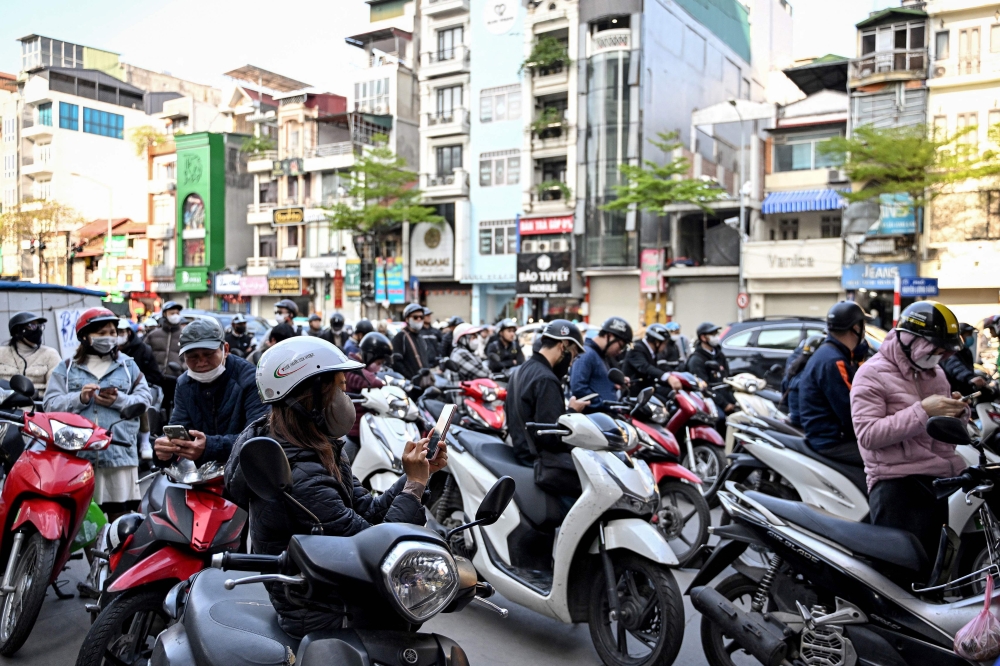
Malaysia has effectively managed the global energy crisis so far by maintaining stable fuel supplies and avoiding severe shortages, thanks to its domestic energy production and strategic management by entities like Petronas.
Despite this success, Malaysia must remain vigilant as high oil prices could persist, necessitating continued strategic planning and transitioning towards renewable energy.
Malaysia's approach is a benchmark for its ASEAN peers, who face similar challenges but lack equivalent buffers, highlighting the need for an integrated regional response to energy security and a shift towards energy independence.
SEPTEMBER 7 — Malaysia should not congratulate itself too quickly. But neither should it ignore something that has become increasingly apparent during the prolonged global energy crisis: the country has so far handled the fuel shock relatively well.
The contrast with parts of Asean is becoming increasingly significant.
Prime Minister Anwar Ibrahim’s economic adviser, Nurhisham Hussein, said Malaysia’s fuel supply remains stable despite tightening global supplies. Petronas is confident that sufficient supplies can be secured through the end of the year.
More importantly, Malaysia has avoided the kind of severe physical shortages that an international energy crisis could easily have produced.
That is no small achievement.
But Nurhisham’s second observation deserves even greater attention. Oil prices may remain elevated for another two to three years. Countries that have drawn down their reserves are unlikely to rebuild them aggressively until prices return to something closer to US$80 a barrel.
In other words, this is no longer merely an energy-price spike.
It could become a prolonged period of expensive energy.
Malaysia enters this difficult environment with several advantages. It is a significant oil and gas producer, a net exporter of liquefied natural gas, possesses substantial domestic energy infrastructure and, above all, has Petronas.
The government has also chosen not to expose households completely to international price fluctuations.
The basic monthly eligibility for subsidised RON95 has been restored to 300 litres, with the subsidised price remaining RM1.99 per litre. Malaysia’s overall inflation, meanwhile, remains around two per cent.
This is an important economic buffer.
Petrol prices are not simply another item in the consumer price index.
Energy runs through almost everything: transportation, logistics, food distribution, manufacturing, aviation, fisheries and eventually the price of goods on supermarket shelves.
A government that prevents an international oil shock from immediately becoming a domestic cost-of-living shock therefore buys valuable economic and political breathing space.
Much of Asean is not quite so fortunate.
The Philippines is particularly vulnerable because of its dependence on imported energy, relatively modest buffers and rapid transmission of international energy prices into domestic costs.
Thailand is similarly exposed through its large oil and gas trade deficit. Indonesia has greater domestic energy resources but must contend with the enormous fiscal cost of shielding its population from international prices.
This is the fundamental Asean dilemma.
Governments can allow international oil prices to pass through to consumers and risk inflation, declining purchasing power and political dissatisfaction. Or they can subsidise energy heavily and transfer the shock onto government budgets.
Neither option is painless.
Indeed, fossil-fuel support across South-east Asia was estimated at US$353.1 billion in 2024 when explicit and implicit subsidies are included.
Elevated energy prices therefore represent not merely an energy-security problem but an increasingly serious fiscal challenge.
Malaysia’s relative success should consequently be understood as strategic management rather than immunity.
Kuala Lumpur still has to pay for subsidies. Businesses remain vulnerable to higher diesel, electricity, transportation and input costs.
An extended period of expensive crude could eventually work its way through supply chains regardless of government intervention.
Nor can Malaysia ignore what happens to its neighbours.
Asean is an interconnected production platform. If transportation costs rise sharply in Thailand, manufacturing costs increase in Vietnam, inflation accelerates in the Philippines or Indonesia is forced to divert billions more into energy subsidies, Malaysia will eventually feel the consequences through trade, investment and regional demand.
Energy security must therefore become an Asean issue rather than merely ten separate national problems.
The Asean Power Grid becomes even more important in this environment.
So does diversification towards renewable energy, stronger regional electricity interconnection, electric vehicles, improved public transportation and greater energy efficiency.
Interestingly, China’s rapid adoption of electric vehicles is already helping moderate global petroleum demand, according to Nurhisham.
There is a lesson here for Asean.
Energy transition should no longer be viewed exclusively through the prism of climate change. It is increasingly about strategic autonomy.
Every additional unit of electricity generated domestically from solar, hydroelectricity or other renewable sources potentially reduces exposure to distant conflicts and vulnerable maritime chokepoints.
The West Asian crisis has demonstrated brutally how geopolitical instability thousands of kilometres away can reach directly into the household budgets of South-east Asians. More than 80 per cent of the crude oil and LNG passing through the Strait of Hormuz is normally destined for Asia.
Malaysia has managed this difficult period better than might have been expected.
Stable supplies, targeted fuel support, Petronas’ international reach and relatively contained inflation have provided the country with buffers that several Asean neighbours do not possess to the same degree.
But if Nurhisham is correct that elevated oil prices could persist for another two or three years, Malaysia cannot merely congratulate itself for surviving the first stage of the crisis.
It should use the breathing space to prepare for the next one.
And Malaysia should help Asean do the same.
Energy resilience cannot stop at Malaysia’s borders. In an integrated Asean economy, Malaysia cannot remain permanently fortunate if its neighbours are increasingly unfortunate.
* Phar Kim Beng, PhD is the Professor of Asean Studies at International Islamic University of Malaysia and Director of Institute of International and Asean Studies (IINTAS).
** This is the personal opinion of the writers or publication and does not necessarily represent the views of Malay Mail .
The night the volcano asked us to wait — Marziah Zahar
Asean must secure its AI sovereignty amid shifting geopolitics and geoeconomics — Phar Kim Beng
When everyone has a voice, who gets heard? — Asrul Farhan Hasran
How much support flows into Malaysian homes: Breaking down the nation’s subsidy system
At KLIA, stranded travellers hope Jakarta flights resume soon after Anak Krakatau eruption
MACC arrests ex‑DG with ‘Datuk’ title and another suspect over alleged land‑sale corruption
马来西亚凭借其国内能源生产和像马来西亚国家石油公司(Petronas)这样的实体的战略管理,通过维持稳定的燃料供应和避免严重短缺,有效地应对了全球能源危机。
尽管取得了这些成功,但马来西亚仍需保持警惕,因为高油价可能会持续,因此需要继续进行战略规划并向可再生能源转型。
马来西亚的做法为面临类似挑战但缺乏同等缓冲的东盟国家树立了标杆,这凸显了采取综合区域措施应对能源安全问题以及向能源独立转型的必要性。
9月7日——马来西亚不应过早沾沾自喜。但它也不应忽视在旷日持久的全球能源危机中日益凸显的一点:迄今为止,马来西亚应对能源冲击的表现相对较好。
与东盟部分地区的对比正变得越来越显著。
马来西亚总理安瓦尔·易卜拉欣的经济顾问努尔希沙姆·侯赛因表示,尽管全球供应趋紧,但马来西亚的燃料供应依然稳定。马来西亚国家石油公司(Petronas)有信心确保年底前充足的燃料供应。
更重要的是,马来西亚避免了国际能源危机很容易造成的严重物资短缺。
这绝非易事。
但努尔希沙姆的第二个观点更值得关注。油价可能在未来两到三年内保持高位。那些已经动用石油储备的国家不太可能在油价回落到接近每桶80美元的水平之前积极重建石油储备。
换句话说,这不再仅仅是能源价格飙升的问题了。
这可能会演变成一段漫长的高耗能时期。
马来西亚凭借多项优势进入了这一充满挑战的市场环境。它是重要的石油和天然气生产国,液化天然气净出口国,拥有庞大的国内能源基础设施,最重要的是,它拥有马来西亚国家石油公司(Petronas)。
政府也选择不让家庭完全暴露于国际价格波动的影响之下。
马来西亚享受补贴的RON95汽油每月基本限额已恢复至300升,补贴价格仍为每升1.99令吉。与此同时,马来西亚的整体通货膨胀率仍维持在2%左右。
这是一个重要的经济缓冲。
汽油价格并非仅仅是消费者价格指数中的另一个项目。
能源几乎贯穿一切:交通运输、物流、食品配送、制造业、航空业、渔业,最终甚至影响到超市货架上的商品价格。
因此,一个政府如果能够阻止国际石油危机立即演变为国内生活成本危机,就能赢得宝贵的经济和政治喘息空间。
东盟大部分地区就没有那么幸运了。
由于菲律宾依赖进口能源、缓冲能力相对较弱以及国际能源价格迅速传导至国内成本,因此该国特别容易受到能源冲击。
泰国同样面临着巨大的石油和天然气贸易逆差风险。印尼拥有更丰富的国内能源资源,但必须承担保护民众免受国际价格波动影响的巨额财政成本。
这是东盟面临的根本困境。
各国政府可以选择让国际油价上涨转嫁给消费者,但这样可能会引发通货膨胀、购买力下降和政治不满。或者,他们也可以大力补贴能源,将冲击转嫁到政府预算上。
两种选择都不轻松。
事实上,如果将显性补贴和隐性补贴都计算在内,预计到 2024 年东南亚对化石燃料的支持将达到 3531 亿美元。
因此,能源价格高企不仅代表着能源安全问题,而且代表着日益严峻的财政挑战。
因此,马来西亚的相对成功应该被理解为战略管理而非免疫力。
吉隆坡仍需支付补贴。企业依然容易受到柴油、电力、运输和原材料成本上涨的影响。
即使政府干预,原油价格长期高企最终也可能会波及整个供应链。
马来西亚也不能对邻国发生的事情视而不见。
东盟是一个相互关联的生产平台。如果泰国的运输成本大幅上涨,越南的制造成本上升,菲律宾的通货膨胀加剧,或者印尼被迫将数十亿美元用于能源补贴,马来西亚最终都会通过贸易、投资和区域需求感受到这些影响。
因此,能源安全必须成为一个东盟问题,而不仅仅是十个独立的国家问题。
在这种环境下,东盟电网的重要性更加凸显。
因此,向可再生能源多元化发展、加强区域电力互联、推广电动汽车、改善公共交通和提高能源效率也至关重要。
努尔希沙姆认为,有趣的是,中国对电动汽车的快速普及已经开始帮助缓解全球石油需求。
东盟可以从中吸取教训。
能源转型不应再仅仅从气候变化的角度来看待,它越来越关乎战略自主。
国内每增加一单位太阳能、水力或其他可再生能源发电,就有可能减少遭受远距离冲突和脆弱海上咽喉要道影响的风险。
西亚危机残酷地表明,远在数千公里之外的地缘政治不稳定如何直接影响到东南亚家庭的预算。通常情况下,途经霍尔木兹海峡的原油和液化天然气超过80%都运往亚洲。
马来西亚应对这段艰难时期的表现比预期要好。
稳定的供应、有针对性的燃料支持、马来西亚国家石油公司的国际影响力以及相对可控的通货膨胀,为该国提供了几个东盟邻国所不具备的缓冲空间。
但如果努尔希沙姆的说法是正确的,即高油价可能会持续两到三年,那么马来西亚就不能仅仅因为挺过了危机的第一阶段而沾沾自喜。
它应该利用这段喘息时间为下一阶段做好准备。
马来西亚也应该帮助东盟做到这一点。
能源韧性不能止步于马来西亚的国界。在东盟一体化的经济体系中,如果邻国日益陷入困境,马来西亚也无法永远保持幸运。
* Phar Kim Beng 博士是马来西亚国际伊斯兰大学东盟研究教授,也是国际与东盟研究所 (IINTAS) 所长。
**本文仅代表作者或出版方的个人观点,并不一定代表《马来邮报》的观点。
火山要求我们等待的那晚——玛尔齐亚·扎哈尔
在不断变化的地缘政治和地缘经济格局中,东盟必须确保其人工智能主权——法金本
当每个人都有发言权时,谁的声音会被听到?——阿斯鲁尔·法尔汉·哈斯兰
马来西亚家庭获得了多少补贴:剖析该国的补贴体系
在吉隆坡国际机场,滞留旅客希望雅加达航班在喀拉喀托火山喷发后尽快恢复
马来西亚反贪污委员会逮捕了一名拥有“拿督”头衔的前总监和另一名嫌疑人,他们涉嫌参与土地买卖腐败案。