‘Like a jewel’: Japan’s luxury ice revered by bars worldwide“宛如宝石”:日本奢华冰块备受全球酒吧推崇
KANAZAWA, Sept 6 — In the historic Japanese city of Kanazawa, craftsmen painstakingly shape and slice blocks of ice destined to chill negronis in some of the world’s trendiest...
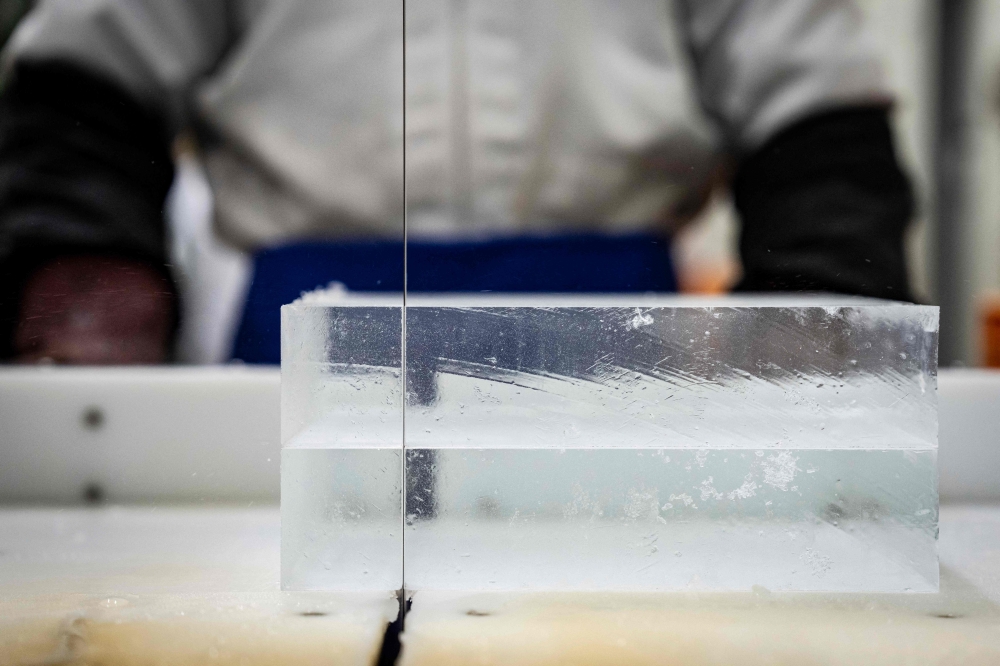
Japan's Kuramoto Ice produces ultra-clear premium ice using a unique, time-consuming method, and exports have more than doubled since 2019.
The Japanese method involves removing impurities and constant stirring, resulting in dense, clear ice that cools cocktails without diluting them.
Native bar in Singapore and others choose Kuramoto Ice for its clarity and slow melting, benefiting cocktail taste; this shows the ice's importance in bartending.
KANAZAWA, Sept 6 — In the historic Japanese city of Kanazawa, craftsmen painstakingly shape and slice blocks of ice destined to chill negronis in some of the world’s trendiest bars.
The men work for Kuramoto Ice, a century-old company in Ishikawa on the Sea of Japan coast and one of dozens of Japanese firms producing ultra-clear, premium ice.
This luxury product, believed by those in the industry to melt more slowly than regular blocks, is a staple of Japan’s cocktail culture.
But its popularity is also spilling over to bars abroad, from the United States to Australia, who pay as much as 200 yen (US$1.25) per cube.
Kuramoto Ice is of the country’s few international exporters, and has seen total sales more than double since exports began in 2019.
“We take our time and freeze water slowly, keeping it in motion... That’s how we end up with good ice,” Kazuhiko Kuramoto, the firm’s fifth-generation head, told AFP at their Kanazawa factory.
“My heart leaps with joy when I see ice that looks like a jewel,” said the 41-year-old, as he poured cold hojicha tea into a glass filled with a large, clear sphere.
Using a technique that originally came from the United States, specialist Japanese ice makers freeze water over a period of 48 to 72 hours, far longer than the few hours typically required for homemade ice or the 30 minutes it takes industrial ice machines.
As freezing begins and the ice forms from outside in, various impurities in the water get pushed towards the centre. But the Japanese method involves removing that tainted water and replacing it with a fresh batch. Constant stirring helps remove air bubbles, resulting in completely transparent ice, known as “junpyo” in Japanese.
Although there is little scientific evidence, it’s said the technique also results in a colder, denser product that will cool rather than dilute a cocktail.
Native — a trendy bar in Singapore that made this year’s Asia’s 50 Best Bars list — imports around 900 kilograms of ice from Kuramoto each year.
“Local ice is more economical, but Kuramoto Ice is clearer, denser and melts more slowly,” co-owner Yong Wei told AFP.
‘Lingering aftertaste’
In Kanazawa, workers dressed in full-body overalls haul large blocks of ice across the factory floor, before starting on the delicate work of carving perfect spheres, cubes and rectangular blocks with cut corners.
Once packaged, the finished products — which can be made to precisely fit any glass — are stored in a room at minus 10 degrees before shipment.
Boss Kuramoto is not blind to the environmental cost of transporting cubes of ice thousands of kilometres across the world, but insisted that small goods like his have a relatively low environmental impact.
He said he had dreamed of reaching American bars since visiting Las Vegas more than a decade ago and realising low-quality ice that melts easily and waters down the flavour was being used in expensive cocktails.
The time-consuming ice-making technique often used in Japan, which tends to produce a higher quality product, had largely been phased out in the US.
At a Hilton Hotel bar near Tokyo, bartender Shingo Miyachi prepares a negroni with one of Kuramoto Ice’s big, clear cubes.
The ice fits perfectly in the glass, and its clarity makes it almost invisible.
“Ice really has a huge impact on the taste of a cocktail,” Miyachi told AFP.
If it melts, “it especially affects the lingering aftertaste once you’ve taken a sip.”
Ice handling is considered an essential skill for Japanese bartenders, who often begin their training by learning to break it with precision.
“When you look at the ice and see the level of attention to detail, you can pretty much tell how seriously the bartender takes the flavour of the cocktail and how much care they’ve put into it,” he explained.
“A cocktail only really comes into being when the glass, the ice, and the liquid become one as a single unified whole.” — AFP
‘Sobering reality’: Smuggled bottles and empty shelves mark Syria’s alcohol crackdown
Romanticised Mao myths rise among China’s youth as sanitised history leaves space for idealism
AFP photographer Luis Tato wins Visa d’Or for Madagascar protest coverage
How much support flows into Malaysian homes: Breaking down the nation’s subsidy system
At KLIA, stranded travellers hope Jakarta flights resume soon after Anak Krakatau eruption
MACC arrests ex‑DG with ‘Datuk’ title and another suspect over alleged land‑sale corruption
日本的仓本冰厂采用独特且耗时的方法生产超透明的优质冰块,自 2019 年以来出口量翻了一番多。
日本制冰法包括去除杂质和不断搅拌,从而制成致密、透明的冰块,可以冷却鸡尾酒而不会稀释其味道。
新加坡的 Native 酒吧和其他酒吧都选择 Kuramoto Ice,因为它的透明度高,融化速度慢,有利于鸡尾酒的口感;这表明冰在调酒中的重要性。
金泽,9 月 6 日——在日本历史悠久的金泽市,工匠们一丝不苟地塑造和切割冰块,这些冰块将用于在世界上一些最时尚的酒吧里冰镇内格罗尼鸡尾酒。
这些男子在仓本冰业公司工作,该公司位于日本海沿岸的石川县,是一家拥有百年历史的企业,也是数十家生产超透明优质冰块的日本公司之一。
业内人士认为,这种奢侈品比普通块状物融化得更慢,是日本鸡尾酒文化中不可或缺的一部分。
但它的受欢迎程度也蔓延到了国外的酒吧,从美国到澳大利亚,每个方块的价格高达 200 日元(1.25 美元)。
仓本冰是日本为数不多的国际出口商之一,自 2019 年开始出口以来,总销售额增长了一倍多。
“我们慢慢地、缓慢地冻结水,并保持水的流动……这样才能做出好的冰,”该公司第五代掌门人仓本和彦在金泽工厂告诉法新社。
“看到像宝石一样晶莹剔透的冰块,我心里就乐开了花,”这位 41 岁的男子一边说着,一边将冰镇焙茶倒入一个装满大而透明冰球的玻璃杯中。
日本专业的制冰师采用源自美国的技术,将水冷冻 48 至 72 小时,这比自制冰块通常所需的几个小时或工业制冰机所需的 30 分钟要长得多。
当冰层开始冻结,由外向内形成冰时,水中各种杂质会被推向冰心。但日本制冰法会将这些受污染的水取出,换上新鲜的水。不断搅拌有助于去除气泡,最终制成完全透明的冰,日语称之为“纯冰”。
虽然缺乏科学证据,但据说这种技术还能产生更冷、更稠的产品,从而起到冷却鸡尾酒的作用,而不是稀释它。
Native 是新加坡一家时尚酒吧,今年入选亚洲 50 佳酒吧榜单。这家酒吧每年从藏本进口约 900 公斤冰块。
“本地冰更经济实惠,但仓本冰更清澈、更致密、融化更慢,”共同所有人永伟告诉法新社。
“余味悠长”
在金泽,工人们身穿连体工作服,将大块冰块拖过工厂车间,然后开始精细地雕刻出完美的球体、立方体和带有切角的矩形冰块。
包装完成后,成品(可以根据任何玻璃精确定制)会在发货前储存在零下 10 度的房间里。
仓本老板并非对将冰块运送数千公里到世界各地所造成的环境成本视而不见,但他坚持认为像他这样的小商品对环境的影响相对较小。
他说,自从十多年前去拉斯维加斯参观后,他就梦想着能进军美国酒吧。当时他发现,昂贵的鸡尾酒里竟然使用了容易融化、会冲淡味道的劣质冰块。
日本常用的耗时制冰技术往往能生产出更高质量的冰块,但这种技术在美国已基本被淘汰。
在东京附近的一家希尔顿酒店酒吧里,调酒师宫地慎吾用仓本冰的一块大而透明的冰块调制了一杯内格罗尼鸡尾酒。
冰块完美地放入杯中,晶莹剔透,几乎看不见。
“冰块对鸡尾酒的味道影响很大,”宫地告诉法新社。
如果它融化了,“尤其会影响你喝一口后残留的余味。”
对于日本调酒师来说,处理冰块被认为是一项基本技能,他们通常从学习如何精准地打碎冰块开始接受培训。
“当你观察冰块,看到其中对细节的关注程度时,你就能大致判断出调酒师对鸡尾酒口味的重视程度以及他们投入的心血,”他解释道。
“只有当酒杯、冰块和酒液融为一体,成为一个统一的整体时,鸡尾酒才真正诞生。”——法新社
“令人警醒的现实”:走私酒瓶和空空如也的货架标志着叙利亚对酒精的严厉打击
随着经过粉饰的历史为理想主义留下空间,浪漫化的毛泽东神话在中国青年中兴起。
法新社摄影师路易斯·塔托凭借对马达加斯加抗议活动的报道荣获金签证奖。
马来西亚家庭获得了多少补贴:剖析该国的补贴体系
在吉隆坡国际机场,滞留旅客希望雅加达航班在喀拉喀托火山喷发后尽快恢复
马来西亚反贪污委员会逮捕了一名拥有“拿督”头衔的前总监和另一名嫌疑人,他们涉嫌参与土地买卖腐败案。