Behind the blazes: ST looks at 10 firms issued notices under S’pore haze law幕后真相:海峡时报调查了10家因新加坡雾霾法而被发出通知的公司。
Singapore haze law notices issued to 10 firms linked to fires in Indonesia, including repeat offenders supplying Asia Pulp and Paper. Read more at straitstimes.com.
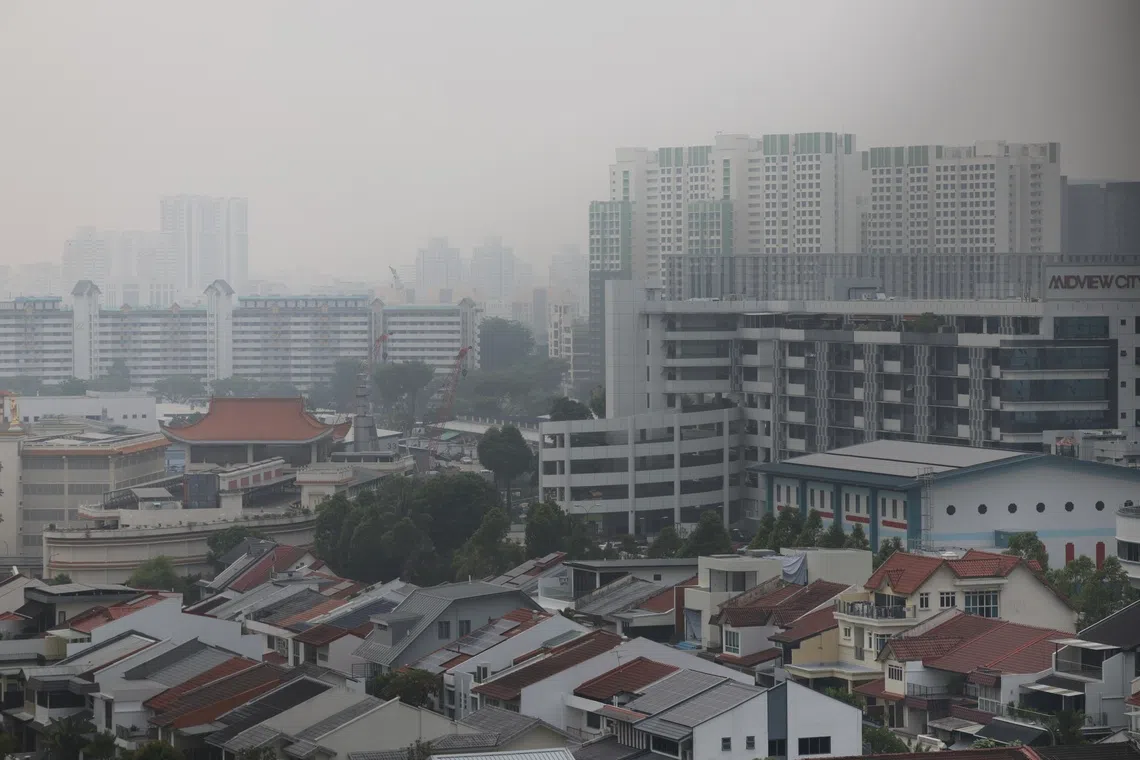
NEA has issued legal notices to 10 companies in Indonesia under Singapore’s Transboundary Haze Pollution Act.
Published Oct 20, 2026, 11:20 AM
Updated Oct 20, 2026, 11:20 AM
Singapore has issued notices to 10 Indonesian firms under the Transboundary Haze Pollution Act. NEA used satellite data, concession maps and weather information to trace fires that sent haze to Singapore.
Three firms are repeat offenders from 2015, and five are linked to Asia Pulp and Paper. Senior Minister K. Shanmugam said firms cannot hide behind complex structures or blame fires outside their concessions.
Greenpeace said several have kept burning since 2015.
SINGAPORE – As fires continue to rage across Indonesia, sending smoke haze to Singapore, the authorities here are putting more pressure on plantation companies to control and put out the fires on their land.
The National Environment Agency (NEA) has issued legal notices to 10 companies in Indonesia under Singapore’s Transboundary Haze Pollution Act, requesting them to stop burning on their land, and to submit plans on how they plan to prevent them from recurring.
The 10 firms have plantations in South Sumatra and Kalimantan – where most of the haze-causing hotspots are located.
Minister for Sustainability and the Environment Grace Fu said on Oct 16 that NEA used a combination of data points, including concession maps and satellite imagery, as well as information sourced from public avenues, to trace the source of some of the haze to several companies .
Satellite information, wind speed and direction and meteorological information are used to determine if the smoke from a fire is likely to move in the direction of Singapore.
Those guilty under the Act can be fined up to $100,000 a day, capped at a total of $2 million.
This is the second time this law was wielded against errant companies. In 2015, the last severe haze crisis to blanket South-east Asia, the NEA issued notices to six firms, and closed two cases. Investigations into the remaining four are still open.
The Straits Times’ checks showed that three of 10 firms were repeat offenders who were also issued notices in 2015.
On Oct 19, Senior Minister K. Shanmugam warned firms that they cannot hide behind complex corporate structures , nor attempt to shirk responsibility simply because the burning plantations are located in Indonesia while they are based in Singapore.
For instance, he said that companies cannot claim that the fires originated outside their plantations, but spread within their boundaries.
He added that if they do not cooperate, the Government will look at who they are linked to, before deciding on a course of action. And rather than tackle the individual concession holders, he said action will be taken against the large corporations behind them.
Beyond using the law, Shanmugam also said that Singapore will be exploring other mechanisms, including economic measures to exert pressure on complicit companies where it matters most, including on their bottom lines.
ST combed through corporate database records, company transparency documents and archival Indonesian news reports to learn more about these 10 entities.
Asia Pulp and Paper links
Of the 10 companies issued notices, four of them are officially linked to one of Indonesia’s largest pulp and paper companies, Asia Pulp and Paper (APP), which has a presence in Singapore .
The four are listed on APP’s website as being pulpwood suppliers to the company. A fifth company issued a notice this year, Baratama Putra Perkasa, may also have APP ties, according to past media reports, but public information on it is scant.
APP is part of the larger Sinar Mas conglomerate owned by the Widjaja family, which has businesses across eight different sectors, including in agroforestry, telecommunications, energy and real estate development.
According to APP’s financial statement for 2025, it recorded an operating profit of US$1.65 billion (S$2.11 billion).
APP had also come under fire for causing the haze back in 2015. That year, three of the six companies issued notices under Singapore’s haze law were APP-linked.
NEA’s actions in 2015 had prompted local supermarket chains to pull APP’s products from shelves, including its line of Paseo toilet rolls. These products have since returned, after receiving green certification from the Singapore Environment Council, which administers the Singapore Green Labelling Scheme.
This year, the same three firms were issued notices under the law again. They include Bumi Andalas Permai, Bumi Mekar Hijau and Sebangun Bumi Andalas Wood Industries. All three have plantations in South Sumatra.
A separate analysis by environmental watchdog Greenpeace Indonesia also found that these three firms “have been repeatedly burning since 2015”, said its forest campaigner Belgis Habiba.
She noted that in 2024, 11 South Sumatra residents, supported by Greenpeace and other organisations, filed a lawsuit against the three pulpwood companies over chronic smoke haze from fires in their concessions.
Habiba said: “This is solid evidence that APP has failed to ensure that its long-term suppliers comply with its commitment to prevent fires.
“Companies often try to escape responsibility by arguing that fires started outside their concessions. In fact, under strict liability in Indonesian environmental law, companies must take full responsibility if their concessions burn.”
Asked for its comments on the notices it was issued for its role in the 2026 haze crisis, an APP spokesperson said it maintains a “strict zero-burning policy” across its operations, including its supply chain.
“The presence of fires within a concession does not necessarily indicate that land was deliberately burned or that the concession holder was responsible for starting the fire.
“Fires can originate outside concession boundaries and spread into managed areas, making it important to establish their causes through proper investigation,” the spokesperson said.
When asked its comments about three of its suppliers being recalcitrant offenders, the spokesperson said it has invested to the tune of US$300 million in fire management since 2015. APP added that it remains committed to working with suppliers to continually improve fire prevention and compliance with zero-burning requirements.
Asked how APP acts against suppliers if they are found to use slash-and-burn land clearance mechanisms, the company said it will investigate first. If its suppliers are found to be non-compliant, then it will undertake corrective action, which potentially includes suspending or terminating the relationship if serious breaches are found.
1. Bumi Andalas Permai
Singapore link: Supplier to APP
Concessions in South Sumatra
The Indonesian firm, which lists its office address in South Sumatra, was one of those issued an NEA notice in 2015.
It has a working area spanning about 190,000ha – roughly 2½ times the size of Singapore – in South Sumatra, according to a corporate transparency document published in January 2026.
Business records indicate that this firm has a history of rapid executive turnover.
The current president director listed is Ahmad Rusdi.
But an earlier corporate transparency document in January 2023 listed an individual named Wagimin in that role, while in 2021, the president director was Sapto Nurlistyo. Sapto had held the position since at least 2015, when the firm was first issued a notice under the THPA.
Despite the rotating directorships, checks on corporate intelligence platform Sayari indicate the firm’s ultimate shareholding is linked to Lioe Tha Nen, an Indonesian national, with an address in West Jakarta.
Lioe is also listed in corporate records as the owner of several other pulpwood plantation companies that supply APP across West Kalimantan and Riau, though those additional entities were not named by NEA.
The second repeat offender is owned by Muliadi Sutjitro, who owns several other pulpwood plantation companies.
Its concession in South Sumatra measures approximately 250,000ha. This is about three times the size of Singapore.
Greenpeace Indonesia had in an Oct 5 report identified Bumi Mekar Hijau as the firm with the highest concentration of haze source points. In an update to ST, Greenpeace said there were 928 areas under its purview that contributed to the haze between Aug 8 and Oct 18.
3. Sebangun Bumi Andalas Wood Industries
This firm, known as SBA Wood Industries, was also issued an NEA notice in 2015.
The firm’s corporate transparency report published in January 2026 showed that it was granted a working area that spanned 136,525ha in South Sumatra. This is almost twice the size of Singapore.
Data from Sayari showed that its beneficial owner is currently an individual named Jelian Anak Kasim, whose address is listed as a luxury bungalow in Sabah.
His name, which follows the Iban tribes’ naming conventions, is also identified as being the owner of two other pulp plantation companies. The Iban tribes primarily reside in Sarawak, Malaysia.
The company’s January report identifies its president director as Ruzkia Rahman.
Between Aug 8 and Oct 18, 50 haze-source spots - where smoke originates - were found in its concessions.
4. Buana Megatama Jaya
Concessions in West Kalimantan
This APP supplier was issued an NEA notice for the first time for its link to the 2026 haze crisis.
Its corporate transparency records show that it manages a working area of 43,800ha. This is just slightly larger than half of Singapore.
It was ranked 17th in Greenpeace’s Oct 5 report that outlined the top 20 plantations with the most number of haze source points.
Business records list its beneficial owner as an Indonesian man named Mulyadi Gani.
His name appears as the beneficial owner of other pulpwood plantation firms, and in 2023, he was identified as the owner of Sebangun Bumi Andalas Wood Industries, another APP supplier which had been issued a notice under the THPA in 2015 and 2026.
Other haze-linked companies
5. Baratama Putra Perkasa
Singapore link: Personnel involved has links to APP; held directorships in Singapore
Concessions in Kalimantan
Also identified as being a source of haze in the Oct 5 Greenpeace report, this pulp plantation firm in Kalimantan lists Lee Mon Lun as its beneficial owner, with a Hong Kong address.
Other information about Baratama Putra Perkasa is not publicly available.
Singapore business records show Lee, a Chinese national, is a director of waste treatment company KL Resources in Loyang, which counts a Pan Yaw Cheng as a former director.
Lee’s name also appears in Cambodian business records as the director and chairman of the board for Greenrich Group, a logging company with operations in Cambodia . Pan is listed as a director.
Greenrich Group does not appear on APP’s website, but its public relations manager had in 2020 been quoted in Cambodian news outlets Khmer Times and Phnom Penh Post as saying that the firm is a subsidiary of APP.
6. Paramitra Mulia Langgeng
Singapore link: Key personnel of the parent company hold Singapore permanent residency status
Ranked 18th in Greenpeace’s report, with 14 active haze spots, Paramitra Mulia Langgeng is a subsidiary of the Sungai Budi Group – an agribusiness firm that ranks among one of Indonesia’s largest conglomerates – led by patriarch Oey Widarto.
On Jan 14, 2026, Paramitra Mulia Langgeng’s director, Djunaidi Nur, was sentenced to two years and four months in prison after pleading guilty to bribing an ex-president director of a state-owned forestry company, reported Indonesian media. The bribes, which amounted to about S$199,000, were delivered via an intermediary, who was an employee at the Sungai Budi Group.
Based on checks through corporate databases, Oey Widarto, as well as his nephew Santoso Winata – the vice-chairman of Sungai Budi Group – are Singapore PRs.
According to data from Indonesia’s Forest Ministry for the year 2022, Paramitra Mulia Langgeng had a concession size of 70,130ha in South Sumatra, which measures just slightly smaller than Singapore.
7. Sumatera Alam Anugerah
Singapore link: No records found
Ranked 14th by Greenpeace for the highest number of haze spots, Sumatera Alam Anugerah remains largely opaque in corporate databases, beyond a link to an individual named Sugeng Santoso. He is listed as its beneficial owner.
8. Hutan Lestari Raya
Singapore link: Key personnel hold Singapore permanent residency status
Concessions in the Bangka Belitung Islands
Hutan Lestari Raya was ranked fifth in Greenpeace’s list with 32 haze hotspots.
In 2025, residents in South Bangka Regency, located east of Sumatra, had called for the authorities to revoke the firm’s permit to manage 31,360ha of land. The permit was approved in 2016, and granted Hutan Lestari Raya 60 years of access.
Hutan Lestari Raya is linked to the Setiawan family, which runs the Topjaya Group.
The conglomerate primarily dealt in consumer electronics, becoming the main distributor for Toshiba products in Indonesia, before diversifying across several industries including palm oil, coal mining and trading.
The group’s chief executive and the director of Hutan Lestari Raya is Erik Setiawan, a Singapore PR.
According to Singapore business records, he incorporated the company Esse First in June 2004 to manage the trading and export of coal. The company was struck off in 2016.
He is also listed as a director for a Singapore firm providing sustainability consultancy services, and records indicate he still has a registered address at The Orchard Residences condominium.
Erik is also identified as being the beneficial owner of Istana Kawi Kencana, which was labelled as being responsible for deforestation on Bangka Island.
Sector: Pulp/Oil palm
Non-governmental organisation Forest Watch Indonesia reported in July 2024 that the country’s Ministry of Environment and Forestry had revoked Bangkanesia’s permit to run a plantation in 2022, although no reason was cited.
In 2023, local reports said the land had been converted into an oil palm plantation, although it is unclear who had taken control of it.
There was also no information regarding its ownership structure on corporate databases.
A palm oil plantation company with concessions in Kalimantan, Mananjung Hayak’s beneficial owner is listed as Indonesian agribusiness and palm oil company Dwi Mitra Adhiusaha.
Provincial documents and corporate records list Nadia Putri Asrini Jenie as being the owner of Dwi Mitra Adhiusaha, as well as Sapta Karya Damai, which are palm oil plantation firms under the umbrella of the Asam Jawa group.
Additional reporting by Shabana Begum and David Sun
Aqil Hamzah is a transport journalist at The Straits Times. He is also interested in issues related to crime and technology.
National Environment Agency
新加坡国家环境局 (NEA) 已根据新加坡《跨境烟霾污染法》向印尼的 10 家公司发出法律通知。
发布于2026年10月20日上午11:20
更新于2026年10月20日上午11:20
新加坡已根据《跨境烟霾污染法》向10家印尼公司发出通知。国家环境局利用卫星数据、特许经营地图和气象信息追踪了导致新加坡出现烟霾的火灾源头。
三家公司是2015年的惯犯,五家与亚洲浆纸业公司有关联。高级部长尚穆根表示,企业不能躲在复杂的组织架构背后,也不能将火灾归咎于特许经营区之外。
绿色和平组织表示,其中一些火点自 2015 年以来一直在燃烧。
新加坡——随着印尼各地火灾持续肆虐,烟雾飘向新加坡,新加坡当局正加大力度向种植园公司施压,要求其控制并扑灭其土地上的火灾。
新加坡国家环境局 (NEA) 根据新加坡《跨境烟霾污染法》向印度尼西亚的 10 家公司发出法律通知,要求它们停止在其土地上焚烧,并提交防止此类事件再次发生的计划。
这 10 家公司在南苏门答腊和加里曼丹拥有种植园——而这两个地方正是造成雾霾的热点地区。
永续及环境部长傅海燕于10月16日表示,国家环境局利用特许经营地图、卫星图像等数据点,以及来自公共渠道的信息,追溯到部分雾霾的来源是几家公司。
利用卫星信息、风速和风向以及气象信息来确定火灾产生的烟雾是否可能向新加坡方向飘移。
根据该法案,违法者每天最高可被处以 10 万美元的罚款,最高罚款总额可达 200 万美元。
这是该法律第二次被用于处罚违规企业。2015年,东南亚地区遭遇上一次严重的雾霾危机,当时国家环境局向六家公司发出通知,并结案两起。对其余四家公司的调查仍在进行中。
《海峡时报》的调查显示,10 家公司中有 3 家是屡犯者,在 2015 年也曾收到过通知。
10 月 19 日,高级部长尚穆根警告各公司,他们不能躲在复杂的公司结构背后,也不能仅仅因为燃烧的种植园位于印度尼西亚而公司总部设在新加坡就试图推卸责任。
例如,他表示,企业不能声称火灾起源于其种植园之外,而是在其边界内蔓延。
他补充说,如果他们不合作,政府将调查他们的关联方,然后再决定采取何种行动。他还表示,政府不会针对个别特许经营者,而是会对背后的大型企业采取行动。
除了运用法律手段外,尚穆根还表示,新加坡将探索其他机制,包括经济措施,以在最关键的地方(包括企业的盈利)向涉案企业施加压力。
ST 仔细查阅了公司数据库记录、公司透明度文件和印尼新闻档案报道,以了解更多关于这 10 个实体的信息。
亚洲浆纸业链接
在收到通知的 10 家公司中,有 4 家与印度尼西亚最大的纸浆和造纸公司之一——亚洲浆纸业(APP)有正式关联,该公司在新加坡设有分支机构。
这四家公司均被APP列为其纸浆木材供应商,并在APP的网站上公布。据以往媒体报道,今年早些时候发布公告的第五家公司Baratama Putra Perkasa也可能与APP存在关联,但关于该公司的公开信息很少。
APP隶属于维贾亚家族拥有的更大的金光集团,该集团的业务遍及八个不同的领域,包括农林业、电信、能源和房地产开发。
根据 APP 2025 年的财务报表,其营业利润为 16.5 亿美元(21.1 亿新元)。
APP 也曾因在 2015 年造成雾霾而受到抨击。那一年,根据新加坡雾霾法发出通知的六家公司中,有三家与 APP 有关联。
2015年,新加坡国家环境局(NEA)的举措导致本地连锁超市将APP的产品下架,其中包括其旗下的Paseo系列卫生纸。这些产品在获得新加坡环境理事会(负责管理新加坡绿色标签计划)的绿色认证后,已重新上架。
今年,这三家公司再次被依法发出通知。它们包括 Bumi Andalas Permai、Bumi Mekar Hijau 和 Sebangun Bumi Andalas Wood Industries。这三个人都在南苏门答腊岛拥有种植园。
绿色和平组织印尼分部的另一项分析也发现,这三家公司“自 2015 年以来一直在反复焚烧森林”,该组织的森林活动家贝尔吉斯·哈比巴 (Belgis Habiba) 表示。
她指出,2024 年,11 名南苏门答腊居民在绿色和平组织和其他组织的支持下,对三家纸浆木材公司提起诉讼,指控其特许经营区内的火灾造成长期烟雾污染。
哈比巴表示:“这有力地证明,APP未能确保其长期供应商遵守其防止火灾的承诺。
“企业常常试图以火灾发生在特许经营区之外为由逃避责任。但事实上,根据印尼环境法的严格责任原则,如果特许经营区发生火灾,企业必须承担全部责任。”
针对因其在 2026 年雾霾危机中所扮演的角色而收到的通知,APP 的一位发言人表示,该公司在其所有运营活动(包括其供应链)中都坚持“严格的零燃烧政策”。
“特许经营区内发生火灾并不一定表明土地是被故意焚烧的,或者特许经营权持有人应对火灾负责。
发言人表示:“火灾可能起源于特许经营区边界之外,并蔓延到管理区内,因此通过适当的调查确定火灾原因非常重要。”
当被问及对三家供应商屡次违规一事有何评论时,发言人表示,自2015年以来,该公司已在消防管理方面投资了3亿美元。APP补充说,公司将继续致力于与供应商合作,不断改进防火措施,并确保其遵守零燃烧要求。
当被问及如果发现供应商使用刀耕火种的方式清理土地,APP将采取何种措施时,该公司表示会首先进行调查。如果发现供应商不合规,APP将采取纠正措施,如果发现严重违规行为,则可能包括暂停或终止合作关系。
1. 安达拉斯·佩尔迈
新加坡链接:APP供应商
南苏门答腊的特许经营权
这家印尼公司将其办公地址登记在南苏门答腊,是 2015 年被国家环境局 (NEA) 发出通知的公司之一。
根据2026年1月发布的一份企业透明度文件显示,该公司在南苏门答腊的工作区域占地约190,000公顷,大约是新加坡面积的2.5倍。
商业记录显示,这家公司历来高管更迭频繁。
现任总裁是艾哈迈德·鲁斯迪。
但2023年1月的一份早期企业透明度文件显示,担任该职务的是Wagimin,而2021年,总裁是Sapto Nurlistyo。Sapto至少从2015年起就担任该职位,当时该公司首次根据《电信监管法》(THPA)收到通知。
尽管公司董事轮换,但对企业情报平台 Sayari 的调查显示,该公司的最终持股与居住在西雅加达的印度尼西亚公民 Lioe Tha Nen 有关。
公司记录显示,Lioe 还拥有其他几家纸浆木材种植园公司,这些公司向西加里曼丹和廖内省的 APP 供货,但 NEA 没有透露这些其他实体的名称。
第二名惯犯的所有者是穆利亚迪·苏吉特罗,他拥有其他几家纸浆木材种植园公司。
该公司在南苏门答腊的特许经营面积约为25万公顷,大约是新加坡面积的三倍。
绿色和平组织印尼分部在10月5日的一份报告中指出,Bumi Mekar Hijau公司是雾霾源头最集中的公司。绿色和平组织在向《海峡时报》更新的信息中表示,在其管辖范围内,8月8日至10月18日期间共有928个区域造成了雾霾。
3. Sebangun Bumi Andalas 木材工业公司
这家名为 SBA Wood Industries 的公司在 2015 年也收到了 NEA 通知。
该公司于2026年1月发布的企业透明度报告显示,其在南苏门答腊获批的作业区域面积达136,525公顷,几乎是新加坡面积的两倍。
Sayari 的数据显示,其受益所有人目前是 Jelian Anak Kasim,其地址登记为沙巴的一栋豪华别墅。
他的名字遵循伊班族的命名习俗,据称他还是另外两家纸浆种植园公司的所有者。伊班族主要居住在马来西亚沙捞越州。
该公司一月份的报告显示,其总裁是鲁兹基娅·拉赫曼。
8 月 8 日至 10 月 18 日期间,在其特许经营区内发现了 50 个烟雾源头(烟雾的来源地)。
4. 布阿纳·梅加塔玛·贾亚
西加里曼丹的特许经营权
这是该应用程序供应商首次因与 2026 年雾霾危机有关而被国家环境局发出通知。
其企业透明度记录显示,该公司管理的作业区域面积为43800公顷,略大于新加坡面积的一半。
在绿色和平组织 10 月 5 日发布的报告中,该种植园排名第 17 位,该报告列出了雾霾源头最多的 20 个种植园。
商业记录显示,其实际受益所有人为一名名叫穆利亚迪·加尼的印度尼西亚男子。
他的名字出现在其他纸浆木材种植园公司的受益所有人名单中,2023 年,他被确认为 Sebangun Bumi Andalas Wood Industries 的所有者,该公司是另一家 APP 供应商,曾于 2015 年和 2026 年根据《THPA》收到通知。
其他与雾霾有关的公司
5. 巴拉塔玛·普特拉·佩尔卡萨
新加坡关联:涉事人员与APP有关联;曾在新加坡担任董事职务。
加里曼丹的特许经营权
在 10 月 5 日绿色和平组织的报告中,这家位于加里曼丹的纸浆种植园公司也被认定为雾霾的来源之一。该公司的实际受益所有人为李孟伦,地址为香港。
关于巴拉塔玛·普特拉·佩尔卡萨的其他信息尚未公开。
新加坡商业记录显示,李某(Lee)是中国公民,他是位于洛阳的废物处理公司 KL Resources 的董事,该公司前董事为潘耀成(Pan Yaw Cheng)。
李的名字也出现在柬埔寨的商业记录中,他是格林里奇集团(一家在柬埔寨开展业务的伐木公司)的董事兼董事长。潘也被列为董事。
Greenrich Group 没有出现在 APP 的网站上,但其公关经理曾在 2020 年接受柬埔寨新闻媒体《高棉时报》和《金边邮报》采访时表示,该公司是 APP 的子公司。
6. 帕拉米特拉·穆利亚·朗根
新加坡关联:母公司关键人员持有新加坡永久居留权
根据绿色和平组织的报告,Paramitra Mulia Langgeng 排名第 18 位,有 14 个活跃的雾霾点。它是 Sungai Budi 集团的子公司,该集团是一家农业综合企业,位列印度尼西亚最大的企业集团之一,由 Oey Widarto 领导。
据印尼媒体报道,2026年1月14日,Paramitra Mulia Langgeng公司的董事Djunaidi Nur因贿赂一家国有林业公司前总裁而被判处两年零四个月监禁。贿赂金额约为19.9万新元,是通过一名Sungai Budi集团的员工作为中间人进行的。
根据企业数据库的核查,Oey Widarto 以及他的侄子 Santoso Winata(Sungai Budi 集团副主席)都是新加坡永久居民。
根据印度尼西亚森林部 2022 年的数据,Paramitra Mulia Langgeng 在南苏门答腊的特许经营面积为 70,130 公顷,略小于新加坡。
7. Sumatera Alam Anugerah
新加坡链接:未找到记录
根据绿色和平组织的排名,Sumatera Alam Anugerah公司因雾霾点数量最多而位列第14位。该公司在企业数据库中的信息仍然十分不透明,除了与一位名叫Sugeng Santoso的个人有关联外,几乎没有其他信息。Sugeng Santoso被列为该公司的实际受益人。
8. 森林之光
新加坡关联:关键人员持有新加坡永久居留权
邦加勿里洞群岛的租界
在绿色和平组织的排名中,Hutan Lestari Raya 共有 32 个雾霾热点地区,位列第五。
2025年,位于苏门答腊岛东部的南邦加县居民呼吁当局撤销该公司管理31360公顷土地的许可证。该许可证于2016年获得批准,授予Hutan Lestari Raya公司60年的使用权。
Hutan Lestari Raya 与经营 Topjaya 集团的 Setiawan 家族有联系。
该集团最初主要从事消费电子产品业务,成为东芝产品在印度尼西亚的主要分销商,之后业务多元化发展,涉足棕榈油、煤炭开采和贸易等多个行业。
该集团的首席执行官兼 Hutan Lestari Raya 董事是新加坡公关 Erik Setiawan。
根据新加坡商业记录,他于2004年6月注册成立了Esse First公司,从事煤炭贸易和出口业务。该公司于2016年注销。
他还被列为一家提供可持续发展咨询服务的新加坡公司的董事,记录显示他的注册地址仍然是乌节路公寓。
埃里克还被认定为 Istana Kawi Kencana 的实际受益所有人,该机构被指控应对邦加岛的森林砍伐负责。
行业:纸浆/油棕
非政府组织“森林观察印尼”在 2024 年 7 月报告称,该国环境和林业部已撤销了 Bangkanesia 公司在 2022 年经营种植园的许可证,但没有给出任何理由。
2023 年,当地报道称这片土地已被改造成油棕种植园,但目前尚不清楚是谁接管了这片土地。
企业数据库中也没有关于其所有权结构的信息。
Mananjung Hayak 是一家在加里曼丹拥有特许经营权的棕榈油种植园公司,其受益所有人登记为印度尼西亚农业综合企业和棕榈油公司 Dwi Mitra Adhiusaha。
省政府文件和公司记录显示,Nadia Putri Asrini Jenie 是 Dwi Mitra Adhiusaha 和 Sapta Karya Damai 的所有者,这两家公司都是 Asam Jawa 集团旗下的棕榈油种植园公司。
Shabana Begum 和 David Sun 亦有报道。
阿基尔·哈姆扎是《海峡时报》的交通记者。他也对犯罪和科技相关议题感兴趣。
国家环境局