Celebrate longer lives and harness the opportunities that come with it: Indranee庆祝更长的寿命,并把握随之而来的机遇:英德拉妮
Indranee says Singapore must harness longevity as a national advantage, with healthy ageing, age-friendly neighbourhoods and lifelong skills. Read more at straitstimes.com.
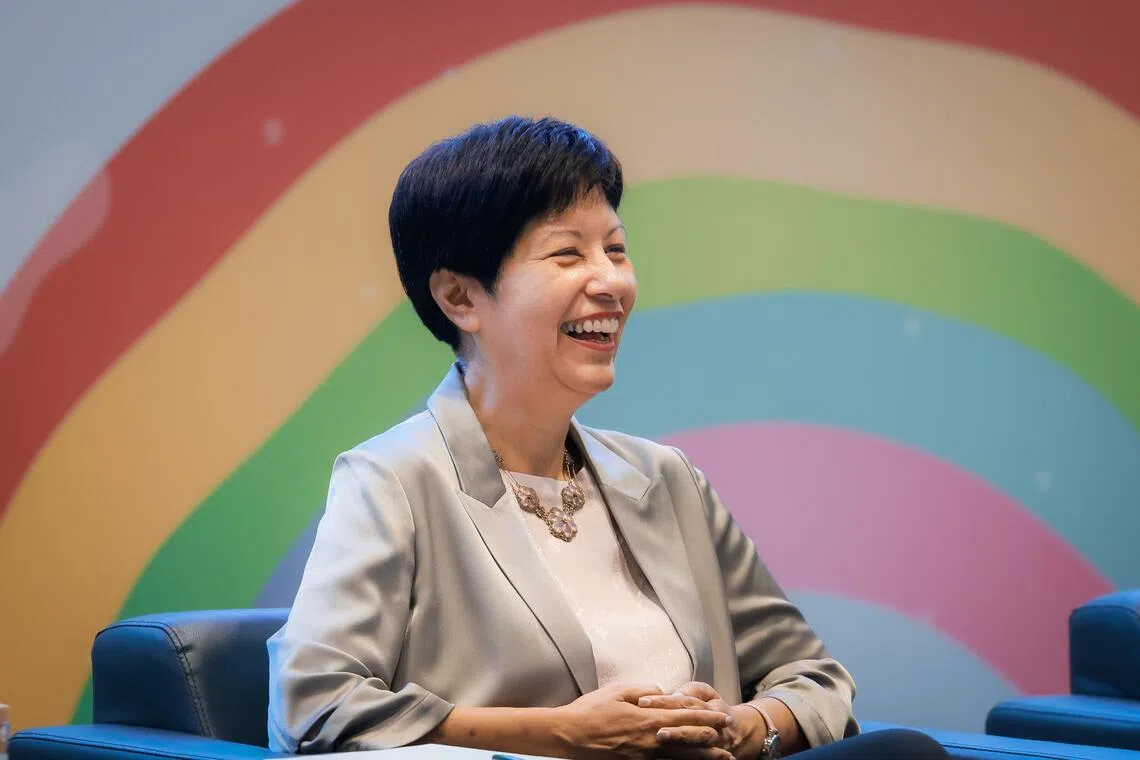
Minister in the Prime Minister’s Office Indranee Rajah said living well is important when it comes to ageing.
Published Oct 20, 2026, 05:35 PM
Updated Oct 20, 2026, 05:36 PM
Singapore’s longer life expectancy is a national success, but Indranee Rajah said the gain must become an advantage, not a strain, as the country becomes super-aged in 2026.
She outlined three priorities: better health care and long-term care, age-friendly neighbourhoods, and stronger life-long resilience in health, money and skills.
She also said longevity creates economic opportunities, with older people able to keep contributing, while new products and services can support healthier, longer lives.
SINGAPORE – Under the right circumstances, living longer can be a national advantage , said Minister in the Prime Minister’s Office Indranee Rajah.
“The fact that Singaporeans are living longer is one of our greatest national achievements,” she said, and it is a reflection of decades of progress in healthcare, education, housing, public health and economic development.
“A super-aged society is one with more people who possess decades of accumulated experience, knowledge, and social capital. These are people who have spent years building careers, raising families, mentoring others, and contributing to their communities, who can continue doing so for as long as they remain healthy and active.”
A society is described as super-aged when at least 21% of its population is aged 65 and above. Singapore reached this milestone in 2026 .
The life expectancy at birth for Singapore residents in 2025 was 83.9 years, among the world’s highest .
Indranee, who is also Second Minister for Finance and National Development, said Singapore should celebrate this increase in longevity and harness it well.
“Now that we have crossed that threshold and a super-aged society is no longer just something we talk about but is in fact a reality, we need to continue asking the tough questions: what must be true for this longevity to become an advantage rather than a strain?”
The advantage is not automatic, she said.
“It depends on whether the extra years lived are spent in good health, and on whether we prepare seniors for this early enough.”
The gap between life expectancy and healthy life expectancy in Singapore is about 11 years , with over a decade spent in poor health.
She was delivering her keynote address at the Singapore Management University (SMU), where she launched an annual symposium by the Centre for Research on Successful Ageing (ROSA) on Oct 20.
She suggested three areas to building a “longevity society”, where people can lead long, healthy and active lives.
First, Singapore is building the foundations for healthy and active longevity through preventive health and accessible long-term care.
To unlock the benefits of longevity, additional years must be years lived in good health. To this end, Singapore has shifted from treating illness to promoting well-being through preventive care, stronger community-based support and meaningful social connections, she said.
Through the national preventative healthcare initiative Healthier SG , residents are encouraged to take proactive steps to manage their health, prevent chronic disease and adopt healthier lifestyles before serious health problems develop.
For healthier seniors, the Government continues to expand Active Ageing Centres , which provide opportunities for social participation, lifelong learning, exercise and volunteerism.
It has also expanded Community Health Posts so that residents can access health screening, health monitoring and chronic disease support closer to home.
As for seniors with care needs, Singapore is broadening the range of community and home-based options available, including initiatives such as Community Care Apartments , Shared Stay-in Senior Caregiving Services and enhanced Home Personal Care.
Secondly, Singapore is creating neighbourhoods and built environments that are age-friendly. This involves finding ways to make neighbourhoods more accessible, inclusive and supportive of ageing in place.
To adapt the built environment to make everyday living safer and more convenient for seniors, there are programmes like the Enhancement for Active Seniors (EASE) which helps seniors move around their homes more safely through features such as grab bars, ramps and slip resistant flooring.
There is also the Silver Upgrading Programme , which helps seniors age-in-place more comfortably with amenities like therapeutic gardens and barrier-free access ramps.
Road crossings and pedestrian infrastructure are also redesigned to make roads safer and more convenient for seniors, as part of the Friendly Streets initiative .
Singapore is also piloting a more integrated approach through Age Well Neighbourhoods , where healthcare services, active ageing programmes, homebased services and age-friendly infrastructure are integrated as part of a connected neighbourhood ecosystem.
Third, the Republic needs to strengthen resilience across the course of life so that Singaporeans are better prepared for longer lives, Indranee said, adding that preparing for longevity must start much earlier in life.
The Government recognises this need for earlier planning, and has been taking steps to support Singaporeans across health, financial and skills resilience, she noted.
She added during a panel discussion that the Government has introduced the cohort system, where different support is given to the Pioneer and Merdeka Generations when needed. This is on top of other schemes like the national health insurance scheme MediShield Life.
To build skills resilience, initiatives such as the SkillsFuture MidCareer Credit and SkillsFuture Mid-Career Training Allowance support Singaporeans aged 40 and above in upskilling and reskilling.
Indranee, who chairs the inter-agency Marriage and Parenthood Reset Workgroup to help Singaporeans as they navigate marriage and parenthood, noted that retirees can help with backfilling as people are making use of the increased childcare leave to take care of their children or family.
The Government is looking into the fractionalisation of work, where the work is broken into smaller pieces and time periods.
“Retirees would be very suitable because they may not necessarily want to work for all of the time,” she said, adding that the Manpower Ministry is doing a study on this.
Longevity also creates new economic opportunities, she pointed out , citing a recent report by SMU and social enterprise and longevity consultancy Ageing Asia . It estimated that across 14 Asia-Pacific markets, there will be 733 million people aged 60 and above, holding US$7.1 trillion in savings.
This means opportunities for new products, services and business models that support longer and healthier lives.
Indranee told some 200 members of the audience that living well is important when it comes to ageing.
Stay healthy, stay connected and engaged, whether it is learning online or meeting people, she said. Finding purpose or doing something useful are key.
“What’s important is to know that in your retirement, you can still make a difference, and you can because there is so much that seniors can contribute.”
Chin Soo Fang is senior correspondent at The Straits Times, covering a wide range of topics including community, politics, social issues, consumer, culture and heritage.
SMU/Singapore Management University
总理公署部长英兰妮·拉贾表示,健康生活对于老年生活至关重要。
发布于 2026 年 10 月 20 日下午 5:35
更新于2026年10月20日下午5:36
新加坡预期寿命延长是一项国家成就,但英兰妮·拉贾表示,随着新加坡在 2026 年进入超老龄化时期,这一成就必须成为优势,而不是负担。
她概述了三个优先事项:更好的医疗保健和长期护理、老年友好型社区以及在健康、金钱和技能方面更强的终身适应能力。
她还表示,长寿创造了经济机会,老年人能够继续做出贡献,而新的产品和服务可以支持更健康、更长寿的生活。
新加坡——总理公署部长英兰妮·拉贾表示,在合适的条件下,寿命延长可以成为国家的优势。
“新加坡人寿命延长是我们国家最伟大的成就之一,”她说,“这反映了数十年来我们在医疗保健、教育、住房、公共卫生和经济发展方面取得的进步。”
“超老龄化社会是指拥有更多积累了数十年经验、知识和社会资本的人口的社会。这些人多年来致力于事业发展、养育子女、指导他人并为社区做出贡献,只要他们保持健康和活力,就能继续这样做。”
当一个社会中至少有21%的人口年龄在65岁及以上时,就被称为超老龄化社会。新加坡在2026年达到了这一里程碑。
2025年新加坡居民的预期寿命为83.9岁,位居世界最高之列。
新加坡财政部兼国家发展部第二部长英兰妮表示,新加坡应该庆祝预期寿命的延长,并好好利用这一优势。
“既然我们已经跨过了那道门槛,超老龄化社会不再只是我们谈论的事情,而实际上已经成为现实,我们就需要继续提出一些棘手的问题:要让长寿成为一种优势而不是一种负担,必须满足哪些条件?”
她表示,这种优势并非与生俱来。
“这取决于老年人多活的岁月是否健康度过,以及我们是否及早为老年人做好准备。”
新加坡的预期寿命与健康预期寿命之间相差约 11 年,其中超过十年处于不健康状态。
10 月 20 日,她在新加坡管理大学 (SMU) 发表了主题演讲,并启动了由成功老龄化研究中心 (ROSA) 主办的年度研讨会。
她提出了构建“长寿社会”的三个领域,在这个社会中,人们可以过上长寿、健康和积极的生活。
首先,新加坡正通过预防保健和便捷的长期护理,为健康长寿奠定基础。
她表示,要充分发挥长寿的益处,增加的寿命必须是健康长寿的寿命。为此,新加坡已从治疗疾病转向通过预防保健、加强社区支持和建立有意义的社会联系来促进健康。
通过国家预防保健计划“更健康的新加坡”,鼓励居民采取积极措施管理自身健康,预防慢性疾病,并在出现严重健康问题之前养成更健康的生活方式。
为了让老年人身体更健康,政府继续扩大“活力长者中心”,为老年人提供参与社会活动、终身学习、锻炼和志愿服务的机会。
它还扩大了社区卫生站的规模,以便居民能够在离家更近的地方获得健康筛查、健康监测和慢性病支持服务。
对于有照护需求的老年人,新加坡正在扩大社区和居家照护的选择范围,包括社区照护公寓、共享居家养老照护服务和加强型居家个人照护等举措。
其次,新加坡正在打造适老型社区和建筑环境。这包括探索如何让社区更方便老年人出入、更具包容性,并支持老年人居家养老。
为了改造建筑环境,使老年人的日常生活更安全、更方便,出现了诸如“增强老年人活力计划”(EASE)之类的项目,该计划通过扶手、坡道和防滑地板等设施,帮助老年人在家中更安全地活动。
此外,还有“银发升级计划”,该计划通过提供治疗花园和无障碍坡道等设施,帮助老年人更舒适地居家养老。
作为“友好街道”计划的一部分,道路交叉口和行人基础设施也进行了重新设计,使道路对老年人来说更安全、更方便。
新加坡也在通过“乐龄邻里”试点一种更加综合的方法,将医疗保健服务、积极老龄化计划、居家服务和适老基础设施整合到一个相互联系的邻里生态系统中。
第三,英德拉妮表示,新加坡共和国需要加强人们一生各个阶段的适应能力,以便新加坡人更好地为更长的寿命做好准备,并补充说,为长寿做好准备必须从更早的人生阶段就开始。
她指出,政府认识到需要更早进行规划,并已采取措施在健康、财务和技能方面为新加坡人提供支持,增强他们的韧性。
她在小组讨论中补充说,政府已经推出了群体扶持制度,根据不同情况为建国一代和独立一代提供不同的扶持。此外,政府还推出了其他计划,例如国民健康保险计划终身健保计划(MediShield Life)。
为了增强技能韧性,诸如“技能创前程中期职业技能补助”和“技能创前程中期职业技能培训津贴”等举措,旨在支持40岁及以上的新加坡人提升技能和重新学习技能。
担任跨部门婚姻与育儿重置工作组主席的英兰妮指出,由于人们利用增加的育儿假来照顾孩子或家人,退休人员可以帮助填补空缺。该工作组旨在帮助新加坡人应对婚姻和育儿问题。
政府正在研究工作碎片化,即将工作分解成更小的部分和时间段。
“退休人员非常合适,因为他们可能并不想一直工作,”她说道,并补充说人力部正在就此进行研究。
她指出,长寿也创造了新的经济机遇,并援引了新加坡管理大学(SMU)和社会企业及长寿咨询机构“亚洲老龄化”(Ageing Asia)最近的一份报告。该报告估计,亚太地区14个市场将有7.33亿60岁及以上的人口,他们拥有7.1万亿美元的储蓄。
这意味着有机会推出新的产品、服务和商业模式,从而支持更长寿、更健康的生活。
英德拉妮告诉现场约200名观众,好好生活对于衰老至关重要。
她表示,要保持健康,保持联系,积极参与各种活动,无论是线上学习还是与人见面。找到人生目标或做一些有用的事情至关重要。
“重要的是要知道,即使退休了,你仍然可以有所作为,因为老年人可以做出很多贡献。”
Chin Soo Fang 是《海峡时报》的资深记者,报道范围广泛,包括社区、政治、社会问题、消费者、文化和遗产等话题。
新加坡管理大学