Haze running dos and don’ts for outdoor runners in Singapore新加坡户外跑者在雾霾天气跑步的注意事项
Haze and running: why tracking PSI and PM2.5 is not enough for outdoor runners Read more at straitstimes.com.
新闻视频
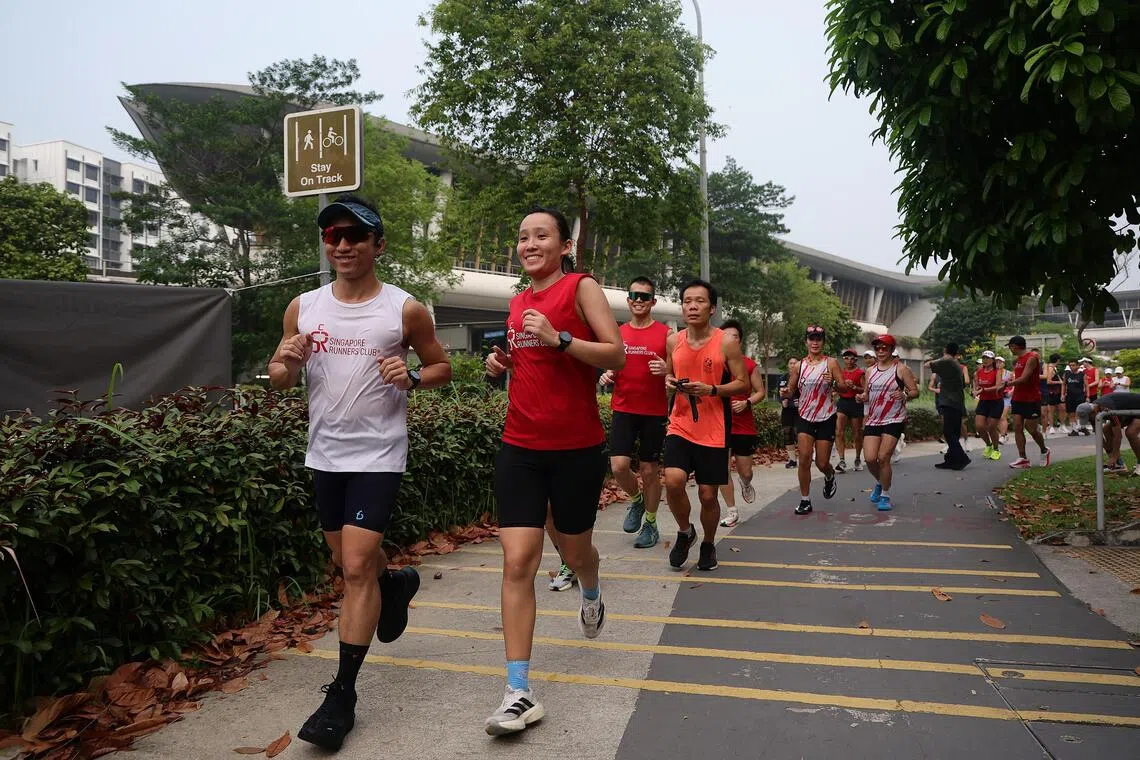
The Singapore Runners Club shifted its Oct 17 morning run from VivoCity to Canberra, as hourly PM2.5 readings have been lower in the north.
Published Oct 20, 2026, 12:15 PM
Updated Oct 20, 2026, 03:27 PM
Poor air quality has forced Singapore runners to cancel, shorten, or move training.
Doctors say haze can inflame airways, worsen breathing, and raise heart risks. They advise runners to stop outdoor exercise when air quality is unhealthy.
Runners are using indoor gyms, malls, and easier runs instead. Organisers are watching NEA advisories and may cancel races if haze conditions do not improve.
SINGAPORE – Jileen Tan is training for a personal best race time, but has had to cancel outdoor runs over the past two weeks because of poor air quality.
Singapore recorded unhealthy 24-hour Pollutant Standards Index (PSI) readings daily from Oct 5 to 17. Hourly readings of fine particulate matter of 2.5 microns or less in diameter (PM2.5) in size were elevated or high.
Tan, a 62-year-old secretary, now wonders whether she will be able to complete the 21.1km half-marathon in under two hours at the Standard Chartered Hong Kong Marathon in January 2027.
She had hired a personal trainer to help her achieve this goal, but can no longer adhere to her original training plan, which includes outdoor runs of 14km to 16km.
“I love to run outdoors and I miss it,” she says. “But I have to accept the situation.”
Many avid runners and those training for upcoming races have found their outdoor exercise hobbled by the haze.
Running when outdoor air quality is poor can irritate the airways and cause lung inflammation, as well as potentially trigger cardiac arrest, doctors say. Increased thirst and watering eyes can also make running more difficult.
Yet, some runners are still trying to get their outdoor fix by wearing masks, running at a slower pace or over shorter distances, and by tracking the hourly PM2.5 readings across the island and shifting their runs to areas where the air quality is better.
Not all these hacks help, say doctors. Here is what outdoor runners should keep in mind.
Haze can inflame airways, trigger cardiac arrest
Adrian Poh, medical director of the HMI OneCare Clinic chain, says people should postpone or cancel their usual outdoor exercise when air quality is unhealthy, as PM2.5 can penetrate the lungs and affect the airways.
Respiratory irritation and inflammation cause throat irritation, coughing, wheezing or chest tightness.
Increases in PM2.5 readings were associated with higher chances of out-of-hospital cardiac arrest in the first two days after exposure, according to data from emergency doctors and public health specialists in Singapore published in 2018 and again in 2022.
PM2.5 particles are retained in the lungs and not cleared by the usual mechanisms, Poh adds. This triggers oxidative stress and can lead to airway and lung injury. The airways and lungs become more susceptible to infection, and over time, lung function may be impaired.
“If your usual running pace feels harder, don’t push through,” he says. “The haze could be contributing to extra strain.”
Jill Lim, 33, has found it harder to breathe during her usual runs. The public servant is a pacer for the Singapore Runners Club (SGRC), a social running club whose members train and run together several times a week.
The club tracks hourly PM2.5 readings before deciding whether or not to hold a scheduled run. Lim says that even when the readings are just above 55, in the elevated but not yet unhealthy range, she finds it harder to breathe during intense training like interval runs.
“I feel a difference, compared with my usual sessions,” she says. “My breathing is definitely heavier.”
She has switched to easy runs rather than speedy bursts of interval training. “Now is definitely not a good time to do interval training outdoors,” she says.
Track PSI readings, shorten or cancel runs
Runners and event organisers are tracking the haze and referring to government advisories to cancel, postpone or modify runs.
SGRC, for example, shifted its Oct 17 morning run from VivoCity to Canberra, as hourly PM2.5 readings have been lower in the north. About 30 runners turned up for the 30-minute easy run.
On Oct 24, the club will move its run indoors and do eight or 10 loops of Marina Square mall instead, before shops open. The mall first opened its space to runners on Oct 17 , when about 15 enthusiasts from the community running group X-Run Singapore logged mileage of up to 19km.
Those who registered for running events in the last quarter of 2026 are still training, but some remain uncertain about whether their races will proceed.
Scheduled for Oct 25 are the POSB PAssion Run for Kids 2026 and the Garmin Run Marathon Series – Singapore.
Organisers of both events say they are monitoring PSI levels and advisories from the National Environment Agency.
Participants of the POSB PAssion Run for Kids will learn by noon on Oct 24 whether the race is on or cancelled.
Organisers of the Garmin Run will let registered participants know by 11pm on Oct 24 whether the race is cancelled.
The Great Eastern Women’s Run 2026, originally scheduled for Nov 1, was cancelled on Oct 16. Organisers cited the uncertain haze outlook in an Instagram post that day.
Organisers of the BYD Singapore International Marathon presented by adidas, which is on from Dec 4 to 6, say that training runs continue, though some have been shortened or cancelled because of the haze.
Lion City Road Runners is a weekly training programme that helps runners build up their mileage ahead of the BYD marathon. On Oct 10, planned distances of 24km and 18km were reduced to 12km and 9km, respectively. The Oct 17 session was cancelled.
The Oct 10 training sessions of Lion City Road Runners were shortened amid the haze. PHOTO: BYD SINGAPORE INTERNATIONAL MARATHON
The Oct 10 training sessions of Lion City Road Runners were shortened amid the haze.
PHOTO: BYD SINGAPORE INTERNATIONAL MARATHON
Leon Lai, chief executive of SG International Marathon, which is organising the BYD Singapore International Marathon, says: “While we recognise that runners are preparing for their races in December, their health and safety must take precedence over training mileage.”
Running with an N95 mask not foolproof
Jack Seow, 35, has worn a surgical or cloth mask for his outdoor runs since the Covid-19 pandemic. In September, he switched to a KF94 mask, which filters 94% of haze particles, similar to the N95.
“I make sure to wear it tight and properly,” says the senior operations executive in market research.
He is “not a fan of indoor treadmills” and keeps his runs shorter, easier and in green spaces to reduce exposure to the haze.
He sometimes has to remove the mask and readjust it during a run, but says he usually completes the workout without removing it.
Poh says that wearing an N95 mask to run outdoors is not necessarily foolproof.
A well-fitted N95 mask with a good seal can filter 95% of airborne particles, but may not be comfortable or safe during vigorous exercise like running, he says.
“An N95 mask adds resistance to airflow, which makes breathing more laboured,” he says. This causes extra strain for people with existing lung and heart conditions.
“My advice is not to rely on an N95 mask to justify running outdoors in the haze when the air quality is bad,” he adds.
Train indoors with care
When the haze made it dangerous to run outdoors in early October, Justina Zeng, 44, signed up for a six-month membership at a private fitness chain.
Zeng, who works in banking, is training for a marathon in Hanoi in November, and for the BYD Singapore International Marathon.
“Desperate times call for desperate measures,” she says with a laugh.
She prefers to run outdoors and is concerned that training in air-conditioning will make it harder for her to run outdoors during the actual races.
“I’m worried I won’t be acclimatised to the environment,” she says.
Poh advises moving exercise indoors during this period of haze, especially if the indoor area is well filtered and well ventilated.
Air-conditioner filters alone cannot filter out PM2.5 particles effectively, but the building serves as a barrier to haze particles. A ventilation system can also keep outdoor air pollution from entering the gym.
“It is best to have an air purifier. If not, closing the windows and turning on the air-con or fan is the next best alternative,” Poh adds.
He cautions that outdoor air may still accumulate indoors if there are poor window seals or poor ventilation.
People with chronic heart or lung conditions, and other vulnerable groups, should take care when exercising.
Try resistance bands, push-ups, static and dynamic stretches, and balance-training routines that can be easily done at home, Poh suggests.
With outdoor runs out of the question, Tan consulted her trainer and focused on strength training and rest.
This period of alternative exercise has given her muscles and ligaments time to recover and led to better sleep, she adds.
As the hourly PM2.5 readings fell to elevated or even normal levels in various parts of Singapore on Oct 18 and 19, many runners she knew headed out for a run.
Tan continued to train indoors. “The 24-hour PSI is still high. I prefer to protect my lungs at my age,” she says.
Akshita Nanda writes about health, well-being, ageing and longevity. She co-led a Straits Times project on dementia in 2022 that won international acclaim.
Health and well-being
由于北部地区的 PM2.5 小时读数较低,新加坡跑步俱乐部将 10 月 17 日的晨跑活动从怡丰城 (VivoCity) 改到了堪培拉 (Canberra)。
发布于 2026 年 10 月 20 日下午 12:15
更新于2026年10月20日下午3:27
新加坡空气质量恶劣,迫使跑步爱好者取消、缩短或转移训练时间。
医生表示,雾霾会刺激呼吸道,加重呼吸困难,并增加心脏疾病风险。他们建议跑步者在空气质量不佳时停止户外运动。
跑步爱好者们纷纷改用室内健身房、商场等场所,并进行难度较低的跑步训练。赛事组织者密切关注国家环境局的建议,如果雾霾情况没有改善,可能会取消比赛。
新加坡——吉琳·谭正在为创造个人最佳比赛成绩而训练,但由于空气质量差,她不得不取消过去两周的户外跑步训练。
从 10 月 5 日至 17 日,新加坡每天的 24 小时污染物标准指数 (PSI) 读数均不健康。直径小于或等于 2.5 微米的细颗粒物 (PM2.5) 的小时读数偏高或过高。
现年 62 岁的秘书谭女士现在想知道,她能否在 2027 年 1 月的渣打香港马拉松赛上,在两小时内完成 21.1 公里的半程马拉松。
她曾聘请私人教练帮助她实现这个目标,但她现在无法再坚持原来的训练计划,该计划包括户外跑步 14 公里至 16 公里。
“我热爱户外跑步,我很想念它,”她说。“但我必须接受现状。”
许多跑步爱好者和正在备战比赛的人都发现,雾霾阻碍了他们的户外锻炼。
医生表示,在户外空气质量差的情况下跑步会刺激呼吸道,导致肺部炎症,甚至可能引发心脏骤停。口渴加剧和眼睛流泪也会使跑步更加困难。
然而,一些跑步爱好者仍然试图通过戴口罩、放慢跑步速度或缩短跑步距离,以及追踪全岛每小时的 PM2.5 读数并将跑步地点转移到空气质量更好的地区来满足他们对户外运动的需求。
医生表示,并非所有这些小技巧都有效。以下是户外跑步者应该牢记的事项。
雾霾会刺激呼吸道,引发心脏骤停
HMI OneCare 诊所连锁的医疗总监 Adrian Poh 表示,当空气质量不健康时,人们应该推迟或取消通常的户外运动,因为 PM2.5 会进入肺部并影响呼吸道。
呼吸道刺激和炎症会导致咽喉刺激、咳嗽、喘息或胸闷。
根据新加坡急诊医生和公共卫生专家在 2018 年和 2022 年发表的数据,PM2.5 读数的增加与暴露后头两天院外心脏骤停的几率增加有关。
Poh补充说,PM2.5颗粒物会滞留在肺部,无法通过正常的清除机制排出体外。这会引发氧化应激,并可能导致气道和肺部损伤。气道和肺部更容易受到感染,随着时间的推移,肺功能可能会受损。
“如果你感觉平时跑步的速度更吃力,就不要勉强自己,”他说。“雾霾可能会增加额外的负担。”
33岁的吉尔·林(Jill Lim)发现自己在跑步时呼吸越来越困难。这位公务员是新加坡跑步俱乐部(SGRC)的配速员,该俱乐部是一个社交跑步俱乐部,成员们每周一起训练和跑步数次。
俱乐部会每小时监测PM2.5读数,以此决定是否进行预定的跑步活动。林女士表示,即使读数仅略高于55,处于偏高但尚未达到不健康范围,她在进行高强度训练(例如间歇跑)时也会感到呼吸困难。
“我感觉和以往的训练相比有所不同,”她说。“我的呼吸明显变得沉重了。”
她不再进行高强度间歇训练,而是改为轻松慢跑。“现在绝对不是在户外进行间歇训练的好时机,”她说。
跟踪PSI读数,缩短或取消运行
跑步者和赛事组织者都在关注雾霾情况,并参考政府建议取消、推迟或修改跑步活动。
例如,由于北部地区的PM2.5小时读数较低,新加坡跑者协会(SGRC)将10月17日的晨跑活动从怡丰城(VivoCity)改到了堪培拉(Canberra)。大约有30名跑者参加了这场30分钟的轻松跑。
10月24日,俱乐部将把跑步活动移至室内,在滨海广场购物中心内绕行8到10圈,赶在商店开门前进行。该购物中心于10月17日首次向跑步者开放,当时来自社区跑步团体X-Run Singapore的约15名爱好者累计跑出了最长达19公里的里程。
报名参加 2026 年第四季度跑步赛事的选手仍在训练,但有些人仍然不确定他们的比赛是否会如期举行。
定于 10 月 25 日举行的有 POSB PAssion Run for Kids 2026 和 Garmin Run Marathon Series – Singapore。
两项活动的组织者均表示,他们正在密切关注PSI水平和国家环境署的建议。
POSB PAssion Run for Kids 的参赛者将于 10 月 24 日中午得知比赛是否举行或取消。
Garmin Run 的组织者将于 10 月 24 日晚上 11 点前通知已注册的参赛者比赛是否取消。
原定于 11 月 1 日举行的 2026 年大东方女子长跑赛于 10 月 16 日取消。组织者当天在 Instagram 上发帖称,取消原因是雾霾天气前景不明朗。
由阿迪达斯赞助的比亚迪新加坡国际马拉松将于 12 月 4 日至 6 日举行,赛事组织者表示,训练跑仍在继续,但由于雾霾,一些训练跑已经缩短或取消。
狮城路跑俱乐部是一个每周一次的训练计划,旨在帮助跑者在比亚迪马拉松前积累跑量。10月10日,原计划的24公里和18公里训练分别缩短至12公里和9公里。10月17日的训练已取消。
受雾霾影响,狮城路跑俱乐部10月10日的训练缩短了时间。图片:比亚迪新加坡国际马拉松
受雾霾影响,狮城公路跑者俱乐部10月10日的训练课程缩短了时间。
图片:比亚迪新加坡国际马拉松
负责组织比亚迪新加坡国际马拉松的SG国际马拉松首席执行官Leon Lai表示:“虽然我们知道跑者们正在为12月的比赛做准备,但他们的健康和安全必须优先于训练里程。”
戴着N95口罩跑步并非万无一失
35岁的杰克·肖(Jack Seow)自新冠疫情爆发以来,一直佩戴医用口罩或布口罩进行户外跑步。9月份,他改用KF94口罩,这种口罩可以过滤掉94%的雾霾颗粒,与N95口罩类似。
“我确保把它戴得紧一些,佩戴得当,”这位市场研究领域的高级运营主管说道。
他“不喜欢室内跑步机”,为了减少接触雾霾,他会选择在绿地进行更短、更轻松的跑步。
他有时需要在跑步过程中摘下口罩重新调整,但他表示通常都能在不摘下口罩的情况下完成锻炼。
Poh表示,戴着N95口罩在户外跑步并不一定万无一失。
他说,贴合良好、密封性好的 N95 口罩可以过滤掉 95% 的空气颗粒物,但在跑步等剧烈运动中可能不够舒适或安全。
“N95口罩会增加空气流通阻力,使呼吸更加费力,”他说道。这会给已有肺部和心脏疾病的人带来额外的负担。
“我的建议是,不要因为戴了 N95 口罩就觉得在空气质量差、雾霾严重的时候在户外跑步是合理的,”他补充道。
小心地在室内训练。
10月初,雾霾使户外跑步变得危险,44岁的曾小姐(Justina Zeng)在一家私人健身连锁店办理了六个月的会员资格。
在银行工作的曾先生正在为 11 月份在河内举行的马拉松比赛和比亚迪新加坡国际马拉松比赛进行训练。
“非常时期需要非常手段,”她笑着说。
她更喜欢户外跑步,并担心在空调房里训练会使她在实际比赛中更难在户外跑步。
“我担心自己无法适应这里的环境,”她说。
Poh建议在雾霾期间将运动转移到室内,尤其是有良好过滤和通风的室内区域。
单靠空调滤网无法有效过滤PM2.5颗粒,但建筑物本身可以起到阻挡雾霾颗粒的作用。通风系统也能防止室外空气污染进入健身房。
Poh补充道:“最好是使用空气净化器。如果没有,关上窗户,打开空调或风扇也是不错的选择。”
他提醒说,如果窗户密封不良或通风不良,室外空气仍然可能会积聚在室内。
患有慢性心脏或肺部疾病的人以及其他易感人群在锻炼时应格外小心。
Poh建议,可以尝试使用阻力带、做俯卧撑、进行静态和动态拉伸以及平衡训练,这些都可以在家轻松完成。
由于户外跑步是不可能的,谭咨询了她的教练,并专注于力量训练和休息。
她补充说,这段交替锻炼的时间让她的肌肉和韧带得到了恢复,睡眠质量也得到了改善。
10 月 18 日和 19 日,新加坡各地 PM2.5 每小时读数降至较高甚至正常水平,她认识的许多跑步爱好者都出门跑步了。
谭女士继续进行室内训练。“24小时压力指数仍然很高。我这个年纪更愿意保护肺部,”她说。
阿克希塔·南达撰写有关健康、福祉、老龄化和长寿的文章。她曾于2022年与他人共同领导《海峡时报》关于痴呆症的项目,该项目赢得了国际赞誉。
健康与福祉