She pioneered breast care nursing in Singapore and, at 74, still cares for breast cancer patients她是新加坡乳腺护理领域的先驱,现年74岁,仍然在照顾乳腺癌患者。
After establishing breast care services at Singapore General Hospital in 1992, Nagalingam Saraswathi trained nurses from other hospitals and started a support group for breast cancer patients. More than three decades later, caring for them remains a huge part of her life.
After establishing breast care services at Singapore General Hospital in 1992, Nagalingam Saraswathi trained nurses from other hospitals and started a support group for breast cancer patients. More than three decades later, caring for them remains a huge part of her life.
Nagalingam Saraswathi is Singapore’s first breast care nurse, who set up services at Singapore General Hospital in 1992. (Photo: Singapore General Hospital)
This audio is generated by an AI tool.
Imagine getting a breast cancer diagnosis – the shock, uncertainty and range of emotions that follow, and the many questions about what happens next.
This is where a breast care nurse (BCN) comes in, guiding patients on their treatment journey and providing emotional support. In Singapore, the woman who first made it possible for patients to get this care is Nagalingam Saraswathi, the country’s first BCN.
In 1992, Saraswathi, or Sister Sara as she’s known to patients and colleagues, was an oncology nurse at Singapore General Hospital (SGH).
The hospital’s head of surgery had seen a presentation on breast care nursing during a conference in the United States and put up a proposal to the nursing department for a specialty nurse in breast care.
Saraswathi was sent to England for a 10-week training course – the only nurse from Singapore. There, she learnt counselling techniques, what information to give patients about their surgery, and how to address common myths.
She also learnt how to develop policies, as she would be setting up SGH’s breast care nursing services that year.
“On the flight back, I wrote everything I needed to do in my little diary – which I kept,” she said.
Saraswathi was the only nurse from Singapore at a 10-week course in England where she trained in breast care nursing in 1991. (Photo: Singapore General Hospital)
TRAINING BREAST CARE NURSES IN HOSPITALS
Over the next few years, Saraswathi conducted six-week training courses for nurses from other public and some private hospitals, sharing information on chemotherapy, radiotherapy and counselling. That is how BCN services began in Singapore in the 90s.
“I’m very happy that I developed a lot of breast care nurses,” Saraswathi told CNA Women.
For 10 years, Saraswathi was the only BCN in SGH, so her job involved long hours.
“At first, I saw around 100 patients a year, and within two or three years, it was around 500 a year,” she said. “I don’t remember leaving work at 5pm; I worked 12 to 15 hours a day.”
The 74-year-old added: “I had a wonderful husband who never asked me to drop everything and go home. He took care of our two children and picked me up from work at 10pm.”
Saraswathi (second from left) trained the first batch of breast care nurses in Singapore and continues to be an inspiration to nurses today. (Photo: Singapore General Hospital)
At the beginning, when the role of a BCN wasn’t well known, Saraswathi said younger patients, especially, reacted positively when they received information and support.
She also managed to bond with older patients when they found out she could speak Hokkien, which she learnt as a trainee nurse in the early 70s to communicate with the many patients who spoke the dialect.
“Sometimes, patients were crying when they met me and I’d tell them, ‘You can call me when you feel more settled and we can talk’,” she said. “It makes a lot of difference to them to feel that they have been heard – they then opened up to me more.
“We ask how much they’ve understood about what the doctor told them and explain what life is going to be like for them after this diagnosis and how they can cope,” she said.
FIRST BREAST CANCER SUPPORT GROUP IN SGH
Saraswathi recalled how, when she was an oncology nurse, she would go to a patient’s house on Sundays to dress her fungating wound. These are wounds that result from a cancerous tumour breaking through the skin’s surface.
“My husband drove me there and waited in the car for 45 minutes while I looked after her,” she recalled.
When the patient’s wound was smaller, Saraswathi referred her to a clinic as she was heading to England for her breast care nursing course.
“To my surprise, she showed up at the airport with her husband and children to wish me a safe journey,” she added. “My eyes filled with tears then and, even now, when I talk about it, I cry.”
Saraswathi (second from right) says she provided her services as a breast cancer care nurse “with my heart”. (Photo: Singapore General Hospital)
Saraswathi recalled another patient who didn’t want male health professionals treating her fungating wound.
“She sometimes waited for me for two or three hours without complaining. When she died a few years later, I went to the funeral parlour to pay my respects.”
Saraswathi also started SGH’s first breast cancer support group in 1992 with around five patients. As membership grew, she teamed them into groups named after flowers such as jasmine and orchid. Around 10 years later, the support group became known as Blossoms – it still functions in SGH today.
“These women have gone through a lot; they fought their illness and won, and they continue to help other patients,” said Saraswathi.
Before post-mastectomy bras were available commercially, Saraswathi made soft padding that patients could insert into their bras. She bought the materials and got the women from Blossoms – who were patients too – to cut them into shape, stuff them and sew them up.
In the mid to late 90s, she also conducted programmes at community centres and got support group members involved in educating the public about breast cancer.
“I PROVIDED THE SERVICE WITH MY HEART”
As a child, Saraswathi loved caring for others – she even dressed her family members’ and neighbours’ wounds.
When she went to secondary school, she joined St John’s Ambulance as a co-curricular activity. On Sundays, the uniformed group would volunteer at Kwong Wai Shiu Hospital, tending to elderly patients.
“I always had this passion for caring. I met an amazing nurse who was very kind to students like us. I was inspired by her, the way she took care of patients,” said Saraswathi.
She began nursing training in 1972 and worked in the intensive care unit, then became interested in oncology several years later.
Saraswathi (back row, second from left) started her nursing career in 1972 and was the only Singaporean selected to undergo training in 1992 to be the first breast care nurse here. (Photo: Singapore General Hospital)
“I met a prostate cancer patient while on a night shift and we became friends. He was in pain a lot of the time and I didn’t know much about cancer. So, in 1989, when the first oncology course was conducted in Singapore in School of Nursing , I immediately applied.”
Saraswathi has received several accolades during her more than five decades as a nurse. Among them was the President’s Award for Nurses in 2001, the highest accolade in the nursing profession.
“I didn’t expect any awards, they all just came along,” she said. “I provided the service with my heart; it was a true feeling for the patients. I spent a lot of time with them and many patients became my friends.
“Even today, sometimes they come up to me at hawker centres. I may not recognise them but they [recognise me] and that’s a lovely feeling.”
STILL SPREADING BREAST CANCER AWARENESS
Saraswathi retired in November 2025 after 54 years as a nurse but is still active in breast cancer awareness.
Saraswathi is still active in spreading breast cancer awareness after her retirement. She is seen here with two members of Singapore General Hospital’s breast cancer support group, Blossoms, at the hospital’s Breast Cancer Awareness Month event on Oct 8, 2026. (Photo: Singapore General Hospital)
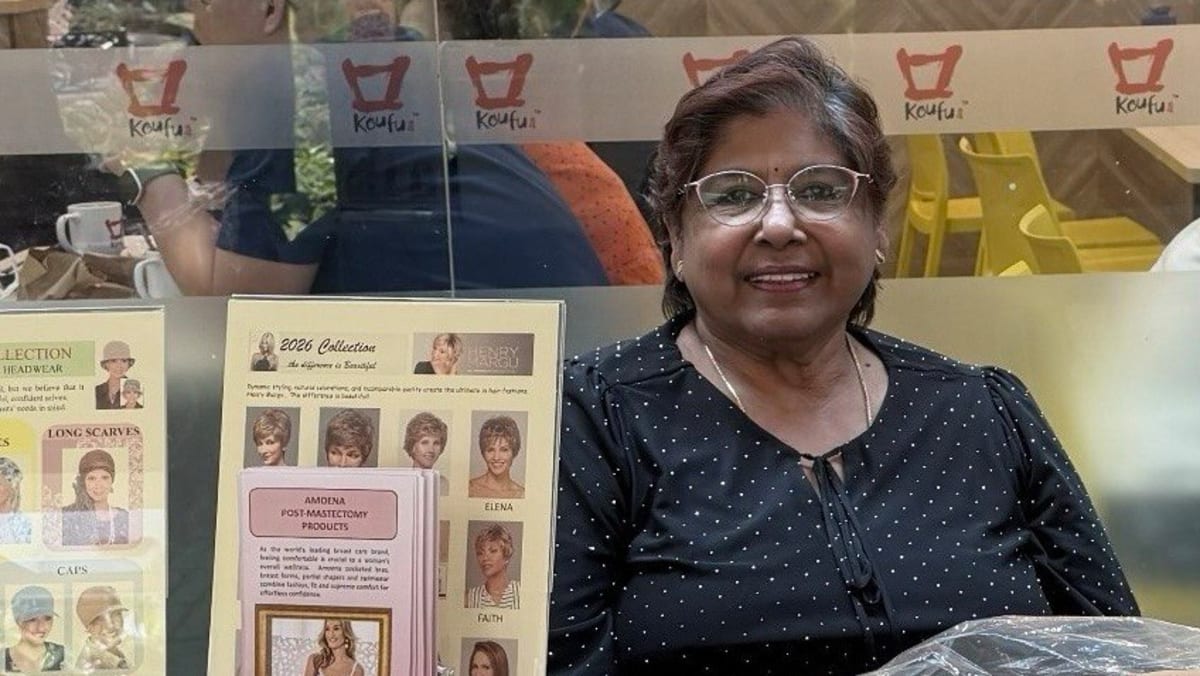
She works three-and-a-half days a week at a boutique, fitting bras and prosthetics for mastectomy patients. She also serves as a locum nurse once a week for 365 Cancer Prevention Society and still attends meetings and activities in SGH’s Blossoms.
“My daughter complains that I’m more busy now than before I retired,” she laughed. “The truth is, I hope to keep myself happy and healthy and still working for breast cancer patients till my last breath.
“I feel there’s a meaning to my birth; I have done something that is good for humanity,” she said. “I have made many people’s lives better, in a sense. Even now, I have support group members who tell me I saved their lives.”
She said she has learnt a lot from her patients. “We always take things for granted but because of cancer, these women value life and start to look at things differently. They inspire me to do more and learn to be brave – they’re very brave.
“And when you give them love, you’ll see how much love they give you too,” she added.
CNA Women is a section on CNA Lifestyle that seeks to inform, empower and inspire the modern woman. If you have women-related news, issues and ideas to share with us, email CNAWomen [at] mediacorp.com.sg .
A single handpicked story that we think you shouldn't miss. Just one a day.
1992年,纳加林加姆·萨拉斯瓦蒂在新加坡中央医院建立了乳腺护理服务,之后她培训了其他医院的护士,并成立了乳腺癌患者互助小组。三十多年过去了,照顾这些患者仍然是她生活中非常重要的一部分。
纳加林加姆·萨拉斯瓦蒂是新加坡首位乳腺护理护士,她于1992年在新加坡中央医院创立了乳腺护理服务。(图片:新加坡中央医院)
这段音频是由人工智能工具生成的。
想象一下被诊断出患有乳腺癌——随之而来的震惊、不确定和各种复杂的情绪,以及关于接下来会发生什么的诸多疑问。
这时,乳腺护理护士(BCN)就发挥作用了,她们指导患者完成治疗过程,并提供情感支持。在新加坡,让患者能够获得这种护理的第一位女性是纳加林加姆·萨拉斯瓦蒂,她是该国第一位乳腺护理护士。
1992 年,萨拉斯瓦蒂(Saraswathi,病人和同事都称她为萨拉修女)是新加坡中央医院 (SGH) 的一名肿瘤科护士。
该医院的外科主任在美国的一次会议上看到了关于乳腺护理的演示,并向护理部提出了设立乳腺护理专科护士的提案。
萨拉斯瓦蒂被派往英国参加为期十周的培训课程——她是新加坡唯一一位参加该课程的护士。在那里,她学习了咨询技巧、如何向患者提供有关手术的信息以及如何纠正常见的误解。
她还学习了如何制定政策,因为那一年她将负责建立新加坡中央医院的乳腺护理服务。
“在回程的航班上,我把所有需要做的事情都写在了我的小日记本里——我一直保留着这本日记本,”她说。
1991年,萨拉斯瓦蒂是参加在英国为期10周的乳腺护理培训课程的唯一一位新加坡护士。(图片:新加坡中央医院)
在医院培训乳腺护理护士
在接下来的几年里,萨拉斯瓦蒂为其他公立医院和一些私立医院的护士举办了为期六周的培训课程,分享化疗、放疗和心理咨询方面的知识。这就是BCN服务在90年代于新加坡的开端。
“我很高兴培养了很多乳腺护理护士,”萨拉斯瓦蒂告诉 CNA Women。
10 年来,Saraswathi 一直是 SGH 唯一的 BCN,因此她的工作时间很长。
“起初,我一年大约接诊100名病人,两三年后,就增加到每年500名左右,”她说。“我不记得自己下午5点下班;我每天工作12到15个小时。”
这位74岁的老人补充道:“我有一个很棒的丈夫,他从不要求我放下一切回家。他照顾我们的两个孩子,晚上10点来接我下班。”
萨拉斯瓦蒂(左二)在新加坡培训了第一批乳腺护理护士,至今仍激励着无数护士。(图片:新加坡中央医院)
萨拉斯瓦蒂说,在最初,当乳腺癌护理师的角色还不为人所知时,年轻的患者尤其在获得相关信息和支持后,反应非常积极。
当老年患者发现她会说福建话时,她也和他们建立了良好的关系。她在 70 年代初做实习护士时学习福建话,以便与许多讲福建方言的患者交流。
“有时候,病人见到我时会哭,我会告诉他们,‘等你心情平静下来后可以给我打电话,我们可以聊聊’,”她说。“让他们感到被倾听对他们来说意义重大——他们也因此更愿意向我敞开心扉。”
她说:“我们会询问他们对医生所说的话理解了多少,并解释确诊后他们的生活将会是什么样子,以及他们该如何应对。”
新加坡中央医院首个乳腺癌互助小组
萨拉斯瓦蒂回忆说,她以前是肿瘤科护士时,经常在星期天去病人家里为她处理溃烂的伤口。这些伤口是由于癌性肿瘤突破皮肤表面造成的。
“我丈夫开车送我过去,然后在车里等了45分钟,我则在一旁照顾她,”她回忆道。
当病人的伤口变小后,萨拉斯瓦蒂将她转诊到诊所,因为她自己正要去英国参加乳腺护理课程。
“令我惊讶的是,她带着丈夫和孩子出现在机场,祝我一路平安,”她补充道。“当时我热泪盈眶,即使现在,每当我提起这件事,我都会哭。”
萨拉斯瓦蒂(右二)表示,她“全心全意”地提供乳腺癌护理服务。(图片:新加坡中央医院)
萨拉斯瓦蒂回忆起另一位病人,她不希望男性医护人员治疗她溃烂的伤口。
“她有时会等我两三个小时,从不抱怨。几年后她去世时,我去殡仪馆吊唁。”
1992年,萨拉斯瓦蒂在新加坡中央医院(SGH)创办了第一个乳腺癌互助小组,当时只有大约五名患者。随着成员人数的增加,她将她们分成以花卉命名的小组,例如茉莉花小组和兰花小组。大约十年后,这个互助小组正式更名为“花开”(Blossoms),至今仍在新加坡中央医院运作。
萨拉斯瓦蒂说:“这些女性经历了很多;她们与疾病作斗争并取得了胜利,而且她们还在继续帮助其他患者。”
在市面上出现乳房切除术后专用胸罩之前,萨拉斯瓦蒂会制作柔软的衬垫,供患者放入胸罩中。她购买材料,然后让布洛瑟姆斯诊所的女性患者帮忙裁剪、填充和缝制。
在 90 年代中后期,她还在社区中心开展活动,并让支持小组的成员参与到向公众普及乳腺癌知识的活动中。
“我全心全意地提供了服务”
萨拉斯瓦蒂从小就喜欢照顾别人——她甚至会帮家人和邻居包扎伤口。
她上中学时,参加了圣约翰救伤队作为课外活动。每周日,这支身着制服的队伍都会到广汇肇留医院做义工,照顾老年病人。
“我一直对护理工作充满热情。我遇到了一位很棒的护士,她对我们这些学生非常友善。她照顾病人的方式深深地激励了我,”萨拉斯瓦蒂说道。
她于 1972 年开始接受护理培训,并在重症监护室工作,几年后对肿瘤学产生了兴趣。
萨拉斯瓦蒂(后排左二)于1972年开始她的护理生涯,并于1992年成为新加坡首位乳腺护理护士,也是当时唯一被选中接受培训的新加坡人。(图片:新加坡中央医院)
“我在值夜班时遇到了一位前列腺癌患者,我们成了朋友。他经常感到疼痛,而我对癌症了解不多。所以,1989年,当新加坡护理学院开设第一门肿瘤学课程时,我立即报读了。”
萨拉斯瓦蒂从事护理工作超过五十年,期间荣获多项荣誉。其中包括2001年获得的总统护士奖,这是护理界的最高荣誉。
“我没想过会得奖,这些奖都是意料之外的,”她说。“我全心全意地为病人服务;我对病人倾注了真情实感。我花了很多时间和他们在一起,很多病人都成了我的朋友。”
“即使到了今天,有时在小贩中心他们还会认出我。我可能认不出他们,但他们认得我,这种感觉真好。”
继续传播乳腺癌防治意识
萨拉斯瓦蒂在做了 54 年护士后于 2025 年 11 月退休,但她仍然积极参与乳腺癌防治宣传活动。
萨拉斯瓦蒂退休后仍然积极参与乳腺癌防治宣传活动。图中是她与新加坡中央医院乳腺癌互助小组“Blossoms”的两名成员在2026年10月8日医院举办的乳腺癌防治宣传月活动上的合影。(图片:新加坡中央医院)
她每周在一家精品店工作三天半,为乳房切除术后的患者试穿胸罩和义乳。她还每周一天在365癌症预防协会担任临时护士,并且仍然参加新加坡中央医院“Blossoms”项目的会议和活动。
“我女儿抱怨说我现在比退休前还忙,”她笑着说。“事实上,我希望保持快乐健康,直到生命的最后一刻都能继续为乳腺癌患者服务。”
“我觉得我的出生是有意义的;我为人类做了一些好事,”她说。“从某种意义上说,我改善了许多人的生活。即使现在,我的支持小组的成员也告诉我,我救了他们的命。”
她说她从病人身上学到了很多。“我们总是把一切都视为理所当然,但因为癌症,这些女性开始珍惜生命,并以不同的视角看待事物。她们激励我做得更多,并学会勇敢——她们真的很勇敢。”
“当你给予他们爱时,你会发现他们也会给予你多少爱,”她补充道。
CNA Women是CNA Lifestyle旗下的一个版块,旨在为现代女性提供信息、赋能和灵感。如果您有与女性相关的新闻、议题或想法想要与我们分享,请发送电子邮件至CNAWomen[at]mediacorp.com.sg。
每天一篇,我们精心挑选一篇您不容错过的精彩故事。