South-east Asia’s digital economy to hit US$368b in 2026, up 17% as AI uplifts growth东南亚数字经济规模预计到2026年将达到3680亿美元,增长17%,人工智能将推动经济增长。
South-east Asia’s digital economy is forecast to hit US$368 billion in 2026, boosted by AI-led growth in e-commerce and travel. Read more at straitstimes.com.
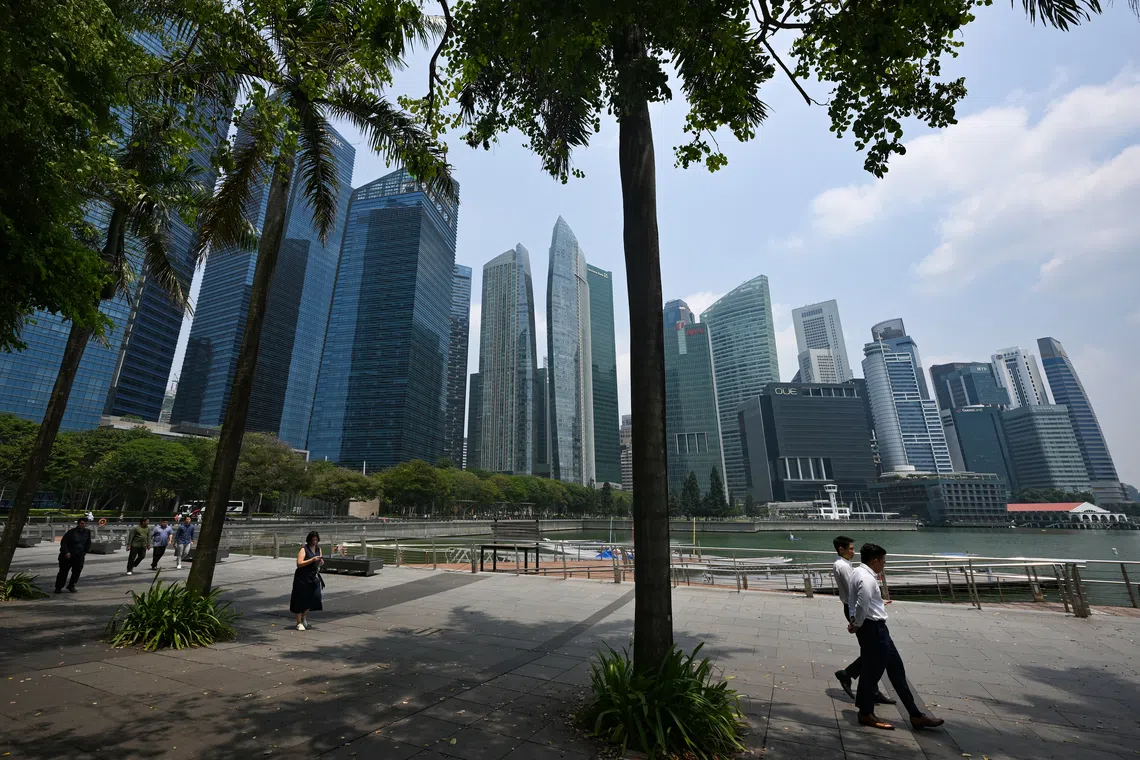
The annual e-Conomy report released on Oct 21 said that South-east Asia’s digital economy - which includes Singapore - is projected to reach US$368 billion (S$470 billion) by the end of 2026. This is a 17% increase from 2025’s US$315 billion.
Published Oct 21, 2026, 02:26 PM
Updated Oct 21, 2026, 02:26 PM
South-east Asia’s digital economy is forecast to reach US$368 billion in 2026, up 17% from 2025, despite geopolitical and macroeconomic challenges.
Google, Temasek and Bain said AI is driving growth in e-commerce, travel, online media, as well as transport and food delivery, with sellers seeing a 10 to 15 per cent conversion uplift for e-commerce.
E-commerce is set to hit US$226 billion, while online travel, media, and transport and food delivery also show strong gains across the 10-country region.
SINGAPORE - Despite geopolitical and macroeconomic challenges, South-east Asia’s digital economy is expected to hit US$368 billion (S$470 billion) by the end of 2026.
This is forecast to be a 17% increase from 2025’s US$315 billion , as artificial intelligence uplifts growth, according to a report released on Oct 21 by tech giant Google, Singapore’s investment company Temasek and consultancy Bain & Company.
The report covers 10 countries in the region: Brunei, Cambodia, Indonesia, Laos, Malaysia, Myanmar, the Philippines, Singapore, Thailand and Vietnam.
It measures the digital economy and its various components in gross merchandise value. It is calculated as the value of goods and services sold on various platforms, such as e-commerce and transport booking platforms.
The report said that strong growth was seen across e-commerce, online travel, online media, as well as transport and food delivery.
Florian Hoppe, a partner at Bain, said that South-east Asia’s digital economy has been resilient, with gross domestic product growth rates expected to be between 4 and 5 per cent, despite macroeconomic challenges.
“GDP has held up remarkably well, and that has been linked partially also to the fact that investment has been very strong,” he said at a media conference.
In the International Monetary Fund’s October economic forecast, ASEAN’s GDP growth is expected to reach 4.9 per cent in 2026 and 4.7 per cent in 2027. This is higher than global growth, which is forecasted to come in at 3.1 per cent in 2026 and 3.4 per cent in 2027.
Hoppe said that AI heavily boosted e-commerce, which still holds the largest share of the digital market.
The region’s e-commerce market is slated to hit US$226 billion, an 18% increase over 2025’s US$191 billion, according to the report.
Hoppe said that there are now many AI tools available to sellers on e-commerce platforms, such as for creating short videos about their products that help shoppers make purchases. Customers are also getting AI recommendations for products to buy.
The report also found that a significant number of shoppers are using AI. For example, in a smaller study of six countries in the region - Indonesia, Malaysia, Singapore, Thailand, Vietnam and the Philippines - 69 per cent of consumers use AI to compare products.
With the AI tools available, sellers are seeing a 10 to 15 per cent conversion uplift, said Hoppe.
For online travel, its gross merchandise value - measured by purchases for flights, accommodations and holiday rentals - is predicted to reach US$59 billion in 2026, up from US$53 billion a year ago, a 10% increase.
This growth was facilitated by, among other things, AI helping customers with discovering travel destinations and planning their travels, as well as helping travellers with bookings and adjusting their travel itineraries.
Online media - which covers online advertisements, spending in games, as well as streaming subscriptions for video and music - is expected to contribute US$44 billion to the region’s digital economy in 2026, up 22% from 2025’s US$36 billion.
Meanwhile, the gross merchandise value for transport bookings and food delivery is slated to reach US$40 billion by the end of this year, up 15% from US$35 billion in 2025.
AI/artificial intelligence
10月21日发布的年度电子经济报告称,包括新加坡在内的东南亚数字经济预计到2026年底将达到3680亿美元(4700亿新元)。这比2025年的3150亿美元增长17%。
发布于 2026 年 10 月 21 日下午 2:26
更新于2026年10月21日下午2:26
尽管面临地缘政治和宏观经济挑战,东南亚数字经济预计到 2026 年将达到 3680 亿美元,比 2025 年增长 17%。
谷歌、淡马锡和贝恩表示,人工智能正在推动电子商务、旅游、在线媒体以及交通和食品配送等领域的增长,电子商务卖家的转化率提高了 10% 到 15%。
电子商务预计将达到 2260 亿美元,而在线旅游、媒体、交通和食品配送在该地区 10 个国家也呈现强劲增长。
新加坡——尽管面临地缘政治和宏观经济挑战,预计到 2026 年底,东南亚数字经济规模将达到 3680 亿美元(4700 亿新元)。
据科技巨头谷歌、新加坡投资公司淡马锡和咨询公司贝恩公司于 10 月 21 日发布的一份报告预测,到 2025 年,这一数字将比 3150 亿美元增长 17%,人工智能将推动增长。
该报告涵盖了该地区的 10 个国家:文莱、柬埔寨、印度尼西亚、老挝、马来西亚、缅甸、菲律宾、新加坡、泰国和越南。
它衡量的是数字经济及其各个组成部分的商品交易总额。其计算方法是将商品和服务在各种平台上(例如电子商务平台和交通预订平台)的销售价值相加。
报告称,电子商务、在线旅游、在线媒体以及交通运输和食品配送等领域均实现了强劲增长。
贝恩公司合伙人弗洛里安·霍普表示,尽管面临宏观经济挑战,东南亚的数字经济依然具有韧性,预计国内生产总值增长率将在 4% 至 5% 之间。
他在新闻发布会上表示:“GDP表现非常出色,这在一定程度上也与投资非常强劲有关。”
国际货币基金组织10月份的经济预测显示,东盟2026年的GDP增长率预计将达到4.9%,2027年将达到4.7%。这高于全球增长率,全球增长率预计在2026年为3.1%,在2027年为3.4%。
霍普表示,人工智能极大地推动了电子商务的发展,电子商务目前仍占据数字市场最大的份额。
报告显示,该地区的电子商务市场预计将达到 2260 亿美元,比 2025 年的 1910 亿美元增长 18%。
霍普表示,目前电商平台上有许多人工智能工具可供卖家使用,例如制作产品短视频,帮助消费者做出购买决定。消费者也能获得人工智能推荐的产品。
该报告还发现,相当一部分消费者正在使用人工智能。例如,在一项针对该地区六个国家(印度尼西亚、马来西亚、新加坡、泰国、越南和菲律宾)的小型研究中,69%的消费者使用人工智能来比较产品。
Hoppe表示,借助人工智能工具,卖家转化率提高了10%到15%。
就在线旅游而言,其商品交易总额(以机票、住宿和度假租赁的购买额衡量)预计将在 2026 年达到 590 亿美元,高于一年前的 530 亿美元,增幅达 10%。
这一增长得益于多方面因素,其中包括人工智能帮助客户发现旅游目的地和规划行程,以及帮助旅行者预订和调整行程。
在线媒体(包括在线广告、游戏消费以及视频和音乐流媒体订阅)预计将在 2026 年为该地区的数字经济贡献 440 亿美元,比 2025 年的 360 亿美元增长 22%。
与此同时,预计到今年年底,运输预订和食品配送的商品交易总额将达到 400 亿美元,比 2025 年的 350 亿美元增长 15%。
人工智能