S'pore rises to 14th spot in global rule of law ranking; 2nd for absence of corruption新加坡在全球法治排名中升至第14位;在反腐败方面排名第二。
It is among the few nations to improve amid a decline in most countries. Read more at straitstimes.com.
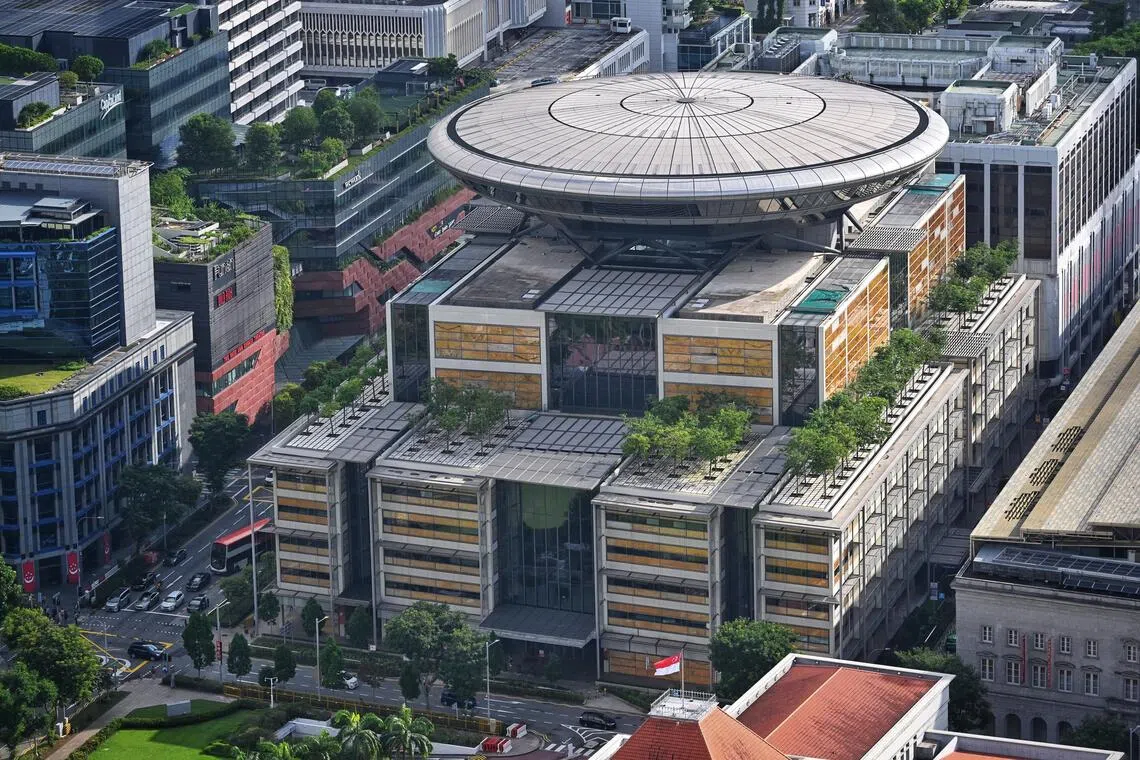
In a release on Oct 21, World Justice Project (WJP) said Singapore is among the minority of countries to see its rule of law index score increase this year.
Published Oct 21, 2026, 09:00 PM
Updated Oct 21, 2026, 09:00 PM
Singapore rose two places to 14th in the 2026 World Justice Project rule of law index, ranking third in East Asia and the Pacific.
It kept strong results in order and security, corruption control, and regulatory enforcement, while government openness fell slightly and rights improved a little.
WJP said global rule of law is still weakening, with most countries facing five-year declines in key safeguards and civic freedoms, while Denmark led the ranking.
SINGAPORE – Singapore was ranked the top country for order and security, and second in the world for absence of corruption in an index by World Justice Project (WJP) , an independent advocacy group based in the United States.
Overall, the Republic rose two places to the 14th spot out of 143 countries in a worldwide ranking of the strength of the rule of law in 2026.
In a release on Oct 21, WJP said Singapore is among the minority of countries to see its rule of law index score increase this year.
The organisation said: “Authoritarianism is no longer an emerging trend—it has become entrenched: over 86% of countries have suffered a sustained five-year decline in at least one safeguard against authoritarian rule: constraints on government powers, open government, or fundamental rights.
“This does not include Singapore.”
It added that across criminal and civil systems alike, undue executive pressure and interference have become the leading drivers of institutional decay.
“Civil justice weakened in 64% of countries and criminal justice in 58%, with improper government influence emerging as a central factor in both areas.
“Judiciaries are also losing ground to executive overreach more broadly: government powers limited by the judiciary fell in 63% of countries. This does not include Singapore,” said WJP.
It also noted that freedoms essential to civic space, public debate and government oversight are shrinking across most countries, including in Singapore.
The index, published annually since 2009, relies on more than 215,000 household surveys and 3,400 practitioner and expert surveys to measure how the rule of law is experienced and perceived worldwide.
WJP defines the rule of law as a durable system of laws, institutions, norms, and community commitment that delivers accountability, just law, open government, and accessible and impartial justice.
The index is measured across eight main factors: constraints on government powers, absence of corruption, government openness, fundamental rights, order and security, regulatory enforcement, civil justice, and criminal justice.
The top-ranked country for 2026 is Denmark, followed by Norway, Finland, Sweden, and Luxembourg.
The country with the lowest score is Venezuela, followed by Afghanistan, Haiti, Cambodia, and Nicaragua.
Regionally, Singapore ranks third overall out of 15 countries in East Asia and the Pacific, after New Zealand and Australia.
Selina Lum is senior law correspondent at The Straits Times.
世界正义工程(WJP)在 10 月 21 日发布的一份声明中表示,新加坡是今年法治指数得分上升的少数几个国家之一。
发布于2026年10月21日晚上9点
更新于2026年10月21日晚上9点
在 2026 年世界正义工程法治指数中,新加坡上升两位至第 14 位,在东亚和太平洋地区排名第三。
在秩序和安全、反腐败和监管执法方面取得了显著成效,而政府开放程度略有下降,人权状况略有改善。
世界正义工程组织表示,全球法治仍在削弱,大多数国家在关键保障措施和公民自由方面都面临五年来的下滑,而丹麦在该排名中位居榜首。
新加坡——世界正义工程(WJP)是一家总部位于美国的独立倡导组织,该组织发布的指数显示,新加坡在秩序和安全方面排名第一,在无腐败方面排名世界第二。
总体而言,在 2026 年全球法治实力排名中,该共和国的排名上升了两位,在 143 个国家中位列第 14 位。
世界正义工程 (WJP) 在 10 月 21 日发布的一份声明中表示,新加坡是今年法治指数得分上升的少数几个国家之一。
该组织表示:“威权主义不再是一种新兴趋势,它已经根深蒂固:超过 86% 的国家在至少一项防止威权统治的保障措施方面,连续五年持续下降,这些保障措施包括:对政府权力的限制、开放的政府或基本权利。
“这不包括新加坡。”
报告还指出,无论是在刑事司法系统还是民事司法系统中,行政部门的不当压力和干预都已成为制度衰败的主要驱动因素。
“64%的国家民事司法体系有所削弱,58%的国家刑事司法体系有所削弱,政府不当干预成为这两个领域的核心因素。
世界正义律师协会表示:“司法机构的权力也在更广泛地受到行政权力过度扩张的制约:63%的国家中,政府权力受到司法机构的限制有所下降。新加坡不在此列。”
报告还指出,包括新加坡在内的大多数国家,对公民空间、公共辩论和政府监督至关重要的自由正在萎缩。
该指数自 2009 年以来每年发布,依靠超过 215,000 份家庭调查和 3,400 份从业人员和专家调查来衡量世界各地对法治的体验和看法。
世界正义工程组织将法治定义为一个持久的法律、制度、规范和社区承诺体系,该体系能够实现问责制、公正的法律、开放的政府以及可及且公正的司法。
该指数通过八个主要因素进行衡量:政府权力的制约、无腐败、政府开放性、基本权利、秩序和安全、监管执法、民事司法和刑事司法。
2026 年排名最高的国家是丹麦,其次是挪威、芬兰、瑞典和卢森堡。
得分最低的国家是委内瑞拉,其次是阿富汗、海地、柬埔寨和尼加拉瓜。
从区域来看,新加坡在东亚和太平洋地区的 15 个国家中排名第三,仅次于新西兰和澳大利亚。
Selina Lum是《海峡时报》的资深法律记者。