Singapore, Sweden can learn from each other on social cohesion, competitiveness: President Tharman新加坡和瑞典可以在社会凝聚力和竞争力方面互相学习:尚达曼总统
Despite having a strong egalitarian culture, Sweden has entrepreneurs who set ambitious goals, President Tharman said. Read more at straitstimes.com.
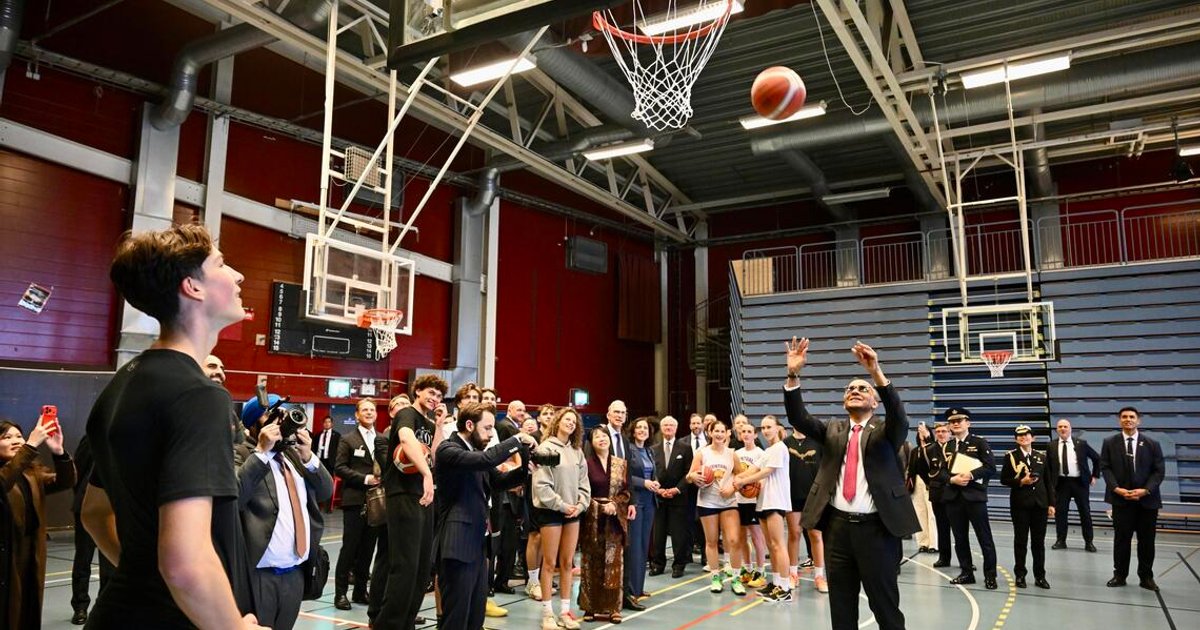
Despite having a strong egalitarian culture, Sweden has entrepreneurs who set ambitious goals, President Tharman said.
ST PHOTO: DESMOND FOO
Published Oct 22, 2026, 12:22 PM
Updated Oct 22, 2026, 12:22 PM
Singapore and Sweden will learn from each other on social unity and competitiveness, said President Tharman Shanmugaratnam during his state visit to Sweden.
He highlighted Sweden’s egalitarian culture, strong start-up funding, and business collaboration, while noting Singapore also wants to support workers and help firms grow globally.
Both countries agreed to a joint declaration on trusted and innovative technologies, covering semiconductors, AI, quantum and 6G, as they deepen ties after 60 years of bilateral relations.
GOTHENBURG - Beyond the formal agreements to collaborate in high-tech fields like quantum and 6G, Singapore and Sweden will continue to learn from each other in more systemic areas.
This includes each country’s approach to keeping their society together and to stay competitive in a more difficult world, said President Tharman Shanmugaratnam on Oct 21.
Speaking to reporters on the final day of his state visit to Sweden, the President noted that both countries seek to bring everyone along in economic progress, and can exchange ideas in this area.
He noted that the Swedes are very proud of their egalitarian “horizontal culture”, and their country’s deep commitment to the idea of making sure that everyone moves up together.
On Oct 20, he visited Fryshuset, an organisation in Stockholm that empowers youth from all backgrounds, including those with difficulties, to gain confidence, develop themselves, and feel that they play a role in society.
At the same time, Sweden has been able to produce individuals and entrepreneurs who set very ambitious goals for themselves, he noted. The country has one of the highest proportions of business unicorns in the world relative to population size, a term that refers to companies with a valuation of over US$1 billion (S$1.28 billion).
“Not everyone is like that of course, but they’ve been able to keep that balance,” said President Tharman.
Swedish corporate culture has also evolved from one that used to involve quite transactional relationships towards something more collaborative.
Employees from successful startups have gone on to found their own companies, while successful founders have gone on to invest in other companies, noted the President.
“That dense community of entrepreneurs they have created is quite impressive,” he said. “It involves collaboration, it involves mentorship, and it involves investing in each other.”
Singapore and Sweden are also similar in that both governments take the view that they have to enable companies to grow and compete internationally. But they do so not by intruding in corporate strategy, but by having a predictable regulatory environment and through overseas business promotion, he added.
President Tharman said the Swedes, more than most other countries in Europe, have a strong system of funding for emerging enterprises. This includes a thriving angel investor community, who succeed in their investments and recycle their gains into the next set of start-ups.
“These are things which are not new to us,” said President Tharman. “We have our own aspirations in start-up funding, and there’s something to learn from Sweden.”
During President Tharman’s state visit, which commemorates the 60th anniversary of bilateral relations, the two countries agreed to a joint declaration on strategic cooperation on trusted and innovative technologies.
Among other things, both governments will explore cooperation in areas including semiconductors, Internet of Things technologies, AI models and applications, quantum technologies and 5G and 6G applications.
The President also made visits to the premises of Swedish firms Spotify, Ericsson and Volvo across his five-day trip.
In his wrap-up interview, the President also spoke about the Swedes’ longstanding culture of business-trade union collaboration, that beyond wage bargaining is increasingly about how much companies should invest in their workers.
“They are working out strategies so that even if not every job remains the same, people are taken care of,” he said. “The large corporates are able to redeploy people within their own companies; smaller ones often help people move on somewhere else.”
This is also what Singapore seeks to do, and where the two countries can learn from each other, he said.
Besides their similarities, President Tharman said Singapore and Sweden can work together because they have developed a relationship of trust over the last 60 years.
From defence technology in the early days, the two sides expanded their cooperation to different areas of research and development, including education and now energy, he noted.
“So it’s been a productive visit, not just because of the agreements we are moving along on – in energy, in AI, in quantum, in 6G, in material science and other areas,” he said.
“But also because of the way in which we are continuing to learn from each other in our approach to keeping society together, in being competitive, and expanding possibilities for ourselves in a world that’s more difficult than before.”
Tharman Shanmugaratnam
尚达曼总统表示,尽管瑞典拥有强大的平等主义文化,但瑞典也涌现出许多设定远大目标的创业者。
圣路易斯照片:德斯蒙德·福
发布于 2026 年 10 月 22 日下午 12:22
更新于2026年10月22日下午12:22
新加坡总统尚达曼在对瑞典进行国事访问期间表示,新加坡和瑞典将在社会团结和竞争力方面互相学习。
他强调了瑞典的平等文化、强大的创业资金和商业合作,同时指出新加坡也希望支持劳动者并帮助企业在全球范围内发展。
两国在建交60年后,进一步深化双边关系,并就值得信赖的创新技术发表了联合声明,涵盖半导体、人工智能、量子技术和6G等领域。
哥德堡——除了在量子和 6G 等高科技领域达成正式合作协议外,新加坡和瑞典还将继续在更系统性的领域互相学习。
尚达曼总统于10月21日表示,这包括各国为保持社会团结和在更加艰难的世界中保持竞争力所采取的措施。
在对瑞典进行国事访问的最后一天,总统在接受记者采访时指出,两国都致力于让所有人共同参与经济发展,并可以就此领域交流想法。
他指出,瑞典人非常自豪于他们平等主义的“横向文化”,以及他们国家对确保每个人都能共同进步这一理念的坚定承诺。
10 月 20 日,他参观了位于斯德哥尔摩的 Fryshuset 组织,该组织致力于帮助来自各种背景的青年,包括有困难的青年,增强自信心,发展自我,并感受到自己在社会中扮演着重要角色。
与此同时,他还指出,瑞典也涌现出许多为自己设定远大目标的个人和企业家。该国独角兽企业(估值超过10亿美元,约合12.8亿新元)的比例位居世界前列,占人口比例相当。
“当然,并不是每个人都能做到这一点,但他们一直能够保持这种平衡,”尚达曼总统说。
瑞典企业文化也从过去以交易为主的关系向更具协作性的关系演变而来。
总裁指出,成功的创业公司的员工后来都创立了自己的公司,而成功的创始人也投资了其他公司。
他说:“他们建立的这个创业者社群非常紧密,令人印象深刻。它包含了合作、指导和互相投资。”
新加坡和瑞典的相似之处还在于,两国政府都认为必须帮助企业发展壮大并参与国际竞争。但他补充说,两国并非通过干预企业战略来实现这一目标,而是通过营造可预测的监管环境和促进海外业务发展。
尚达曼总统表示,瑞典比欧洲大多数其他国家拥有更完善的新兴企业融资体系。这其中包括一个蓬勃发展的天使投资人群体,他们投资成功后,会将收益再投资于下一批初创企业。
“这些对我们来说并不陌生,”尚达曼总统说。“我们在初创企业融资方面也有自己的愿景,瑞典也有很多值得我们学习的地方。”
在尚达曼总统对韩国进行国事访问期间,为纪念两国建交60周年,双方就可信赖和创新技术领域的战略合作达成了一项联合声明。
两国政府将探讨在半导体、物联网技术、人工智能模型和应用、量子技术以及 5G 和 6G 应用等领域的合作。
在为期五天的访问中,总统还参观了瑞典公司 Spotify、爱立信和沃尔沃的办公场所。
在总结采访中,总统还谈到了瑞典长期以来企业与工会合作的文化,这种文化除了工资谈判之外,越来越关注企业应该在员工身上投入多少资金。
他说:“他们正在制定策略,即使不能保证所有工作岗位都保持不变,也能确保员工得到妥善安置。大型企业能够在公司内部重新调配员工;小型企业通常会帮助员工找到其他工作。”
他说,这也是新加坡努力的方向,也是两国可以互相学习的地方。
除了相似之处外,尚达曼总统表示,新加坡和瑞典能够合作是因为两国在过去60年中建立了互信关系。
他指出,双方早期的合作领域是国防技术,后来扩展到包括教育在内的不同研发领域,现在又扩展到能源领域。
“所以这次访问成果丰硕,不仅仅是因为我们在能源、人工智能、量子技术、6G、材料科学和其他领域达成了协议,”他说。
“但同时也因为我们不断互相学习,学习如何维系社会团结,如何在竞争中脱颖而出,如何在比以往更加艰难的世界中拓展自身的可能性。”
尚达曼