How Singapore is preparing to keep its power grid reliable as demand grows随着电力需求增长,新加坡如何做好准备以确保电网可靠性
Singapore's peak electricity demand is projected to grow by between 2.9 per cent and 6.5 per cent annually over the next decade, according to EMA.
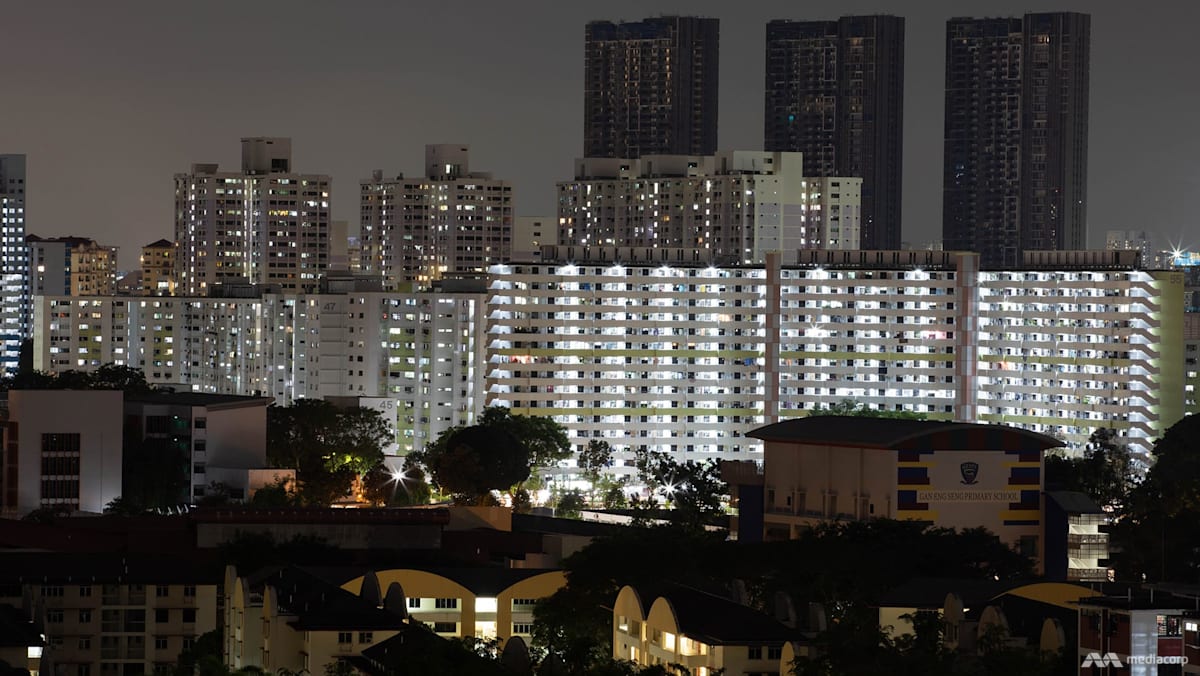
Singapore's peak electricity demand is projected to grow by between 2.9 per cent and 6.5 per cent annually over the next decade, according to EMA.
HDB flats in Singapore. (File photo: CNA/Ili Nadhirah Mansor)
This audio is generated by an AI tool.
SINGAPORE: Singapore is taking steps to ensure its power grid can support increasing demand from data centres, advanced manufacturing facilities and other energy-intensive developments, while maintaining its high level of reliability.
This comes as Singapore's peak electricity demand is projected to grow by between 2.9 per cent and 6.5 per cent annually over the next decade, according to the Energy Market Authority's (EMA) 2026 demand projections.
EMA and SP Group say such preparations include long-term demand planning, grid upgrades and diversifying energy sources.
Speaking to CNA938 on Wednesday (Oct 21), SP Group vice president of asset planning and strategy Quek Swee Xian said this involves understanding not just how much electricity will be needed, but also where demand is expected to emerge and when it is likely to materialise.
The grid operator works with EMA to review electricity demand projections and other agencies such as JTC Corporation and the Economic Development Board to identify areas where demand is growing.
"It is not only about how much capacity is coming in, but more importantly where the demand is and also when it is coming, so that we can prepare ahead," Ms Quek said.
She noted that Singapore's electricity needs are changing amid a growing number of electric vehicles on the roads.
As of 2025, EVs made up 7.4 per cent of Singapore's total car population, reaching 49,262 vehicles – nearly double the 4 per cent share recorded the preceding year.
Industries with significant power requirements are also expanding, with Singapore home to 70 data centres .
The nature of Singapore's electricity grid is evolving as well.
Electricity traditionally flows in one direction - from power plants through the grid, and eventually to homes and businesses.
However, electricity now comes from more sources, Ms Quek said, referring to the increasing adoption of solar energy and battery storage systems, along with the possibility of more low-carbon electricity imports in the future.
"For example, a building with solar panels can now draw electricity from the grid and at the same time, send electricity back to the grid," she added.
With a more "dynamic and complex" electricity network, Singapore must therefore continue to develop sufficient capacity while renewing and strengthening the existing network that homes and businesses rely on.
CNA Games Guess Word Crack the word, one row at a time Buzzword Create words using the given letters Mini Sudoku Tiny puzzle, mighty brain teaser Mini Crossword Small grid, big challenge Word Search Spot as many words as you can Show More Show Less
MAINTAINING RELIABILITY
Maintaining electricity reliability is another key priority amid growing demand.
Ms Quek said Singapore operates "one of the world's most reliable electricity networks".
She noted that Singapore could "experience up to 30 minutes of interruption a year on average" in the 1990s, in comparison to outages today, which are measured in seconds.
The network here is designed with built-in redundancy so electricity can be supplied through alternative routes when faults occur.
When disruptions happen, teams from SP Group work to identify the fault, isolate the affected area and restore supply as quickly and safely as possible, she added.
Singapore's power system also has contingency measures in place to cope with disruptions. According to EMA, power generation companies can draw on a standby liquefied natural gas facility if gas supplies are interrupted, while they are also required to maintain fuel stockpiles.
Asked about the possibility of higher electricity prices as demand grows, EMA Assistant Chief Executive (Energy Technologies) Eugene Toh noted that solar energy is cheaper than natural gas, and as more solar energy enters the system, there could be "downward pressure" on prices.
However, he said future electricity prices would also depend on factors such as the diversification of energy sources and the upgrading of energy infrastructure, including the power grid.
Policymakers would need to balance three priorities: affordability, sustainability in the form of de-carbonising the economy and energy security.
"How you balance these three factors will really be the key to answering how our energy needs are met in the long run," he added.
DIVERSIFYING ENERGY SOURCES
Beyond grid upgrades, EMA is also looking at ways to strengthen Singapore's energy security through a more diverse mix of energy sources.
Singapore's LNG infrastructure allows the country to source natural gas from different parts of the world, including Qatar and Australia, said Mr Toh.
In the longer term, Singapore is also studying greater regional power connectivity that could grant access to low-carbon electricity sources such as solar energy and hydropower from neighbouring countries.
The Association of Southeast Asian Nations (ASEAN) aims to establish an interconnected power grid by 2045 to facilitate cross-border electricity trade and strengthen energy security.
"We need to continue to work with countries around the world ... to diversify our energy sources and bolster our energy resilience," Mr Toh said.
EMA is also studying the development of an energy infrastructure cluster on Pulau Tekong that could potentially accommodate hydrogen-ready gas-fired power plants, LNG infrastructure and other low-carbon energy technologies.
The study will explore whether co-locating such facilities in the same cluster could help optimise land use while supporting Singapore's future energy needs, said Mr Toh.
He added: "We can then power back the electricity to mainland Singapore, and hence we'll continue to power our energy needs, whether it's for our economy, whether it's for our people or businesses."
A consultant is expected to be appointed by mid-2027, and the study of the 200ha site on reclaimed land - equivalent to about 40 per cent of Sentosa Island's land area - is estimated to take about two years.
Get our pick of top stories and thought-provoking articles in your inbox
Stay updated with notifications for breaking news and our best stories
Join our channel for the top reads for the day on your preferred chat app
据 EMA 预测,未来十年新加坡的用电高峰需求预计将以每年 2.9% 至 6.5% 的速度增长。
新加坡的 HDB 公寓。 (资料图:CNA/Ili Nadhirah Mansor)
这段音频是由人工智能工具生成的。
新加坡:新加坡正采取措施,确保其电网能够满足数据中心、先进制造设施和其他能源密集型发展项目日益增长的需求,同时保持其高可靠性。
据新加坡能源市场管理局 (EMA) 2026 年需求预测,未来十年新加坡的电力需求峰值预计将以每年 2.9% 至 6.5% 的速度增长。
EMA 和 SP 集团表示,此类准备工作包括长期需求规划、电网升级和能源来源多元化。
新加坡能源集团资产规划与战略副总裁郭瑞贤周三(10月21日)在接受CNA938采访时表示,这不仅需要了解需要多少电力,还需要了解需求预计会出现在哪里以及何时可能出现。
电网运营商与EMA合作审查电力需求预测,并与裕廊集团和经济发展局等其他机构合作,以确定需求增长的地区。
郭女士表示:“这不仅关乎产能的增加,更重要的是需求在哪里,以及需求何时到来,这样我们才能提前做好准备。”
她指出,随着道路上电动汽车数量的不断增加,新加坡的电力需求也在发生变化。
截至 2025 年,电动汽车占新加坡汽车总数的 7.4%,达到 49,262 辆,几乎是前一年 4% 份额的两倍。
对电力需求量大的行业也在不断扩张,新加坡拥有 70 个数据中心。
新加坡的电网结构也在不断演变。
电力传统上是单向流动的——从发电厂通过电网,最终到达家庭和企业。
郭女士表示,如今电力来源更加多元化,她指的是太阳能和电池储能系统的日益普及,以及未来可能进口更多低碳电力。
她补充说:“例如,现在一栋装有太阳能电池板的建筑物可以从电网获取电力,同时还可以将电力输送回电网。”
面对更加“动态和复杂”的电力网络,新加坡必须继续发展足够的电力容量,同时更新和加强家庭和企业赖以生存的现有网络。
CNA游戏 猜词游戏 逐行破解单词 流行词游戏 用给定的字母组成单词 迷你数独 小小谜题,挑战你的大脑 迷你填字游戏 小方格,大挑战 单词搜索 尽可能多地找出单词 显示更多 显示更少
保持可靠性
在需求不断增长的情况下,保持电力可靠性是另一项关键优先事项。
郭女士表示,新加坡拥有“世界上最可靠的电力网络之一”。
她指出,上世纪 90 年代,新加坡“平均每年可能会经历长达 30 分钟的停电”,而如今的停电时间是以秒计算的。
这里的电网设计有内置冗余,因此当发生故障时,可以通过备用路径供电。
她补充说,当电力中断发生时,SP集团的团队会努力找出故障原因,隔离受影响区域,并尽快、安全地恢复供电。
新加坡电力系统也制定了应急措施以应对电力中断。根据能源市场管理局(EMA)的说法,如果天然气供应中断,发电公司可以使用备用液化天然气设施,同时他们也必须维持一定的燃料储备。
当被问及随着需求增长电价上涨的可能性时,EMA助理首席执行官(能源技术)Eugene Toh指出,太阳能比天然气便宜,随着更多太阳能进入系统,价格可能会面临“下行压力”。
但他表示,未来的电价还将取决于能源来源多样化和能源基础设施(包括电网)升级等因素。
政策制定者需要平衡三个优先事项:可负担性、以经济脱碳为形式的可持续性以及能源安全。
他补充说:“如何平衡这三个因素,才是真正能够解答我们长期能源需求如何得到满足的关键。”
能源来源多元化
除了电网升级之外,EMA 还在探索通过更多样化的能源组合来加强新加坡能源安全的方法。
杜先生表示,新加坡的液化天然气基础设施使该国能够从世界各地(包括卡塔尔和澳大利亚)获取天然气。
从长远来看,新加坡也在研究加强区域电力互联互通,以便获得邻国的低碳电力来源,例如太阳能和水力发电。
东南亚国家联盟(东盟)的目标是到 2045 年建立互联电网,以促进跨境电力贸易并加强能源安全。
“我们需要继续与世界各国合作……实现能源来源多元化,增强能源韧性,”杜先生说。
EMA 还在研究在德光岛开发能源基础设施集群的可能性,该集群有可能容纳氢气燃气发电厂、液化天然气基础设施和其他低碳能源技术。
Toh先生表示,该研究将探讨在同一区域内集中建设此类设施是否有助于优化土地利用,同时满足新加坡未来的能源需求。
他补充道:“这样我们就可以把电力输送回新加坡本岛,从而继续满足我们的能源需求,无论是为了我们的经济,还是为了我们的人民或企业。”
预计将于 2027 年年中委任顾问,对这块占地 200 公顷的填海土地(约占圣淘沙岛土地面积的 40%)的研究预计将耗时约两年。
订阅我们的邮件,即可获取精选热点新闻和引人深思的文章。
订阅通知,第一时间获取突发新闻和精彩报道。
加入我们的频道,即可在您常用的聊天应用上获取当日热门文章。