Malaysians remain ‘happy’ as wages recover post Covid-19, but rising costs squeeze poorer households, says KRI马来西亚人虽然在新冠疫情后工资回升时依然感到“满意”,但不断上涨的生活成本令贫困家庭倍感压力,KRI表示。
KUALA LUMPUR, Oct 23 — Malaysians are still classified as “happy” as wages have recovered to above pre-Covid-19 levels, despite household spending rising rapidly among...
The Khazanah Research Institute's report, "From Income to Wellbeing: The State of Households 2026," finds that Malaysian wages have surpassed pre-COVID-19 levels, contributing to a general sense of happiness among the population.
As of 2024, the median monthly household income reached RM7,017, with notable growth in Putrajaya.
However, rising living costs have increased spending, particularly among lower-income groups, constraining their disposable income.
Despite higher wages, significant income disparities and poverty persist, with 46.2% of households in districts where income is below the national median and over half of districts having poverty rates above the national average of 5.1%.
KUALA LUMPUR, Oct 23 — Malaysians are still classified as “happy” as wages have recovered to above pre-Covid-19 levels, despite household spending rising rapidly among lower-income households, the Khazanah Research Institute (KRI) found in a recent survey.
The report, titled “From Income to Wellbeing: The State of Households 2026”, said median monthly household income reached RM7,017 in 2024, while labour force participation rose to 70.6 per cent that year.
Putrajaya recorded the fastest wage growth, with median monthly household income rising from RM2,700 in 2010 to more than RM4,500 in 2024.
However, the report also noted that nearly half of Malaysian households (46.2 per cent) lived in 22 of the country’s 166 districts, where median monthly household income was below RM7,017.
Some 111 of Malaysia’s 166 districts also recorded poverty rates above the national rate of 5.1 per cent. The poverty rate in 66 districts was more than twice the national rate, the report said.
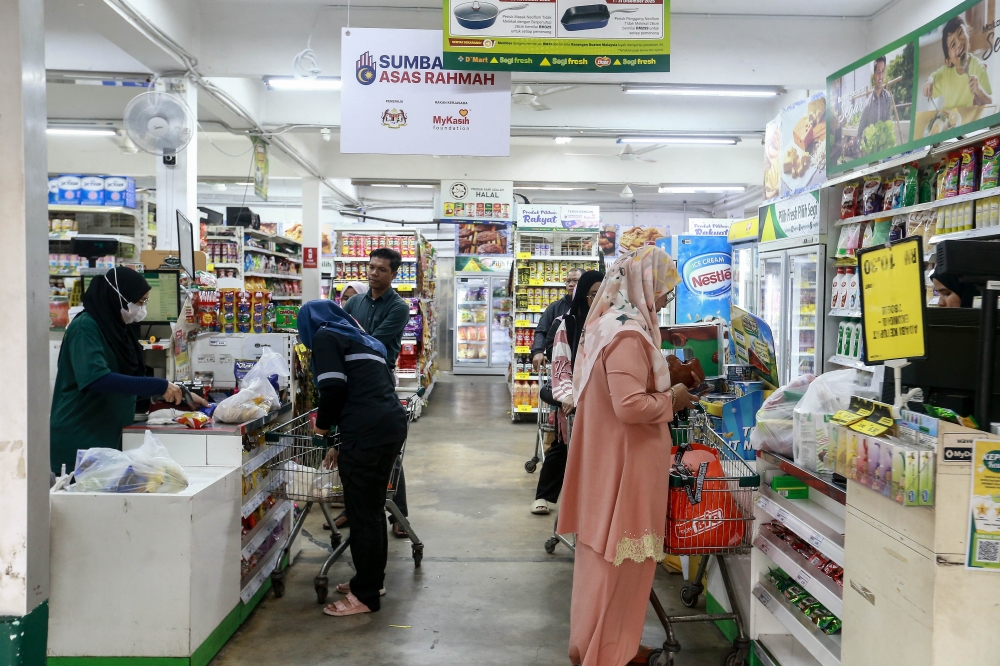
Even as wages rise, lower-income households are spending more due to rising living costs, leaving them with little disposable income.
The report said household expenditure rose by more than 15 per cent among the bottom 70 per cent of the income distribution between 2019 and 2024.
However, spending barely changed among the top 10 per cent of households.
The squeeze was more severe for the bottom 10 per cent.
“Households in the bottom 10 per cent of the income distribution retained only 1.9 per cent of their gross incomes after covering their consumption expenses, down from 10.8 per cent in 2019,” KRI said in the report.
However, it noted that residual income does not account for tax payments, loan repayments or remittances to other households.
Tighter rules for Malaysian dealers, agents, and accountants? BNM to review money laundering risks next year
Holy smoke: Massive ganja and heroin haul found in Klang house of worship
Budget 2027: Borrowers praise PTPTN repayment discounts and deferments
国库研究院发布的报告《从收入到福祉:2026 年家庭状况》发现,马来西亚的工资已经超过了新冠疫情前的水平,这有助于提升民众的幸福感。
截至 2024 年,家庭月收入中位数达到 7,017 令吉,其中布城增长尤为显著。
然而,生活成本的上涨增加了支出,尤其是在低收入群体中,从而限制了他们的可支配收入。
尽管工资有所提高,但收入差距和贫困问题依然严重,46.2% 的家庭生活在收入低于全国中位数的地区,超过一半的地区的贫困率高于 5.1% 的全国平均水平。
吉隆坡,10 月 23 日讯——尽管低收入家庭的支出迅速增长,但马来西亚国库研究院 (KRI) 最近的一项调查发现,由于工资已恢复到新冠疫情前的水平以上,马来西亚人仍然被归类为“幸福”的。
这份题为《从收入到福祉:2026 年家庭状况》的报告称,到 2024 年,家庭月收入中位数将达到 7,017 令吉,而当年的劳动力参与率将上升至 70.6%。
布城工资增长速度最快,家庭月收入中位数从 2010 年的 2700 令吉增长到 2024 年的 4500 令吉以上。
然而,该报告还指出,近一半的马来西亚家庭(46.2%)居住在该国 166 个地区中的 22 个地区,这些地区的家庭月收入中位数低于 7,017 令吉。
报告指出,马来西亚166个县中,有111个县的贫困率高于5.1%的全国平均水平。其中66个县的贫困率是全国平均水平的两倍多。
即使工资上涨,但由于生活成本上升,低收入家庭的支出也随之增加,导致他们的可支配收入很少。
报告称,2019 年至 2024 年间,收入分配中后 70% 人群的家庭支出增长超过 15%。
然而,收入最高的 10% 家庭的支出几乎没有变化。
底层10%人群受到的挤压更为严重。
库尔德斯坦研究所(KRI)在报告中指出:“收入分配中处于后10%的家庭在支付消费支出后,仅保留了总收入的1.9%,低于2019年的10.8%。”
但报告指出,剩余收入不包括税款、贷款偿还或汇给其他家庭的款项。
马来西亚将对经销商、代理商和会计师实施更严格的监管?马来西亚国家银行明年将审查洗钱风险。
惊天大案:巴生一处宗教场所查获大量大麻和海洛因
2027年预算案:借款人称赞高等教育贷款计划(PTPTN)的还款折扣和延期政策