Rare disorder and low muscle tone cannot dampen teen’s swimming passion罕见疾病和肌肉张力低下也无法浇灭这位少年对游泳的热情。
Teen with rare PTPS deficiency keeps swimming after early diagnosis and treatment at KKH in Singapore Read more at straitstimes.com.
Medical Mysteries is a series that spotlights rare diseases or unusual conditions.
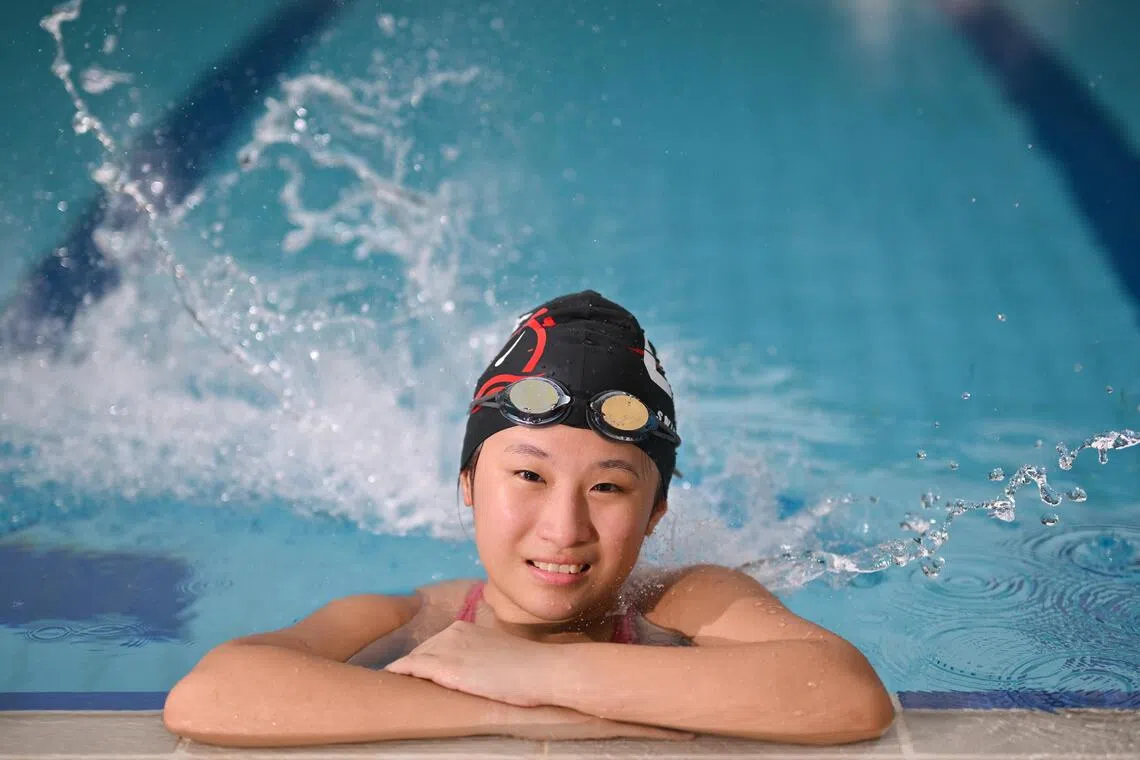
Born with PTPS deficiency, 18-year-old Jessica Quek has continued to go against the tide to pursue her passion for swimming while studying electronics engineering at ITE College West.
ST PHOTO: LIM YAOHUI
Published Oct 24, 2026, 08:00 AM
Updated Oct 24, 2026, 08:00 AM
Jessica Quek, 18, has rare PTPS deficiency. Early newborn screening at KKH found it, and treatment helped prevent severe disability and seizures.
Her condition lowers BH4, dopamine and serotonin, causing low muscle tone, poor sleep and movement problems. She now takes daily medicine, which costs thousands a month.
Despite bullying and illness, Jessica won bronze medals in the ITE swimming meet in 2025 and 2026. She hopes to become an engineer and teach coding.
SINGAPORE – Her rare genetic condition did not just shortchange teenager Jessica Quek’s brain of the two primary chemicals responsible for joy and motivation; it also hijacked her muscle tone.
Yet, the 18-year-old electronics engineering student from ITE College West is not letting it get her down.
In fact, Jessica went against the tide by actively taking part in the annual ITE Inter-College Swimming Meet in 2025 and 2026, taking home two bronze medals across the two meets.
“The first was for the 50m butterfly sprint in 2025 and the one this year was for the 400m breaststroke,” she told The Straits Times.
Even her doctor was pleasantly surprised at her “remarkable accomplishment”.
Jessica competed in the 50m butterfly at the inter-school swimming meet in 2025 and won a bronze medal. ST PHOTO: LIM YAOHUI
Jessica competed in the 50m butterfly at the inter-school swimming meet in 2025 and won a bronze medal.
“Knowing that Jessica competed in an interschool swimming meet is a massive testament to early intervention, comprehensive medical care, and her own incredible personal resilience,” said her doctor Mildrid Yeo, a consultant geneticist from the department of genomic medicine at the KK Women’s and Children’s Hospital (KKH).
Jessica was diagnosed with 6-pyruvoyl-tetrahydropterin synthase (PTPS) deficiency, a rare inherited metabolic disorder that results in low muscle tone and impairs the production of serotonin and dopamine in her brain, during newborn screening at KKH.
All newborns at the hospital are screened for metabolic and heritable diseases under the National Expanded Newborn Screening programme , a preventive measure to detect health problems before symptoms appear.
The procedure – which is not legally mandated – involves pricking a baby’s heels to collect a blood sample between 24 and 72 hours after birth.
Yeo said PTPS deficiency occurs when the body cannot produce enough of a “vital helper molecule” called BH4, which is needed by the brain to produce its key chemical messengers.
“Without adequate BH4, three things go wrong at once: an amino acid found in proteins called phenylalanine builds up in the blood and brain; dopamine, the chemical that controls mood and movement, falls short, causing stiffness and motor delays and involuntary tremors similar to those seen in Parkinson’s disease; and serotonin levels drop.
“Serotonin governs mood, sleep and emotional well-being, so low levels can lead to behavioural and cognitive difficulties,” the geneticist said.
“In short, it simultaneously starves the brain of two neurotransmitters at once, which is what makes it so serious if left untreated.”
The condition is “ultra-rare”, affecting approximately one in a million people worldwide, though its prevalence varies significantly by ethnicity and region.
Yeo said the condition is noticeably more common in Asian populations than in Caucasian populations. Currently, there are only three known cases in Singapore, including Jessica.
Early detection gives her a better chance at a normal life
Jessica with KKH consultant geneticist Mildrid Yeo, who manages the teenager’s condition. PTPS deficiency affects the body’s production of BH4, a molecule needed to make key brain chemicals. ST PHOTO: LIM YAOHUI
Jessica with KKH consultant geneticist Mildrid Yeo, who manages the teenager’s condition. PTPS deficiency affects the body’s production of BH4, a molecule needed to make key brain chemicals.
Due to her BH4 deficiency, Jessica’s newborn screening detected an excessive amount of phenylalanine, an essential amino acid that is usually found in foods such as meat, fish, eggs, dairy and beans.
Doctors were able to treat her early. Left untreated, the condition could have left Jessica intellectually disabled, with severe developmental delays, and caused seizures.
“Delayed treatment could also result in dystonia, a neurological movement disorder causing muscles to contract involuntarily, leading to twisting movements or abnormal postures,” Yeo said.
“There is no cure for PTPS deficiency, and Jessica’s treatment generally focuses on reducing high levels of phenylalanine and replacing dopamine and serotonin,” she added.
Her low levels of dopamine and serotonin also contributed to her chaotic sleep patterns.
Jessica told ST: “I often fell asleep in class in primary school, especially during Chinese class. My teachers were told of my condition, so there was no issue, nor was I scolded.”
Despite starting medication early, Jessica developed seizures when she turned 10.
She was put on synthetic BH4 to help lower her blood phenylalanine levels. The medication acts as a cofactor, or helper molecule, for multiple enzymes in the body, including the enzyme in the liver responsible for processing phenylalanine.
Yeo said: “But synthetic BH4 alone cannot fix Jessica’s neurotransmitter deficits in the brain. To restore her dopamine levels, she is prescribed levodopa; and for serotonin, she is given 5-hydroxytryptophan to allow the brain to successfully manufacture serotonin.”
Jessica takes more than 10 pills a day to manage her symptoms, but remains upbeat and encourages others to accept their flaws and not be discouraged by the judgment of those around them. ST PHOTO: LIM YAOHUI
Jessica takes more than 10 pills a day to manage her symptoms, but remains upbeat and encourages others to accept their flaws and not be discouraged by the judgment of those around them.
Jessica’s medication costs thousands of dollars a month, and the expense is lifelong, with her medical bill increasing as she grows older.
“We are not rich. My father is a mechanic and my mother a swimming coach,” Jessica said.
The family is financially supported by the Rare Disease Fund, which covers a large portion of her treatment costs.
Jessica, who found out about her condition only when she was 13, added: “I need to take six pills and capsules every morning, two in the afternoon and three at night just to keep my symptoms at bay.”
And kept it at bay she did. The seizures, which started when she was 10, went away in 2023.
Despite her low muscle tone, Jessica continues to swim competitively, some days under her mother’s watchful eye.
She wants to graduate and work as an engineer and “perhaps teach coding in a robotics school one day”.
Despite her condition and the bullying she experienced in primary and secondary schools while growing up, Jessica continues to have a happy outlook on life.
“We should accept our flaws, even when others look down at us for them. Never be discouraged,” she said.
Judith Tan is health correspondent at The Straits Times.
ST Medical Mysteries
KK Women's and Children's Hospital
《医学谜案》是一档聚焦罕见疾病或不寻常病症的系列节目。
18 岁的 Jessica Quek 出生时患有 PTPS 缺乏症,但她仍然逆流而上,一边在 ITE 西区学院学习电子工程,一边追求自己对游泳的热情。
ST 照片:林耀辉
发布于2026年10月24日上午8:00
更新于2026年10月24日上午8:00
18岁的杰西卡·郭患有罕见的PTPS缺陷症。在KKH医院进行的新生儿早期筛查发现了这一疾病,治疗帮助她避免了严重的残疾和癫痫发作。
她的病情导致体内BH4、多巴胺和血清素水平降低,造成肌肉张力低下、睡眠质量差和行动障碍。她现在每天都要服药,每月花费数千美元。
尽管遭受欺凌和疾病的折磨,杰西卡仍在2025年和2026年的ITE游泳比赛中获得铜牌。她希望成为一名工程师,并教授编程。
新加坡——这种罕见的遗传疾病不仅使少女杰西卡·郭的大脑缺乏两种主要的、负责快乐和动力的化学物质,而且还影响了她的肌肉张力。
然而,这位来自ITE西区学院的18岁电子工程系学生并没有因此而气馁。
事实上,杰西卡逆潮流而行,积极参加了 2025 年和 2026 年的 ITE 校际游泳比赛,并在两届比赛中获得了两枚铜牌。
“第一个是2025年的50米蝶泳短距离比赛,今年的这个是400米蛙泳比赛,”她告诉《海峡时报》。
就连她的医生也对她取得的“卓越成就”感到惊喜。
2025年,杰西卡参加了校际游泳比赛的50米蝶泳项目,并获得铜牌。(海峡时报摄影:林耀辉)
杰西卡参加了2025年校际游泳比赛的50米蝶泳比赛,并获得铜牌。
“杰西卡能够参加校际游泳比赛,这充分证明了早期干预、全面医疗护理以及她自身惊人的个人韧性,”她的医生,来自KK妇女儿童医院(KKH)基因组医学部的遗传学顾问Mildrid Yeo说道。
杰西卡在KKH医院接受新生儿筛查时,被诊断出患有6-丙酮酰四氢蝶呤合成酶(PTPS)缺乏症,这是一种罕见的遗传性代谢紊乱,会导致肌肉张力低下,并损害大脑中血清素和多巴胺的产生。
根据国家新生儿筛查计划,医院所有新生儿都会接受代谢性疾病和遗传性疾病的筛查,这是一项预防措施,旨在症状出现之前发现健康问题。
该程序(并非法律强制规定)是指在婴儿出生后 24 至 72 小时内,刺破婴儿的脚后跟以采集血样。
Yeo表示,PTPS缺乏症是指人体无法产生足够的名为BH4的“重要辅助分子”,而大脑需要BH4来产生其关键的化学信使。
“如果没有足够的 BH4,就会同时出现三个问题:一种叫做苯丙氨酸的蛋白质氨基酸会在血液和大脑中积聚;控制情绪和运动的多巴胺不足,导致僵硬、运动迟缓和类似帕金森病的不自主震颤;血清素水平下降。
“血清素控制着情绪、睡眠和情感健康,因此血清素水平过低会导致行为和认知困难,”这位遗传学家说。
“简而言之,它会同时剥夺大脑中两种神经递质的供应,因此如果不及时治疗,后果会非常严重。”
这种疾病“极其罕见”,全球范围内大约每百万人中只有一人患有此病,但其患病率因种族和地区而异。
杨医生表示,这种疾病在亚洲人群中比在白种人群中更为常见。目前,新加坡已知的病例只有三例,其中包括杰西卡。
早期发现能让她更有可能过上正常的生活。
杰西卡与KKH医院的遗传学顾问医生杨美玲(Mildrid Yeo)合影,杨美玲医生负责管理这位青少年的病情。PTPS缺乏症会影响人体产生BH4,而BH4是合成关键脑化学物质所必需的分子。(海峡时报摄影:林耀辉)
杰西卡与KKH的遗传咨询师Mildrid Yeo在一起,Mildrid Yeo负责管理这位青少年的病情。PTPS缺乏症会影响人体BH4的生成,BH4是合成关键脑化学物质所必需的分子。
由于杰西卡患有 BH4 缺乏症,新生儿筛查发现她体内苯丙氨酸含量过高,苯丙氨酸是一种必需氨基酸,通常存在于肉类、鱼类、鸡蛋、乳制品和豆类等食物中。
医生及时对她进行了治疗。如果不及时治疗,杰西卡可能会出现智力障碍、严重的发育迟缓,甚至引发癫痫。
“延迟治疗还可能导致肌张力障碍,这是一种神经系统运动障碍,会导致肌肉不自主收缩,从而导致扭转动作或异常姿势,”叶医生说。
“PTPS 缺乏症目前尚无治愈方法,杰西卡的治疗通常侧重于降低体内过高的苯丙氨酸水平,并补充多巴胺和血清素,”她补充道。
她体内多巴胺和血清素水平低也是导致她睡眠紊乱的原因之一。
杰西卡告诉《海峡时报》:“我小学时经常在课堂上睡觉,尤其是在中文课上。老师们都知道我的情况,所以没有发生什么问题,我也没有被责骂。”
尽管杰西卡很早就开始服药,但她在 10 岁时还是出现了癫痫发作。
她开始服用合成BH4来帮助降低血液中的苯丙氨酸水平。这种药物作为辅因子或辅助分子,作用于体内多种酶,包括肝脏中负责代谢苯丙氨酸的酶。
Yeo医生说:“但单靠合成的BH4无法修复Jessica大脑中的神经递质缺陷。为了恢复她的多巴胺水平,医生给她开了左旋多巴;为了恢复她的血清素水平,医生给她服用5-羟色氨酸,以帮助大脑成功合成血清素。”
杰西卡每天要服用十多片药来控制症状,但她依然保持乐观,并鼓励其他人接受自己的缺点,不要因为周围人的评判而气馁。(海峡时报摄影:林耀辉)
杰西卡每天要服用 10 多片药来控制症状,但她依然保持乐观,并鼓励其他人接受自己的缺点,不要因为周围人的评判而气馁。
杰西卡的药物每月花费数千美元,而且这笔费用是终身的,随着她年龄的增长,她的医疗费用也会增加。
“我们家并不富裕。我父亲是修车工,我母亲是游泳教练,”杰西卡说。
罕见病基金会为这个家庭提供了经济支持,承担了她大部分的治疗费用。
杰西卡直到 13 岁才发现自己的病情,她补充说:“我每天早上需要服用六粒药片和胶囊,下午两粒,晚上三粒,才能控制住我的症状。”
她成功地控制住了病情。她的癫痫病从10岁开始,到2023年消失了。
尽管肌肉张力较低,杰西卡仍然坚持参加游泳比赛,有时是在母亲的密切监督下进行。
她希望毕业后成为一名工程师,“也许有一天能在机器人学校教编程”。
尽管杰西卡身患疾病,并且在小学和中学时期遭受过欺凌,但她仍然对生活保持乐观的态度。
“我们应该接受自己的缺点,即使别人因此看不起我们。永远不要气馁,”她说。
Judith Tan是《海峡时报》的健康记者。
ST 医学谜案
KK妇女儿童医院