How Singapore universities are preparing undergraduates for work新加坡大学如何为本科生就业做好准备
Singapore universities expand internships, AI courses and career support to prepare undergraduates for a competitive job market Read more at straitstimes.com.
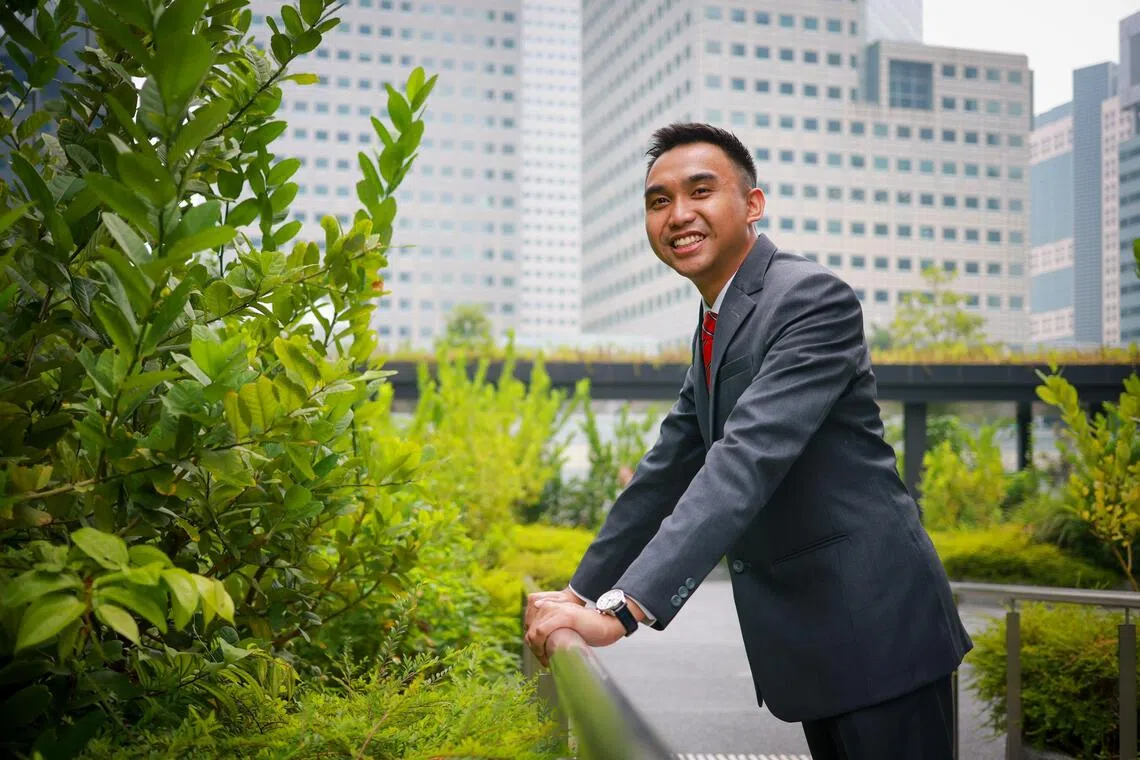
Muhammad Irfan Djuanda, 25, began attending career fairs in his second year of university when he was searching for internships.
ST PHOTO: JASON QUAH
Published Oct 24, 2026, 08:15 AM
Updated Oct 24, 2026, 08:15 AM
Singapore’s universities are boosting career support with internships and practical learning to help students compete in a tougher graduate job market.
Courses now focus more on AI, interdisciplinary skills and real-world problem solving.
Universities also offer networking, coaching and lifelong alumni support.
SINGAPORE – As the graduate job market grows increasingly competitive , Singapore’s six autonomous universities are expanding efforts to help students get a head start in their careers.
From career readiness programmes to new courses emphasising interdisciplinary skills and familiarity with artificial intelligence, undergraduates are getting more support.
This shift reflects a growing emphasis on hands-on experience across local tertiary institutions.
At a recent panel discussion on AI and employment, President Tharman Shanmugaratnam noted that higher education must pivot towards applied learning through work-study options, attachments and internships.
In line with this direction, around 3,000 new year-long internships will be offered to tertiary students over the next three years across sectors such as technology, finance and healthcare.
At the Singapore University of Technology and Design (SUTD), its president Phoon Kok Kwang highlights experiential learning as core to the institution’s pedagogical model.
“Our students start with the people and the problem, and develop solutions, using AI where it helps. They build, test and improve until the solutions are useful to the people they serve,” he says.
SUTD’s Design·AI Innovation and Venture Exploration (DIVE) platform, launched in 2026, integrates design, technology, entrepreneurship and industry collaboration.
Students are sent into the industry to tackle real-world challenges, giving them opportunities to apply their knowledge and cultivate an innovator’s mindset.
“These experiences help shape their values, build character and broaden their perspectives, cultivating a global outlook,” Phoon adds.
Refreshed modules prepare graduates for industry
Singapore Institute of Technology (SIT) has introduced interdisciplinary offerings, such as integrated studies in technology and management, and new minors such as entrepreneurship and AI.
Susanna Leong, SIT’s deputy president (academic) and provost, says these cross-domain options prepare graduates to bridge technical and non-technical disciplines when tackling complex workplace issues.
Similarly, the Singapore University of Social Sciences (SUSS) revamped its undergraduate curriculum in 2023 to provide greater flexibility through free electives, minors and second majors.
The modular structure allows undergraduates to tailor their learning to changing industry needs and career aspirations.
SUTD has likewise adapted its coursework to place a stronger emphasis on AI and interdisciplinary applications.
Angelvin Parma, head of SUTD’s career development centre, notes that employers today prioritise candidates who can design end-to-end solutions, critically evaluate AI outputs and build robust systems, rather than simply writing code from scratch.
Networking with future employers
Each semester at Nanyang Technological University (NTU), more than 250 employers participate in career fairs and on-campus recruitment events.
At SUTD, second-year undergraduates participate in networking events and final-year students complete a module on job search strategies. They subsequently attend networking sessions with prospective employers. A career fair is also held about four months before graduation.
“These platforms help students build meaningful industry connections, learn directly from employers and gain greater visibility into available opportunities,” says Parma.
Internships pave the way for full-time roles
At the Singapore Management University (SMU), nearly one in two graduates receives a full-time job offer from an internship organisation, with one in three accepting the offer.
SMU’s career centre also coordinates global attachments to help students develop cross-cultural competencies. In 2025, more than 250 SMU students completed overseas internships.
Similarly, at NTU, nearly one in three graduates secures employment through an internship placement.
The National University of Singapore (NUS) encourages students to treat internships, contract positions and freelance projects as stepping stones towards long-term career growth.
“In a cautious job market, these experiences provide valuable opportunities to build skills, gain industry exposure and strengthen long-term employability,” says its spokesperson.
An SUSS spokesperson notes that beyond leading to job offers, internships also give students valuable workplace experience, opportunities to build professional networks, and greater clarity about their career interests and aspirations.
Career coaching and skills development
To ensure students present themselves effectively, universities offer structured training in hiring processes. NUS provides workshops in resume writing, interviewing, personal branding and workplace communication, while SMU covers AI-enabled job search strategies and professional networking.
Also, every SMU student is paired with a career coach for personalised guidance on career planning and skills development.
At NTU, individual schools collaborate with its career and attachment office to deliver tailored support. For instance, the School of Materials Science and Engineering offers resume coaching for final-year students.
Extending career support to alumni
Career services increasingly extend beyond graduation day to support graduates throughout their working lives.
SIT provides its alumni network with ongoing career coaching, resume reviews, interview preparation and job search assistance tailored to different career stages.
Every alumnus is entitled to one complimentary course or module every five years valued at up to $3,500 to upskill or reskill.
SIT’s Leong says that the institute’s approach has evolved from preparing students for their first jobs to equipping them for a lifetime of careers in an AI-enabled economy.
“As industries are reshaped by AI, digital transformation and economic uncertainty, employers increasingly value graduates who can adapt quickly, apply their skills across different contexts and embrace continuous learning,” she says.
SMU similarly introduced Lifelong Career Support in 2025, granting its alumni ongoing access to career coaching and its jobs platform.
Prasanthi Guda, director of SMU’s Dato’ Kho Hui Meng Career Centre, says this is to support alumni as careers become increasingly non-linear.
“We support graduates throughout their professional journeys, helping them navigate career transitions, upskill and remain competitive in a rapidly changing employment landscape.”
Jane Ng is a senior correspondent who covers parenting, education and lifestyle stories. She writes a regular column, Minor Issues, where she mulls over her parenting dilemmas.
Universities - Singapore
25岁的穆罕默德·伊尔凡·朱安达在大学二年级时开始参加招聘会,当时他正在寻找实习机会。
《海峡时报》摄影:JASON QUAH
发布于 2026 年 10 月 24 日上午 8:15
更新于2026年10月24日上午8:15
新加坡各大学正在通过实习和实践学习来加强职业支持,以帮助学生在竞争日益激烈的毕业生就业市场中脱颖而出。
现在的课程更加注重人工智能、跨学科技能和实际问题解决。
大学还提供人脉拓展、指导和终身校友支持。
新加坡——随着毕业生就业市场竞争日益激烈,新加坡的六所自治大学正在加大力度,帮助学生在职业生涯中抢占先机。
从职业准备计划到强调跨学科技能和人工智能知识的新课程,本科生正在获得更多支持。
这一转变反映出本地高等院校越来越重视实践经验。
在最近一次关于人工智能和就业的小组讨论中,尚达曼总统指出,高等教育必须通过勤工俭学、实习和见习等方式转向应用型学习。
按照这一方向,未来三年将在科技、金融和医疗保健等领域为高等院校学生提供约 3000 个新的为期一年的实习机会。
新加坡科技设计大学(SUTD)校长潘国光强调,体验式学习是该校教学模式的核心。
他说:“我们的学生从人和问题出发,开发解决方案,并在必要时运用人工智能。他们不断构建、测试和改进,直到解决方案真正对他们所服务的人群有用。”
新加坡科技设计大学 (SUTD) 的 Design·AI 创新与风险探索 (DIVE) 平台将于 2026 年推出,该平台整合了设计、技术、创业和行业合作。
学生会被派往行业中解决现实世界的挑战,让他们有机会运用所学知识,培养创新思维。
“这些经历有助于塑造他们的价值观,培养他们的性格,拓宽他们的视野,培养他们的全球视野,”Phoon补充道。
更新后的课程模块使毕业生为行业做好准备
新加坡理工大学 (SIT) 推出了跨学科课程,例如技术与管理综合研究,以及创业和人工智能等新的辅修课程。
新加坡理工大学副校长(学术)兼教务长梁淑芬表示,这些跨领域课程使毕业生能够在处理复杂的职场问题时,将技术和非技术领域联系起来。
同样,新加坡社会科学大学(SUSS)于 2023 年对其本科课程进行了改革,通过自由选修课、辅修专业和第二专业提供更大的灵活性。
模块化结构使本科生能够根据不断变化的行业需求和职业抱负来调整学习内容。
新加坡科技设计大学也同样调整了课程设置,更加注重人工智能和跨学科应用。
新加坡科技设计大学 (SUTD) 职业发展中心负责人 Angelvin Parma 指出,如今的雇主更看重能够设计端到端解决方案、批判性地评估人工智能输出并构建稳健系统的候选人,而不是仅仅从头开始编写代码的候选人。
与未来雇主建立联系
南洋理工大学(NTU)每个学期都有超过 250 家雇主参加招聘会和校园招聘活动。
在新加坡科技设计大学,二年级本科生会参加各种社交活动,而应届毕业生则会完成一个关于求职策略的模块学习。之后,他们会参加与潜在雇主的交流会。此外,在毕业典礼前大约四个月还会举办一场招聘会。
帕尔马说:“这些平台帮助学生建立有意义的行业联系,直接向雇主学习,并更清楚地了解可用的机会。”
实习经历为获得全职工作铺平了道路。
在新加坡管理大学 (SMU),近二分之一的毕业生会收到实习机构提供的全职工作机会,其中三分之一的人会接受这份工作。
新加坡管理大学的职业发展中心还协调国际实习项目,帮助学生培养跨文化能力。2025年,超过250名新加坡管理大学的学生完成了海外实习。
同样,在南洋理工大学,近三分之一的毕业生通过实习机会获得就业机会。
新加坡国立大学鼓励学生将实习、合同职位和自由职业项目视为迈向长期职业发展的垫脚石。
“在就业市场谨慎的情况下,这些经历为培养技能、获得行业经验和增强长期就业能力提供了宝贵的机会,”其发言人表示。
新加坡社会科学大学发言人指出,实习除了能带来工作机会外,还能为学生提供宝贵的工作经验、建立专业人脉的机会,以及更清晰的职业兴趣和抱负。
职业辅导和技能发展
为了确保学生能够有效地展现自我,大学会提供系统化的招聘流程培训。新加坡国立大学(NUS)提供简历撰写、面试技巧、个人品牌塑造和职场沟通等方面的研讨会,而新加坡管理大学(SMU)则涵盖人工智能辅助的求职策略和职业人脉拓展。
此外,每位新加坡管理大学的学生都会配备一名职业导师,以获得个性化的职业规划和技能发展指导。
在南洋理工大学,各学院与校内就业指导中心合作,提供量身定制的支持服务。例如,材料科学与工程学院为应届毕业生提供简历指导。
为校友提供职业发展支持
职业服务越来越多地延伸到毕业典礼之后,为毕业生提供贯穿整个职业生涯的支持。
SIT 为其校友网络提供持续的职业指导、简历审核、面试准备和求职帮助,这些服务均根据不同的职业阶段量身定制。
每位校友每五年可免费参加一门价值高达 3,500 美元的课程或模块,以提升或重新学习技能。
新加坡理工大学的梁教授表示,该学院的办学理念已经从帮助学生为第一份工作做好准备,发展到让他们在人工智能经济中拥有终身职业发展能力。
“随着人工智能、数字化转型和经济不确定性重塑各行各业,雇主越来越重视能够快速适应、在不同环境中运用技能并乐于持续学习的毕业生,”她说。
新加坡管理大学 (SMU) 也于 2025 年推出了终身职业支持计划,使其校友能够持续获得职业指导和求职平台。
新加坡管理大学拿督许慧敏职业中心主任普拉桑蒂·古达表示,这是为了支持校友,因为职业发展正变得越来越非线性。
“我们为毕业生提供全程职业发展支持,帮助他们应对职业转型、提升技能,并在快速变化的就业环境中保持竞争力。”
Jane Ng是一位资深记者,主要报道育儿、教育和生活方式方面的故事。她定期撰写专栏“小问题”,在专栏中探讨她遇到的育儿难题。
新加坡大学