Thailand falls behind Southeast Asian peers in race to build more flight connections as tourism fades随着旅游业的衰退,泰国在建设更多航班连接方面落后于东南亚其他国家。
High-season alarm for Thailand as direct international flights to Hat Yai, Krabi and Koh Samui plunge. Foreign arrivals are down 4%, while Kasikorn cuts its… Read More ›
新闻视频
October 24, 2026 at 11:22 pm
in Economy , Living , Media , Thailand
Thailand’s tourism industry faces mounting pressure as foreign arrivals fall 4.12% and international airlines expand far faster into Malaysia, Vietnam and China. New Kasikorn Research Centre figures expose sharp cuts in flights to Krabi, Koh Samui and Hat Yai ahead of the high season. Meanwhile, Thai AirAsia is slashing capacity as fuel costs soar and airline profits shrink. Kasikorn has already cut its 2026 tourist forecast by 2.74 million visitors. The worsening outlook gives fresh weight to warnings issued by senior economists in November 2025 about Thailand’s declining tourism competitiveness and persistently weak visitor spending since the COVID-19 pandemic closures of 2020 and 2021.
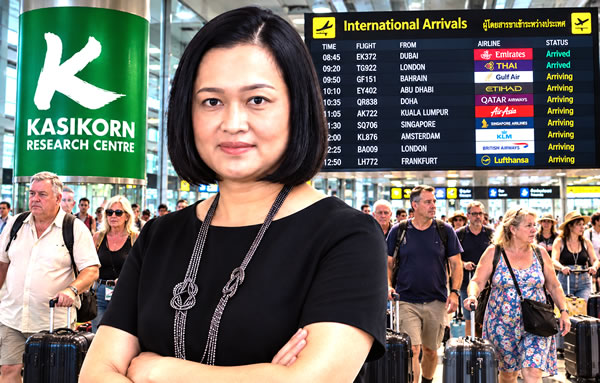
Thailand’s tourist arrivals fall 4.12% as flights are cut. Kasikorn’s Varithorn Sirisattayawong warned in November 2025 of weak tourist spending and declining competitiveness. ( Source: Kasikorn Research Centre )
Thailand is losing ground in Asia’s aviation market as international airlines expand services far more rapidly into competing destinations. New Kasikorn Research Centre figures show Thailand trailing Malaysia, Vietnam and China in scheduled international flight growth.
Meanwhile, foreign tourism arrivals have fallen by approximately 4% this year, compounding pressure on the country’s tourism industry. The latest figures reinforce warnings issued by senior Kasikorn economists in November 2025. They also expose sharp reductions in direct international services to Krabi, Koh Samui and Hat Yai.
The research, published on 12 October, forecasts 5.8% growth in incoming international flights during the final quarter of 2026. Although this exceeds worldwide growth of 2.5%, Thailand trails six of the nine Asian destinations examined. Malaysia leads with 15% growth, followed by Vietnam at 13.6% and China at 13.4%. Indonesia, South Korea and Singapore are also expanding faster. Consequently, Thailand ranks seventh despite remaining one of Southeast Asia’s largest aviation and tourism markets.
Kasikorn slashes tourism forecast as Varithorn’s earlier warnings on weak visitor spending gain force
The findings come as Thailand’s tourism outlook has deteriorated sharply since last November. Kasikorn has already reduced its 2026 foreign visitor forecast from 34.1 million to 31.36 million.
That represents 2.74 million fewer expected arrivals than previously projected. In addition, the centre forecasts international tourism receipts of approximately ฿1.54 trillion, down around 3%. The latest aviation figures now reveal further weaknesses ahead of the peak tourism season.
The deterioration was anticipated by Varithorn Sirisattayawong, Head of Research at Kasikorn Research Centre, in November 2025. She warned that Thailand’s tourism recovery remained below its potential, despite expectations of returning Chinese visitors.
More importantly, she identified weak spending per tourist and receipts that had failed to regain pre-pandemic levels. Her assessment challenged the industry’s dependence on increasing arrival numbers without securing stronger financial returns.
Varithorn urged higher-value tourism before arrivals forecasts fell and receipts weakened in 2026
At the time, Kasikorn expected 34.1 million foreign visitors during 2026, representing growth of 4%. That followed an estimated 7% contraction in 2025. Nevertheless, Varithorn cautioned that higher visitor numbers alone would not restore the industry’s financial performance. Instead, Thailand needed to develop tourism products capable of attracting travellers who spent more during their visits.
She identified major international concerts, sporting events and global theme parks as potential attractions. Furthermore, international conferences, exhibitions, medical tourism and wellness services offered opportunities for higher-value spending.
However, Varithorn acknowledged that developing these markets would require substantial investment and effective international marketing. Her comments were made before Kasikorn’s forecasts deteriorated during 2026.
By August, the centre had abandoned its earlier expectation of renewed visitor growth. Its revised forecast anticipated 31.36 million foreign arrivals, representing a projected annual decline of 4.9%. Meanwhile, expected international tourism receipts fell to approximately ฿1.54 trillion. The latest year-to-date visitor figures show a contraction of approximately 4%, steeper than the August full-year forecast.
Tourism forecasts diverge from actual arrivals as Kasikorn warns of declining tourism competitiveness
The difference between the two estimates is important. Kasikorn’s 4.9% decline represents its forecast for the entire year. In contrast, the approximately 4% reduction reflects arrivals recorded so far during 2026. Nevertheless, both figures demonstrate the deterioration since November 2025, when the centre still anticipated a recovery.
Varithorn’s earlier assessment has therefore gained significance as Thailand’s tourism performance has weakened. However, her documented remarks concerned the November 2025 outlook, not the latest October aviation study. The new research provides further evidence of the commercial pressures she identified almost a year earlier.
Another senior Kasikorn economist issued a more explicit warning alongside Varithorn’s assessment. Kevalin Wangpichayasuk, Deputy Managing Director of Kasikorn Research Centre, identified growing signs of declining international tourism competitiveness.
She also highlighted the narrowing gap between foreign tourism receipts and Thai spending on overseas travel. Moreover, growth from Europe and India was failing to compensate fully for weaker Chinese and ASEAN arrivals.
Kasikorn data expose uneven regional growth as secondary destinations struggle for international flights
Kevalin identified another longstanding problem affecting Thailand’s tourism industry. Foreign visitors remained heavily concentrated in established destinations, while secondary cities received insufficient benefits.
Consequently, tourism growth was failing to spread more evenly across the country. The latest aviation figures now reveal substantial differences between Thailand’s principal tourist centres.
Kasikorn’s October research examines scheduled international flights between October and December 2026. The figures are based on Bloomberg airline schedules available on 7 October. Importantly, they measure planned services rather than completed flights or confirmed passenger arrivals.
Airlines may still revise schedules before departure. Nevertheless, the figures provide a detailed comparison of international aviation expansion across major Asian destinations.
Malaysia’s incoming international flights are scheduled to increase by 15% compared with the corresponding quarter of 2025. Vietnam follows with growth of 13.6%, while China is expanding by 13.4%.
Indonesia is recording an 8.9% increase, followed by South Korea at 7.9% and Singapore at 6.6%. Thailand follows at 5.8%, ahead of the Philippines at 2.5%. Japan is the only destination recording a contraction, with scheduled international flights declining by 1.7%.
Malaysia and Vietnam outpace Thailand as Chiang Mai gains flights but other resorts lose connections
The gap between Thailand and its strongest competitors is substantial. Malaysia’s growth rate is more than two and a half times Thailand’s figure. Similarly, Vietnam is expanding international flights at more than twice Thailand’s pace.
China is also recording growth exceeding double Thailand’s rate. Even Singapore, an established regional aviation hub, is increasing incoming services more rapidly.
Thailand’s performance remains stronger than the worldwide average. However, the regional comparison exposes a weaker position among several important competing destinations. Airlines are scheduling substantially faster expansion into Malaysia, Vietnam and China. Meanwhile, Thailand’s national increase conceals significant reductions in services to several tourist centres.
Chiang Mai is recording the strongest growth among the Thai destinations examined. Scheduled international flights into the northern city are increasing by 14.3% during the fourth quarter. Bangkok follows with growth of 6.8%, while Phuket is expanding by 6.4%. In contrast, Hat Yai, Krabi and Koh Samui face steep reductions in direct overseas connections.
Hat Yai, Krabi and Koh Samui face deep international flight cuts ahead of the peak tourism season
Hat Yai is recording the largest contraction, with scheduled international flights falling by 29.2%. Krabi follows with a decline of 22.3%, while Koh Samui faces a 20.6% reduction. These losses contrast sharply with the overall national increase of 5.8%. Indeed, Hat Yai is losing almost three in ten scheduled international services compared with last year.
Krabi and Koh Samui are also experiencing reductions exceeding one fifth. Consequently, three established tourist destinations face substantially fewer direct international connections ahead of the high season. The reductions affect access to hotels, resorts and other tourism businesses dependent on overseas customers.
Direct flights allow international visitors to reach destinations without additional domestic connections or lengthy road transfers. When services are withdrawn, passengers may need alternative routes through Bangkok or other airports.
Furthermore, competing holiday destinations offering convenient direct connections can become more attractive. The loss of international services therefore presents a commercial problem for affected tourism businesses.
However, the figures concern direct international flights rather than total visitor arrivals. Travellers reaching Krabi through Bangkok or Phuket would not appear as direct international arrivals at Krabi Airport. Similarly, foreign visitors reaching Koh Samui through domestic connections would not be included in its international flight figures. Nevertheless, the reductions indicate weaker direct access from overseas markets.
Thai Hotels Association warns on Krabi connections as passenger growth fails to match added flights
The Thai Hotels Association has already expressed concern about Krabi’s international aviation connections. Its president, Thienprasith Chaiyapatranun, warned about the implications for accommodation businesses ahead of the high season.
Separately, he reported that Phuket was retaining important Middle Eastern connections. However, passenger growth was considerably weaker than the increase in scheduled flights.
That difference is significant for the tourism industry. Additional aircraft services do not necessarily produce equivalent increases in passenger numbers. Likewise, higher visitor arrivals do not automatically generate proportional growth in tourism receipts. These issues reflect the concerns raised by Varithorn about visitor spending and the industry’s financial performance.
Kasikorn’s breakdown of incoming flights by origin market reveals further weaknesses. China and Europe are supplying much of Thailand’s projected aviation growth. However, services from India, South Korea and Russia are declining. The contrasting figures demonstrate how expansion from selected markets is compensating for reductions elsewhere.
Chinese and European flights rise sharply while India, South Korea and Russia record falling services
Scheduled flights from Europe are increasing by 28.6% compared with the final quarter of 2025. Meanwhile, incoming services from China are expanding by 21.6%. Kasikorn identifies these markets as the principal contributors to Thailand’s overall growth. China alone is expected to provide 13,035 incoming international flights during the quarter.
Nevertheless, stronger Chinese flight schedules do not guarantee equivalent growth in Chinese visitor arrivals. Passenger occupancy, ticket prices and travel patterns influence the eventual results. Furthermore, some travellers may use international flights for purposes other than tourism. The increase in scheduled services therefore cannot be treated as a direct measure of additional holidaymakers.
Elsewhere, the figures are considerably weaker. Scheduled flights from India are declining by 4.6% to 5,344 services. Malaysia is recording modest growth of 1.9%, with 4,544 incoming flights. In contrast, South Korea and Russia face much sharper reductions.
Incoming flights from South Korea are scheduled to fall by 20.5%, leaving 2,222 services during the quarter. Russia faces an even larger contraction of 22.5%, with 1,408 scheduled flights. These declines affect two established international visitor markets. Moreover, the South Korean reduction follows a prolonged deterioration in tourist arrivals.
South Korean arrivals weaken as regional rivals gain tourists seeking better value and cheaper trips
Kasikorn previously identified weakening South Korean visitor numbers beginning in January 2025. The latest flight schedules now show a substantial reduction in direct aviation services from that market.
Meanwhile, fewer flights from India and Russia add to the difficulties facing Thailand’s tourism industry. Stronger Chinese and European services must therefore offset weakness across several established markets.
Kasikorn’s August research also identified changing international travel preferences. Tourists were increasingly selecting destinations according to affordability and perceived value. Notably, Chinese travellers were showing greater interest in Vietnam and South Korea. Malaysia and Indonesia were also benefiting from changing regional travel patterns.
These developments have intensified competition for international visitors. Thailand remains a major destination, but several regional rivals are attracting faster aviation expansion. Furthermore, weaker arrivals from established markets have complicated the country’s recovery. The October figures show that increased services from Europe and China are occurring alongside substantial contractions elsewhere.
OAG figures show Thailand losing airline seats while Vietnam and Indonesia expand aviation capacity
Separate figures from aviation data specialist OAG reinforce concerns about Thailand’s performance. For October 2026, Thailand remains Southeast Asia’s second-largest aviation market by scheduled airline seats. However, its total scheduled capacity has declined by 1.7% compared with October 2025. Thailand has approximately 7.43 million scheduled airline seats during the month.
Vietnam presents a contrasting picture. Its scheduled airline seat capacity has increased by 10.6% to approximately 6.52 million. Meanwhile, Indonesia remains Southeast Asia’s largest aviation market, with 10.94 million scheduled seats. Its capacity has increased by 4.7% compared with October last year.
The comparison reveals another difference between Thailand and its regional competitors. Thailand is recording a contraction in total scheduled airline seats, while Vietnam and Indonesia continue expanding. Nevertheless, OAG’s figures measure a different aspect of aviation activity from Kasikorn’s research.
OAG counts domestic and international scheduled airline seats during October. Kasikorn measures incoming international flights across the entire fourth quarter. Consequently, the figures cannot be compared directly. However, both sets of data show Thailand performing more weakly than several competing aviation markets.
The distinction between flight numbers and passenger capacity is also important. Airlines can increase scheduled flight frequencies without increasing available seats by the same proportion. Aircraft size, seating arrangements and domestic services all influence total capacity. Furthermore, actual passenger numbers depend on how many seats airlines ultimately fill.
Thai AirAsia cuts seats sharply as fuel costs, aircraft shortages and regional pressures hit carriers
OAG’s figures reveal particularly difficult conditions for some low-cost carriers. Thai AirAsia has reduced its October scheduled seat capacity by 17.7%, equivalent to approximately 364,400 seats. In contrast, Vietnam Airlines has increased capacity by 9.7%. The difference highlights contrasting capacity decisions among important regional carriers.
Across Southeast Asia, low-cost airline seat capacity has contracted by 3.7%. Meanwhile, full-service carriers have expanded their capacity by 5.5%. Thai AirAsia’s reduction is therefore considerably sharper than the regional low-cost average. The figures reveal substantial pressure on budget aviation services during 2026.
Higher operating costs are another important factor affecting the industry. Kasikorn identifies geopolitical tensions, flooding in some Thai provinces and persistently high jet fuel prices as immediate risks. These pressures could prompt airlines to postpone additional services or withdraw existing routes. Furthermore, expensive fuel can make weaker routes less commercially attractive.
Separately, Krungsri Research has identified wider operational problems affecting Thailand’s aviation industry. Aircraft delivery delays, maintenance constraints and airport infrastructure limitations are restricting capacity expansion. Weaker domestic purchasing power is also affecting the operating environment. In addition, the Middle East conflict has increased airline costs and disrupted some international routes.
Higher fuel bills and aircraft constraints squeeze airline profits and threaten services into Thailand
Some carriers have altered flight paths to avoid affected airspace. Consequently, longer journeys have increased fuel consumption and operating expenses. Higher costs place additional pressure on airline profitability, particularly where passenger demand remains weak. Airlines must also consider aircraft availability and expected occupancy before adding services.
Krungsri expects the Thai aviation industry’s net profit margin to decline from 4.2% in 2025 to approximately 2% in 2026. That represents a substantial deterioration in profitability. Furthermore, aircraft delivery delays and maintenance restrictions could constrain expansion for another two to three years. Some major airport infrastructure projects are not expected to be completed until after 2028.
These restrictions affect airline capacity decisions even where passenger demand remains relatively healthy. Aircraft availability, maintenance requirements and airport infrastructure determine how quickly carriers can expand. Meanwhile, higher operating expenses can encourage reductions on less profitable routes. Krungsri expects some airlines to adjust frequencies to protect occupancy rates and earnings.
The commercial consequences extend beyond airlines and airports. International tourism supports hotels, restaurants, transport operators, tour businesses and retailers across Thailand. When direct overseas connections decline, local businesses face reduced access to important international markets. Furthermore, weaker visitor growth can affect employment and working hours across tourism-related industries.
Tourist centres face lost direct flights as Kasikorn cuts its forecast by 2.74 million expected arrivals
The pressure is particularly relevant to destinations experiencing sharp reductions in international flights. Krabi, Koh Samui and Hat Yai are all recording contractions exceeding 20%. Meanwhile, Hat Yai’s decline approaches 30%. These figures reveal substantially weaker direct international connectivity despite Thailand’s overall aviation growth.
However, Kasikorn has not calculated a specific financial loss attributable to slower flight expansion. Nor can differences in scheduled aviation growth be converted directly into lost visitors or tourism receipts. Actual arrivals depend on passenger demand, aircraft capacity and airline occupancy. Nevertheless, the reductions present clear commercial difficulties for destinations dependent on international visitors.
The wider tourism forecasts show how substantially expectations have deteriorated. In November 2025, Kasikorn anticipated 34.1 million foreign arrivals during 2026. By August, that estimate had fallen to 31.36 million. Meanwhile, projected international tourism receipts stood at approximately ฿1.54 trillion, down around 3%.
The revised arrivals forecast represents 2.74 million fewer visitors than originally anticipated. Furthermore, the latest year-to-date decline of approximately 4% shows that foreign tourism remains under pressure. This is steeper than Kasikorn’s August full-year forecast of a 4.9% contraction. However, the two figures concern different reporting periods.
Varithorn and Kevalin’s 2025 warnings gain force as Thailand trails rivals in scheduled flight growth
These developments have reinforced the relevance of the November 2025 warnings from Varithorn and Kevalin. Varithorn identified weak spending per visitor and the need for higher-value tourism products.
Kevalin warned about declining competitiveness and insufficient distribution of tourism beyond established destinations. Both assessments preceded the latest deterioration in aviation schedules and visitor forecasts.
The October research now shows Thailand trailing six Asian destinations in scheduled international flight growth. Moreover, several important Thai tourist centres are losing direct overseas connections. Meanwhile, Malaysia, Vietnam and China are recording increases exceeding twice Thailand’s rate.
Thailand nevertheless retains an extensive international aviation network. Bangkok remains an important regional gateway, while Phuket continues attracting additional services. Chiang Mai is also recording strong double-digit growth. However, these gains contrast with the reductions affecting Krabi, Koh Samui and Hat Yai.
For the remainder of 2026, Kasikorn identifies geopolitical uncertainty, flooding and high fuel costs as immediate threats. Airlines may still revise schedules as operating conditions change. Meanwhile, stronger Chinese and European services have yet to establish how many additional passengers will arrive during the high season.
Krabi hotels face high-season flight losses as airlines reassess routes and rising operating costs
The Thai Hotels Association remains particularly concerned about Krabi’s reduced international connections. Its president has warned about the implications for local accommodation businesses.
On another front, Krungsri’s aviation outlook points to weaker airline profitability and continuing capacity restrictions. Aircraft shortages and infrastructure limitations are expected to remain problems beyond 2026.
The next important evidence will come from completed flights, actual visitor arrivals and hotel performance during the peak tourism season. Airlines will also continue adjusting schedules according to demand, operating costs and aircraft availability. For Krabi, Koh Samui and Hat Yai, the immediate issue is whether direct international services can recover.
Kasikorn’s November 2025 tourism forecast has already undergone a major downward revision. Its October aviation research now provides another measure of Thailand’s weakening competitive position. Meanwhile, Malaysia, Vietnam and China are expanding international flights considerably faster. The remaining months of 2026 will establish whether stronger Chinese and European connections can offset reductions elsewhere.
Airlines begin axing flights as jet fuel supplies dwindle. Massive impact on the foreign tourism sector
6th Minister of Tourism and Sports in 3 years promises a tourist levy, a policy first proposed in 2015
Hardline foreign tourism confirmed by new minster. More charges, shorter visas and mandatory insurance
Visa entry period to go from 60 to 30 days. Agreement in principle as foreign tourism numbers fall by 10%
60-day visa regime to be ended confirms Minister responding to rising industry security concerns
Tourism boss warns Thailand it is facing a Chinese blacklist if another security controversy erupts
Ung Ing finally gives the order. Thailand pulls the plug on scam centre electricity in Burma. Cut at 9 am
PM on a mission to China to ask President Xi Jinping to help rein in heavy online criticism of the kingdom
PM Paetongtarn to speak Chinese with AI to address security fears in China as foreign tourism suffers over scam farms
Visa waiver scheme questioned with another China Crisis for foreign tourism driven by security fears
฿13 million swindled and robbed in Chinese criminal exploits in central Bangkok on Thursday afternoon
Tourism cryptocurrency sandbox payment plan is bound to face stiff opposition from the central bank
Joseph Anthony is an expat from Ireland who has lived in Thailand for the last decade. He has worked extensively in the media including editorial positions in Ireland and Thailand. He is focused on economic and business stories in Thailand as well as the expat lifestyle.
All posts by Joseph O' Connor
PM orders hands off land and property by foreigners as enforcement to be moved ahead by December October 20, 2026 Anutin puts thousands of suspected foreign land
Chinese and Vietnamese links probed in police open files on nightlife activities in Bangkok and Rayong October 19, 2026 Police storm a karaoke bar at 4 am, arresting 13
Nigerian cocaine gang arrested after strict crackdown orders from the Immigration Bureau chief Big Nop October 18, 2026 Bangkok cocaine sting leads police from a dealer to a
Midnight raids in Rayong on karaoke clubs fronting for prostitution see local police chief sidelined pending enquiries October 17, 2026 Four unlicensed KTV clubs serving Chinese customers
American company director arrested in Bangkok Thursday for failing to over a million baht in wages October 17, 2026 Nearly four months after a court issued its first
Pheu Thai leadership assures PM of support in the No Conference debate and vote at the end of October October 17, 2026 Pheu Thai chiefs promise Anutin all 71 MPs to defeat a
Justice Ministry boss reveals ‘Black Research’ aimed at High School students. 3,000 sexual abuse images October 16, 2026 Schoolboys aged 15–17 were tricked into supplying
Man gunned down by motorcycle assassins outside a weed shop in Bangkok’s Laksi district early Friday October 16, 2026 Two motorcycle gunmen unleash more than ten shots
Police arrest South Korean after child reports mother being abused. Man found to have overstayed his visa October 16, 2026 A sudden call from a Thai woman’s child triggers
Base pipe bomb attack on Thursday in southern Yala province left five army officers with minor injuries October 16, 2026 Yala security forces come under bomb attack as
Prime Minister Anutin talks of an economy driven by ‘quality growth’ at the Bangkok IMF World Bank forum October 15, 2026 Anutin promises advanced industries, richer tourists
Thai Airways now says baggage failure was five times worse than admitted. Board orders compensation October 15, 2026 Thai Airways faces a worldwide reckoning after 25,000
Boss Surat Thani woman shot worker who borrowed a cooking pot and motorbike dead after he attacked her October 15, 2026 Roadside bloodshed in Surat Thani as a woman shoots
Malaysian couple on honeymoon with 40 litres of petrol spark security crisis at IMF World Bank summit October 14, 2026 Bomb squad police search a Malaysian couple’s
Ekniti clings to AI to buoy the Thai economy and even promises a second life for the ‘sick man of Asia’ October 14, 2026 Ekniti pitches an AI-powered revival at the
Child trafficked from Burma sold for 30k baht by her mother as top ministers smash vile ring in Bangkok October 13, 2026 Two arrested and six Burmese children rescued in
Action underway against adventure sports organisers after two foreign tourists are injured abseiling October 13, 2026 An adventure trip in Phetchabun ended with two foreign
7kg heroin in drink sachets bound for Australia found in a Samut Prakan premises after police tip off October 19, 2026
Much loved Robocop, a popular figure in Nonthaburi near Bangkok dies in a tragic road traffic accident October 19, 2026
Thai star Nene Royal faces trademark headaches in Thailand and South Korea as she secures her fortune October 18, 2026
Six dead in deadly clashes in Southern Thailand including a policeman killed on National Police Day October 17, 2026
Underfire southern MP says Prime Minister Anutin telephoned her and urged her to post a selfie online October 17, 2026
Prime Minister cock a hoop as IMF World Bank meet ends in Bangkok. Insists Thailand’s standing has risen October 17, 2026
Departures tax pushed by the Ministry of Finance is the death kiss for the tourist sector say top execs October 16, 2026
US Bangkok broadside to the IMF and the World Bank delivered by Scott Bessent who snubbed the meeting October 16, 2026
Friday protests by anti IMF World Bank activists continue after overnight camp event in central Bangkok October 16, 2026
Air hostess linked to international trafficking ring smuggling Chinese nationals in and out of Thailand October 16, 2026
Protests at the IMF World Bank meetings turn violent but Bangkok police deny being heavy handed October 15, 2026
Bhumjaithai Party Southern MP facing political strain as questions grow about her husband’s online fortune October 15, 2026
Portuguese woman’s 5 year stay in Thailand without a valid visa ends at a Phuket cookery class on Tuesday October 15, 2026
Thai police get involved in Hong Kong prostitution ring smashed last weekend which yielded vast returns October 14, 2026
Police arrest Chinese tourist thief who used Thai flights to snatch credit cards and run up charges on them October 14, 2026
UK man urgently sought by family after vanishing in Thailand over a week ago just before his flight home October 13, 2026
Tax grab targeted at outbound passengers is opposed by travel industry as ministry pushes a new agenda October 13, 2026
Upmarket Thai prostitution racket smashed by Hong Kong police. 16 people arrested in separate swoops October 13, 2026
Air force monitors Chinese base operation in Laos as Beijing strengthens military ties with neighbours October 12, 2026
Tourist police reach out to Russian Embassy to inform tourists visiting Thailand about laws and customs October 12, 2026
Police chief says Bangkok is ready for World Bank and IMF meetings with over 18,000 delegates visiting October 12, 2026
Indian YouTube on tour of Thailand with no money hits a snag at Udon Thani temple and is asked to leave October 11, 2026
© 2026 Thai Examiner. All rights reserved.
2026年10月24日晚上11点22分
在经济、生活、媒体、泰国
泰国旅游业面临越来越大的压力,外国游客数量下降了4.12%,而国际航空公司却以更快的速度扩张到马来西亚、越南和中国。开泰研究中心最新数据显示,在旅游旺季到来之前,飞往甲米、苏梅岛和合艾的航班大幅削减。与此同时,由于燃油成本飙升和航空公司利润缩水,泰国亚洲航空也在削减运力。开泰研究中心已将2026年的游客预测下调了274万人次。前景恶化进一步印证了资深经济学家在2025年11月发出的警告:自2020年和2021年新冠疫情封锁以来,泰国旅游业竞争力持续下降,游客消费支出也持续疲软。
由于航班减少,泰国游客入境人数下降4.12%。开泰研究中心的瓦里通·西里萨塔亚翁(Varithorn Sirisattayawong)在2025年11月曾警告称,旅游消费疲软,竞争力下降。(来源:开泰研究中心)
随着国际航空公司以更快的速度拓展航线至其他竞争目的地,泰国在亚洲航空市场的地位正在下降。开泰研究中心最新数据显示,泰国在定期国际航班增长方面落后于马来西亚、越南和中国。
与此同时,今年外国游客入境人数下降了约4%,加剧了泰国旅游业的压力。最新数据印证了开泰银行高级经济学家在2025年11月发出的警告。这些数据还显示,直飞甲米、苏梅岛和合艾的国际航班数量大幅减少。
这项于10月12日发布的研究预测,2026年第四季度泰国入境国际航班数量将增长5.8%。尽管这一增速高于全球2.5%的平均水平,但在所考察的九个亚洲目的地中,泰国的增速却落后于六个。马来西亚以15%的增速领跑,其次是越南(13.6%)和中国(13.4%)。印尼、韩国和新加坡的增长速度也更快。因此,尽管泰国仍然是东南亚最大的航空和旅游市场之一,但其排名仅为第七。
开泰宫大幅下调旅游业预测,此前瓦里通关于游客消费疲软的警告逐渐生效
调查结果出炉之际,泰国旅游业前景自去年11月以来急剧恶化。开泰旅游局已将2026年外国游客数量预测从3410万人次下调至3136万人次。
这意味着预计到港游客人数比此前预测减少了274万人次。此外,该中心预测国际旅游收入约为1.54万亿泰铢,下降约3%。最新的航空数据显示,在旅游旺季到来之前,旅游业仍存在更多疲软迹象。
早在2025年11月,开泰研究中心研究主管Varithorn Sirisattayawong就预测到了这种恶化趋势。她警告说,尽管人们预期中国游客会回归,但泰国旅游业的复苏仍未达到其应有的水平。
更重要的是,她指出游客人均消费疲软,且旅游收入未能恢复到疫情前水平。她的评估对旅游业过度依赖游客数量增长而忽视财务回报的做法提出了质疑。
瓦里松敦促发展高价值旅游,以免2026年游客人数预测下降和旅游收入减少。
当时,开泰集团预计2026年外国游客人数将达到3410万人次,同比增长4%。此前,预计2025年外国游客人数将下降7%。然而,瓦里通警告说,仅靠游客数量的增长并不能恢复旅游业的财务状况。泰国需要开发能够吸引更多游客、提升游客消费能力的旅游产品。
她认为大型国际音乐会、体育赛事和全球主题公园都是潜在的吸引点。此外,国际会议、展览、医疗旅游和健康服务也提供了高价值消费的机会。
然而,瓦里通承认,开发这些市场需要大量投资和有效的国际营销。她的这番言论是在开泰银行2026年预测恶化之前发表的。
到8月份,该中心放弃了此前对游客数量回升的预期。其修订后的预测显示,外国游客到访量预计为3136万人次,同比下降4.9%。与此同时,预计国际旅游收入降至约1.54万亿泰铢。最新的年初至今游客数据显示,游客数量下降了约4%,降幅高于8月份的全年预测。
旅游预测与实际入境人数出现偏差,开泰银行警告称旅游业竞争力正在下降
这两个预测值之间的差异至关重要。开泰航空预测的4.9%的降幅代表了其对全年的预测。相比之下,约4%的降幅反映的是2026年迄今为止的入境人数。尽管如此,这两个数字都表明,自2025年11月以来情况有所恶化,当时该中心仍预期会出现复苏。
因此,随着泰国旅游业表现疲软,Varithorn 早前的评估显得尤为重要。然而,她当时所作的评论是基于2025年11月的展望,而非最新的10月份航空业研究。这项新研究进一步证实了她近一年前提出的商业压力。
与瓦里通的评估相呼应,另一位开泰银行资深经济学家也发出了更为明确的警告。开泰银行研究中心副总经理凯瓦林·旺皮查亚苏克指出,国际旅游竞争力下降的迹象日益明显。
她还强调,外国游客收入与泰国人海外旅游支出之间的差距正在缩小。此外,来自欧洲和印度的游客增长未能完全弥补中国和东盟游客数量的下降。
开泰航空的数据显示,区域增长不平衡,二线目的地难以吸引国际航班。
凯瓦林指出了泰国旅游业长期存在的另一个问题:外国游客仍然高度集中在成熟的旅游目的地,而二线城市则未能从中受益。
因此,旅游业的增长未能均衡地遍及全国各地。最新的航空数据显示,泰国主要旅游中心之间存在显著差异。
开泰银行10月份的研究分析了2026年10月至12月期间的定期国际航班。数据基于彭博社10月7日发布的航空公司航班时刻表。值得注意的是,这些数据统计的是计划航班,而非已完成的航班或已确认的旅客抵达人数。
航空公司仍有可能在起飞前修改航班时刻表。尽管如此,这些数据仍能详细比较亚洲主要目的地国际航空业的扩张情况。
马来西亚的国际入境航班数量预计将比 2025 年同期增长 15%。越南紧随其后,预计增长 13.6%,而中国则增长 13.4%。
印尼的国际航班数量增长了8.9%,紧随其后的是韩国(7.9%)和新加坡(6.6%)。泰国以5.8%的增幅位列第三,菲律宾则以2.5%的增幅位居第四。日本是唯一一个国际航班数量出现萎缩的目的地,其定期国际航班数量下降了1.7%。
马来西亚和越南的航班增长速度超过泰国,清迈新增航班,但其他度假胜地的航班减少。
泰国与其最强劲的竞争对手之间的差距巨大。马来西亚的经济增长速度是泰国的两倍半以上。同样,越南的国际航班扩张速度也是泰国的两倍以上。
中国的增长速度也超过了泰国的两倍。就连新加坡这个成熟的区域航空枢纽,其入境航班的增长速度也更快。
泰国旅游业的整体表现依然优于全球平均水平。然而,从区域比较来看,泰国在几个重要的竞争目的地中处于劣势。航空公司正计划大幅扩张飞往马来西亚、越南和中国的航线。与此同时,泰国国内航线数量的增长掩盖了部分旅游中心航线服务的显著减少。
在所考察的泰国旅游目的地中,清迈的增长最为强劲。第四季度,飞往这座北部城市的定期国际航班数量增长了14.3%。曼谷紧随其后,增长了6.8%,普吉岛则增长了6.4%。相比之下,合艾、甲米和苏梅岛的直飞国际航班数量则大幅减少。
在旅游旺季来临之际,合艾、甲米和苏梅岛将面临大幅国际航班削减。
合艾的国际航班降幅最大,下降了29.2%。甲米紧随其后,下降了22.3%,苏梅岛也面临20.6%的降幅。这些降幅与全国整体5.8%的增长形成鲜明对比。事实上,与去年相比,合艾的国际航班减少了近十分之三。
甲米和苏梅岛的航班也减少了五分之一以上。因此,这三个成熟的旅游目的地在旺季来临前面临着国际直航航班大幅减少的困境。航班减少影响了依赖海外游客的酒店、度假村和其他旅游企业的运营。
直飞航班使国际游客无需经停国内航班或长途陆路即可抵达目的地。航班停飞后,乘客可能需要经由曼谷或其他机场转机。
此外,提供便捷直达交通的竞争性度假目的地可能会变得更具吸引力。因此,国际航线的中断给受影响的旅游企业带来了商业难题。
然而,这些数据指的是直飞国际航班,而非游客总入境人数。经曼谷或普吉岛抵达甲米的旅客不会被计入甲米机场的直飞国际航班入境人数。同样,经国内转机抵达苏梅岛的外国游客也不会被计入其国际航班统计数据。尽管如此,这些下降仍然表明来自海外市场的直飞渠道有所减弱。
泰国酒店协会警告称,由于客流量增长未能跟上航班增加,甲米航线的客运量可能下降。
泰国酒店协会此前已对甲米的国际航空交通状况表示担忧。该协会主席Thienprasith Chaiyapatranun警告称,旺季来临之际,这将对住宿业造成影响。
此外,他还报告说,普吉岛与中东地区保持着重要的联系。然而,客运量的增长远低于定期航班数量的增长。
这种差异对旅游业意义重大。增加航班服务并不一定能带来同等程度的客运量增长。同样,游客数量的增加也并不会自动带来旅游收入的相应增长。这些问题反映了瓦里通提出的关于游客消费和行业财务状况的担忧。
开泰航空按始发市场细分入境航班数据,揭示了更多疲软之处。中国和欧洲是泰国航空业预计增长的主要来源。然而,来自印度、韩国和俄罗斯的航班服务却在下降。这些对比鲜明的数据表明,部分市场的增长弥补了其他市场的下滑。
中国和欧洲的航班数量大幅增加,而印度、韩国和俄罗斯的航班数量则出现下降。
与2025年第四季度相比,来自欧洲的定期航班数量增长了28.6%。与此同时,来自中国的入境航班数量增长了21.6%。开泰航空认为,这些市场是泰国整体增长的主要贡献者。预计仅中国在本季度就将提供13,035个入境国际航班。
然而,增加中国航班并不能保证中国游客入境人数也会相应增长。客座率、机票价格和出行模式都会影响最终结果。此外,部分旅客可能出于旅游以外的目的乘坐国际航班。因此,航班数量的增加不能直接视为游客数量的增长。
其他地区的形势则明显疲软。来自印度的定期航班数量下降了4.6%,至5344班。马来西亚则录得1.9%的温和增长,入境航班数量为4544班。相比之下,韩国和俄罗斯的降幅则要大得多。
来自韩国的入境航班预计将减少20.5%,本季度仅剩2222个航班。俄罗斯的航班降幅更大,达22.5%,仅剩1408个航班。这些航班的减少影响了两个重要的国际游客市场。此外,韩国航班的减少是在游客数量持续下滑的基础上发生的。
由于区域竞争对手吸引更多寻求性价比更高、更便宜旅行的游客,韩国游客数量有所下降。
开泰航空此前已指出,自2025年1月起,韩国游客数量将持续下降。最新的航班时刻表显示,来自该市场的直航航班服务将大幅减少。
与此同时,来自印度和俄罗斯的航班减少,加剧了泰国旅游业面临的困境。因此,中国和欧洲航线的强劲增长必须弥补几个成熟市场的疲软。
开泰银行八月份的研究还发现,国际旅行偏好正在发生变化。游客越来越倾向于根据价格和感知价值来选择目的地。值得注意的是,中国游客对越南和韩国表现出越来越浓厚的兴趣。马来西亚和印度尼西亚也受益于区域旅行模式的转变。
这些发展加剧了国际游客的竞争。泰国仍然是重要的旅游目的地,但几个区域竞争对手正在吸引更快的航空扩张。此外,来自传统市场的游客数量减少也使泰国的复苏之路更加复杂。10月份的数据显示,来自欧洲和中国的航班数量增加的同时,其他地区的航班数量却大幅减少。
OAG数据显示,泰国航空座位数量减少,而越南和印尼则扩大了航空运力。
航空数据专家OAG提供的另一组数据也加剧了人们对泰国航空业表现的担忧。截至2026年10月,泰国仍是东南亚按定期航班座位数计算的第二大航空市场。然而,其总运力较2025年10月下降了1.7%。泰国当月约有743万个定期航班座位。
越南的情况则截然不同。其定期航班座位运力增长了10.6%,达到约652万个。与此同时,印尼仍然是东南亚最大的航空市场,定期航班座位运力为1094万个。与去年10月相比,其运力增长了4.7%。
对比结果揭示了泰国与其区域竞争对手之间的另一个差异。泰国定期航班座位总数正在萎缩,而越南和印尼则持续增长。然而,OAG的数据与开泰航空的研究侧重于航空活动的不同方面。
OAG统计的是10月份的国内和国际定期航班座位数。Kasikorn统计的是整个第四季度的入境国际航班数。因此,两组数据无法直接比较。然而,两组数据都显示,泰国航空业的表现逊于其他几个竞争市场。
区分航班数量和乘客容量也很重要。航空公司可以在不按比例增加可用座位的情况下增加航班频次。飞机大小、座位布局和国内航线都会影响总容量。此外,实际乘客数量取决于航空公司最终的座位利用率。
受燃油成本上涨、飞机短缺和区域性压力影响,泰国亚洲航空大幅削减座位。
OAG的数据显示,部分低成本航空公司的处境尤为艰难。泰国亚洲航空已将其10月份的定期航班座位运力削减了17.7%,相当于约364,400个座位。相比之下,越南航空则增加了9.7%的运力。这一差异凸显了各大区域航空公司在运力决策上的分歧。
东南亚地区低成本航空公司的座位运力下降了3.7%。与此同时,全服务航空公司的运力则增长了5.5%。因此,泰国亚洲航空的降幅远高于该地区低成本航空公司的平均水平。这些数据表明,到2026年,廉价航空服务将面临巨大压力。
运营成本上升是影响航空业的另一个重要因素。开泰航空指出,地缘政治紧张局势、泰国部分府的洪灾以及持续高企的航空燃油价格是迫在眉睫的风险。这些压力可能促使航空公司推迟增开航班或取消现有航线。此外,高昂的燃油价格也会降低原本就经营状况不佳的航线的商业吸引力。
此外,Krungsri Research 还指出,泰国航空业面临着更广泛的运营问题。飞机交付延误、维护限制和机场基础设施不足都制约了运力扩张。国内购买力下降也影响了运营环境。此外,中东冲突也推高了航空公司的成本,并扰乱了一些国际航线。
燃油成本上涨和飞机数量限制挤压航空公司利润,并威胁到飞往泰国的航班服务。
部分航空公司已更改航线以避开受影响空域。因此,航程延长导致燃油消耗和运营成本增加。成本上升给航空公司的盈利能力带来更大压力,尤其是在客运需求依然疲软的情况下。航空公司在增加航班服务前,还必须考虑飞机可用性和预期上座率。
Krungsri预计泰国航空业的净利润率将从2025年的4.2%下降到2026年的约2%,这意味着盈利能力将大幅下滑。此外,飞机交付延迟和维护限制可能会在未来两到三年内抑制航空业的扩张。一些大型机场基础设施项目预计要到2028年以后才能完工。
即使客运需求依然相对旺盛,这些限制也会影响航空公司的运力决策。飞机可用性、维护需求和机场基础设施决定了航空公司扩张的速度。与此同时,运营成本的上升可能会促使航空公司减少盈利能力较弱的航线。Krungsri 预计部分航空公司会调整航班频次以维持上座率和收益。
商业影响远不止于航空公司和机场。国际旅游业支撑着泰国各地的酒店、餐厅、运输运营商、旅行社和零售商。当直航海外航线减少时,当地企业将面临进入重要国际市场渠道受限的困境。此外,游客增长放缓还会影响旅游相关行业的就业和工时。
由于开泰航空将预计游客人数下调了274万人次,旅游中心面临直飞航班减少的风险。
对于国际航班大幅减少的目的地而言,这种压力尤为显著。甲米、苏梅岛和合艾的航班量均下降超过20%。其中,合艾的航班量下降幅度接近30%。这些数据表明,尽管泰国整体航空业有所增长,但其国际直航连通性却显著减弱。
然而,开泰航空并未计算出航班增长放缓造成的具体经济损失。航班增长的差异也无法直接转化为游客数量或旅游收入的减少。实际到港游客数量取决于客运需求、飞机运力和航空公司上座率。尽管如此,航班减少无疑给依赖国际游客的旅游目的地带来了明显的商业困难。
更广泛的旅游业预测显示,预期已大幅恶化。2025年11月,开泰银行预测2026年外国游客到访量将达到3410万人次。到8月份,这一预测已降至3136万人次。与此同时,预计国际旅游收入约为1.54万亿泰铢,下降约3%。
修订后的入境游客预测比原先预期减少了274万人次。此外,今年迄今为止的最新数据显示,入境游客数量下降了约4%,表明外国旅游业仍然面临压力。这一降幅高于开泰银行8月份预测的全年4.9%的降幅。然而,这两个数据对应的统计周期不同。
随着泰国在定期航班增长方面落后于竞争对手,Varithorn 和 Kevalin 针对 2025 年的警告更具说服力。
这些事态发展进一步印证了瓦里通和凯瓦林在2025年11月发出的警告的现实意义。瓦里通指出游客人均消费水平较低,需要开发更高价值的旅游产品。
凯瓦林曾警告说,旅游业竞争力下降,且旅游目的地分布不足,主要集中在传统旅游胜地。这两项评估均早于最近航空航班时刻表和游客预测的恶化。
10月份的研究显示,泰国在定期国际航班增长方面落后于六个亚洲目的地。此外,泰国一些重要的旅游中心正在失去直飞海外的航线。与此同时,马来西亚、越南和中国的航班增长速度是泰国的两倍以上。
尽管如此,泰国仍然拥有广泛的国际航空网络。曼谷仍然是重要的区域门户,而普吉岛也持续吸引着更多航班。清迈也实现了强劲的两位数增长。然而,这些增长与甲米、苏梅岛和合艾的航班下滑形成了鲜明对比。
开泰航空认为,2026年剩余时间里,地缘政治不确定性、洪水和高昂的燃油成本是迫在眉睫的威胁。航空公司可能会根据运营情况的变化调整航班时刻表。与此同时,中国和欧洲航线客流量较大的航空公司尚未确定旺季期间将有多少额外旅客抵达。
由于航空公司重新评估航线和运营成本上升,甲米酒店面临旺季航班亏损。
泰国酒店协会尤其关注甲米国际联系的减少。该协会主席已就此对当地住宿业的影响发出警告。
另一方面,Krungsri 的航空业展望报告指出,航空公司盈利能力将下降,运力限制也将持续存在。飞机短缺和基础设施不足的问题预计将持续到 2026 年以后。
接下来的重要证据将来自旅游旺季期间的航班完成情况、实际游客到访量和酒店入住率。航空公司也将继续根据需求、运营成本和飞机可用性调整航班时刻表。对于甲米、苏梅岛和合艾而言,眼下的关键问题是国际直航服务能否恢复。
开泰银行2025年11月的旅游业预测已经大幅下调。其10月份的航空业研究进一步表明,泰国的竞争力正在减弱。与此同时,马来西亚、越南和中国正在以更快的速度拓展国际航班。2026年剩余的几个月将揭示,加强与中国和欧洲的联系能否抵消其他地区的减少。
由于航空燃油供应短缺,航空公司开始取消航班。这对外国旅游业造成了巨大影响。
三年内第六位旅游和体育部长承诺征收旅游税,这项政策最早于2015年提出。
新任部长确认将对外国旅游采取强硬措施。增加收费、缩短签证期限并强制购买保险。
签证入境期限由60天缩短至30天。鉴于外国游客数量下降10%,该提议已原则上达成一致。
部长确认将取消60天签证制度,以回应日益增长的行业安全担忧
泰国旅游业负责人警告称,如果再次爆发安全争议,泰国将面临被中国列入黑名单的风险。
翁英终于下达了命令。泰国切断了缅甸诈骗中心的电力供应。上午9点结束
首相奉命访问中国,请求习近平主席帮助遏制网络上对沙特阿拉伯王国的猛烈批评。
为应对中国境内非法农场问题导致外国旅游业遭受重创,泰国总理白东腾将与人工智能进行中文对话,以消除人们对中国安全的担忧。
签证豁免计划因另一场以安全担忧为驱动的中国危机而受到质疑,这场危机阻碍了外国游客的旅游。
周四下午,一群中国犯罪分子在曼谷市中心行骗,诈骗和抢劫了1300万泰铢。
旅游业加密货币沙盒支付计划势必会遭到央行的强烈反对。
约瑟夫·安东尼是一位来自爱尔兰的侨民,过去十年一直居住在泰国。他曾在爱尔兰和泰国的媒体行业担任过编辑职务,拥有丰富的媒体从业经验。他主要关注泰国的经济和商业新闻,以及侨民的生活方式。
约瑟夫·奥康纳的所有帖子
总理下令禁止外国人侵占土地和房产,执法行动将于2026年10月20日前推进。阿努廷将数千块疑似外国土地划为非法占地。
2026年10月19日,警方公开调查曼谷和罗勇夜生活场所的中国和越南关联,并展开调查。凌晨4点,警方突袭一家卡拉OK酒吧,逮捕13人。
2026年10月18日,在移民局局长“大诺普”(Big Nop)的严厉打击下,一个尼日利亚可卡因团伙在曼谷落网。此次缉毒行动将警方从一名毒贩引向了最终的犯罪团伙。
2026年10月17日午夜,罗勇府警方突击搜查以卖淫为幌子的卡拉OK俱乐部,当地警察局长因接受调查而被停职。四家无证KTV俱乐部为中国顾客提供服务。
一名美国公司董事周四在曼谷被捕,原因是拖欠超过一百万泰铢的工资(2026年10月17日)。此前近四个月,法院首次发出逮捕令。
为泰党领导层向总理保证,将在10月底的反对党大会辩论和投票中给予支持。2026年10月17日,为泰党领导人向阿努廷承诺,将动用全部71名议员的力量,击败反对党大会。
司法部部长揭露针对高中生的“黑名单”调查。2026年10月16日,3000张性虐待图片曝光。15至17岁的男学生被骗提供图片。
2026年10月16日星期五凌晨,一名男子在曼谷叻西区一家大麻店外遭摩托车枪手射杀。两名摩托车枪手开了十多枪。
警方逮捕一名韩国男子,此前一名儿童举报其母亲遭到虐待。该男子被发现签证过期滞留。2026年10月16日,一名泰国女子的孩子突然来电,引发了一系列事件。
2026年10月16日,亚拉省南部一处军事基地发生管状炸弹袭击,造成五名军官轻伤。亚拉安全部队遭到炸弹袭击。
2026年10月15日,阿努廷总理在曼谷举行的国际货币基金组织和世界银行论坛上谈到,经济将以“高质量增长”为驱动力。阿努廷承诺发展先进产业,并吸引更多富裕的游客。
泰国航空现称行李事故比之前承认的严重五倍。董事会于2026年10月15日下令赔偿。在造成25000人次事故后,泰国航空面临全球舆论的谴责。
2026年10月15日,素叻他尼一名女子枪杀了一名借给她锅碗瓢盆和摩托车的工人,此前该工人曾袭击她。
2026年10月14日,一对马来西亚夫妇蜜月旅行时携带40升汽油,引发国际货币基金组织世界银行峰会安全危机。警方拆弹小组搜查了这对马来西亚夫妇的行李。
Ekniti 力挺人工智能以提振泰国经济,甚至承诺让“亚洲病夫”重获新生。2026年10月14日,Ekniti 提出了一项人工智能驱动的复兴计划。
2026年10月13日,曼谷高级官员捣毁一个令人发指的贩卖儿童团伙,两名缅甸儿童被捕,六名缅甸儿童获救。一名从缅甸被拐卖的女童被其母亲以3万泰铢的价格卖掉。两名缅甸儿童被捕,六名缅甸儿童获救。
两名外国游客在2026年10月13日于碧差汶府进行绳索速降时受伤,目前已对探险运动组织者采取行动。
2026年10月19日,警方根据线报在北榄府一处房屋内查获7公斤海洛因,这些海洛因藏在饮料袋中,原计划运往澳大利亚。
深受喜爱的“机械战警”(Robocop)是曼谷附近暖武里府的知名人物,于2026年10月19日因一场悲惨的交通事故去世。
泰国明星妮妮·罗亚尔(Nene Royal)在泰国和韩国面临商标纠纷,她正努力保住自己的财富。2026年10月18日
泰国南部发生致命冲突,造成六人死亡,其中包括一名在2026年10月17日国家警察日当天殉职的警察。
备受争议的南方议员称,总理阿努廷于2026年10月17日致电她,敦促她在网上发布一张自拍照。
泰国总理在曼谷举行的国际货币基金组织和世界银行会议闭幕之际沾沾自喜,坚称泰国的地位已经提升。(2026年10月17日)
财政部力推的离境税是旅游业的致命一击,高管们如是说 2026年10月16日
美国驻曼谷大使斯科特·贝森特向国际货币基金组织和世界银行发出严厉警告,他缺席了2026年10月16日举行的会议。
2026年10月16日,在曼谷市中心举行通宵露营活动后,反对国际货币基金组织和世界银行的活动人士的抗议活动仍在继续。
2026年10月16日,一名空姐被曝与国际人口贩运团伙有关联,该团伙负责将中国公民偷渡出泰国。
国际货币基金组织和世界银行会议期间的抗议活动演变为暴力事件,但曼谷警方否认使用暴力手段 2026年10月15日
泰自豪党南部议员因其丈夫的网上财富受到质疑而面临政治压力 2026年10月15日
一名葡萄牙女子在没有有效签证的情况下在泰国滞留了五年,于2026年10月15日星期二在普吉岛的一堂烹饪课上结束了她的滞留。
泰国警方参与了上周末捣毁的香港卖淫团伙,并缴获了巨额赃物 2026年10月14日
警方逮捕了一名利用泰国航班抢夺信用卡并进行高额消费的中国游客(2026年10月14日)
一名英国男子在泰国失踪,家人正在紧急寻找他。他于一周多前失踪,当时正准备搭乘2026年10月13日的航班回国。
针对出境旅客的税收政策遭到旅游业的反对,与此同时,该部正力推一项新议程 2026年10月13日
香港警方捣毁泰国高档卖淫团伙,16人于2026年10月13日分批出动逮捕。
美国空军密切关注中国在老挝的军事基地运作,北京正加强与邻国的军事联系 2026年10月12日
旅游警察联系俄罗斯大使馆,向前往泰国的游客介绍当地的法律和习俗(2026年10月12日)
曼谷警察局长表示,曼谷已为2026年10月12日举行的世界银行和国际货币基金组织会议做好准备,预计将有超过18000名代表到访。
2026年10月11日,一名身无分文的印度YouTube博主在泰国旅行时,在乌隆他尼寺庙遭遇阻碍,被要求离开。
© 2026 Thai Examiner。版权所有。