Falling deeper into debt债台高筑
Migrant worker falls deeper into debt after borrowing from unlicensed moneylenders and struggling to repay loans in Singapore. Read more at straitstimes.com.
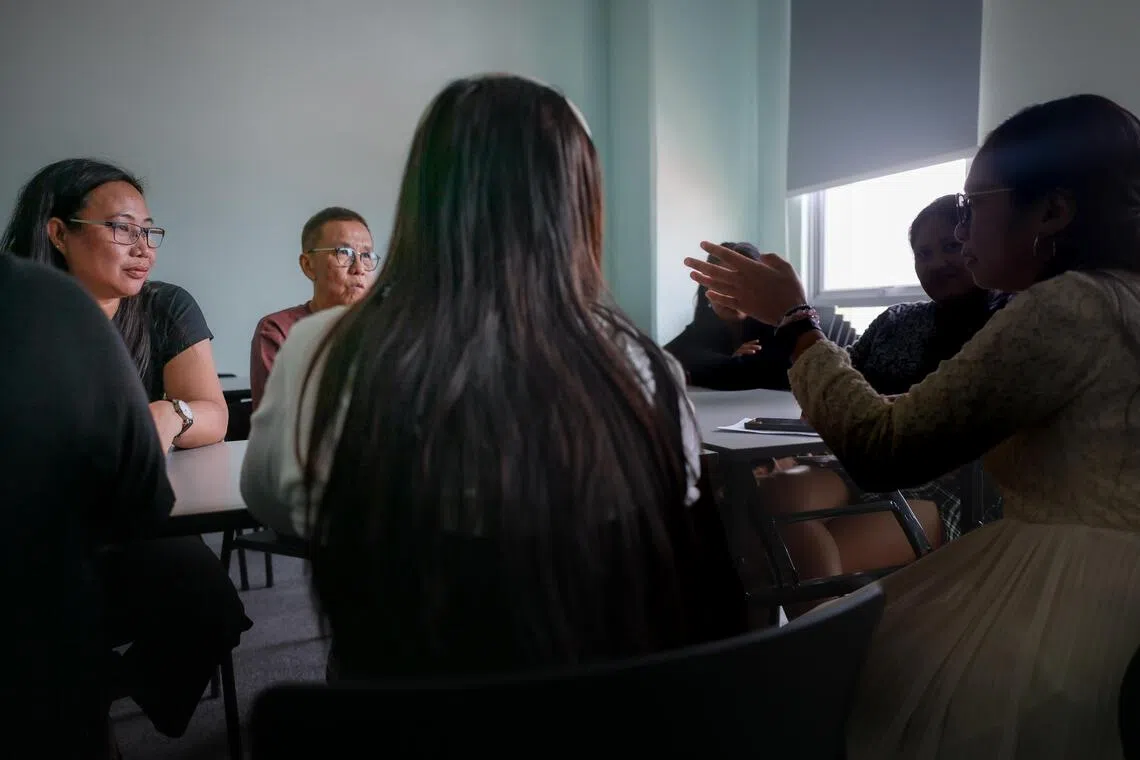
Pastor Billy Lee and cell group leader Monette speaking with foreign domestic workers struggling with debt during a support session on Oct 11.
Published Oct 25, 2026, 05:00 AM
Updated Oct 25, 2026, 05:00 AM
Michelle, a Filipino worker in Singapore, fell into debt after a disputed paluwagan savings pool led her to borrow from unlicensed moneylenders.
High interest, loan guarantees, jewellery instalments and her mother’s illness pushed her debt higher, with lenders even contacting her employer.
She fears her contract may not be renewed and says she may return home because she is “very tired” and cannot see a way out.
Michelle, 40, supports her parents and nine-year-old son, who live in the Philippines. Her husband works in Saudi Arabia and contributes occasionally, but she bears most of the costs.
“I pay my son’s school fees, his allowance, everything... transportation, the food.”
Her debt troubles began in December 2023, after she organised a paluwagan , a rotating savings pool common in Filipino communities. Ten relatives and friends contributed each month, taking turns to collect the full pot. Michelle collected the money and passed it to the member whose turn it was.
When two members failed to pay, the person due to receive the pot accused Michelle of pocketing the money and shamed her on social media.
“I asked her to wait because they had not paid yet , but she did not believe me, so she posted that I scammed her.”
Desperate to clear her name, Michelle borrowed from an unlicensed moneylender to cover the shortfall.
When she missed a repayment, the lender called her employer. Confronted, Michelle admitted she had borrowed from a loan shark. Her employer filed a police report but kept her on, giving her a second chance.
The borrowing terms quickly made repayment difficult, Michelle says.
“If you borrow $200, the interest is $100 per month . If you cannot return it with the capital, you pay a deferment fee.”
The following year, she agreed to guarantee a friend’s loan, a practice she says is common in close-knit migrant communities. When the friend was deported for borrowing from illegal lenders, Michelle says she was left to repay more than $1,000.
She also owes two jewellery shops in Singapore and a moneylender in the Philippines.
At a shop in Paya Lebar, she bought 7.2g of gold on instalments. By her tally, she has paid about $3,000 so far. Yet when she pawned the piece, it fetched just $1,000. She continues to pay the shop $100 a month and says she has another three years of repayments.
In February this year , her mother fell ill. Michelle borrowed $1,000 from her employer for her medical bills, then turned to two more unlicensed lenders: a Filipina working with a local man, and a Singaporean man in his 70s.
By June, one had appeared at her employer’s doorstep demanding payment.
Each new obligation pushed her further into debt before she could clear what she already owed.
“Before I could pay it off in full, I had to go deeper and deeper. It’s hard for me,” says Michelle, adding that her parents do not know the full extent of her debts.
Her employer has kept her on, but Michelle worries about what comes next. She says her borrowing history prevents her from transferring to another employer, and her contract is due for renewal in 2027.
“I don’t know if they will renew me,” she says. “I might choose to go home first, because I am very tired.”
Moneylending - illegal
10 月 11 日,牧师 Billy Lee 和小组组长 Monette 在一次支持会议上与身负债务的外籍家庭佣工交谈。
发布于2026年10月25日 上午5:00
更新于2026年10月25日上午5:00
米歇尔是一名在新加坡工作的菲律宾工人,由于与菲律宾工人共同储蓄池发生纠纷,她不得不向无牌放贷者借钱,结果负债累累。
高额利息、贷款担保、珠宝分期付款以及母亲的疾病使她的债务不断增加,贷款方甚至联系了她的雇主。
她担心自己的合同可能不会续签,并表示她可能会回家,因为她“非常疲惫”,看不到出路。
40岁的米歇尔赡养着住在菲律宾的父母和9岁的儿子。她的丈夫在沙特阿拉伯工作,偶尔会补贴家用,但大部分开销都由她承担。
“我支付儿子的学费、零用钱,所有的一切……交通费、伙食费。”
她的债务问题始于2023年12月,当时她组织了一个“帕鲁瓦甘”(paluwagan),这是一种在菲律宾社区常见的轮流储蓄互助组织。十位亲朋好友每月出资,轮流领取全部款项。米歇尔负责收取这些钱,然后交给轮到她的成员。
当两名成员未能支付款项时,本应获得奖金的人指责米歇尔私吞了这笔钱,并在社交媒体上羞辱了她。
“我让她等等,因为他们还没付款,但她不相信我,所以她发帖说我骗了她。”
为了洗清自己的罪名,米歇尔向一家无牌放贷机构借钱来弥补资金缺口。
当她错过还款日时,放贷人联系了她的雇主。面对质问,米歇尔承认自己向高利贷借了钱。她的雇主报了警,但还是留用了她,给了她第二次机会。
米歇尔说,贷款条款很快就让还款变得困难。
“如果你借款200美元,每月利息是100美元。如果你无法偿还本金,则需要支付延期费。”
第二年,她同意为朋友的贷款做担保,她说这种做法在关系紧密的移民社区很常见。后来,这位朋友因为向非法放贷者借钱而被驱逐出境,米歇尔说,她不得不偿还超过1000美元的贷款。
她还在新加坡拥有两家珠宝店,并在菲律宾拥有一家放贷机构。
她在巴耶利峇的一家店里分期购买了7.2克黄金。据她统计,至今已支付了约3000新元。然而,当她典当这块黄金时,却只换来了1000新元。她每月仍需向这家店支付100新元,并表示还需要三年才能还清。
今年二月,她的母亲生病了。米歇尔向雇主借了 1000 美元支付医疗费,然后又向两名无证放贷人借钱:一名是与当地男子合伙的菲律宾女子,另一名是 70 多岁的新加坡男子。
到了六月份,其中一人出现在雇主家门口,要求支付工资。
每增加一项新的债务,她就背负更多债务,直到还清已有的债务为止。
“在还清所有债务之前,我不得不越陷越深。这对我来说太难了,”米歇尔说道,并补充说她的父母并不知道她债务的全部数额。
她的雇主留用了她,但米歇尔担心接下来的路。她说,她的借贷记录使她无法跳槽到其他公司,而且她的合同将于2027年到期。
“我不知道他们会不会续约,”她说。“我可能先选择回家,因为我太累了。”
放贷——非法