askST: Why has ASEAN struggled to tackle haze and what can countries do about it?askST:为什么东盟在应对雾霾问题上举步维艰?各国可以采取哪些措施?
Why ASEAN struggles to tackle haze and why Indonesia must step up to stop the fires causing cross-border pollution. Read more at straitstimes.com.
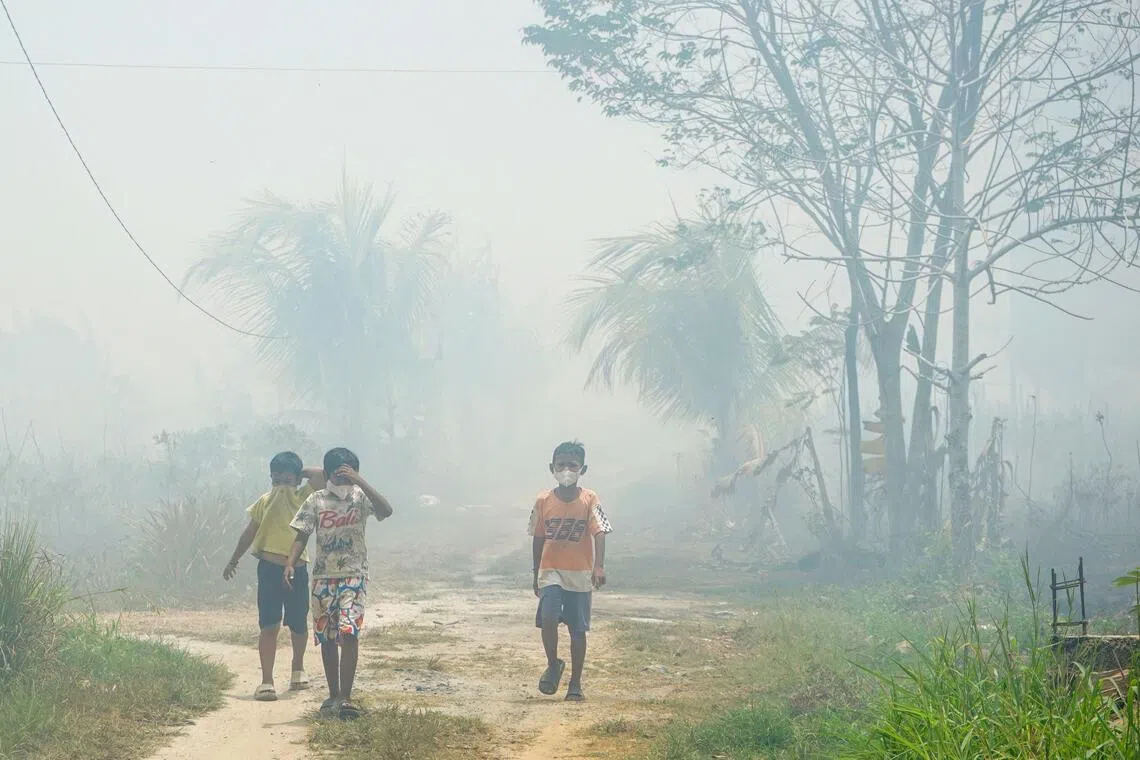
Children wearing face masks walk along a smoke-covered dirt road in Banjarbaru, South Kalimantan province, on Oct 21.
Published Oct 24, 2026, 06:00 PM
Updated Oct 24, 2026, 10:35 PM
ASEAN has rules, monitors and funds to fight haze, but it missed its 2020 target. Experts say weak enforcement and no sanctions limit action.
Indonesia is the key country. Fires there still drive regional haze, and officials and campaigners want stronger law enforcement, better land management and more accountability for companies.
Bilateral help can work faster than ASEAN-wide action. Singapore and Malaysia have offered firefighting aid, but lasting progress needs prevention, early sharing of information and Indonesia’s consent.
JAKARTA – More than two decades after South-east Asian countries signed an agreement to tackle transboundary haze, smoke from forest and peatland fires in Indonesia continues to affect its neighbours.
ASEAN has established monitoring systems, funds and road maps, yet missed its goal of a haze-free region by 2020. As another crisis unfolds, askST examines what the grouping can achieve, whether bilateral cooperation works better and who must act to prevent future fires.
1. What has ASEAN done to tackle transboundary haze?
The ASEAN Agreement on Transboundary Haze Pollution, signed in 2002 and in force since 2003, commits members to preventing, monitoring and mitigating cross-border pollution. Indonesia was the last original ASEAN member to ratify the legally binding agreement in 2014.
Established in 1993, the Singapore-based ASEAN Specialised Meteorological Centre monitors hot spots and provides early warnings. Other initiatives include peatland management strategies and a haze control fund set up in 2007.
After missing its target of eliminating transboundary haze by 2020, ASEAN adopted a new road map in 2023, with a target of 2030.
A haze coordination centre is planned for Indonesia, although its underlying agreement has yet to enter into force.
2. Why does haze persist despite these efforts?
The difficulty lies not so much in detecting fires, but in ensuring countries act on the information.
Joanne Lin, senior fellow and coordinator of the ASEAN Studies Centre at the ISEAS – Yusof Ishak Institute, said: “Having a legally binding agreement does not necessarily translate into effective implementation, particularly when ASEAN has limited powers to compel compliance or enforce domestic environmental laws.”
Being legally binding means member states are obliged under international law to cooperate, share information and take measures to mitigate transboundary haze. But the agreement leaves implementation largely to individual governments, without giving ASEAN the power to impose penalties or compel countries to comply.
Disputes are settled through consultation or negotiation, while ASEAN’s consensus-based approach and principle of non-interference constrain pressure on individual governments.
Simon Tay, chairman of the Singapore Institute of International Affairs, said ASEAN had made progress in monitoring haze and sharing information, but domestic enforcement remained crucial.
“We have become much better at tracking fires than preventing them,” he said.
He pointed to persistent land management problems in the plantation and forestry sectors, saying governments must continue investigating and holding offenders accountable.
For decades , burning has remained a cheap way to clear land for plantations. Observers have pointed out that what is perceived as weak enforcement and a relatively low risk of punishment have often allowed the financial benefits to outweigh the consequences, despite the environmental and health costs borne by communities across the region .
3. What powers does ASEAN have to hold companies accountable?
The power to go after companies responsible for fires that cause haze remains with the national authorities, not ASEAN, said Tay.
“ASEAN is not a regional policeman. It cannot investigate, prosecute or punish companies,” he said.
But with companies and investors operating across borders, he said ASEAN could do more to facilitate the sharing of concession maps, corporate ownership information and evidence.
“The smoke crosses borders. Cooperation in investigating responsibility should do so too,” he added.
On Oct 16, the National Environment Agency (NEA) issued preventive measure notices to seven Indonesian companies whose concession lands were linked to fires suspected of contributing to haze in Singapore. It subsequently issued notices to three more companies under Singapore’s Transboundary Haze Pollution Act, bringing the total to 10.
Enacted in 2014, the Act allows action against entities responsible for haze affecting the Republic even when activities occur abroad.
Senior Minister K. Shanmugam said on Oct 19 that Singapore was exploring legal, economic and regulatory measures, including tracing corporate connections.
But enforcement has proved difficult. Following the 2015 haze, Singapore issued notices to six Indonesian companies. A court warrant against a company director in 2016 sparked a diplomatic dispute, while Singapore said Jakarta had not provided the requested information.
Asked about Singapore’s latest preventive measure notices at an Oct 22 briefing, Indonesian Foreign Ministry spokesman Vahd Nabyl Achmad Mulachela said information from neighbouring countries would be examined under Indonesian regulations.
Tackling fires involves legal and preventive measures as well as firefighting, he said.
“Any information received that can help efforts to tackle forest and land fires will certainly be followed up on seriously,” he said.
4. Can bilateral cooperation be more effective than ASEAN-wide action?
Working directly with affected neighbours can bring firefighting help more quickly, although Indonesia must still agree to accept it.
During the 2015 crisis, Indonesia accepted the services of a Singapore Chinook helicopter carrying a 5,000-litre water bucket, as well as a Malaysian Bombardier CL-415 firefighting aircraft and a supporting helicopter.
In 2026 , Singapore’s Minister for Sustainability and the Environment Grace Fu said on Oct 16 that the Republic had offered civilian firefighting and cloud-seeding assistance.
Malaysia said on Oct 21 that Jakarta had agreed to accept its assistance for fires in Sumatra and Kalimantan, with arrangements still being coordinated.
Singapore Management University law academic Eugene Tan, who served as Singapore’s representative or alternate representative to the ASEAN Intergovernmental Commission on Human Rights for eight years until October 2026, said the region was already engaged in damage control.
He was referring to how countries were focused on containing the fires and mitigating the haze, rather than preventing them.
“The haze-causing fires this year are a done deal – we are now at the mercy of nature (wind and rain),” he said.
“The big issue is how to get Indonesia to implement and enforce its treaty obligations,” he added.
At the Oct 22 briefing, Vahd said Indonesia understood its neighbours’ concerns and that existing ASEAN haze mechanisms were functioning. Jakarta was considering assistance offers based on the conditions on the ground, he said, without confirming acceptance of specific offers.
Malaysia is also considering ways to push for an ASEAN response more quickly.
Its Foreign Minister Mohamad Hasan said on Oct 12 that Kuala Lumpur would propose bringing haze under ASEAN’s disaster-response framework at a November meeting, drawing on the ASEAN Coordinating Centre for Humanitarian Assistance on Disaster Management’s experience.
Even if clearer procedures for requesting personnel and equipment could help, this would not remove the need for Indonesia’s consent, Lin said.
“Under ASEAN’s disaster-response framework, assistance can only be deployed at the request or with the consent of the affected country, and this is unlikely to change,” she added.
Tay said ASEAN-wide cooperation remained important, but countries need not move at the same pace.
“Singapore, Malaysia and Indonesia can deepen practical cooperation, especially in the most fire-prone areas,” he said.
Such efforts could focus on enforcement, land management, peatland protection and incentives for companies and communities to prevent fires.
5. What can countries do to prevent future haze crises?
Ultimately, experts said, the fires must be prevented in Indonesia, rather than merely fought after smoke crosses borders.
Indonesian environmental groups pointed to weak corporate accountability.
In a Sept 22 statement, Greenpeace Indonesia senior researcher Sapta Ananda Proklamasi said peatland-fire enforcement rarely targeted companies, offering little deterrence when fires recurred on their concessions.
Tan called Indonesia the “linchpin” of the regional response, urging stronger coordination between the national and provincial authorities, backed by political will to enforce environmental laws.
Singapore and Malaysia could also scrutinise companies and financial institutions linked to fire-prone plantation and forestry operations, complementing enforcement in Indonesia, observers noted.
NEA said on Oct 23 that it had issued notices to 10 Singapore-registered companies , including Wilmar International and Asia Pulp & Paper, seeking documents and information on their corporate links, land concessions in Indonesia and measures to prevent and fight fires.
Lin said Jakarta could demonstrate leadership through sharing information earlier, accepting assistance sooner and investing in long-term prevention, as well as by hosting ASEAN’s haze coordination centre.
Tan stressed that prevention, rather than firefighting after a crisis begins, must be the priority. “Prevention of the haze must be the watchword. To deal with the haze after the fires are burning uncontrollably is too little, too late.”
Hariz Baharudin is Indonesia correspondent at The Straits Times. He has an interest in Indonesia and the wider currents shaping South-east Asia.
10月21日,在南加里曼丹省班贾尔巴鲁,戴着口罩的孩子们走在一条烟雾弥漫的土路上。
发布于2026年10月24日下午6:00
更新于2026年10月24日晚上10:35
东盟拥有治理雾霾的规则、监测机构和资金,但未能实现2020年的目标。专家表示,执法不力和缺乏制裁措施限制了行动的开展。
印尼是关键国家。那里的火灾仍然造成区域性雾霾,官员和环保人士希望加强执法力度,改善土地管理,并提高企业的问责力度。
双边援助比东盟范围内的行动见效更快。新加坡和马来西亚已提供紧急援助,但要取得持久进展,需要预防、及早共享信息以及印尼的同意。
雅加达——东南亚各国签署解决跨境烟霾问题的协议已超过二十年,但印度尼西亚森林和泥炭地火灾产生的烟雾仍然影响着其邻国。
东盟已建立监测系统、资金和路线图,但仍未能实现到2020年消除雾霾的目标。随着另一场危机的发生,askST 探讨了该组织还能取得哪些成就,双边合作是否更有效,以及谁应该采取行动来防止未来的火灾。
1. 东盟为解决跨境雾霾问题采取了哪些措施?
《东盟跨境烟霾污染协定》于2002年签署,并于2003年生效,该协定要求成员国致力于预防、监测和减轻跨境污染。印度尼西亚是最后一个批准该具有法律约束力的协定的东盟创始成员国,批准时间为2014年。
成立于1993年的东盟专业气象中心总部位于新加坡,负责监测热点地区并提供预警。其他举措包括泥炭地管理策略和2007年设立的雾霾控制基金。
东盟未能实现到 2020 年消除跨境烟霾的目标,于 2023 年通过了一项新的路线图,目标是到 2030 年。
印尼计划设立一个雾霾协调中心,但相关协议尚未生效。
2. 尽管采取了这些措施,为什么雾霾仍然持续存在?
困难之处不在于发现火灾,而在于确保各国根据这些信息采取行动。
尤索夫伊萨克东南亚研究所东盟研究中心高级研究员兼协调员林乔安妮表示:“拥有具有法律约束力的协议并不一定能转化为有效的执行,尤其是在东盟强制遵守或执行国内环境法律的权力有限的情况下。”
该协议具有法律约束力,意味着成员国有义务根据国际法开展合作、共享信息并采取措施缓解跨境雾霾。但协议的执行主要由各国政府自行负责,并未赋予东盟实施处罚或强制各国遵守协议的权力。
争端通过协商或谈判解决,而东盟基于共识的方式和不干涉原则限制了对个别政府的压力。
新加坡国际事务研究所主席郑文杰表示,东盟在监测雾霾和信息共享方面取得了进展,但国内执法仍然至关重要。
他说:“我们在追踪火灾方面做得比预防火灾方面做得好得多。”
他指出种植园和林业部门长期存在土地管理问题,并表示政府必须继续调查并追究违法者的责任。
几十年来,焚烧一直是清理土地用于种植园的廉价方法。观察人士指出,由于执法力度薄弱且处罚风险相对较低,经济利益往往超过了后果,尽管整个地区的社区都为此付出了环境和健康代价。
3. 东盟拥有哪些权力来追究企业的责任?
Tay表示,追究造成烟雾的火灾责任公司的权力仍然属于国家当局,而不是东盟。
他说:“东盟不是区域警察,它不能调查、起诉或惩罚公司。”
但他表示,鉴于企业和投资者跨境经营,东盟可以采取更多措施来促进特许经营地图、公司所有权信息和证据的共享。
“烟雾会跨越国界,调查责任的合作也应该跨越国界,”他补充道。
10月16日,新加坡国家环境局(NEA)向七家印尼公司发出预防措施通知,这些公司的特许经营土地与疑似造成新加坡雾霾的火灾有关。随后,NEA又根据新加坡《跨境雾霾污染法》向另外三家公司发出通知,使受影响的公司总数达到十家。
该法案于 2014 年颁布,允许对造成共和国雾霾的实体采取行动,即使这些实体的活动发生在国外。
新加坡高级部长尚穆根于10月19日表示,新加坡正在探索法律、经济和监管措施,包括追踪企业关联。
但执法困难重重。2015年雾霾事件后,新加坡向六家印尼公司发出通知。2016年,新加坡法院对一家公司董事发出逮捕令,引发外交争端,而新加坡方面则表示雅加达方面并未提供所需信息。
在 10 月 22 日的新闻发布会上,当被问及新加坡最新的防疫措施通知时,印尼外交部发言人瓦赫德·纳比尔·艾哈迈德·穆拉切拉表示,将根据印尼的规定审查来自邻国的信息。
他说,应对火灾不仅包括消防,还包括法律和预防措施。
他说:“任何有助于扑灭森林和土地火灾的信息,我们一定会认真跟进。”
4. 双边合作能否比东盟范围内的行动更有效?
直接与受灾邻国合作可以更快地获得消防援助,但前提是印尼必须同意接受援助。
在 2015 年危机期间,印度尼西亚接受了新加坡奇努克直升机(载有 5000 升水桶)、马来西亚庞巴迪 CL-415 消防飞机和一架支援直升机的服务。
2026年10月16日,新加坡永续发展与环境部长傅海燕表示,新加坡已向该国提供民用消防和人工增雨援助。
马来西亚于 10 月 21 日表示,雅加达已同意接受其对苏门答腊和加里曼丹火灾的援助,相关安排仍在协调中。
新加坡管理大学法学学者陈永健(Eugene Tan)曾担任新加坡在东盟政府间人权委员会的代表或候补代表长达八年,直至2026年10月。他表示,该地区已经开始进行损害控制。
他指的是各国都把重点放在控制火势和减轻烟雾上,而不是预防火灾的发生。
他说:“今年的雾霾引发的火灾已经无法避免——我们现在只能听天由命(风和雨)。”
“最大的问题是如何让印尼履行和执行其条约义务,”他补充道。
在10月22日的简报会上,瓦赫德表示,印尼理解邻国的担忧,并指出东盟现有的雾霾应对机制正在有效运作。他表示,雅加达正在根据当地实际情况考虑提供援助,但并未确认是否接受具体援助方案。
马来西亚也在考虑如何加快东盟的回应速度。
马来西亚外交部长穆罕默德·哈桑于10月12日表示,吉隆坡将在11月的一次会议上提议将雾霾纳入东盟灾害应对框架,并借鉴东盟人道主义援助灾害管理协调中心的经验。
林表示,即使更清晰的人员和设备申请程序会有所帮助,但这并不能消除获得印尼同意的必要性。
她补充说:“根据东盟的灾害应对框架,援助只能应受灾国的请求或经其同意才能部署,这种情况不太可能改变。”
Tay表示,东盟范围内的合作仍然很重要,但各国不必以相同的速度前进。
他说:“新加坡、马来西亚和印度尼西亚可以深化务实合作,尤其是在最易发生火灾的地区。”
这些努力可以侧重于执法、土地管理、泥炭地保护以及激励企业和社区预防火灾。
5. 各国可以采取哪些措施来预防未来雾霾危机?
专家表示,归根结底,印尼必须从源头上预防火灾,而不是等到烟雾越过国界后再去扑灭。
印尼环保组织指出企业问责机制薄弱。
绿色和平组织印尼高级研究员萨普塔·阿南达·普罗克拉马西在 9 月 22 日的一份声明中表示,泥炭地火灾执法很少针对公司,因此当火灾在其特许经营地再次发生时,执法力度有限。
谭称印尼是区域应对措施的“关键”,敦促国家和省级政府加强协调,并拿出政治意愿来执行环境法。
观察人士指出,新加坡和马来西亚也可以审查与易燃种植园和林业作业有关的公司和金融机构,以补充印度尼西亚的执法行动。
新加坡国家环境局 (NEA) 于 10 月 23 日表示,已向包括丰益国际 (Wilmar International) 和亚洲浆纸业 (Asia Pulp & Paper) 在内的 10 家新加坡注册公司发出通知,要求其提供有关其公司联系、在印度尼西亚的土地特许权以及预防和扑灭火灾措施的文件和信息。
林表示,雅加达可以通过更早地分享信息、更早地接受援助、投资于长期预防以及主办东盟雾霾协调中心来展现领导力。
谭强调,预防才是重中之重,而不是危机发生后才去应对。“预防烟霾必须是关键。等到火势失控后再去处理烟霾就太迟了。”
哈里兹·巴哈鲁丁是《海峡时报》驻印度尼西亚记者。他对印度尼西亚以及影响东南亚的更广泛趋势很感兴趣。