Snap Insight: PAP cadres chose cautious renewal in challenging times简讯:人民行动党干部在充满挑战的时期选择谨慎革新
Younger office-holders will need more time and exposure to win over party cadres, says Gillian Koh from the Institute of Policy Studies.
新闻视频
Younger office-holders will need more time and exposure to win over party cadres, says Gillian Koh from the Institute of Policy Studies.
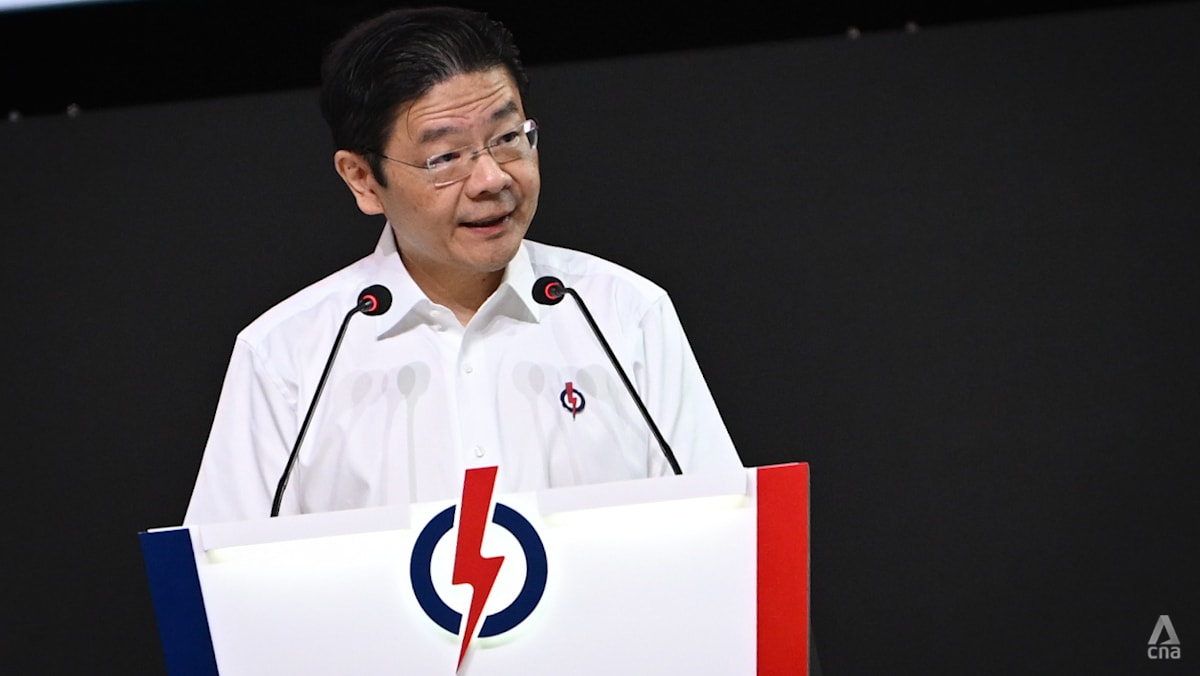
Prime Minister Lawrence Wong delivers an address at the 2026 PAP Party Awards and Conference on Oct 25, 2026. (Photo: CNA/Syamil Sapari)
This audio is generated by an AI tool.
SINGAPORE: In the People’s Action Party (PAP) first leadership vote since receiving its strong electoral mandate in the May 2025 general election, only one new name was among the top 12 balloted.
Judging from the 19 faces on the ballot determined by the out-going central executive committee (CEC) and the outcome, the pace of leadership renewal was cautious; the diversity in thought and experience in the cadres’ choice, constrained.
This, because of the broader context in which the vote was held.
For all the talk of renewal leading up to the conference, party cadres chose the safe option and decided to firm up the bench of experienced fourth generation (4G) leaders and retain former Secretary-General Lee Hsien Loong and K Shanmugam for continuity within the party.
CNA Games Guess Word Crack the word, one row at a time Buzzword Create words using the given letters Mini Sudoku Tiny puzzle, mighty brain teaser Mini Crossword Small grid, big challenge Word Search Spot as many words as you can Show More Show Less
The PAP conference on 25 October took place against the wider backdrop of the “polycrisis” that the region and world face. Cadres elected those who have demonstrated the adaptive and strategic capacity to deal with disorientating geopolitical, technological, business and cultural disruptions that are intertwining to re-write life as we know it.
Their top 12 choices reflect who they are confident about dealing with the acute conditions of change while advancing the longer-term social and economic interests of the country and citizens. Mr Chee Hong Tat, who is National Development Minister was the only new name among that group.
Acting Minister-in-charge of Muslim Affairs, Mr Zaqy Mohamad and Minister for Energy, Trade and Industry, Dr Tan See Leng, were co-opted into the decision-making body of the governing party, having been among the 14 with the highest votes.
CONSTRAINTS ON DIVERSITY OF THOUGHT AND EXPERIENCE
There is still the prospect of tapping newer ministers, when the members of the new 39th CEC meet in a few weeks.
Two first-time Members of Parliament (MPs) and ministers, Jeffrey Siow and Jasmin Lau, had been nominated but trailed their more experienced colleagues in the ballot outcome.
This would not cast a shadow on their standing since none other than current Secretary-General and Prime Minister, Lawrence Wong had his first term as member of the CEC after being co-opted in November 2018 and Mr Chee had his through co-optation in November 2024 also.
As former senior civil servants, there is still a tension to negotiate: It would not signal an infusion of diversity at the leadership level of the party that a more complex, ambiguous and volatile political environment may require for an effective political movement under the current circumstances.
This is a factor PM Wong cited for raising ministerial salaries: to close the opportunity gap of recruiting people with proven leadership qualities from sectors outside of the military and civil service into politics and government.
Dr Tan – someone with a private sector background, savvy in shaping opinion and moving crowds and now, in the hot seat with the ongoing global economic crisis – would be the model for alternative leaders the party will have to do more to nurture over time.
MORE WORK NEED TO WIN OVER POLITICAL CADRES
More work is needed for the younger leaders already in government office to gain the confidence of party cadres.
The party is not the government. But if the government must make difficult policy decisions during challenging times, it needs to engage the ground more actively and the party faithful and grassroots work is one important channel to do so. Building faith in policy requires rich engagement by the party, with cadre fully motivated to support that.
The current conditions of governance will require more imagination from the party to create the platforms that allow 27 first-time PAP MPs and future political candidates to foster that crucial human interface between politics and policy; and from cadre to leaders.
Singaporeans need to be confident that the PAP continues to have a good feel for their daily struggles in this changing world. Quality political dialogue will allow leaders, especially if they are younger, newer and seem to come from the same mould, to earn the right to be heard by their constituents.
Party-based work allows for this melding of heart with head on an ongoing basis. Politics, as the art of making the impossible possible, happens at that retail level, and all political parties neglect that at their peril.
Gillian Koh is Senior Research Fellow at the Institute of Policy Studies, National University of Singapore.
Get our pick of top stories and thought-provoking articles in your inbox
Stay updated with notifications for breaking news and our best stories
Join our channel for the top reads for the day on your preferred chat app
政策研究所的吉莉安·科表示,年轻的官员需要更多的时间和接触才能赢得党内干部的支持。
2026年10月25日,总理黄循财在人民行动党2026年颁奖典礼暨党代会上发表讲话。(图片:CNA/Syamil Sapari)
这段音频是由人工智能工具生成的。
新加坡:人民行动党(PAP)自2025年5月大选获得强有力的选举授权以来首次举行领导人选举,在前12名候选人中只有一位是新面孔。
从即将卸任的中央执行委员会确定的19位候选人及其选举结果来看,领导层更迭的步伐较为谨慎;干部在思想和经验方面的选择也受到限制。
这是因为投票是在更广泛的背景下进行的。
尽管在大会召开前夕,党内干部们一直在谈论革新,但他们还是选择了稳妥的做法,决定巩固经验丰富的第四代(4G)领导人队伍,并保留前秘书长李显龙和尚穆根,以保持党内的连续性。
CNA游戏 猜词游戏 逐行破解单词 流行词游戏 用给定的字母组成单词 迷你数独 小小谜题,挑战你的大脑 迷你填字游戏 小方格,大挑战 单词搜索 尽可能多地找出单词 显示更多 显示更少
10月25日举行的PAP会议是在区域和世界面临“多重危机”的大背景下召开的。干部们选举产生了那些展现出适应能力和战略眼光的人,以应对令人迷茫的地缘政治、技术、商业和文化冲击,这些冲击相互交织,正在重塑我们所知的世界。
他们选出的12位最佳人选,反映了他们认为哪些人能够应对变革带来的严峻挑战,同时又能促进国家和公民的长期社会经济利益。国家发展部长徐芳达先生是其中唯一的新面孔。
代理穆斯林事务部长扎基·穆罕默德先生和能源、贸易及工业部长陈思龙博士因得票数位列前 14 人,被增选进入执政党的决策机构。
思想和经验多样性的限制
几周后,新一届第39届中央执行委员会成员将召开会议,届时仍有可能启用新任部长。
两位首次当选国会议员兼部长的萧正祥和刘嘉敏虽然获得了提名,但在投票结果中却落后于他们经验更丰富的同事。
这不会对他们的地位造成影响,因为现任秘书长兼总理黄循财于 2018 年 11 月被增选为中央执行委员会成员,而徐顺全先生也是在 2024 年 11 月通过增选当选的。
作为前高级公务员,仍然存在需要协商的紧张关系:这并不会标志着党的领导层注入多样性,而当前形势下,在一个更加复杂、模糊和动荡的政治环境中,有效的政治运动可能需要这种多样性。
黄循财总理指出,提高部长薪酬的一个因素是:为了缩小从军政部门以外的领域招募具有卓越领导才能的人才进入政界和政府的机会差距。
陈博士——一位拥有私营部门背景、精于塑造舆论和动员群众的人,如今又因持续的全球经济危机而身处风口浪尖——将成为该党需要花更多时间培养的替代领导人的典范。
还需要做更多工作来赢得政治干部的支持
政府部门中的年轻领导人还需要付出更多努力来赢得党内干部的信任。
党不等同于政府。但政府若要在充满挑战的时期做出艰难的政策决定,就需要更加积极地与基层群众沟通,而党员基层工作正是实现这一目标的重要渠道之一。要建立民众对政策的信任,就需要党的深度参与,并调动全体干部积极性来支持这项政策。
当前的治理状况需要该党发挥更大的想象力,创建平台,使 27 位首次当选的人民行动党议员和未来的政治候选人能够促进政治与政策之间、以及从干部到领导人之间至关重要的人际互动。
新加坡民众需要确信人民行动党始终能够深刻理解他们在瞬息万变的世界中面临的日常挑战。高质量的政治对话能够让领导人,尤其是那些年轻、资历尚浅且看似千篇一律的领导人,赢得选民的信任和支持。
政党工作使得这种情感与理性的持续融合成为可能。政治,作为化不可能为可能的艺术,正是在这种基层层面发挥作用,所有政党若忽视这一点,都将付出惨痛的代价。
许嘉莲是新加坡国立大学政策研究所的高级研究员。
订阅我们的邮件,即可获取精选热点新闻和引人深思的文章。
订阅通知,第一时间获取突发新闻和精彩报道。
加入我们的频道,即可在您常用的聊天应用上获取当日热门文章。