S’pore to tap diverse energy sources, explore new tech, to weather resource nationalism: Tan See Leng陈思龙:新加坡将开发多元化能源,探索新技术,以应对资源民族主义。
Singapore is accelerating its solar push, while investing in research on geothermal and nuclear energy. Read more at straitstimes.com.
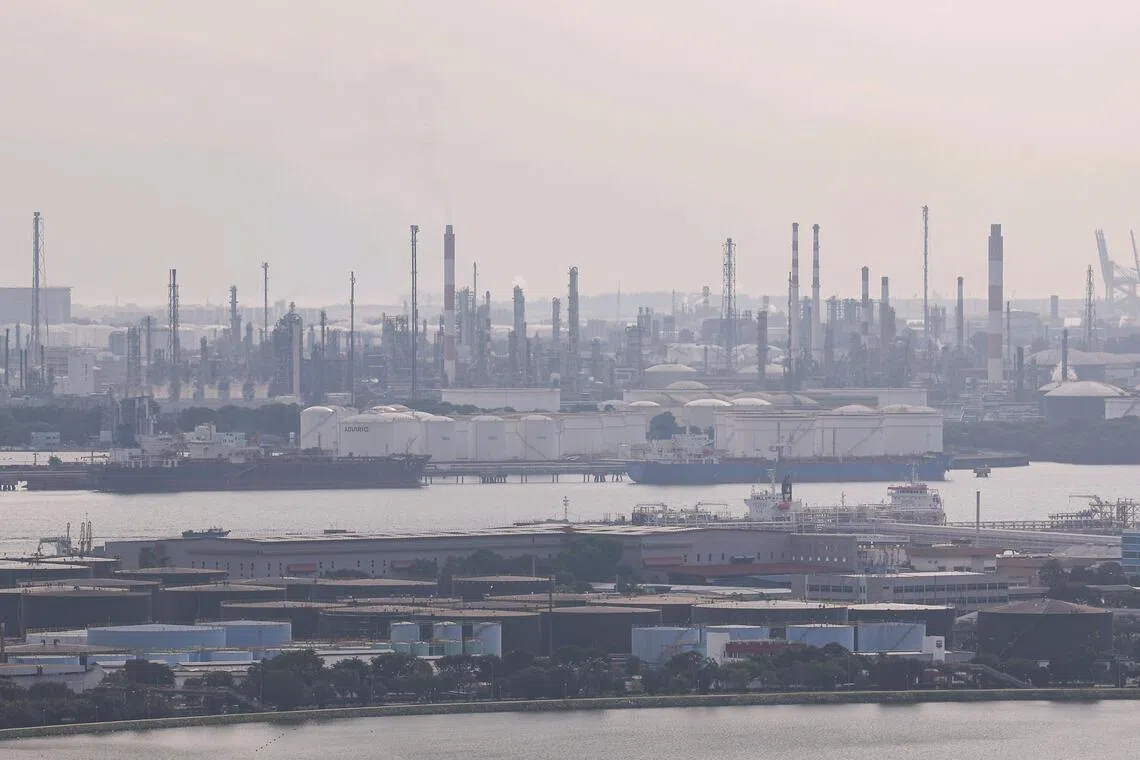
The Republic is also exploring emerging energy options that are not yet commercially viable, including nuclear and geothermal energy.
Published Oct 26, 2026, 09:49 AM
Updated Oct 26, 2026, 09:51 AM
SINGAPORE - Singapore is preparing to weather the increasingly challenging global energy landscape marked by supply crunches and growing resource nationalism, said Minister for Energy, Trade and Industry (Energy and Industry) Tan See Len g on Oct 26.
To navigate these headwinds, the city-state is strengthening the diversity of its energy sources, and taking steps to ensure it has the infrastructure required to support them, he said at the opening of the Singapore International Energy Week conference at Marina Bay Sands.
And even as the Republic strives to ensure its energy security in the near-term with new fossil fuel partnerships, it will also step up its deployment of low-carbon options such as solar energy to meet future energy needs in a climate-friendly way, the minister said.
Tan, whose ministry was on Oct 1 renamed the Ministry of Energy, Trade and Industry to reflect the growing importance of energy for Singapore , was mapping out how Singapore will strengt hen the energy sector . The ministry was previously known as the Ministry of Trade and Industry.
Said Tan: “We must ensure our system resilience continues to be a source of confidence, harness energy to bolster our competitiveness, pursue low-carbon energy pathways, and deepen connectivity with our partners. .. While keeping costs in check.”
His remarks come two days after Indonesia reduced natural gas supplies to Singapore.
The amount of gas cut is less than 2% of the Republic’s total daily gas demand , Singapore’s energy regulator the Energy Market Authority (EMA) later clarified. Singapore relies on natural gas to meet about 95% of its needs.
T an said the t rend of resource nationalism is particularly concerning, especially if it undermines established contractual agreements .
He added that such moves increase business risk and deter investments in the energy sector with negative long-term implications for energy importers like Singapore.
He also cited the disruption of global energy flows caused by the closure of the Strait of Hormuz. Coming just four years after the 2022 energy crisis, the situation could escalate further following recent attacks on Saudi Arabia.
When Singapore first started importing gas, all of its gas was piped from neighboring countries, but today, about half of the Republic’s gas is imported as liquified natural gas (LNG) from a global portfolio of sources, such as the US and Australia, said Tan.
He pointed out that the EMA requires Singapore’s power plants to also run on diesel, allowing for them to tap the Republic’s reserves when there is a severe disruption to gas supplies.
This will be shored up with the signing of an agreement between Saudi Arabia and Singapore on Oct 26, which aims to enable the storage of Saudi crude oil in the Jurong Rock Caverns from the second half of 2027.
Located 150m beneath Jurong Island, the facility has a total storage capacity of 1.47 million cubic metres, enough to fill 600 Olympic-sized swimming pools.
Quoting a Chinese saying, Tan said: “We cannot predict every disruption, but we will always ensure that Singapore is prepared for them.”
And as Singapore prepares to meet growing electricity demand by tapping a variety of different energy sources, the Republic will need to ensure it has the infrastructure to support this.
A five-year plan on how the Republic plans to expand its power system from 2026 was also rolled out on Oct 26.
“This will be the most significant build-up of our energy infrastructure in decades,” said Tan.
The plan features five new power plants, seven new substations, more underground transmission cables, as well as potential energy infrastructure on offshore Pulau Tekong . It also has an aim of tripling the capacity of energy storage systems here to 1 gigawatt-hour.
Energy storage systems help maintain balance in the power system by storing excess electricity during periods of high solar generation and releasing the stored energy when solar output is lower or when the system is under stress, explained Tan .
Elaborating on Singapore’s plans for solar energy, Tan said Singapore intends to expand the deployment of its “most viable indigenous renewable energy source” to 4 gigawatt-peak by 2035.
This is up from its refreshed target of 3 gigawatt-peak by the end of this decade, and amounts to about 5 per cent of the country’s total electricity demand projected for 2030.
The Republic is also working with Chinese firm GCL Perovskite on a proposed pilot for next-generation solar panels that could generate more solar energy with the same amount of space, Tan said. Traditional solar panels are made of silicon, while next-generation ones made of a material known as perovskite could potentially increase its efficiency.
In a drive to develop low-carbon technologies for cleaner and more secure power generation, Tan also announced a $75 million initiative that will fund research in promising technologies.
Despite Singapore’s bigger push for solar energy, it will need other sources of low-carbon energy, noted Tan, who laid out how the Republic is seriously studying tapping nuclear and geothermal energy.
While Singapore has not yet made a decision on whether it will tap nuclear energy, it is working to build up its local expertise to help the country make an informed decision.
To this end, Tan said selected public officers will be able to experience what it is like to work in some of the world’s leading nuclear energy organisations. This will be part of several new schemes to build a pool of nuclear experts and professionals in Singapore.
He said: “Now, even if Singapore eventually decides not to deploy nuclear energy, the capabilities and expertise we are developing today will continue to serve us well, particularly as interest in nuclear energy grows across South-east Asia and around the world.”
The Republic is also deepening its connectivity with partners.
On Oct 26, EMA awarded a conditional approval to Sembcorp Utilities to import up to 1.3 gigawatts (GW) of renewable electricity from and through Peninsular Malaysia to Singapore.
This could mean the import of electricity from sources elsewhere from 2035, including solar power from Malaysia and offshore wind in Vietnam, through connected infrastructure.
S ingapore has a target of importing 6 GW of low-carbon electricity from its neighbours by 2035, which will account for around 30 per cent of the Republic’s electricity demand that year.
Marine subsea surveys to build a new subsea interconnector between Singapore and Peninsular will start in October, Tan added . This will be the Republic’s second interconnection with Malaysia.
Said Tan: “This marks a concrete step forward in adding up to 2GW of new interconnection capacity between Singapore and Peninsular Malaysia by 2030, which will complement the 1 GW of capacity via our existing interconnector.”
The location of the interconnector’s landing site will be determined following the completion of the studies, said an EMA spokesperson.
该共和国还在探索一些目前尚不具备商业可行性的新兴能源选择,包括核能和地热能。
发布于 2026 年 10 月 26 日上午 9:49
更新于2026年10月26日上午9:51
新加坡——新加坡能源、贸易及工业部长(能源及工业)陈世伦于10月26日表示,新加坡正准备应对日益严峻的全球能源形势,该形势的特点是供应短缺和资源民族主义日益抬头。
他在新加坡滨海湾金沙酒店举行的新加坡国际能源周会议开幕式上表示,为了应对这些不利因素,新加坡正在加强能源来源的多样性,并采取措施确保拥有支持这些能源来源所需的基础设施。
部长表示,尽管共和国正努力通过新的化石燃料合作伙伴关系来确保近期能源安全,但同时也将加大力度部署太阳能等低碳能源,以气候友好的方式满足未来的能源需求。
陈先生领导的部门于10月1日更名为能源、贸易及工业部,以体现能源对新加坡日益增长的重要性。他正在制定新加坡如何加强能源领域的计划。该部门此前名为贸易及工业部。
谭先生表示:“我们必须确保系统韧性继续成为信心的来源,利用能源增强竞争力,走低碳能源发展道路,并深化与合作伙伴的联系……同时控制成本。”
两天前,印尼削减了对新加坡的天然气供应。
新加坡能源市场管理局(EMA)随后澄清,此次天然气减供量不到新加坡每日天然气总需求的2%。新加坡约95%的能源需求依赖天然气。
Tan表示,资源民族主义的趋势尤其令人担忧,特别是如果它破坏了已建立的合同协议。
他还补充说,此类举措会增加商业风险,阻碍对能源领域的投资,对新加坡等能源进口国产生负面的长期影响。
他还提到霍尔木兹海峡关闭导致全球能源流动中断。距离2022年能源危机仅四年,沙特阿拉伯近期遭受袭击后,局势可能进一步升级。
谭先生表示,新加坡最初开始进口天然气时,所有天然气都是从邻国通过管道输送的,但如今,新加坡约一半的天然气是以液化天然气 (LNG) 的形式从全球多个来源进口的,例如美国和澳大利亚。
他指出,《能源管理法》要求新加坡的发电厂也必须使用柴油,以便在天然气供应严重中断时能够利用新加坡的柴油储备。
10 月 26 日,沙特阿拉伯和新加坡签署了一项协议,旨在从 2027 年下半年开始在裕廊岩洞储存沙特原油,这将进一步巩固这一局面。
该设施位于裕廊岛地下 150 米处,总储水量为 147 万立方米,足以填满 600 个奥运会标准游泳池。
陈先生引用一句中国谚语说:“我们无法预测每一种突发事件,但我们会始终确保新加坡做好准备应对它们。”
随着新加坡准备利用各种不同的能源来满足日益增长的电力需求,该国需要确保拥有支持这一需求的基础设施。
10 月 26 日,共和国还公布了一项从 2026 年开始扩大其电力系统的五年计划。
“这将是几十年来我们能源基础设施建设的最大规模建设,”谭说道。
该计划包括新建五座发电厂、七座变电站、更多地下输电线路,以及在德光岛近海建设潜在的能源基础设施。该计划还旨在将当地的储能系统容量扩大三倍,达到1吉瓦时。
谭解释说,储能系统通过在太阳能发电高峰期储存多余的电力,并在太阳能输出较低或系统承受压力时释放储存的能量,来帮助维持电力系统的平衡。
陈先生在详细阐述新加坡的太阳能计划时表示,新加坡打算到 2035 年将其“最可行的本土可再生能源”的部署规模扩大到 4 吉瓦峰值。
这比其重新设定的到本十年末达到 3 吉瓦峰值的目标有所提高,约占该国预计 2030 年总电力需求的 5%。
谭先生表示,新加坡政府正与中国协鑫科技(GCL Perovskite)合作,开展一项下一代太阳能电池板试点项目,该项目有望在相同空间内产生更多太阳能。传统太阳能电池板由硅制成,而采用钙钛矿材料制成的下一代太阳能电池板则有望提高其效率。
为了推动开发低碳技术以实现更清洁、更安全的发电,谭还宣布了一项7500万美元的计划,用于资助有前景的技术研究。
尽管新加坡大力发展太阳能,但陈先生指出,新加坡仍需要其他低碳能源。他还详细介绍了新加坡正在认真研究如何开发核能和地热能。
虽然新加坡尚未决定是否开发核能,但它正在努力培养本地专业技术,以帮助该国做出明智的决定。
为此,陈先生表示,部分公务员将有机会体验在世界领先的核能机构工作。这将是新加坡为培养核能专家和专业人才而推出的多项新计划之一。
他说:“即使新加坡最终决定不发展核能,我们今天所培养的能力和专业知识也将继续对我们大有裨益,尤其是在东南亚乃至全世界对核能的兴趣日益增长的情况下。”
该共和国也在深化与合作伙伴的联系。
10 月 26 日,EMA 有条件地批准胜科电力公司从马来西亚半岛进口至多 1.3 吉瓦 (GW) 的可再生电力到新加坡。
这意味着从 2035 年起,将通过互联基础设施从其他地方进口电力,包括来自马来西亚的太阳能和来自越南的海上风能。
新加坡的目标是到 2035 年从邻国进口 6 吉瓦低碳电力,这将占到当年新加坡电力需求的约 30%。
谭先生补充说,连接新加坡和马来西亚半岛的新海底互联管道的海洋海底勘测工作将于10月启动。这将是新加坡与马来西亚的第二次海底互联。
陈先生表示:“这标志着到 2030 年新加坡和马来西亚半岛之间新增 2 吉瓦互联容量的目标迈出了切实的一步,这将与我们现有互联线路的 1 吉瓦容量形成互补。”
欧洲药品管理局发言人表示,互联线路的登陆点位置将在研究完成后确定。